Website Accessibility Violation New York: Your Rights in 2026
Reviewed for accuracy by the ADAhelp team before publishing. ADAhelp is not a law firm; legal work is handled by independent New York attorneys.
New York sees about 31% of U.S. website accessibility lawsuits. See how the ADA, NYSHRL and NYCHRL protect you and how contingency-fee case help works.
New York is the busiest state in the country for digital access complaints. Industry trackers that follow federal filings report that New York accounts for roughly 31% of all website and app accessibility lawsuits filed nationwide. That is not an accident: New Yorkers are covered by three overlapping civil rights laws, and businesses here have had years of notice that an inaccessible site can cost them.
If a website's barriers stopped you from shopping, booking an appointment, applying for a job, or paying a bill, you may have a claim over a website accessibility violation New York law requires businesses to fix. This guide explains what counts as a violation, how the federal Americans with Disabilities Act (ADA), the New York State Human Rights Law (NYSHRL), and the New York City Human Rights Law (NYCHRL) work together, where a complaint gets filed, and how contingency-fee case management works so there are no out-of-pocket costs to you. ADAhelp is a case-management and intake service, not a law firm, and nothing here is legal advice.
Key takeaways
- New York generates about 31% of the nation's digital accessibility lawsuits, so local businesses cannot claim surprise when a site blocks a screen reader.
- Missing image descriptions, unlabeled form fields, keyboard traps, and uncaptioned video are the barriers that most often support a claim.
- The ADA can force a business to fix its site; the NYSHRL and NYCHRL are what open the door to compensatory damages, and the NYCHRL also allows punitive damages.
- Complaints go to the NYC Commission on Human Rights (CCHR), the NYS Division of Human Rights (DHR), or court, and filing with the agencies is free.
- Case management is handled on contingency: no upfront costs, no hourly bills, and no recovery, no fee.
What counts as a website accessibility violation in New York?
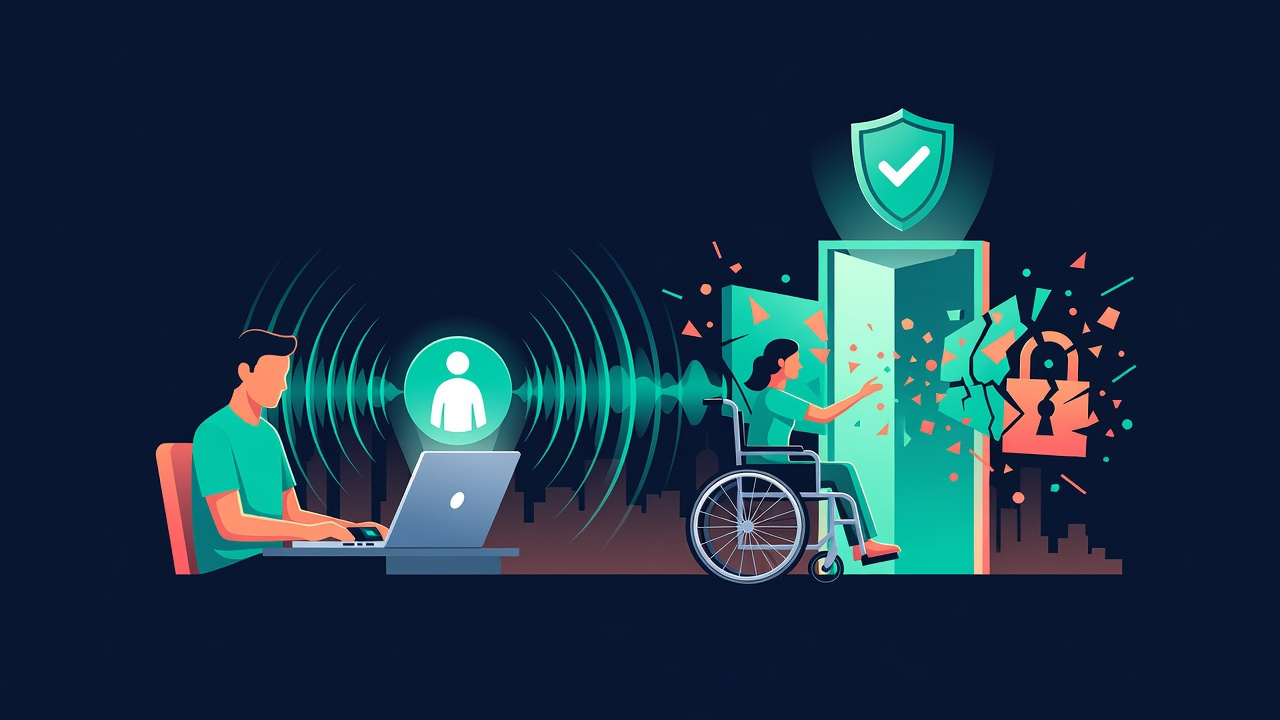
A website accessibility violation happens when a digital platform puts a wall between its services and a person with a disability. Think of a store with three steps and no ramp, only the steps are in the code. If you cannot read a menu, book a flight, refill a prescription, or check out with a cart because of your disability, you were denied equal access. In New York, businesses that serve the public are treated as places of public accommodation, and their websites are part of how they serve the public. A website is simply the digital side of the same rules covered in our guide to public access discrimination in New York.
Digital barriers and assistive technology
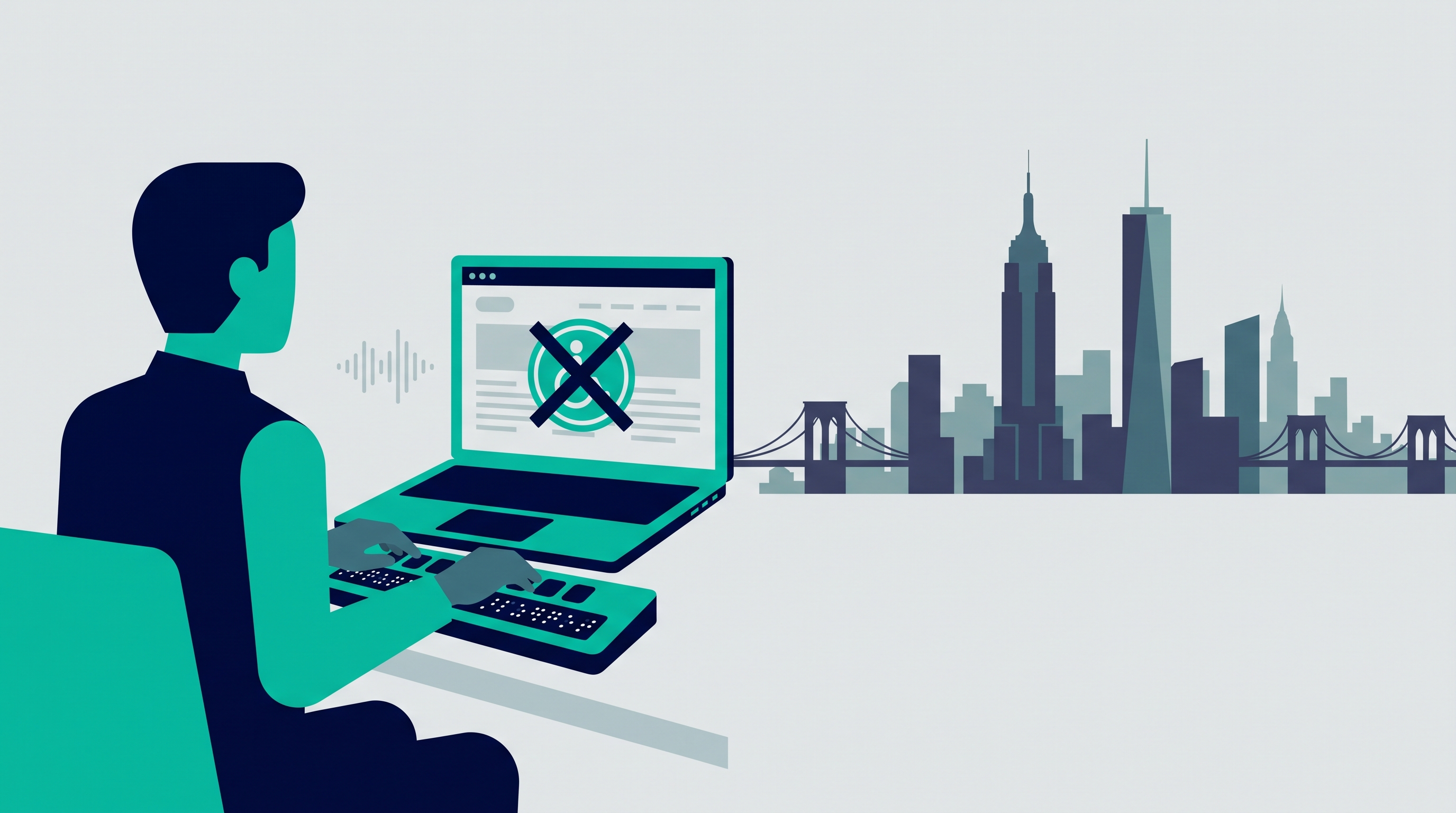
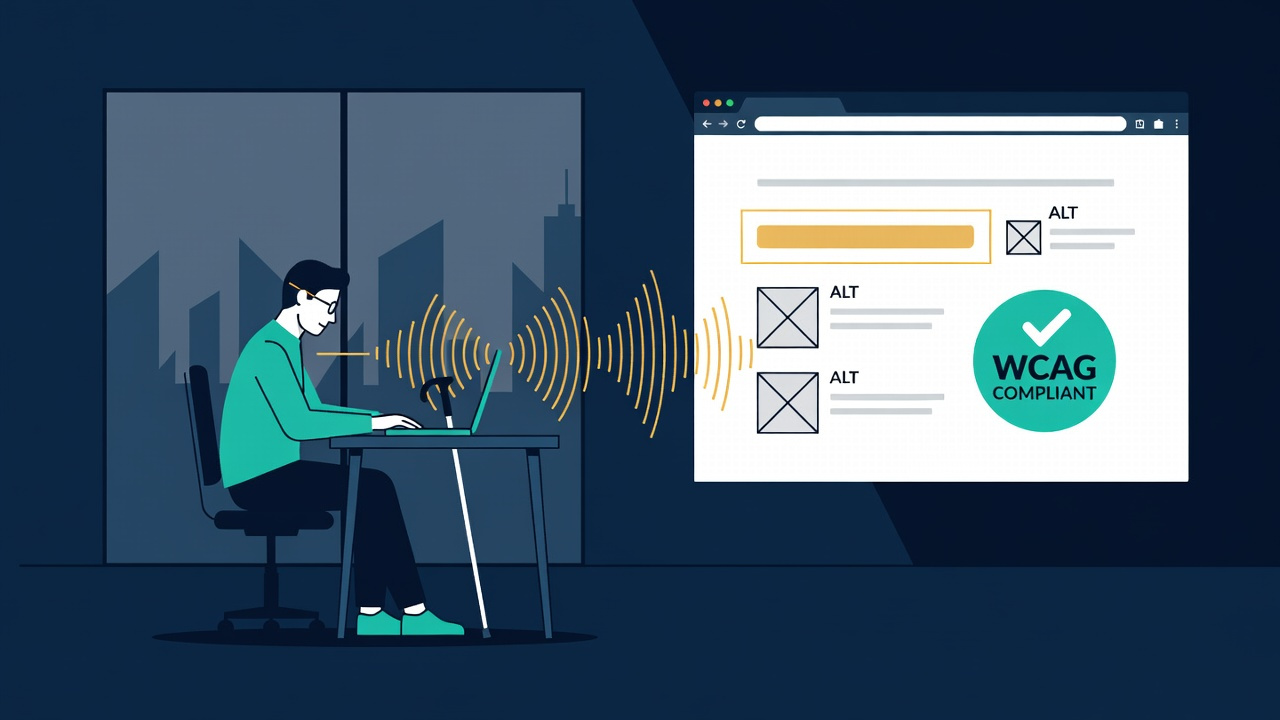
Many New Yorkers use screen readers, which read a page's underlying code aloud to describe images, links, and buttons. If those descriptions are missing, the user is left guessing. Keyboard-only navigation matters just as much: if a checkout button responds only to a mouse click, it is a dead end for people who cannot use a mouse. Uncaptioned video shuts out deaf and hard-of-hearing users, and low color contrast can make text unreadable for people with low vision. These are not cosmetic glitches. They are barriers to a civil right.
Why New York leads the nation in digital access claims
Two things put New York at the front of the pack. First, the volume: roughly 31% of federal digital accessibility suits nationwide come out of New York, and a large share involve businesses that were already on notice about the same problems. Second, the law: New Yorkers have a three-layer stack of protection that most states do not. The ADA sets the floor and can force a fix, while the NYSHRL and NYCHRL add the ability to recover money for the exclusion you actually experienced. For a broader look at how these claims are handled end to end, see our overview of digital accessibility claim management in New York.
The three laws protecting your digital access
Each law does a different job. Understanding which one applies to your situation is the difference between only getting a site repaired and also being compensated for what you went through.
ADA Title III: fixing the site
Title III of the ADA covers places of public accommodation, including businesses that serve the public online. Its main remedy is injunctive relief, meaning a court order requiring the business to remove the barrier, plus attorney's fees and costs to a prevailing plaintiff. Title III does not provide money damages to the individual. It is the tool that changes the code going forward, not the tool that addresses the harm you already experienced. Title III also does not require you to file with a federal agency first, which is different from ADA Title I employment claims that go through the EEOC.
NYSHRL and NYCHRL: where financial recovery comes from
The New York State Human Rights Law and the New York City Human Rights Law are broader than federal law, and both allow compensatory damages for the harm, frustration, and lost time a barrier caused. The NYCHRL is widely regarded as one of the most protective civil rights laws in the country and also permits punitive damages against businesses that act with willful disregard for your rights. The NYSHRL matters for coverage: it reaches businesses of nearly any size, including very small shops, which closes gaps left by federal employment thresholds. If your claim involves a job portal or an employer's internal systems rather than a storefront site, the analysis shifts toward employment law, and our guide on the ADA interactive process in New York is a useful next read.
Common digital barriers New Yorkers face
Most violations fall into a handful of recognizable categories. If any of these stopped you, write down what happened while it is fresh.
- Missing alt text: a screen reader announces "image 402" instead of describing the product you wanted to buy.
- Empty links and buttons: a control labeled only "click here," or no label at all, gives you no way to know where it leads.
- Unlabeled form fields: name, address, and payment boxes that are not tied to text labels make checkout guesswork.
- No captions or transcripts: instructions, announcements, and entertainment delivered only as audio exclude deaf and hard-of-hearing users.
- Keyboard traps: pop-ups and menus that capture focus and never release it, forcing you to restart the browser.
- Timeouts you cannot extend: booking or payment screens that expire before a screen reader user can finish.
Retail and restaurant websites
For many people the frustration starts with dinner. When a restaurant posts its menu as a flat image, a screen reader cannot read the dishes, allergens, or prices. Retail sites often hide barriers deep in the checkout flow: you can add to the cart but cannot pick a delivery window or apply a discount code. The obligations are the same ones behind a restaurant ADA violation in New York.
Employment and housing portals
The stakes rise when a barrier costs you a job or a home. Application portals that require a mouse to upload a resume or navigate a date picker screen out people with motor disabilities. Housing listing and application systems are covered by New York's civil rights laws and, for housing providers, by the federal Fair Housing Act (FHA) as well. You deserve a real shot at every job and every apartment.
Do you have a case? How to document a violation
You do not need to be a developer to know a site did not work for you. A claim generally turns on showing that you tried to use a public-facing service, that a barrier related to your disability stopped or seriously hindered you, and that the business is covered by the law. You are not required to explain the technical cause of the failure.
Steps to take right after you hit a digital barrier
- Capture proof: a screenshot, a short screen recording, or a note of what your screen reader announced.
- Record the date, the time, and the exact page URL where the barrier appeared.
- Write down what you were trying to do and what happened instead.
- Save any error messages, chat transcripts, or emails with customer support.
- Note whether you tried again later and whether the barrier was still there.
For a fuller walkthrough of the paperwork and sequence, see our step-by-step guide on how to file a website accessibility complaint in New York.
Where a website accessibility claim is filed, and the deadlines
Public accommodation claims in New York City are commonly filed with the NYC Commission on Human Rights (CCHR), and claims elsewhere in the state with the NYS Division of Human Rights (DHR). There is no filing fee at either agency. A claim can also be brought in court under the NYSHRL, the NYCHRL, or ADA Title III. Deadlines differ by law and by forum, and a missed deadline can end an otherwise strong claim, so confirm your dates early. Our guide to the ADA discrimination claim statute of limitations in New York breaks the timelines down.
What is a website accessibility case worth?
Outcomes vary, and no one can responsibly promise a number. What drives value is the severity of the barrier, how long it persisted, whether the business had prior notice, and which laws apply. Title III can require the fix; the NYSHRL and NYCHRL are what allow compensatory damages, with punitive damages available under the NYCHRL in the strongest cases. Some New York access claims resolve for amounts up to $60,000, while others resolve mainly with a binding commitment to remediate the site. For realistic ranges and what shifts them, read our breakdown of disability discrimination settlement amounts in New York.
Contingency fees explained: what you pay and when
Cost is the reason many New Yorkers never report a barrier at all. It should not be. Case management through ADAhelp is handled on a contingency basis, which means the work is paid for out of a recovery rather than out of your pocket.
What "no recovery, no fee" actually means
Here is the plain version:
- Nothing upfront. There is no charge to have your situation reviewed, and no charge to open a file.
- No hourly billing. You are never invoiced for time spent on calls, documentation, or follow-ups with an agency.
- No recovery, no fee. If the claim does not produce a recovery, you owe no fee for the case-management work.
- The percentage is disclosed in writing. Before anything is filed, you see how a fee would be calculated out of any recovery, so there are no surprises later.
- Agency filing is free. CCHR and DHR do not charge to accept a complaint.
- Legal work stays with attorneys. ADAhelp manages intake, documentation, and coordination; independent attorneys handle the legal representation and their fee arrangement is explained to you directly.
If you want the mechanics in more detail, including how expenses are treated, see our guide to an ADA claim contingency fee in New York with no upfront cost.
The free three-minute case check
The fastest way to find out whether your experience is worth pursuing is the free case check. You answer a short set of questions about the barrier you hit, the business, and when it happened. If the situation looks viable, we gather the documentation, confirm the applicable deadlines, and prepare the claim for filing with the right agency. If it does not, you will be told that plainly, at no cost.
Secure the digital access you deserve
New York's three-law stack exists because access is not optional. If a business ignored a website accessibility violation New York law requires it to fix, you can ask for the repair and, under state and city law, for compensation for being shut out. You do not have to navigate the agencies, the forms, or the deadlines alone, and you do not have to pay anything upfront to start.
Start your free 3-minute ADA case check and find out where you stand.
Frequently asked questions
Can I file if a site is hard to use but not completely blocked?
Often yes. The question is whether the barrier denied you equal access or seriously hindered your use of the service, not whether the site failed entirely. Unreadable images, unlabeled forms, and navigation that requires a mouse can all create unequal access under the NYSHRL and NYCHRL. Document what you could not accomplish and how long you spent trying.
Do I have to hire a lawyer myself to report a violation?
No. You can file with CCHR or DHR on your own, and there is no filing fee. ADAhelp can also manage the intake, documentation, and filing coordination for you and connect you with an independent attorney if the claim calls for one. ADAhelp is not a law firm and does not provide legal advice.
Does an accessibility overlay or plugin protect the business?
Not automatically. What matters is whether you could actually use the site. Overlays and widgets frequently leave the underlying code unfixed and can interfere with screen readers. If the barrier persisted for you despite the tool, the presence of the tool does not erase the violation.
Are mobile apps covered too?
Apps operated by businesses serving the public are treated the same way as their websites under the ADA, NYSHRL, and NYCHRL analysis. Whether you were on a desktop browser or a phone, the obligation to provide equal access to the goods and services does not change.
Will I owe anything if there is no recovery?
No. Case management is contingency-based: no upfront costs, no hourly bills, and no recovery, no fee. Any fee percentage is disclosed to you in writing before a claim is filed.
How long do I have to act?
Filing windows depend on which law and which forum you use, and they are shorter at some agencies than in court. Because a lapsed deadline can end a valid claim, confirm your dates as soon as possible and keep your documentation dated.
Disclaimer
This article is general information about New York law, not legal advice, and reading it does not create an attorney-client relationship. ADAhelp is a case-management and intake service, not a law firm; legal representation is provided by independent attorneys. Recovery amounts and timelines vary by case, and past outcomes do not guarantee future results. For advice about your specific situation, speak with a qualified attorney or start the free case check.
Tags
Discriminated against in New York because of a disability?
A free three-minute check tells you if you can pursue a claim.
Check my case →New York onlyNo upfront costIndependent NY attorneysFree 3-minute check