How to File a Website Accessibility Complaint in New York
Reviewed for accuracy by the ADAhelp team before publishing. ADAhelp is not a law firm; legal work is handled by independent New York attorneys.
Blocked by a website in NY? Learn how to file a website accessibility complaint New York agencies accept. Start a free case check and connect with an attorney.
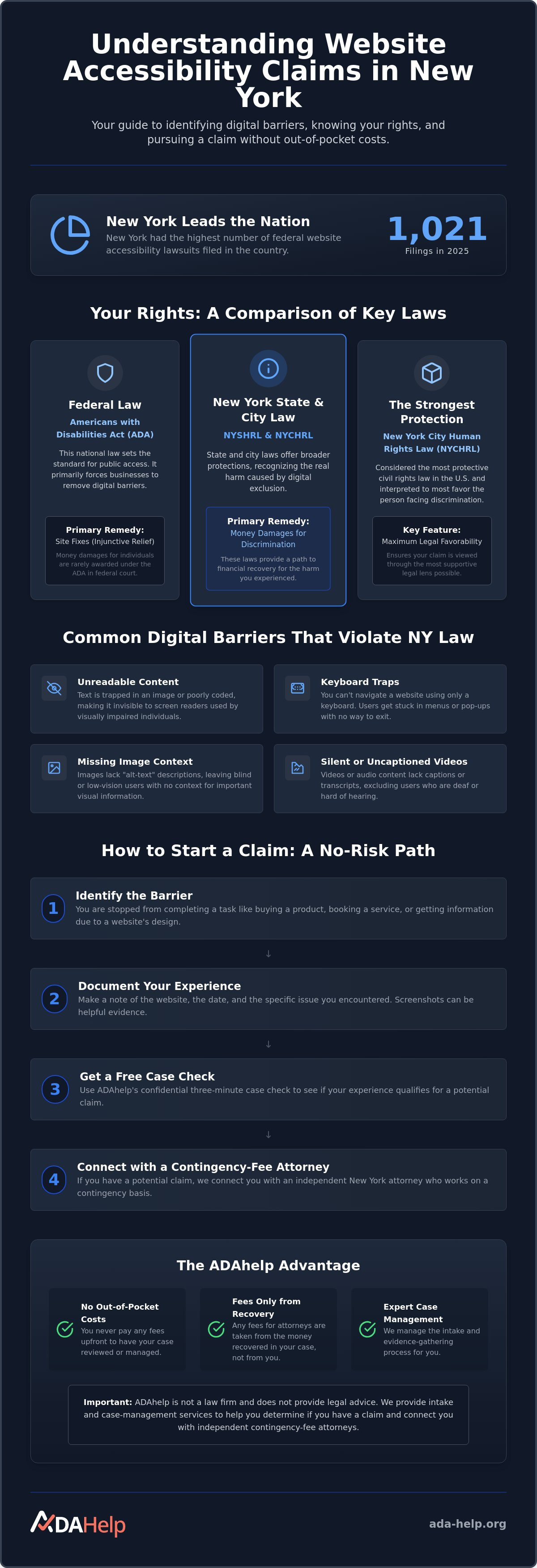
Did you know that New York led the nation in federal website accessibility lawsuits in 2025 with 1,021 filings? If a digital barrier stopped you from using a website, your frustration is valid. It's tiring to hit a dead end when you're just trying to shop or book an appointment. You can secure your rights and seek a potential recovery by understanding how to file a website accessibility complaint New York agencies will recognize.
This guide shows you how to identify violations, understand your rights under state law, and start a claim without financial risk. ADA Help - NY disability discrimination claims is not a law firm. We provide intake and case management services. We help you determine if you have a claim and connect you with independent attorneys. Our process is low-risk because fees are only taken from a recovery; you never pay out of pocket. You'll learn how to identify barriers and start a free three-minute case check.
Key Takeaways
- Understand why New York state and city laws allow you to seek money damages for digital barriers while federal law often focuses on site fixes.
- Identify the specific digital obstacles, such as screen reader failures, that qualify as discrimination under New York law.
- Learn the essential steps to document your experience and file a website accessibility complaint New York agencies will accept.
- Discover how to start a free case check and let ADAhelp connect you with contingency-fee attorneys at no out-of-pocket cost.
- Know the strict deadlines for filing with the New York State Division of Human Rights to protect your right to a potential recovery.

Do you have a website accessibility claim in New York?
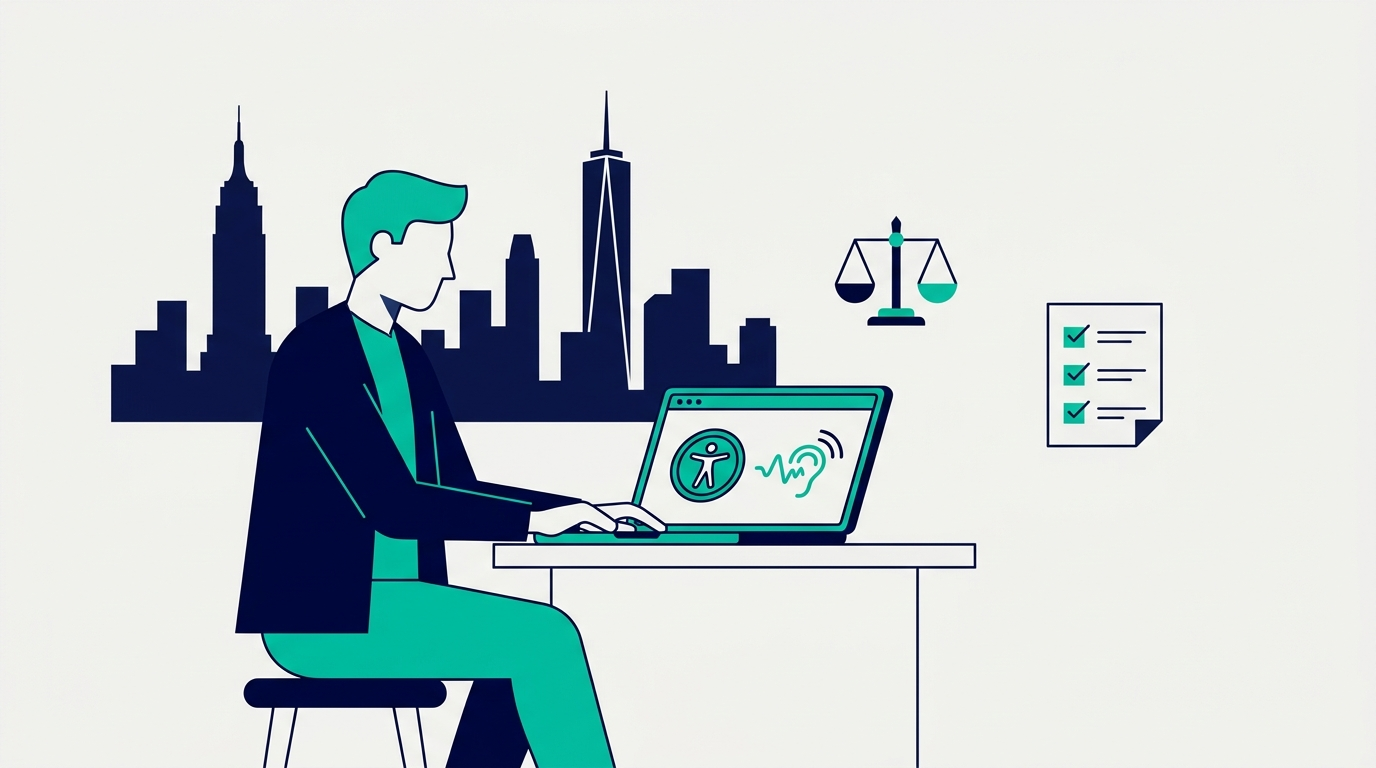
You might wonder if a broken menu or unreadable button on a store's website is just a nuisance or a legal violation. In New York, it's often a violation. If a digital barrier stops you from buying a gift, booking a flight, or reading a menu, you likely have a valid claim. Websites are considered "places of public accommodation" under New York law. This means they have the same legal duty to be accessible as a physical storefront on Broadway. Your website accessibility complaint New York residents file aims to fix the site for everyone and secure a fair recovery for the discrimination you faced. For a deeper walkthrough, see our inaccessible website discrimination claim filing guide.
To better understand how these claims work and why digital access matters, watch this helpful video:
The business doesn't even need a physical office in the Empire State to be held accountable. If they sell goods or services to New Yorkers, they must follow New York rules. This is a powerful tool for justice. ADA Help - NY disability discrimination claims provides the expert management you need to navigate this process. You can start by seeing if your experience qualifies through our free three-minute case check at ada-help.org. We manage the gathering of evidence and filing so you don't have to deal with the stress alone.
The role of the Americans with Disabilities Act
Title III of the Americans with Disabilities Act (ADA) is the federal law that sets the national standard for public access. It requires businesses to remove both physical and digital barriers that block people with disabilities. Most cases rely on the Web Content Accessibility Guidelines (WCAG) to define what an accessible site looks like. While the ADA is a strong starting point, it has a major limitation in federal court. It primarily focuses on forcing the business to fix the website. It rarely results in money damages for the individual who was blocked from the service.
New York State and City Human Rights Laws
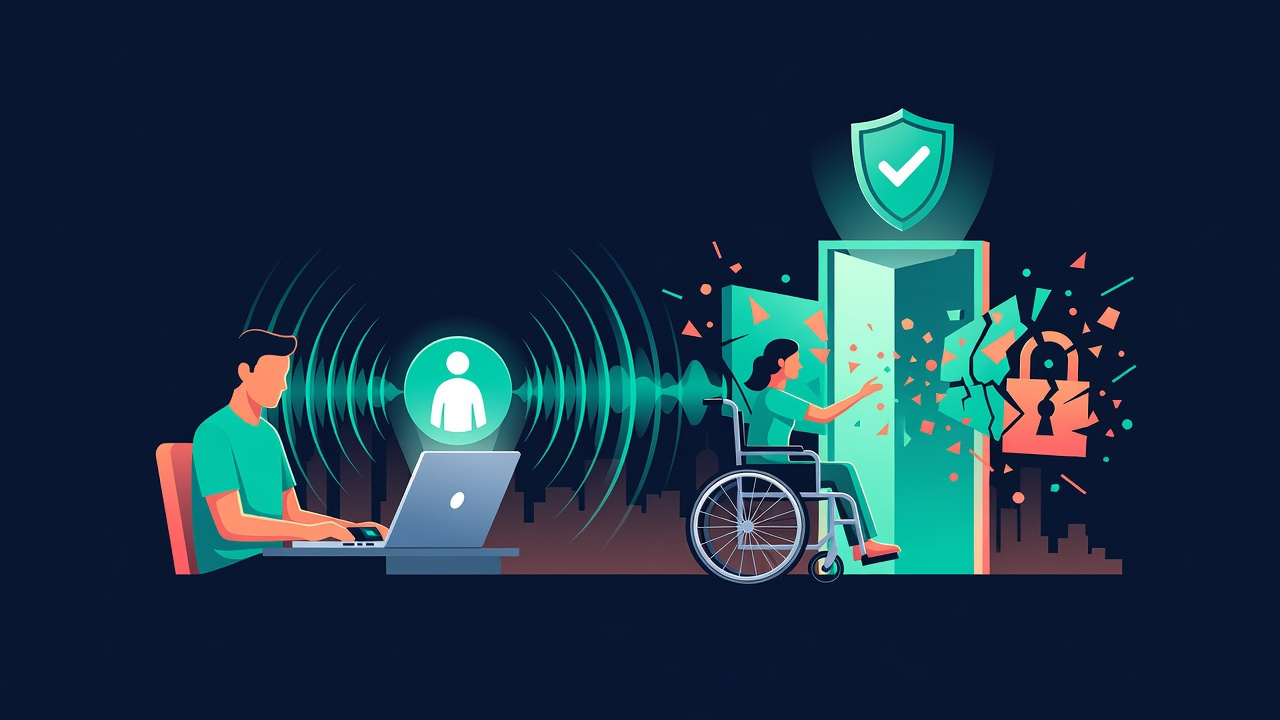
This is where local law steps in to provide more support. The New York State Human Rights Law (NYSHRL) and the New York City Human Rights Law (NYCHRL) offer much broader protections than federal law. These statutes recognize that being excluded from a website causes real harm. Because of this, they allow you to seek money for the discrimination you faced. The NYCHRL is widely considered the most protective civil rights law in the nation. It requires courts to interpret the law in the most favorable way possible for the person facing discrimination. When you file a claim, these local laws are often your strongest path to a fair outcome.
Common digital barriers that violate New York law
Finding a digital barrier feels like walking into a locked door. It's frustrating and unfair. For New Yorkers with disabilities, these barriers aren't just technical glitches; they're civil rights violations. If you can't complete a purchase or access information because of how a site is built, you may have grounds for a website accessibility complaint New York law supports. The New York State Division of Human Rights sets clear expectations for digital inclusion. When a site fails these standards, it excludes a significant portion of the population from the digital economy.
- Unreadable Content: Screen readers can't process text that is trapped inside images or poorly coded.
- Keyboard Traps: Users who don't use a mouse get stuck in menus or pop-ups.
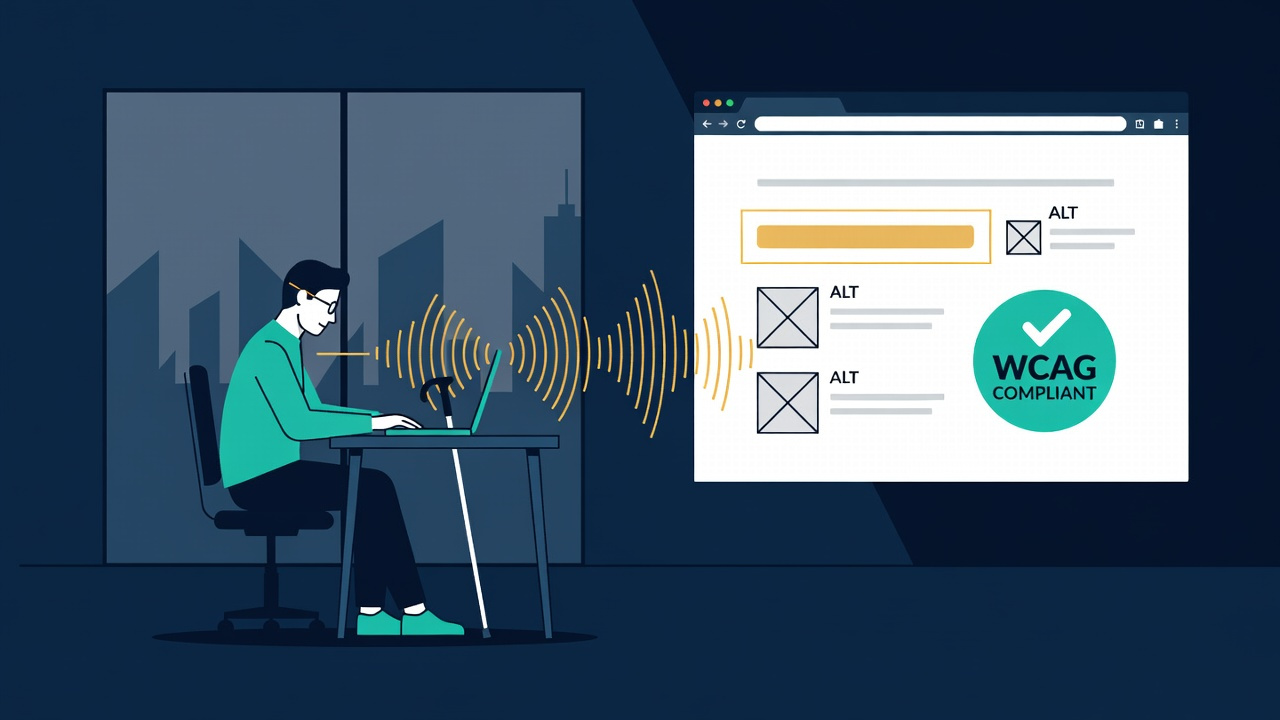
- Missing Context: Images without descriptions leave blind users wondering what's on the page.
- Silent Information: Videos without captions exclude those who are deaf or hard of hearing.
These issues aren't just minor inconveniences. They prevent you from using the web with the same independence as everyone else. If you've run into these walls, you can check your case for free to see if you qualify for a claim.
Screen reader and navigation issues
Websites must be built so that assistive software can read the content aloud in a logical order. If a developer doesn't label buttons correctly, a screen reader might just say "button" without explaining what it does. This makes it impossible to know if you're clicking "Submit" or "Cancel." Similarly, every interactive element must be reachable using only a keyboard. If you can't move through a site using the "Tab" key, the site is effectively closed to you. Forms are a common problem area. If the fields aren't linked to their labels, you won't know what information to type in which box. Documenting these specific failures is the first step toward a successful website accessibility complaint New York courts will recognize.
Visual and auditory barriers
Access isn't just about code; it's about how information is presented. Low color contrast is a frequent violation. If the text color is too similar to the background, many users simply can't read it. This is especially common on light gray text or tiny fonts. Every image that conveys information needs a text alternative. This ensures that even if you can't see the picture, you still get the message. Auditory access is just as vital. Any video content must include synchronized captions. Without them, the information is lost to anyone who can't hear the audio. Finally, flashing content is a serious safety risk. It can trigger seizures and must be avoided entirely to keep the digital space safe for all New Yorkers.
Choosing between federal and New York state courts for your claim
Where you file your website accessibility complaint New York matters for your final outcome. It's the difference between simply getting a site fixed and being compensated for the frustration you endured. Many people assume they must go to federal court because the Americans with Disabilities Act (ADA) is a federal law. While that path results in technical changes, it rarely addresses the personal harm you suffered. Federal judges typically focus on injunctive relief, which is a court order to repair the website.
New York state and city courts offer a more comprehensive approach. They view digital exclusion as a personal injury. A claim handled under local law often allows for compensatory damages. These are payments intended to cover the emotional toll and loss of dignity caused by discrimination. ADA Help - NY disability discrimination claims helps you understand these venue options. We are not a law firm. We provide the case management you need to determine the best path and connect you with independent contingency-fee attorneys.
Why venue matters for your recovery
Choosing a state venue acknowledges the personal impact of being denied access. While a federal fix helps future users, state courts focus on your specific experience. Typical recovery amounts vary based on the severity of the barrier and how often you were blocked. For example, being unable to complete a vital transaction like paying a utility bill may be viewed differently than a missing image description. Selecting the right court ensures the legal system accounts for the actual time and effort you lost.
The NYC Human Rights Law advantage
If the business you're dealing with targets customers in the five boroughs, you may have an even stronger advantage. The New York City Human Rights Law (NYCHRL) is widely considered the most protective civil rights law in the country. It requires a very high standard of accessibility for any business interacting with city residents. This law applies even if the company is based elsewhere and has no physical office in New York. You can learn more about how these specific city rules work by reading about a Website Accessibility Violation New York.
Evaluating these legal paths is complex. You can start by using our free case check at ada-help.org to see where your claim stands. We handle the intake and organization so you can move forward with confidence. Because we work on a contingency basis, there is no financial risk to you.
Steps to file an accessibility complaint in New York
You've encountered a digital wall. You're ready to take action. Filing a website accessibility complaint New York requires a bit of preparation to ensure your rights are protected. Start by capturing what happened before the site changes. Businesses often try to fix errors once they realize a complaint is coming. Having your own records is vital. Capture the screen where the problem occurred. Note the date and time of your attempt. Be specific about what you were trying to do. Were you trying to order a meal? Were you trying to pay a bill? These details prove you were a customer who was denied equal service.
Identifying the owner of the website is your next move. Look at the very bottom of the homepage. You will often find a link for "Terms of Use" or "Privacy Policy." These pages usually list the legal name of the business or its parent company. You need this exact name to ensure your claim is filed against the right entity. Once you have this info, you can start your free three-minute case check to see if you have a valid claim. We handle the paperwork and information gathering so you don't have to worry about the technical details.
Gathering evidence of discrimination
Assistive technology failures leave tracks. If your screen reader skipped over a "Buy Now" button, write it down. If you couldn't use your keyboard to exit a pop-up ad, take a video of the attempt if possible. Keep a simple log of every time you tried to use the site and failed. Note any error messages that appeared. Write a short description of how the experience affected you. Did you feel frustrated? Did you have to ask a friend to help you with a private transaction? This personal impact is exactly what New York state and city laws look for when determining recovery amounts.
The filing process and timelines
You have two main paths for your website accessibility complaint New York. You can file a formal complaint with the New York State Division of Human Rights. This is a government-run process that is free to use. New York City residents can also file with the NYC Commission on Human Rights under the NYCHRL. Alternatively, you can start a private claim. Private claims often move faster and allow for more personalized case management. Timing is the most important factor. You generally have one year from the date of the incident to file with the Division of Human Rights. If you choose to go directly to state court, you have up to three years. Don't wait until the deadline is close. Evidence can disappear as websites are updated. Acting quickly gives you the best chance at a successful outcome.
How ADAhelp manages your New York website accessibility case
Standing up to a major corporation can feel impossible. You are one person; they have teams of lawyers and deep pockets. ADAhelp changes that dynamic. We act as your proactive partner to ensure your voice is heard. If you have struggled with a site that won't work, filing a website accessibility complaint New York is the right move to secure your rights. We make it simple. You don't need to be an expert in web code or the specifics of city statutes. Our job is to handle the heavy lifting so you don't have to.
Our goal is to turn your frustration into a clear path toward resolution. We understand that your time is valuable. You shouldn't have to spend hours researching laws or trying to find a lawyer who will take your case. We have built a system that streamlines every step. From the moment you contact us, we are working to protect you and secure the recovery you deserve. We take the confusion out of the process and put the power back in your hands.
Start your free case review
The first step is a free three-minute case check. You will answer a few simple questions about the digital barrier you encountered. Tell us which website failed you and what specific task you could not complete. Once we have your information, our team performs a technical analysis of the site. We look for violations of the standards that New York courts recognize. This confirms if your experience qualifies for a legal claim. You can begin this journey today by visiting the ADAhelp homepage.
No-risk case management
We remove the financial fear often associated with legal action. You will never pay us anything out of pocket. Our case management services operate on a contingency model; this means we only get paid if you receive a recovery. We manage the entire process from start to finish. This includes gathering evidence, organizing paperwork, and connecting you with independent, experienced attorneys. These lawyers also work on a contingency basis. This ensures that the financial risk stays with the service provider, not with you. You can focus on your daily life while we advocate for your digital access. If you have experienced similar barriers at work, we can also help you understand Employment Disability Discrimination New York. We are committed to making the system work for every New Yorker with minimal friction.
Take control of your digital access today
You don't have to accept being locked out of the digital world. New York laws are built to protect your rights to equal access. By documenting barriers and understanding the strength of the NYSHRL and NYCHRL, you can seek justice for the discrimination you faced. Filing a website accessibility complaint New York is a powerful way to hold businesses accountable and secure a fair recovery.
ADAhelp is your proactive partner in this process. We aren't a law firm. We specialize in NYSHRL and NYCHRL case management and connect you with independent attorneys. We handle the paperwork and evidence gathering for you. Our process is designed to be stress-free and low-risk. We offer contingency-based case management with no out-of-pocket costs. This means we only get paid if you win. You've been excluded long enough. It's time to make the system work for you.
Start your free three-minute case check now and let us help you find a path to resolution.
Frequently Asked Questions
Do I need to be a New York resident to file a website accessibility complaint?
You don't necessarily have to be a permanent resident, but the discrimination must occur while you are in New York. These laws protect people who are trying to access services within the state or city boundaries. If you are a New Yorker facing digital barriers, you have the right to file a website accessibility complaint New York agencies will investigate. This ensures that businesses serving the local market follow local rules.
How much does it cost to start a website accessibility claim with ADAhelp?
Starting your claim with ADAhelp costs you nothing out of pocket. We provide a free three-minute case check to determine if you have a valid claim. Our case management services operate on a contingency basis; this means we only receive payment if you get a recovery. We handle the intake and connect you with independent attorneys who also work on contingency. This removes the financial risk for you.
Can I sue a company if their website is inaccessible but they have no store in NYC?
Yes, you can still file a claim even if the business has no physical store in New York City. If a company's website is open to New York residents and they conduct business here, they must comply with the NYSHRL and NYCHRL. Courts have ruled that a physical location is not a requirement for a website to be considered a place of public accommodation under these specific local laws.
What is the typical recovery for a website accessibility violation in New York?
Typical recovery amounts vary significantly from case to case. While the federal ADA generally only requires the business to fix the site, New York laws allow for compensatory damages for your frustration and pain. The exact amount depends on the severity of the barrier and the impact it had on your life. We never guarantee a specific payout; however, local laws provide a path to financial recovery that federal law does not.
How long does the accessibility complaint process take in New York?
The timeline for your website accessibility complaint New York depends on whether you choose a government agency or a private claim. Filing with the Division of Human Rights can take several months for an investigation. Private claims managed by independent attorneys may reach a resolution faster through settlements. Most cases are resolved within a few months to a year, but every situation is unique.
Will filing a complaint actually make the website easier for me to use?
Yes, one of the primary goals of a complaint is to force the business to fix the digital barriers. Settlements often include a requirement for the company to bring their site up to Web Content Accessibility Guidelines (WCAG) standards. This ensures that you and others with disabilities can use the site independently in the future. Your action helps create a more inclusive digital space for all New Yorkers.

Article by
ADA Help
Written by the ADAhelp editorial team and reviewed for accuracy before publishing. ADAhelp helps New Yorkers find out if they have a disability discrimination claim and manages the process end to end, working with independent attorneys who handle the legal work. We are not a law firm and do not provide legal advice.
Disclaimer
This article is general information about New York law, not legal advice, and reading it does not create an attorney-client relationship. ADAhelp is a case-management and intake service, not a law firm; legal representation is provided by independent attorneys. Recovery amounts and timelines vary by case, and past outcomes do not guarantee future results. For advice about your specific situation, speak with a qualified attorney or start the free case check.
Tags
Discriminated against in New York because of a disability?
A free three-minute check tells you if you can pursue a claim.
Check my case →New York onlyNo upfront costIndependent NY attorneysFree 3-minute check