Disability Discrimination Justice: New York 2026 Guide
Reviewed for accuracy by the ADAhelp team before publishing. ADAhelp is not a law firm; legal work is handled by independent New York attorneys.

Get justice for disability discrimination in NY. Our 2026 guide shows how local laws can get you a financial recovery. Free case check. No out-of-pocket fees.
Did you know that a federal ADA violation in New York can lead to a significant financial payout under local city laws? If you were denied access to a business or lost your job due to a disability, you likely have a case for financial recovery. Seeking justice for disability discrimination in New York is about holding businesses accountable for the exclusion and stress they caused you. You deserve to be heard and validated while removing barriers for others.
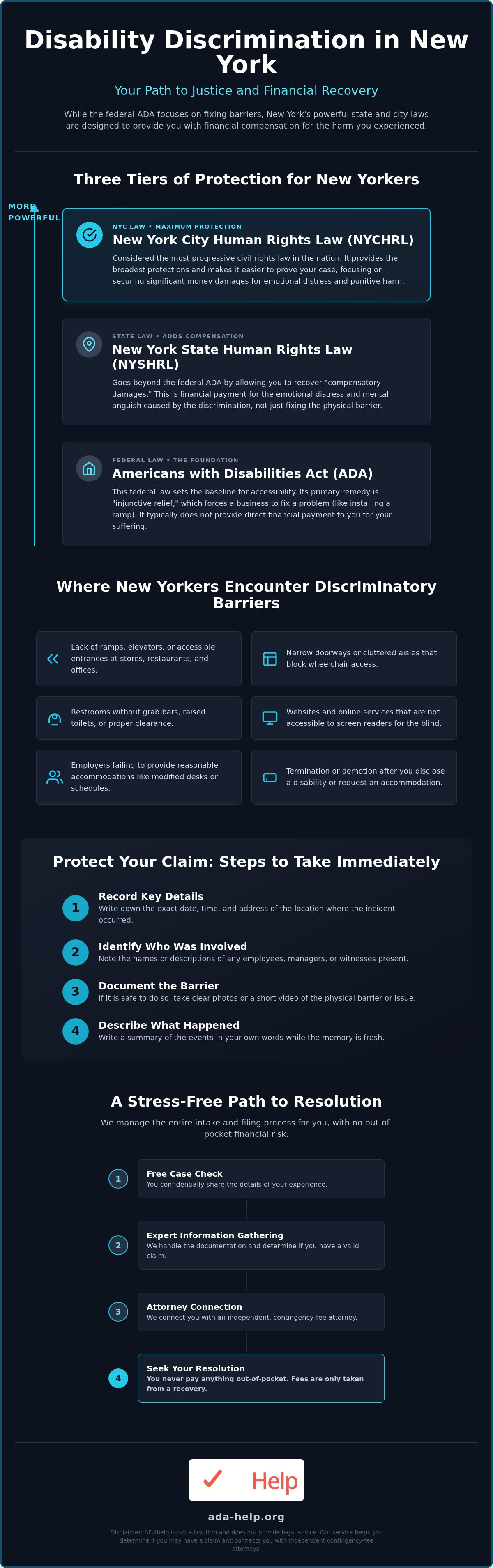
This guide shows you how to use New York specific laws to turn a frustrating experience into a stress-free path toward resolution. While the federal Americans with Disabilities Act focuses on fixing physical barriers, the New York State and City Human Rights Laws provide the path to money damages. ADA Help - NY disability discrimination claims is not a law firm; we are your expert guides who handle the information gathering. We provide a free case check to determine if you have a claim and connect you with independent contingency fee attorneys. You will never pay anything out of pocket because fees are only taken if you receive a recovery. We will preview how the three-tier system of federal, state, and city rules protects your rights in 2026.
Key Takeaways
- Learn how seeking justice for disability discrimination in New York involves both fixing physical barriers and securing financial recovery for your suffering.
- Understand the critical differences between the federal ADA and local New York City laws that prioritize money damages for victims.
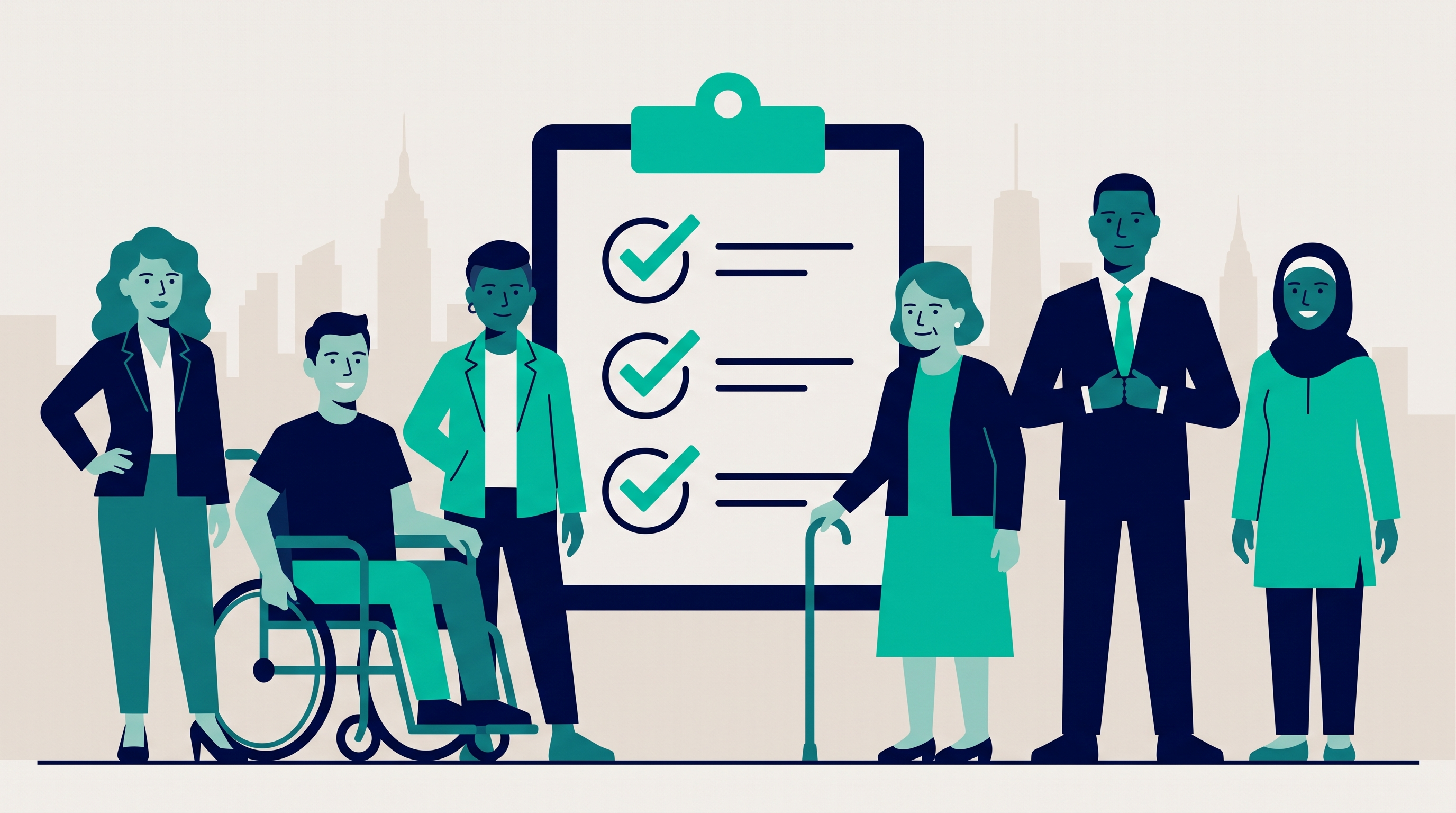
- Follow a simple checklist for recording dates, locations, and names immediately after an incident to protect your future claim.
- Identify common discriminatory barriers in public spaces and workplaces that may entitle you to a legal resolution in 2026.
- See how ADAhelp manages the entire intake and filing process for you while ensuring you face no out of pocket financial risk.
What Is Justice for Disability Discrimination?
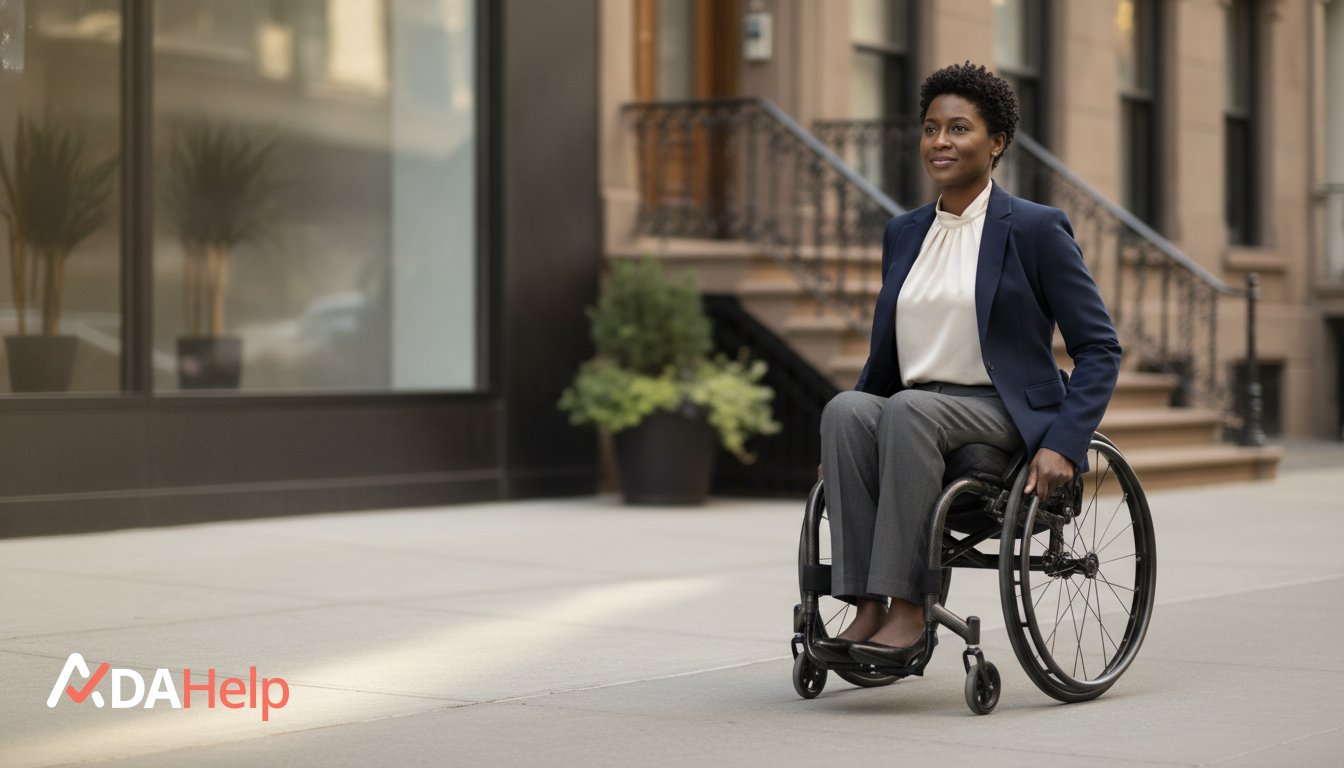
Did you find yourself unable to enter a store because of a steep step? Or perhaps you were fired after asking for a desk that accommodates your wheelchair? Seeking justice for disability discrimination isn't just about getting a simple apology. It's about ensuring the business fixes the problem and pays you for the harm they caused. Under New York law, justice is a dual process of forcing full accessibility compliance and securing fair financial compensation for the victim.
Holding a business accountable means they must acknowledge your civil rights. When a restaurant ignores a ramp request or a website remains unusable for the blind, they are breaking the law. Justice occurs when those businesses are forced to change their ways. It turns your individual struggle into a broader victory for the entire community. You have the right to feel heard and validated through a formal legal process.
Injunctive Relief vs. Money Damages
Most people start their search with the Americans with Disabilities Act (ADA). This federal law is a vital foundation, but it often stops short of providing full relief. Federal courts usually only grant "injunctive relief." This is a court order that forces a business to fix a specific problem, like adding a grab bar in a restroom. It makes the space accessible for the future, but it doesn't address the stress or exclusion you already faced.
In New York, we seek a more complete resolution. True justice for disability discrimination includes "money damages." These are financial payments meant to compensate you for emotional distress, lost wages, or the humiliation of being excluded. While federal law fixes the physical barrier, New York State and City laws focus on the human impact. You shouldn't have to carry the financial burden of someone else's negligence.
Why Accountability Matters in New York
New York provides some of the most powerful legal protections in the United States. Filing a claim sends a clear message to local businesses that accessibility is not optional. It prevents the same discriminatory barriers from hurting others in your neighborhood. When you take action, you force property owners and employers to prioritize inclusion over convenience.
- Accountability forces businesses to update outdated or illegal policies.
- It provides you with the financial recovery needed to move forward after a job loss.
- It establishes a public record of the discrimination to prevent repeat offenses.
The system works when people like you stand up. At ADAhelp, we act as your proactive partner to make this process simple. We manage the intake and information gathering so you don't have to handle the heavy lifting alone. Our goal is to determine if you have a claim and connect you with the right resources to secure a resolution.
Federal ADA vs. New York State and City Laws
Most people think the Americans with Disabilities Act is their only option for recovery. It isn't. The federal law sets a baseline for accessibility, but New Yorkers have access to much stronger tools. If you want to understand your full disability discrimination rights New York offers specific statutes that go far beyond federal requirements. These local laws are the primary way to seek financial compensation for the harm you suffered.
The Problem with Federal-Only Claims
Federal claims focus on fixing the building. They don't focus on the person. If you file a case only under the federal ADA, the court might order a store to install a ramp or fix a bathroom. You won't receive any money for your trouble. In federal court, the only financial outcome is often the payment of legal fees to the attorneys. These cases also move slowly. A federal lawsuit can drag on for years while your financial stress continues to grow. This lack of personal recovery is why relying solely on federal law often feels like an incomplete victory.
The Power of NYSHRL and NYCHRL
This is where New Yorkers find actual justice for disability discrimination. The New York State Human Rights Law (NYSHRL) and the New York City Human Rights Law (NYCHRL) allow for "compensatory damages." This means you can get paid for the emotional distress and mental anguish caused by the discrimination. The NYCHRL is the most progressive civil rights law in the nation. It requires courts to interpret the law as broadly as possible to protect victims. This makes it much easier to prove your case compared to strict federal standards.
As of 2026, New York has expanded these protections even further. You now have three years to file a complaint with the Division of Human Rights for incidents occurring after February 2024. This gives you more time to organize your evidence and seek a resolution. NYC civil penalties can reach up to $250,000 for willful violations; which forces businesses to take your rights seriously. If you aren't sure where to start, ADAhelp can manage your information gathering to see if your situation qualifies for a claim. We focus on the local laws that actually put money back in your pocket.
Where New Yorkers Encounter Discriminatory Barriers
Discrimination in New York often hides in plain sight. It's the small step at the entrance of a West Village bistro or the "no pets" sign that ignores your service animal. Seeking justice for disability discrimination starts with recognizing these barriers as illegal acts rather than simple inconveniences. Whether you are at work, at home, or out in your neighborhood, the law requires that you have equal access to the city's resources. When that access is denied, the impact on your life is immediate and often expensive.
Public Accommodations and Retail
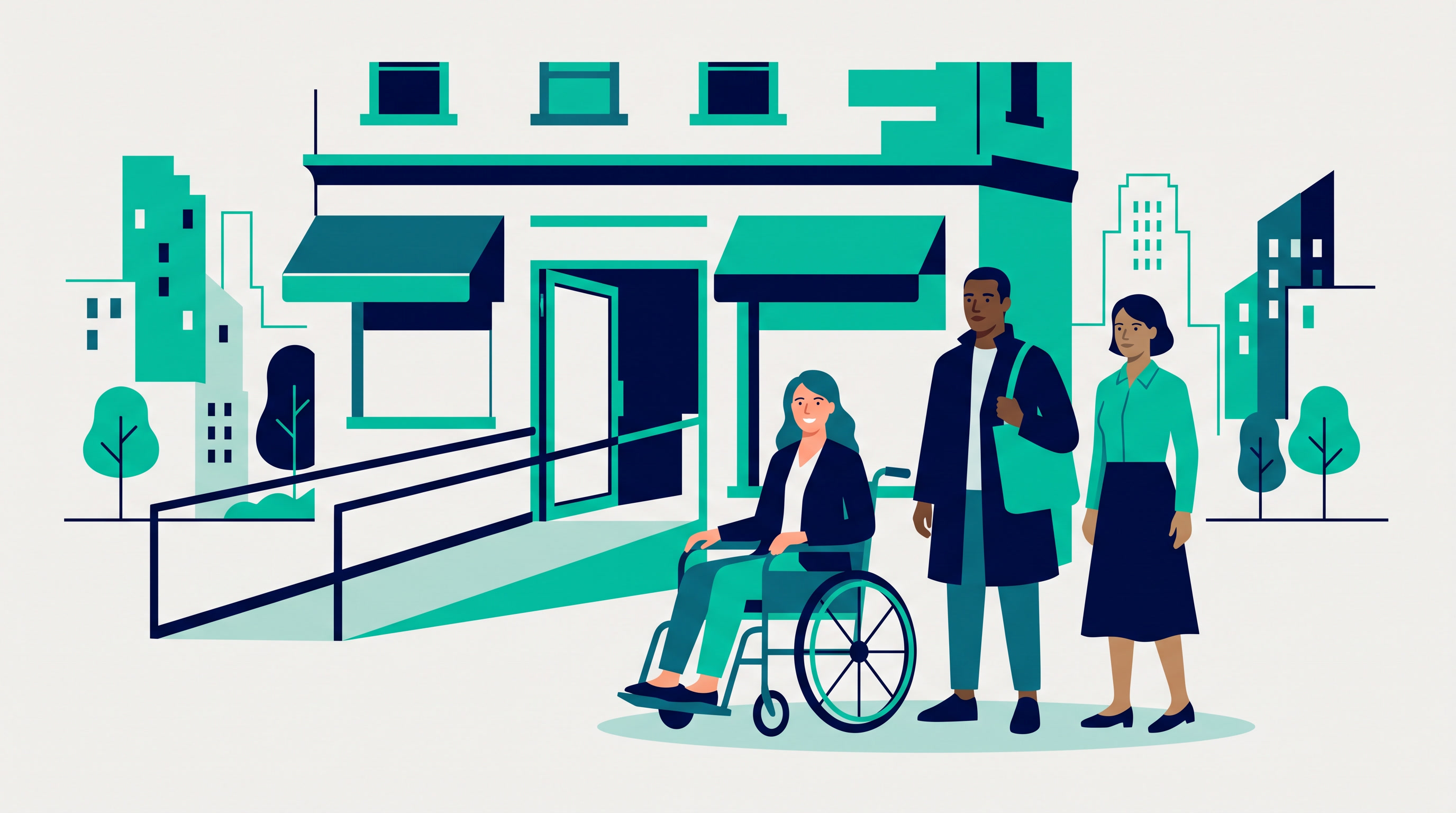
If you use a wheelchair, you shouldn't have to wait on the sidewalk because a shop lacks a ramp. Many NYC retail stores still have narrow aisles that make movement impossible or dangerous. These aren't just design flaws; they are civil rights violations. Restaurants also frequently refuse service animals, despite clear mandates under the NYCHRL. In August 2026, the NYC Commission on Human Rights ordered over $682,000 in relief for various decisions; proving that the city takes these public access issues seriously. You deserve to move through your community without being treated like an afterthought.
Employment and Workplace Rights
Workplace barriers are often less visible but just as damaging to your well-being. You might face a hostile environment or be denied the tools you need to perform your job effectively. The New York City Bar explains disability discrimination laws by emphasizing that employers must engage in a "cooperative dialogue" to find reasonable accommodations. As of December 5, 2025, simply requesting an accommodation is officially a protected activity under the NYSHRL. If your employer retaliates or terminates you after a disclosure, you may have a strong claim for lost wages. Nationally, disability charges remain the second most common complaint filed with the EEOC, showing that you are not alone in this struggle.
Housing and Inaccessible Buildings
Your home should be a sanctuary, not a source of daily stress. Landlords in New York frequently try to block service animals or refuse to make common areas like laundry rooms or lobbies accessible. This is a direct violation of your housing rights. For those facing physical barriers in residential or commercial buildings, ADA Title III case management New York provides a clear path to hold property owners accountable. Beyond physical buildings, digital barriers on local service provider websites are also a major focus for justice for disability discrimination in 2026. If a website prevents you from booking an appointment or accessing a lease, it is an inaccessible space that requires a resolution.
Steps to Take After Facing Discrimination
Record the date and location of the discriminatory act immediately. Memory fades quickly in a fast-paced city like New York, and having a precise record ensures your story remains consistent during the intake process. This is the first practical step toward achieving justice for disability discrimination. Whether you were turned away from a taxi or denied a promotion, the details you capture now will form the foundation of your claim.
Collect the names of any employees or managers who were involved in the incident. If you were at a restaurant, note the server's name or the manager on duty. If you were at work, write down who was present during a specific meeting or conversation. You should also identify any witnesses who saw the discrimination happen. Bystanders or coworkers can provide the external validation needed to support your account. In New York, you typically have 300 days to file a charge with the EEOC for workplace violations, so gathering this information quickly is vital.
Save every piece of written communication related to the incident. This includes emails, text messages, and even internal chat logs from work. If a landlord or employer denies a request for a reasonable accommodation, keep that specific message. These documents act as concrete proof of the interaction and help establish a clear timeline of events. Do not delete anything, even if it seems minor at the time.
How to Document Physical Barriers
Use your phone to capture the reality of the barrier. Take clear photos or videos showing the lack of a ramp where one is required by law. You can use a common object, like a standard credit card or a ruler, to show the height of an inaccessible counter or the narrowness of a doorway. These visuals make it difficult for a business to deny the physical obstacle. You should also keep a log of how this barrier impacted your day. Note if you were forced to wait in the cold or if you missed a scheduled appointment because of the lack of access.
Documenting Workplace Issues
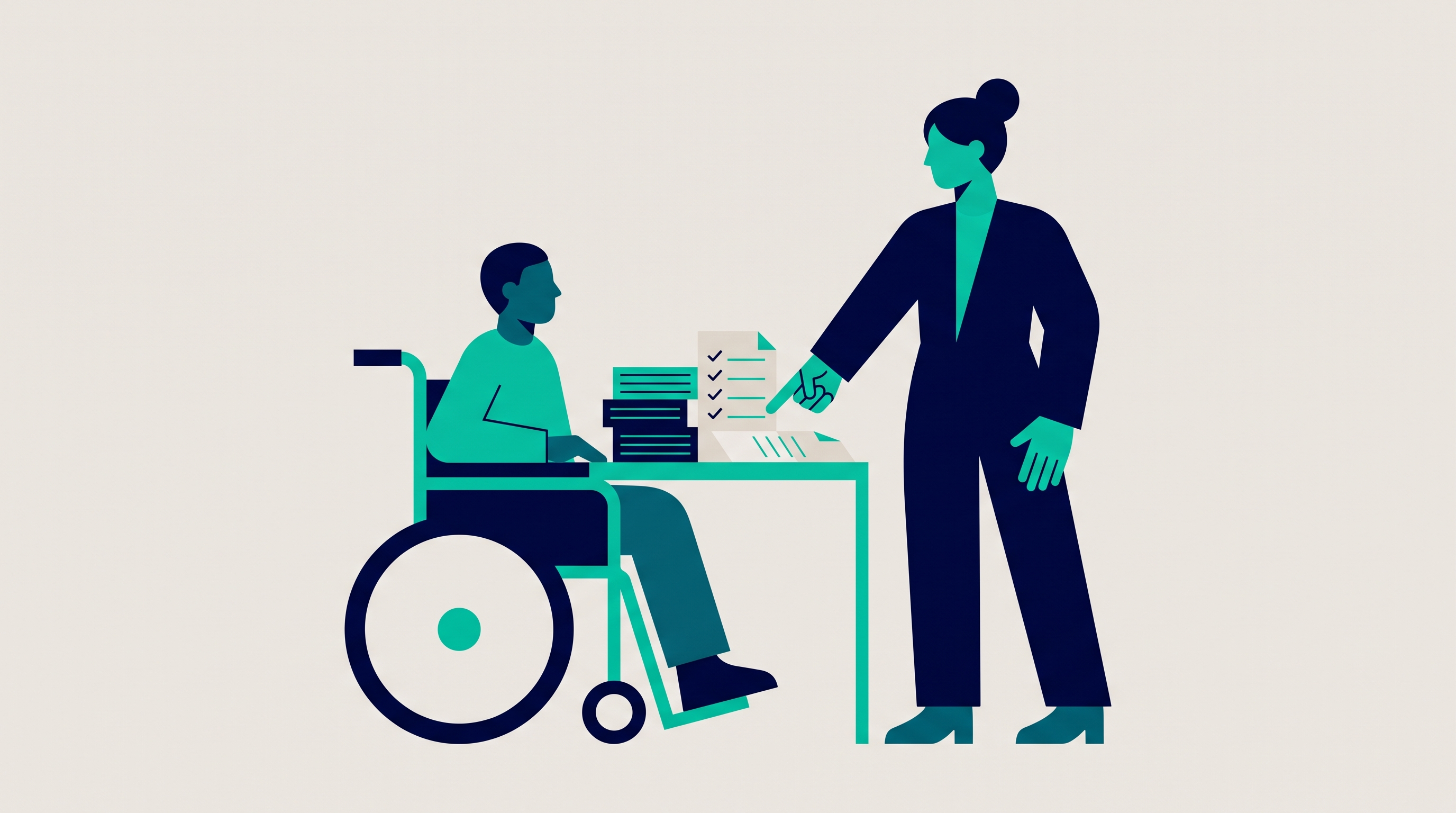
Documentation is your best defense against retaliation. Save copies of every accommodation request you submit to your employer. It is also helpful to keep performance reviews that were positive before you disclosed your disability. This helps demonstrate that any sudden negative feedback may be a cover for discrimination. Note the specific date, time, and exact wording of any offensive comments made by supervisors or coworkers. Once you have gathered these initial notes, start your free three-minute case check to see if your situation qualifies for a claim. We help you organize this information so you can seek a resolution without the stress of handling the paperwork alone.
Where to File: Agencies & Deadlines
Once you have documented what happened, the next question is which agency actually handles your claim. Here is where New Yorkers typically file, and how long you generally have with each one:
- U.S. Equal Employment Opportunity Commission (EEOC) — handles federal workplace disability discrimination. You generally have 300 days from the incident to file a charge.
- New York State Division of Human Rights (DHR) — handles employment, housing, and public access discrimination under the NYSHRL. Most claims now carry a three-year window to file, through the New York State Division of Human Rights complaint process.
- NYC Commission on Human Rights (CCHR) — handles claims arising in the five boroughs under the NYCHRL. You generally have one year to file an administrative complaint with the NYC Commission on Human Rights, or up to three years to sue in court.
- U.S. Department of Justice (DOJ) — enforces Title III public access violations under the Americans with Disabilities Act. You can file a complaint directly with the DOJ in addition to, or instead of, a state or city agency.
Filing with the wrong agency, or missing one of these windows, can cost you the money damages that only the state and city laws provide. A free case check helps confirm which of these deadlines applies before you file.
How Case Management Helps You Secure Resolution
Do you want to stop the stress of managing a complex claim alone? Dealing with the aftermath of exclusion or job loss is exhausting. Seeking justice for disability discrimination shouldn't feel like a second job. At ADAhelp, we act as your proactive partner to handle the heavy lifting of the intake and filing process. We aren't a law firm and we don't provide legal advice; instead, we specialize in end to end case management that turns your documentation into a structured claim.
Our team reviews the evidence you gathered, such as the photos and witness names mentioned earlier, to build a comprehensive file. We help determine if your situation meets the specific criteria for a claim under the New York State or City Human Rights Laws. If your case has merit, we connect you with independent, contingency fee attorneys who specialize in New York disability statutes. This ensures your file is in the hands of professionals who know how to secure the money damages you deserve.
No Upfront Cost for New Yorkers
You don't have to worry about the financial burden of seeking a resolution. Our initial case check is completely free and takes only three minutes to complete. We operate on a contingency model; which means fees are only taken from a successful recovery. You'll never pay anything out of pocket for our case management services. This low risk approach removes the financial barrier that often prevents people from holding large businesses accountable. We believe that your ability to seek justice for disability discrimination should not depend on the size of your bank account.
By handling the information gathering and intake, we save you from the confusion of complex legal systems. We focus on the interplay between federal and local rules so you don't have to. If there is no recovery, you owe us nothing. This commitment allows you to move forward with confidence while we manage the administrative details of your file.
Starting Your Path to Justice
Taking the first step is often the hardest part of the process. Our goal is to provide you with a clear answer on whether you have a case as quickly as possible. You can focus on your life and your recovery while we handle the paperwork and coordination. Avoid the frustration of trying to find the right attorney or filing the wrong forms on your own. We provide a streamlined path that focuses on results and personal validation. When you work with us, you aren't just filing a claim; you're joining a community of New Yorkers who refuse to be ignored. We handle the intake so you can get back to what matters most.
Start Your Path to Recovery and Accountability
You now have the tools to turn a frustrating experience into a successful claim. Remember that while federal laws fix physical barriers, New York State and City laws are what provide the financial compensation you deserve for your suffering. By documenting your experience and gathering witness information, you've already done the hardest part. You don't have to handle the complex legal system or the mountain of paperwork on your own.
Seeking justice for disability discrimination is simpler when you have a proactive partner handling the intake. ADAhelp provides expert New York case management at no out-of-pocket cost to you. We use a contingency-based model; which means you only pay if you receive a recovery. We connect you with independent attorneys who fight for real New Yorkers every day. This keeps the financial risk on the service providers while you focus on moving forward.
Start your free three-minute case check today to find out if you have a claim. You deserve to be heard and validated.
Frequently Asked Questions
Do I need a lawyer to report disability discrimination in New York?
You don't need a lawyer to start the reporting process. You can file a complaint directly with the New York State Division of Human Rights or the EEOC on your own. However, many New Yorkers find the process confusing and stressful. ADAhelp provides case management services to handle the intake and information gathering for you. We evaluate your situation and connect you with independent contingency fee attorneys if your claim has merit.
How much money can I get from a disability discrimination claim?
Recovery amounts are not guaranteed and vary case by case. While federal law focuses on fixing physical barriers, New York laws allow for money damages for emotional distress and lost wages. Typical recoveries depend on the severity of the discrimination and the impact on your life. In New York City, civil penalties for willful conduct can reach up to $250,000; which often encourages businesses to offer a fair settlement during mediation.
How long do I have to file a claim in New York City?
Deadlines vary based on the specific law you use. For the NYC Commission on Human Rights, you generally have one year from the incident. For New York State claims occurring after February 15, 2024, the deadline is three years. Federal EEOC charges must usually be filed within 300 days. Acting fast is the best way to secure justice for disability discrimination before evidence or witness memories begin to fade away.
Can I be fired for reporting a lack of disability access at work?
No, it's illegal for an employer to fire you for reporting accessibility issues or requesting a reasonable accommodation. As of December 5, 2025, New York law officially recognizes accommodation requests as protected activities. If your employer retaliates against you, they are violating the NYSHRL. Retaliation is the most common charge filed with the EEOC; and it often leads to additional financial recovery for the employee beyond the original discrimination claim.
What if the business says they cannot afford to fix the barrier?
Businesses often try to use the "undue hardship" defense to avoid making changes. However, the burden of proof is on the business to show that a fix is truly impossible. In New York, courts look at the overall resources of the company rather than just one location. Even if they don't fix the barrier immediately, you may still be entitled to money damages for the exclusion and humiliation you experienced at their establishment.
Is a website accessibility issue considered discrimination in New York?
Yes, digital barriers are treated as a lack of public access. If a website's design prevents you from using a screen reader or accessing services, it's a violation of your rights. This has become a major focus for those seeking justice for disability discrimination in 2026. Our case management team evaluates these digital barriers to determine if they meet the criteria for a claim under the New York City Human Rights Law.
What is the difference between a case manager and a lawyer?
A case manager handles the administrative work like organizing your evidence and managing your file. ADAhelp is a case management service; we are not a law firm and don't provide legal advice. A lawyer provides legal representation and argues your case in court. We simplify the process by handling the intake and connecting you with independent attorneys who work on a contingency basis; so you never pay out of pocket fees.

Article by
ADA Help
Written by the ADAhelp editorial team and reviewed for accuracy before publishing. ADAhelp helps New Yorkers find out if they have a disability discrimination claim and manages the process end to end, working with independent attorneys who handle the legal work. We are not a law firm and do not provide legal advice.
Disclaimer
This article is general information about New York law, not legal advice, and reading it does not create an attorney-client relationship. ADAhelp is a case-management and intake service, not a law firm; legal representation is provided by independent attorneys. Recovery amounts and timelines vary by case, and past outcomes do not guarantee future results. For advice about your specific situation, speak with a qualified attorney or start the free case check.
Tags
Discriminated against in New York because of a disability?
A free three-minute check tells you if you can pursue a claim.
Check my case →New York onlyNo upfront costIndependent NY attorneysFree 3-minute check