Finding Help for an ADA Violation in Brooklyn: A 2026 Guide
Reviewed for accuracy by the ADAhelp team before publishing. ADAhelp is not a law firm; legal work is handled by independent New York attorneys.
Facing an access barrier? Our 2026 guide makes finding help for an ADA violation in Brooklyn simple. Learn how to get money damages with a free case check.
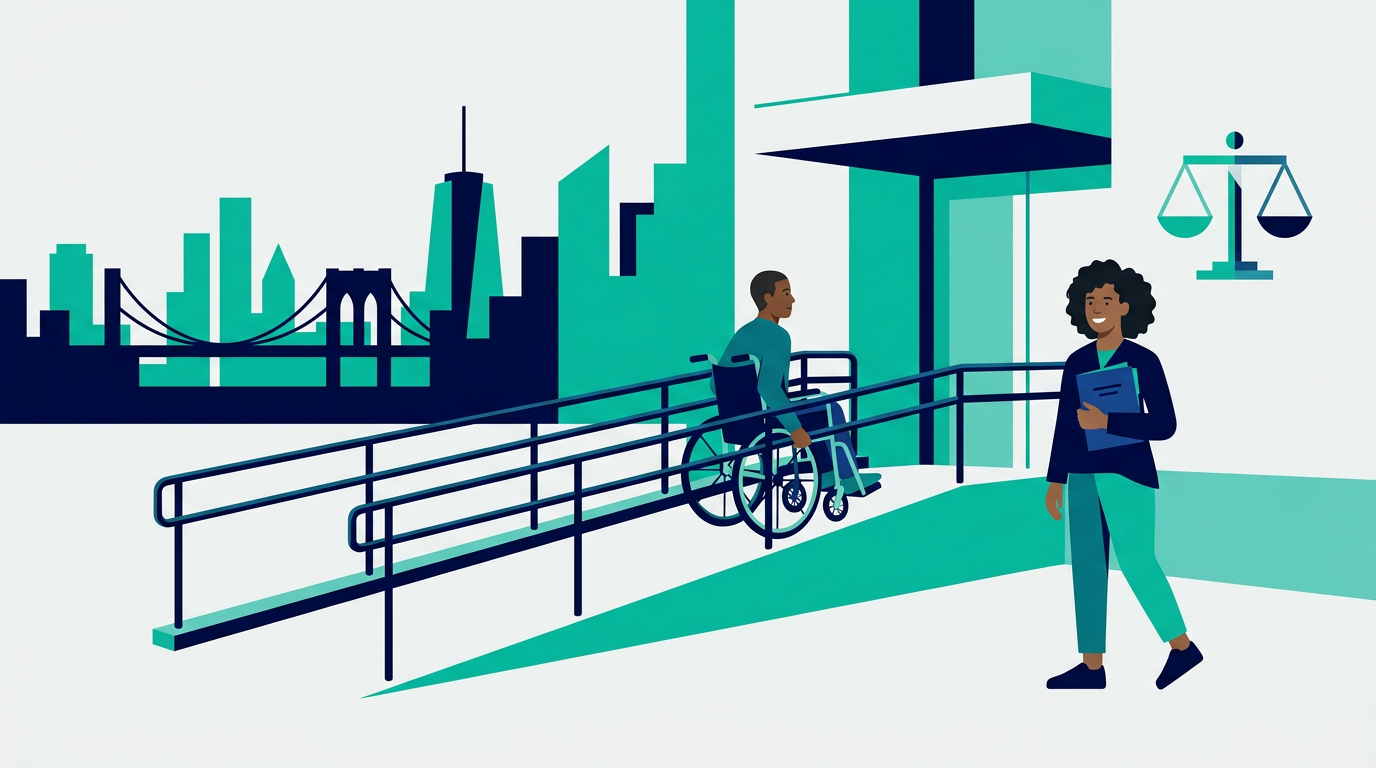
You're trying to grab a coffee on Atlantic Avenue, but the steep step at the entrance makes it impossible to get inside. Maybe you're visiting a doctor in a historic Brooklyn Heights brownstone and realize there's no way to reach the office upstairs. If a business lacks an accessible entrance, you likely have a case that could result in money damages under local law. Finding help for an ADA violation in Brooklyn shouldn't feel like another obstacle in your way.
It's frustrating when the neighborhood you love feels off-limits because of inaccessible design. You might worry about high legal fees or feel confused by the difference between federal and city laws. You deserve a clear path to justice that doesn't involve financial risk. This guide shows you exactly how to identify violations, document your experience, and find professional support to fix the problem without any upfront costs.
We'll explain how the New York City Human Rights Law provides compensation that the federal ADA does not. You'll see how to start a free case check and connect with experts who handle the heavy lifting for you. We'll break down the 2026 rules so you can focus on getting results instead of worrying about paperwork.
Key Takeaways
- Learn to spot common access barriers in local Brooklyn shops like steep steps or heavy doors that violate your rights.
- Understand the difference between federal ADA rules and city laws that allow you to seek money damages for discrimination.
- Discover how finding help for ADA violation in Brooklyn is simple when you use a dedicated case management service.
- Find out exactly how to document your experience and gather evidence safely to support your claim.
- Learn how to access a free case check and connect with expert advocates without any out-of-pocket costs or financial risk.
Common Signs of an ADA Violation in Brooklyn
Identifying an ADA Title III violation is the first step toward fixing a problem that affects your daily life. Under the Americans with Disabilities Act of 1990, a violation occurs when a private business has a barrier that prevents you from using their services. This doesn't just apply to big corporations. It includes the local deli in Williamsburg or the neighborhood pharmacy in Flatbush. If you can't get in the door, the business is likely breaking the law.
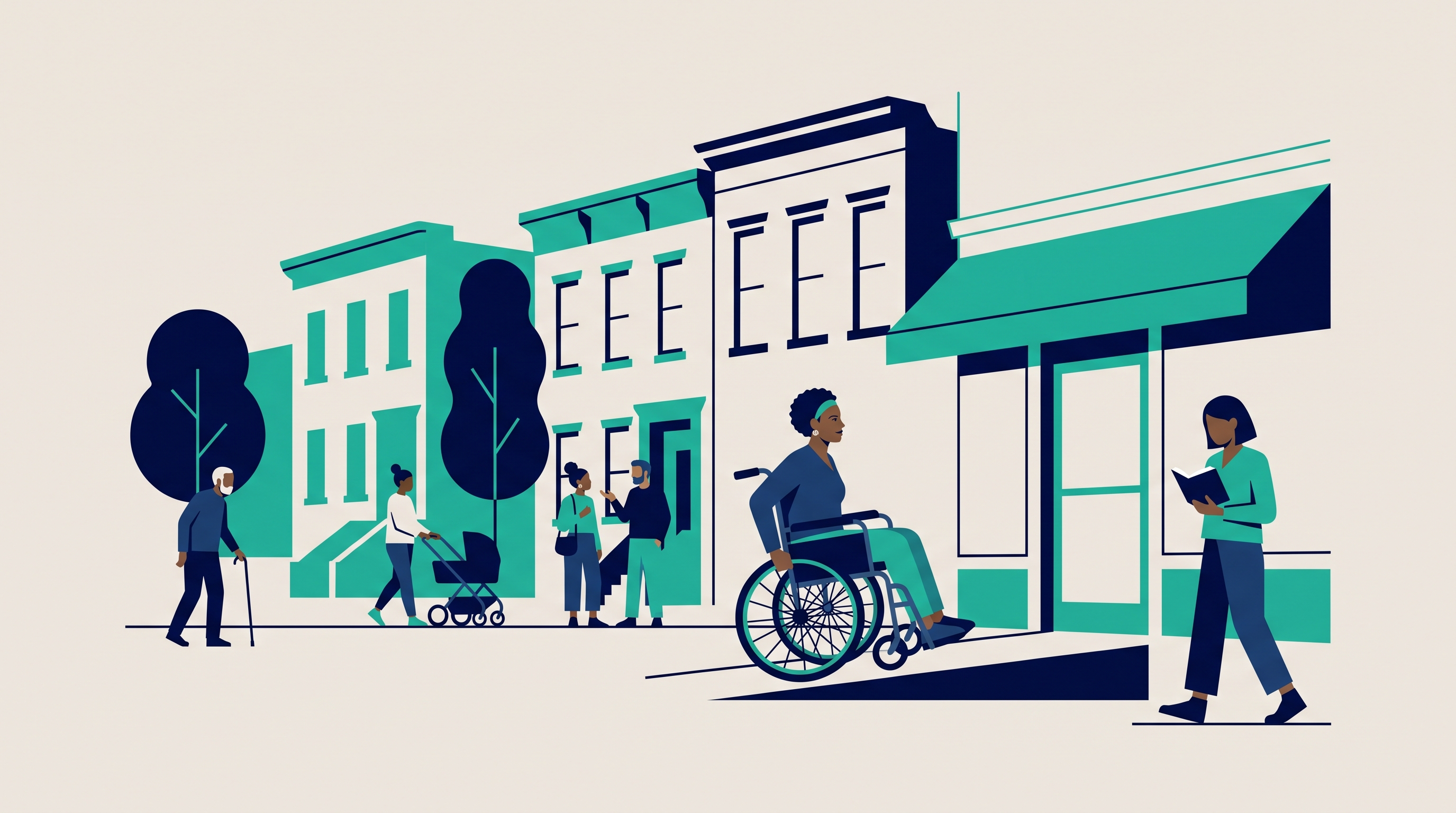
Brooklyn is famous for its history, but old buildings aren't an excuse for discrimination. Even a landmarked brownstone in Brooklyn Heights must provide a way for everyone to enter if it operates as a public business. In 2025, New York saw 1,471 federal ADA lawsuits filed. This high number shows that many businesses still fail to meet basic standards. If you've been turned away or forced to wait outside, finding help for ADA violation in Brooklyn is your next move.
To better understand how these laws protect you, watch this helpful video:
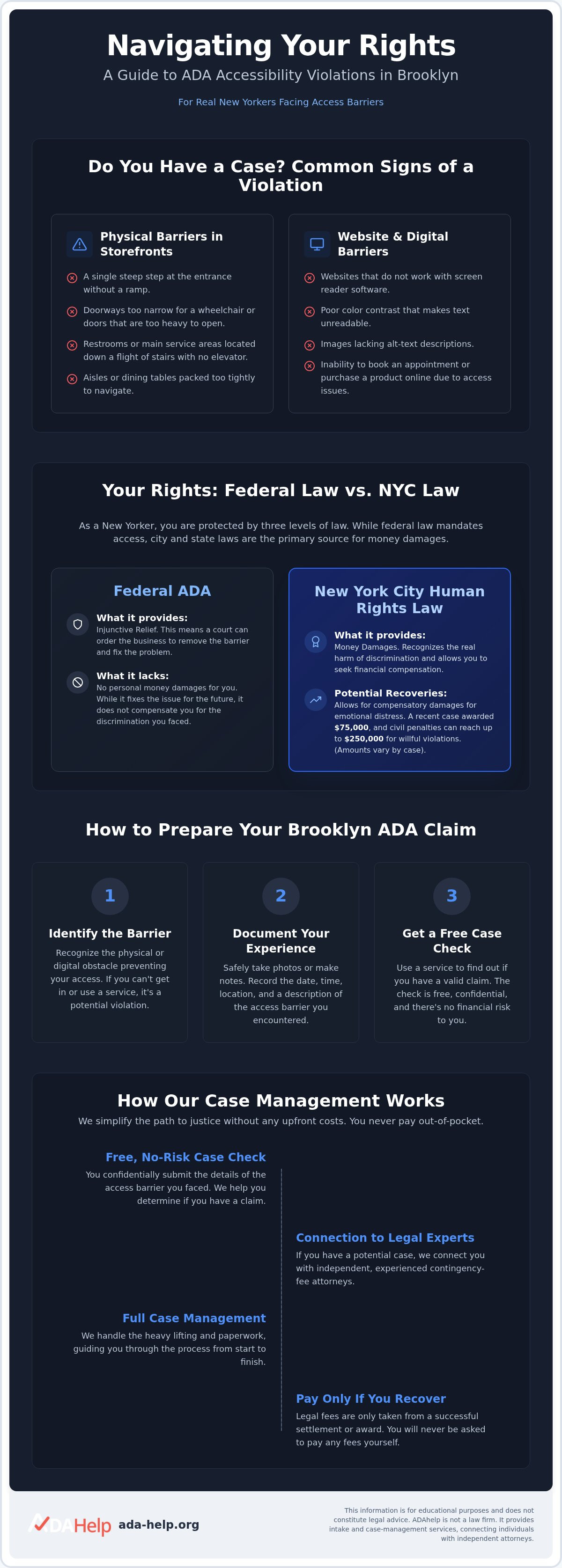
Physical Barriers in Brooklyn Storefronts
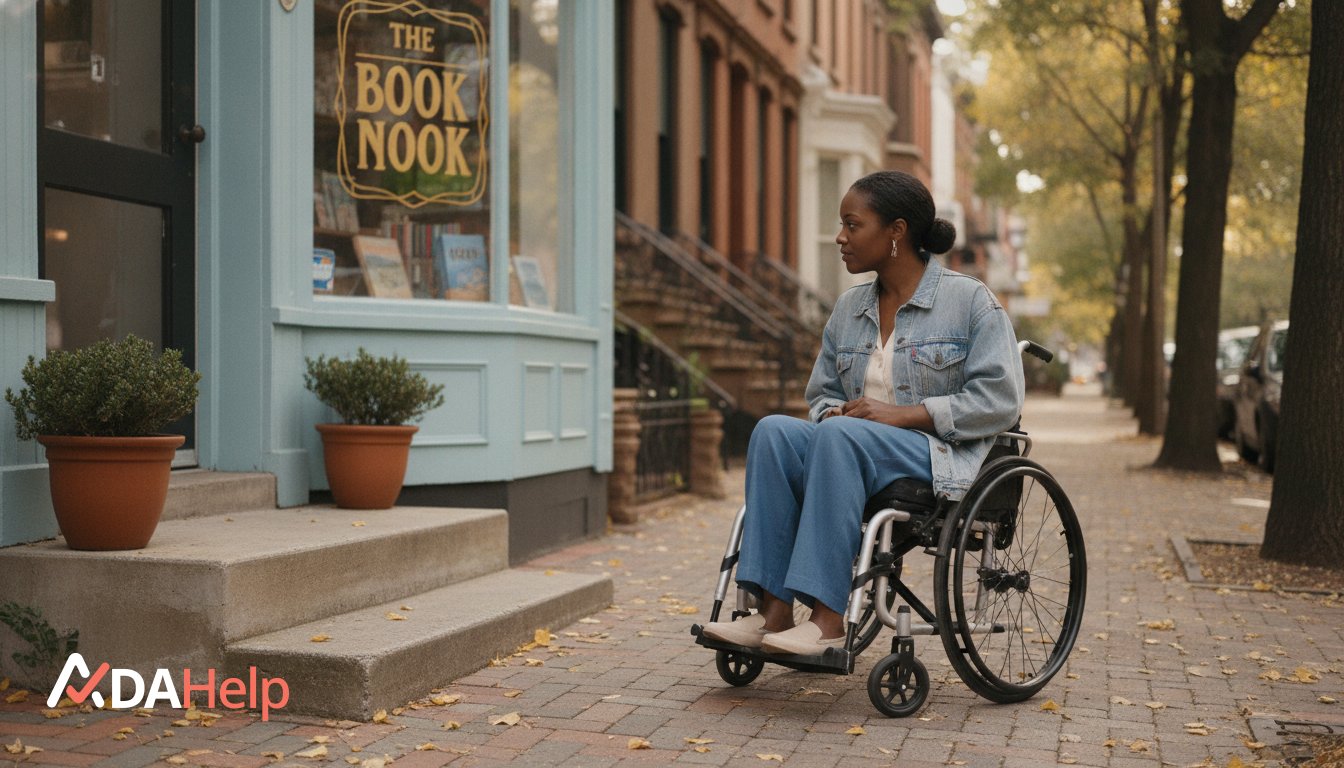
Brooklyn storefronts often present unique challenges. You might notice a single steep step at a pizza shop or a door that is far too heavy to open. These are clear signs of a violation. A public accommodation under Title III is any private entity that owns, leases, or operates a place that is open to the general public. Check for these common issues:
- Narrow entrances that don't fit a standard wheelchair.
- A lack of permanent or portable ramps at retail shops.
- Restrooms located down a flight of stairs without an elevator.
- Inaccessible dining areas where tables are packed too closely together.
If you encounter these obstacles, you don't have to just walk away. Finding help for ADA violation in Brooklyn starts with recognizing that these barriers are illegal. Businesses have a duty to remove these hurdles when it's easily achievable.
Website and Communication Barriers
Discrimination isn't always something you can touch. A business's digital presence is just as important as its physical one. If a local service site doesn't work with screen readers, it's a barrier. You might find missing alt-text on images or color contrast so poor that the text is unreadable. These digital hurdles are reportable violations. If you can't book an appointment, read a menu, or buy a product online, you have a right to seek a solution. You can start by checking your potential claim at ada-help.org to see if these barriers qualify for a case.
Your Rights Under New York City and State Laws
You have rights that go beyond the federal level. Finding help for ADA violation in Brooklyn requires understanding that you are protected by three different levels of law. The federal ADA is the starting point. It ensures that public spaces are accessible to everyone. If a business has a physical barrier, the federal law provides injunctive relief. This means the court forces the business to fix the issue. While this helps other people in the future, it doesn't provide you with financial compensation for the discrimination you faced.
New York City and State laws go much further. The New York City Human Rights Law (NYCHRL) and the New York State Human Rights Law (NYSHRL) are the primary sources for money damages. These laws recognize that discrimination causes real harm. They allow you to hold businesses accountable through financial penalties and personal settlements. You can find general information on the official U.S. government ADA website, but local laws are what usually lead to a recovery.
The Role of the NYCHRL in Brooklyn
The NYCHRL is one of the strongest anti-discrimination laws in the United States. It applies to almost all businesses in Brooklyn. This law is vital because it allows for compensatory damages for emotional distress. In August 2026, the NYC Commission on Human Rights awarded a complainant $75,000 for emotional distress in a case involving a failure to provide reasonable accommodations. Typical recovery amounts vary case by case, but the law allows for civil penalties up to $250,000 for willful violations. This makes the city law a powerful tool for justice. See typical disability discrimination settlement amounts in New York for more context on case value.
Why Local Laws Matter More for Your Recovery
Filing a claim that includes local laws is a more effective strategy for New Yorkers. Federal law only cares about the physical fix. Local laws care about the person who was excluded. Finding help for ADA violation in Brooklyn is often about securing your right to a fair environment and receiving compensation for your experience. The NYSHRL was recently updated to offer even more protection. As of December 2025, the law formally covers disparate impact. This means a policy can be discriminatory even if the business didn't mean to be unfair. The NYSHRL also protects you from retaliation if you request a reasonable accommodation.
The New York State Division of Human Rights oversees these cases and can award significant damages. Because these laws are complex, it helps to have someone manage the process for you. You can start with a free case check to see if your situation qualifies under these powerful local statutes.
Where to Turn for ADA Violation Help in Brooklyn
Finding help for ADA violation in Brooklyn starts with knowing your options. You can file a complaint with a government agency or use a private case management service. These paths serve different goals. It's vital to choose the one that fits your situation before you start the paperwork. Government agencies often focus on systemic change, while case management focuses on your specific experience and recovery. If you want a plain-language overview first, read our NY ADA claim assistance guide.
The Department of Justice (DOJ) enforces federal disability discrimination laws. They often focus on massive changes at big corporations. They rarely provide personal updates to individuals. If you report a neighborhood shop to the DOJ, you might never hear back. The NYC Commission on Human Rights is another option. They can award damages, but they often have a long backlog. You might wait years for a resolution through a government agency. ADA Help - NY disability discrimination claims offers a faster, more personal path. We handle the intake and organize your claim so you don't have to do it alone. We act as your advocate to move the process forward quickly.
Government Agencies vs. Case Management
If you find a barrier at city-owned property, like a Brooklyn public library, call 311. This is the best way to report issues on city land. For private businesses like cafes or medical offices, 311 won't help you get a settlement. This is where ADA Help - NY disability discrimination claims provides a clear benefit. We are not a law firm. We do not offer legal advice. Instead, we gather your evidence and build a strong file. We handle the communication and the hard work of organizing your claim. This prepares your case for an attorney without the stress of managing the details yourself.
Finding an Attorney in Brooklyn
Many people worry about the cost of a lawyer. You should never have to pay an hourly rate for an ADA claim. Most independent disability attorneys work on a contingency fee basis. Their fee comes from the final recovery, not from your pocket. ADA Help - NY disability discrimination claims connects you with these specialists. Using ADA Title III case management New York services ensures your claim is professional. We help you move toward a resolution without any financial risk. Finding help for ADA violation in Brooklyn is simpler when you have a partner who handles the heavy lifting for you.
How to Prepare Your Brooklyn ADA Claim
Start documenting your experience as soon as you encounter a barrier. You don't need to be a legal expert or a building inspector to begin the process. Finding help for ADA violation in Brooklyn is much more effective when you have a clear record of what happened. Your personal notes and photos turn a frustrating afternoon into a factual case that advocates can use to protect your rights. This preparation is the foundation for holding a business accountable and seeking the compensation you deserve under city law.
Step 1: Gathering Physical Evidence
Your phone is your most valuable tool for gathering evidence. Take clear photos of the specific barrier you faced. This might be a steep step at a deli entrance, a heavy door without a power opener, or a counter that is too high to reach from a wheelchair. You can take these pictures quickly and quietly without causing a scene. Make sure to record the exact street address of the Brooklyn business. If you spoke to a manager or an employee about the lack of access, write down their name and a summary of what they said. These details prove the business had notice of the problem. For a full walkthrough of what to collect, see this evidence checklist for disability discrimination cases.
- Capture photos from multiple angles to show the height of a step or the width of a door.
- Record the date and the exact time you visited the location.
- Save the business's name as it appears on the storefront or a receipt.
Step 2: Recording the Impact
Discrimination isn't just about physical buildings; it's about the exclusion you felt. Write a short description of how the barrier affected your day. Did you have to turn around and find another shop? Did the lack of access cause you physical pain or emotional distress? These personal details are vital for claims under the New York City Human Rights Law. If you were able to make a purchase despite the barrier, keep your receipt as proof of your visit. Note if any other customers or passersby witnessed the incident, as their accounts can support your claim later.
Step 3: Checking Your Case Eligibility
The final step in finding help for ADA violation in Brooklyn is a professional evaluation of your evidence. You don't have to guess if your situation qualifies as a legal violation. A professional case check determines if the barrier you faced meets the legal definition of discrimination under city and state statutes. This process is low-stress and helps you understand your options without any financial risk. It moves you from a state of frustration toward a clear, organized path for resolution.
Start your free three-minute case check today to see if your documentation supports a claim for damages.
Where to File: Agencies & Deadlines
Once you've documented a barrier, you have several places to file, each with its own scope and deadline. Filing with the right agency -- or with several at once -- protects your rights while your case management file is being built.
- U.S. Department of Justice (DOJ): Enforces Title III of the federal ADA for public accommodations. The DOJ generally seeks injunctive relief (fixing the barrier) rather than money damages for you personally. Learn more at ada.gov.
- U.S. Equal Employment Opportunity Commission (EEOC): Handles employment-related disability discrimination. You generally have 300 days from the incident to file. Details at eeoc.gov.
- New York State Division of Human Rights (DHR): Accepts NYSHRL claims, including disparate impact claims, and can award damages. You have three years to file for acts occurring on or after February 15, 2024. File directly at dhr.ny.gov.
- NYC Commission on Human Rights (CCHR): Enforces the NYCHRL, one of the strongest local human rights laws in the country, and can award compensatory damages for emotional distress plus civil penalties. Filing typically must happen within one year of the incident. Start at nyc.gov/cchr.
Because these deadlines run in parallel and some are much shorter than others, it helps to have your evidence organized before you file with any agency. A case check through ADA Help - NY disability discrimination claims can help you confirm which agencies fit your situation before the clock runs out.
How ADA Help - NY disability discrimination claims Manages Your Brooklyn Case
Finding help for ADA violation in Brooklyn is often the most difficult part of seeking justice. ADA Help - NY disability discrimination claims is a case management service designed to simplify this entire journey. We are not a law firm and we do not provide legal advice. Instead, we act as your dedicated advocate during the intake and organization phase. We handle the heavy lifting of gathering facts and preparing your information for professional review. Our team knows the specific challenges of the five boroughs. We understand how to apply the New York City Human Rights Law to your specific situation.
You will never face out-of-pocket costs for using our service. We believe that your ability to hold a business accountable shouldn't depend on your bank account. If your situation meets the legal criteria for discrimination, we connect you with independent attorneys. These professionals work on a contingency fee basis. This means they only get paid if you receive a recovery. This model ensures that the financial risk stays with the service providers rather than the person who was excluded from a public space.
The Free Three-Minute Case Check
Our online tool is the fastest way to get an answer about your situation. You don't have to wait weeks or months for a government agency to respond to your complaint. You answer a few targeted questions about the barrier you faced and the location of the business. This check helps us identify if your experience violates the federal ADA or local New York statutes. It is a simple, low-stress starting point that requires no upfront commitment. It allows you to see if finding help for ADA violation in Brooklyn is the right path for your specific situation.
Professional Case Management Support
After you complete the initial check, our team starts building a strong foundation for your claim. We gather the evidence you documented, such as photos of the inaccessible entrance or notes on your interaction with staff. We ensure that every detail is organized so that an independent attorney can see the strength of your case immediately. Our team handles the communication and the administrative tasks involved in the intake phase. We focus on the facts of the harm caused, which is essential for seeking money damages under the NYCHRL. You can start your free case check now to move your claim forward with expert support.
Take the Next Step Toward Accessibility in Brooklyn
You don't have to accept being excluded from your favorite neighborhood. Whether it's a steep step at a local cafe or a website that doesn't work with your screen reader, you have a right to equal access. Remember that while the federal ADA fixes physical barriers, local laws like the NYCHRL are what allow you to seek money damages for the harm you've experienced. Finding help for ADA violation in Brooklyn is simple when you have a partner to handle the paperwork and information gathering.
You can start this process right now without any out-of-pocket costs. Our team uses New York specific expertise to ensure your claim is organized and ready for professional review. We manage the intake and connect you with independent contingency fee attorneys so you never face financial risk. You deserve a clear path to resolution that doesn't involve legal stress or confusing jargon.
Start your free three-minute case check now. Let's work together to make Brooklyn more accessible for everyone.
Frequently Asked Questions
How much does it cost to find help for an ADA violation in Brooklyn?
It costs nothing out-of-pocket to start your search for justice. ADA Help - NY disability discrimination claims provides a free case check to evaluate your situation. If you have a valid claim, we connect you with independent attorneys who work on a contingency fee basis. This means their legal fees are only taken from the final recovery. You never have to pay an hourly rate or upfront costs. Finding help for ADA violation in Brooklyn is designed to be stress-free.
Can I get money for a disability discrimination claim in New York?
Yes, financial recovery is possible under the New York City and State Human Rights Laws. While the federal ADA focuses on fixing physical barriers, local laws allow for compensatory damages for emotional distress. In 2026, settlements for failure to provide reasonable accommodations have ranged from $45,000 to over $150,000. Typical recovery amounts vary case by case depending on the specific facts of the discrimination you experienced. These amounts aim to compensate you for the harm caused.
What is the difference between the ADA and the NYC Human Rights Law?
The main difference is the type of relief available to you. The federal ADA focuses on injunctive relief, which is a court order to fix a barrier. The NYC Human Rights Law is much broader and allows you to seek money damages. While the federal law ensures future access, the city law compensates you for the discrimination you faced. This makes the local statute the primary tool for New Yorkers who want to hold a business accountable.
Do I need a lawyer to report an inaccessible business in Brooklyn?
You don't need a lawyer to start the process, but professional support is vital for seeking a financial recovery. Finding help for ADA violation in Brooklyn through a case management service ensures your evidence is organized properly. We handle the intake and build your case file before connecting you with independent attorneys. These advocates manage the legal complexities so you don't have to manage the city or federal court systems alone.
How long do I have to file an ADA complaint in New York?
Deadlines depend on the specific law you use for your claim. For federal ADA claims through the EEOC, you generally have 300 days from the incident. Under the New York State Human Rights Law, you have three years to file for acts occurring on or after February 15, 2024. The NYC Commission on Human Rights typically requires filing within one year. It is important to act quickly while your evidence and memories are fresh.
What happens if a Brooklyn restaurant refuses to install a ramp?
If a business refuses to remove a barrier that is easily fixable, they are in violation of multiple laws. A successful claim can result in a court order forcing the restaurant to install a ramp. Under the NYCHRL, the business may also be required to pay you money damages for emotional distress. Additionally, the city can impose civil penalties of up to $250,000 for willful violations to ensure the business complies with accessibility standards in the future.
Is a website violation considered an ADA violation in New York?
Yes, digital barriers are treated with the same weight as physical ones in New York. If a Brooklyn business has a website that doesn't work with screen readers or lacks alt-text, it is a reportable violation. New York courts see a high volume of these cases because websites are considered places of public accommodation. You have the right to seek a fix for the site and potential compensation for the exclusion you faced while trying to use their services.
Can ADA Help - NY disability discrimination claims provide me with direct legal advice?
No, ADA Help - NY disability discrimination claims is a case management service and not a law firm. We do not provide legal advice or direct legal representation. Our role is to help you determine if you have a claim and to manage your case intake. If your situation meets the legal criteria for discrimination, we connect you with independent, contingency-fee attorneys. These legal professionals will provide the specific advice and representation needed for your case.

Article by
ADA Help
Written by the ADAhelp editorial team and reviewed for accuracy before publishing. ADAhelp helps New Yorkers find out if they have a disability discrimination claim and manages the process end to end, working with independent attorneys who handle the legal work. We are not a law firm and do not provide legal advice.
Disclaimer
This article is general information about New York law, not legal advice, and reading it does not create an attorney-client relationship. ADAhelp is a case-management and intake service, not a law firm; legal representation is provided by independent attorneys. Recovery amounts and timelines vary by case, and past outcomes do not guarantee future results. For advice about your specific situation, speak with a qualified attorney or start the free case check.
Tags
Discriminated against in New York because of a disability?
A free three-minute check tells you if you can pursue a claim.
Check my case →New York onlyNo upfront costIndependent NY attorneysFree 3-minute check