
Are Migraines a Disability? ADA & New York Rights
Reviewed for accuracy by the ADAhelp team before publishing. ADAhelp is not a law firm; legal work is handled by independent New York attorneys.
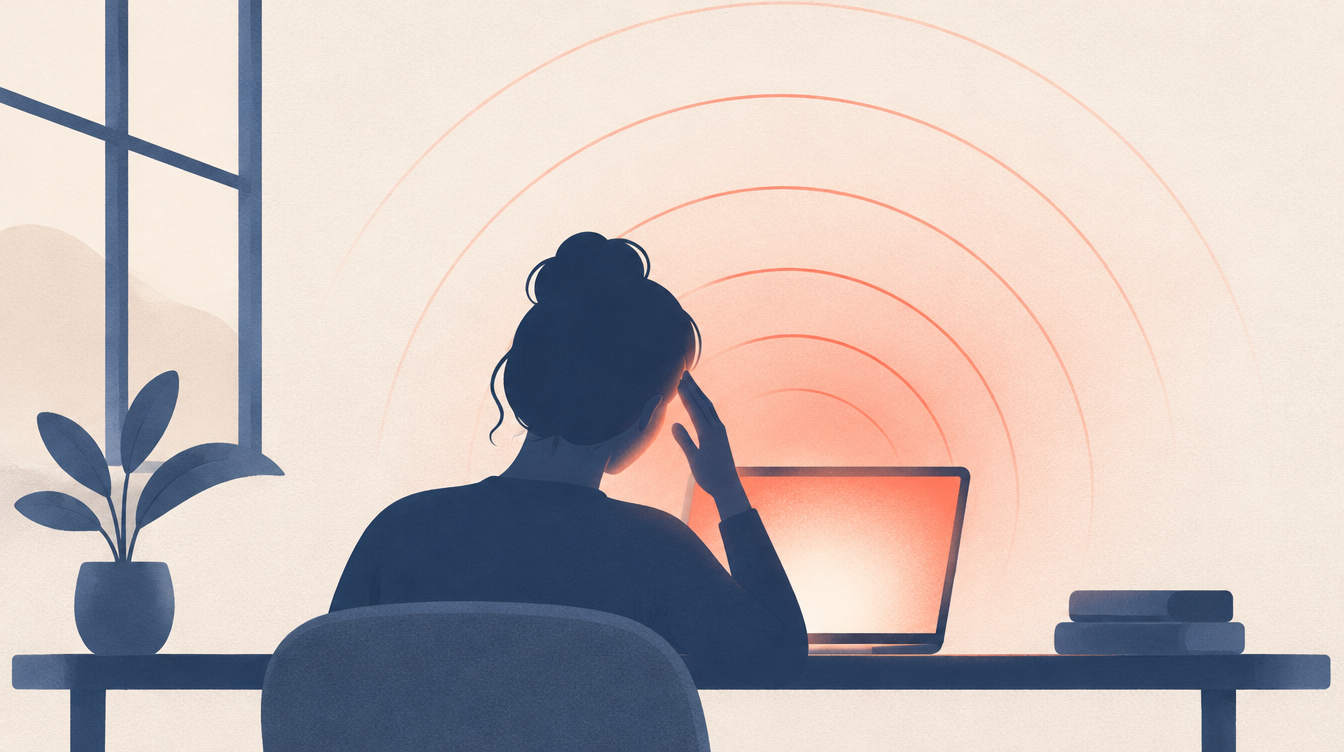
Are migraines a disability? Under the ADA and New York law, chronic and episodic migraine often qualifies. See the test, accommodations and deadlines.
If migraine attacks have started costing you days of work, you have probably wondered whether the law is on your side or whether your employer can simply treat the absences as a performance problem. It is one of the most searched disability questions in the country, and the answer depends less on your diagnosis than on what the attacks actually do to you.
The short answer
Yes — migraine can be a disability under the Americans with Disabilities Act, and in New York it is covered more easily still. The ADA never lists qualifying conditions by name. It asks whether an impairment substantially limits a major life activity, and the law expressly counts the operation of major bodily functions, including neurological and brain function, as a major life activity. Chronic or severe migraine that disrupts your vision, concentration, sleep or ability to work will usually meet that standard.
What that gets you is the right to reasonable accommodation and the right not to be punished because of the condition. It is not the same thing as Social Security disability benefits, which is a separate system with a much harder test.
How the ADA decides whether your migraines count
Since the ADA Amendments Act of 2008, the definition of disability is meant to be read broadly, and three of its rules matter enormously for migraine:
- Episodic conditions count. An impairment that comes and goes, or that is in remission, is still a disability if it would substantially limit a major life activity when active. This is the single most important rule for migraine. You are fine between attacks; that does not disqualify you. The question is what an attack does while it is happening.
- Mitigating measures are ignored. Your employer cannot argue you are not disabled because a triptan, a nerve block or a preventive medication helps. The analysis looks at your migraines without treatment.
- "Substantially limits" is not a high bar. You do not have to be unable to do the activity. You have to be limited compared with most people in the general population.
Major life activities that migraine commonly limits include seeing, concentrating, thinking, sleeping, reading, working and the neurological function that the ADA Amendments Act added to the list by name. A person who loses vision in part of their visual field during an aura, or who cannot look at a screen for a day and a half, is limited in a way the statute was written to reach.
Chronic migraine, vestibular migraine, and occasional headaches
Chronic migraine — headache on fifteen or more days a month under the standard clinical definition — is the easiest case to make, because the frequency itself documents the limitation. Vestibular migraine, which brings vertigo and balance problems, limits major life activities just as clearly even when the head pain is mild. Episodic migraine with three or four disabling attacks a month also commonly qualifies under the episodic-impairment rule.
Ordinary tension headaches, without a diagnosis and without a real limitation, generally will not carry a claim. Being honest about that line matters, because the strength of a migraine case usually rests on medical documentation and attack frequency rather than on how bad a single day felt.
Why New York law protects you more than the ADA does
Three separate laws can apply to a New Yorker with migraine, and they are not equivalent:
- The ADA (federal). Title I covers employers with 15 or more employees. Compensatory and punitive damages are capped by employer size, from up to $50,000 for employers with 15–100 employees to up to $300,000 for employers with more than 500.
- The New York State Human Rights Law (NYSHRL). It applies to employers of every size, including an employer with a single employee, and it uses a broader definition of disability than the ADA. It places no statutory cap on compensatory damages.
- The New York City Human Rights Law (NYCHRL). The most protective of the three for people working in the five boroughs. It requires an employer to engage in a written cooperative dialogue about an accommodation request and to give you a final written determination.
The practical consequence: if you work for an eleven-person studio in Brooklyn, the ADA does not reach your employer, but the NYSHRL does. Many people check the federal threshold, conclude they are not covered and stop there.
Accommodations for migraine that employers actually grant
A reasonable accommodation is a change to how, when or where the work gets done. For migraine, the requests that tend to succeed are small and specific:
- Dimmable or indirect lighting, a desk away from fluorescent fixtures, or a glare filter and screen-brightness control
- Permission to wear tinted lenses indoors
- A quiet, low-stimulus space to recover from an attack instead of being sent home unpaid
- A flexible start time after a night-time attack, or the ability to make up hours later in the week
- Remote work on attack days where the job can be done from home
- A scent-free policy for the immediate work area, since perfume and cleaning products are common triggers
- Intermittent leave for attacks, and time off for neurology and infusion appointments
- Adjusting an attendance policy that counts migraine absences as disciplinary points
That last one is where most migraine disputes actually live. A rigid no-fault attendance policy applied to disability-related absences can itself be a failure to accommodate. Your employer may refuse only if an accommodation would cause undue hardship — significant difficulty or expense measured against the size and resources of the business. "We don't make exceptions" is not undue hardship.
Your employer also gets to choose among effective options. If you ask for remote work and they offer a private dark room and a flexible schedule that genuinely work, that can be enough. What they are not allowed to do is offer nothing, or go silent.
What migraine discrimination looks like at work
It is rarely announced. In the claims we see, it usually looks like one of these patterns:
- You disclose the diagnosis or ask for an adjustment, and weeks later receive your first poor review in years.
- Migraine absences are counted under an attendance policy and stacked into a written warning.
- You are told to "just use your PTO" rather than given the accommodation you asked for.
- A manager tells you it is "just a headache," or questions whether you are really unwell.
- You are moved off a visible project, denied a promotion or reassigned after an attack at work.
- Your request produces no meeting, no reply and no written determination.
Timing is usually the most important fact in the file. When an adverse action lands shortly after you disclose or request, write down the dates precisely — that sequence is evidence.
Does migraine qualify you for disability benefits?
This is a different question from everything above, and the distinction trips up a lot of people. Social Security disability benefits require you to show that you cannot engage in substantial gainful activity — essentially that you cannot work — which is a far harder standard than the ADA's. ADA Help does not handle Social Security claims. We handle discrimination claims: being treated unfairly at work, in housing or in a place of business because of a disability. Many people with migraine have a strong discrimination claim and no benefits claim at all, precisely because they are still working.
Deadlines you cannot afford to miss
New York gives you more than one door, and each has its own clock:
- EEOC charge (ADA): 300 days from the discriminatory act in New York. After the EEOC issues a right-to-sue letter, you have 90 days to file in federal court.
- NYS Division of Human Rights complaint: three years from the discriminatory act for employment complaints. Filing here generally means you cannot bring the same claim in court later, so the choice matters.
- NYC Commission on Human Rights complaint: one year from the discriminatory act for most claims.
- NYSHRL or NYCHRL lawsuit in court: three years.
These are outside limits, not targets. Medical records get harder to pull and witnesses leave long before a deadline runs.
What to do next
Start a simple attack log today if you do not keep one: date, duration, symptoms, what you missed, and whether you told anyone at work. Ask your neurologist for a short letter describing your limitations and likely frequency — not your full clinical history. Put your accommodation request in writing, save the reply, and keep copies outside your work email.
Then find out whether the facts add up to a claim. ADA Help runs a free 3-minute case check for New Yorkers. You answer a few questions about what happened, and we tell you whether there is something worth pursuing and which agency and deadline apply to you. If there is a case, we manage the claim end to end — the paperwork, the filing, the agency correspondence — and our fee comes out of any recovery. No recovery, no fee.
For related reading, see our guides on how to write a reasonable accommodation request, what the interactive process requires of your employer, when leave itself is an accommodation, and what evidence to collect for a disability discrimination case.
Frequently asked questions
Are migraines a disability?
They can be. Under the ADA, migraine is a disability when it substantially limits a major life activity such as seeing, concentrating, sleeping, working or neurological function. Because the law treats episodic conditions as disabilities if they would limit a major life activity when active, you are not disqualified by being well between attacks.
Are chronic migraines a disability?
Chronic migraine is the strongest version of the case. Headache on fifteen or more days a month is itself evidence of a substantial limitation, and the frequency is usually documented in your medical records, which is what an agency investigator looks for.
Can you get disability for migraines?
There are two different answers. For workplace protection and accommodation under the ADA and New York law, frequently yes. For Social Security disability benefits, you must show you cannot work at all, which is a much harder standard and a separate system that ADA Help does not handle.
Do migraines qualify for disability under the ADA?
Qualification turns on effect, not diagnosis. If your attacks limit what you can see, think about, tolerate or complete compared with most people, you meet the definition — and your employer may not refuse to discuss an accommodation.
Are vestibular migraines a disability?
Vestibular migraine commonly qualifies. Vertigo and balance problems limit walking, standing and working even when head pain is mild, and those are recognised major life activities.
Are migraines considered a disability under the ADA if medication controls them?
Yes. The ADA Amendments Act requires that mitigating measures be disregarded when deciding whether you have a disability. Your employer cannot point to your prescription as a reason you are not covered.
ADA Help is a case management service, not a law firm. Legal work is performed by independent New York attorneys. This article is general information, not legal advice.
Tags
Discriminated against in New York because of a disability?
A free three-minute check tells you if you can pursue a claim.
Check my case →New York onlyNo upfront costIndependent NY attorneysFree 3-minute check