Public Transportation Disability Discrimination New York
Reviewed for accuracy by the ADAhelp team before publishing. ADAhelp is not a law firm; legal work is handled by independent New York attorneys.
Faced public transportation disability discrimination in New York? A broken elevator or ramp may be a legal violation. Learn how to file a claim for money.
Did you miss a doctor's appointment because a subway elevator was out of service or a bus driver refused to lower the ramp? These moments are more than just daily frustrations for New Yorkers; they are often legal violations. If you have faced public transportation disability discrimination New York laws provide specific protections that allow you to seek financial recovery. You likely have a case if a transit provider failed to provide equal access or ignored your requests for assistance. While the federal ADA requires agencies to fix barriers, the New York State and City Human Rights Laws are what allow you to receive money for the discrimination you experienced.
We know the system feels stacked against you, but you don't have to handle the burden alone. This guide explains how to identify a valid claim and the simple steps to file for a recovery. You will learn the difference between a standard MTA complaint and a legal claim, as well as the strict deadlines you must meet. We make the process low-risk by helping you determine if you have a claim and connecting you with experts who work on a contingency basis; you never pay out of pocket unless you win a recovery.
Key Takeaways
- Learn how to identify a valid claim for public transportation disability discrimination New York, including broken ramps and out-of-service elevators.
- Discover the specific evidence you need to collect at the scene to strengthen your case for a financial recovery.
- Understand why the New York City Human Rights Law is the key to receiving money damages for transit violations.
- See the difference between filing an internal MTA complaint and starting a legal claim for compensation.
- Find out how to get a free case check and connect with a contingency-fee attorney with no out-of-pocket costs.
What counts as disability discrimination on New York public transit?
Discrimination happens when a transit provider fails to provide you with equal access to their services. In New York, this isn't just a matter of poor service; it's a violation of your rights under the Americans with Disabilities Act (ADA) and local laws. Public transportation disability discrimination New York residents face often falls into two categories: physical barriers and policy failures. If you can't use a bus or subway because of a broken lift or a staff member's refusal to help, you may have a valid claim for a recovery. The law requires these systems to be usable by everyone, regardless of their physical or mental abilities.
Physical barriers are the most common form of discrimination. This includes out-of-service elevators at subway stations or broken ramps on buses. Policy violations are just as serious. A driver might refuse to secure your wheelchair or ignore your request to use the kneeling feature on a bus. Even verbal harassment from transit staff counts as discrimination if it prevents you from using the service safely. While the federal ADA focuses on fixing these problems, the New York City Human Rights Law (NYCHRL) allows you to seek money damages for the frustration and harm these barriers cause.
Common bus accessibility violations in NYC
Bus travel in New York depends on specific features that must work every time. You might experience discrimination if a driver refuses to pull close to the curb, making it impossible for you to board. Malfunctioning wheelchair ramps are a major issue that often leads to a claim. Additionally, drivers must ensure that priority seating areas are available. If a driver refuses to ask other passengers to move for a person with a disability, they are failing to provide the access you are legally owed. These failures often leave riders stranded on the sidewalk, which is a clear violation of New York transit standards.
Subway and rail access barriers
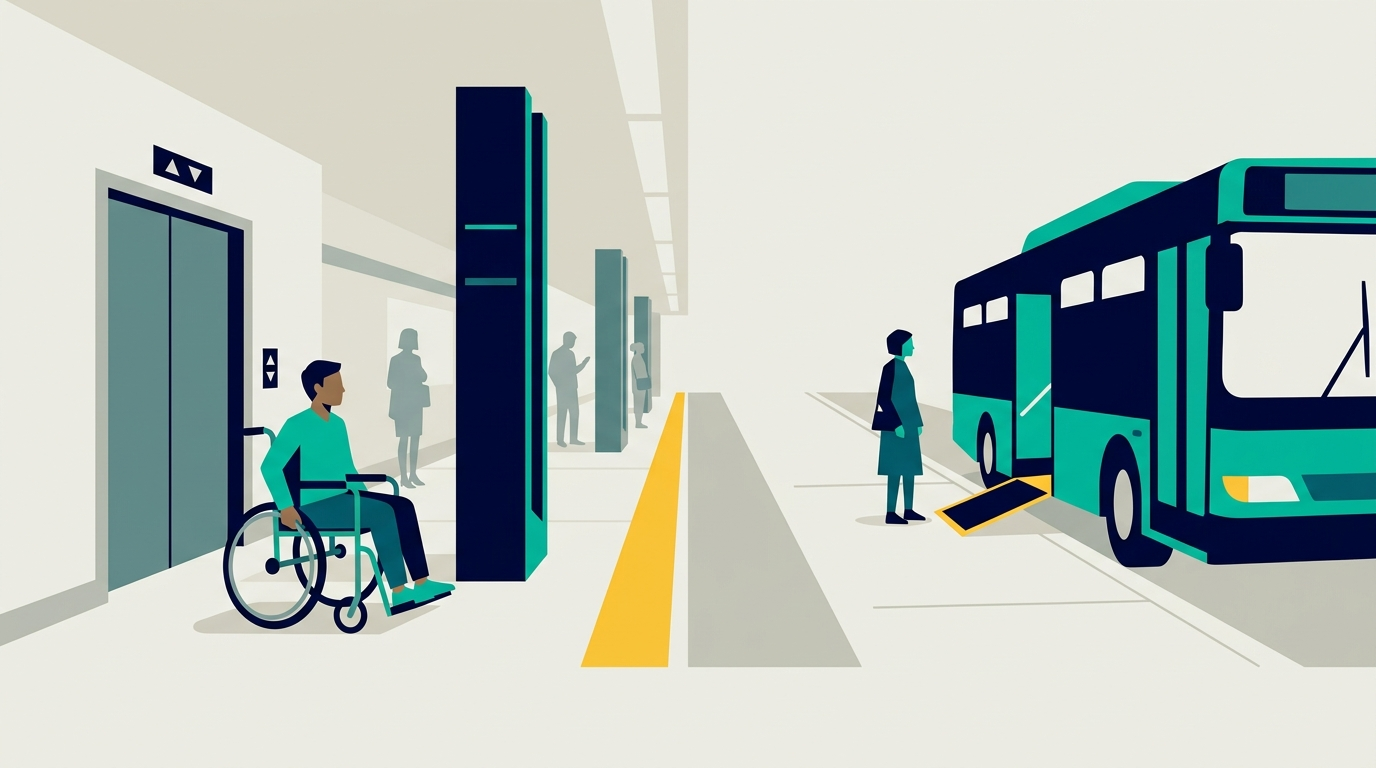
The subway system presents unique challenges. Access barriers often include elevators that stay broken for days without the MTA providing a clear, accessible alternative. Large gaps between the platform and the train car can make boarding dangerous or impossible for wheelchair users. For visually impaired riders, a lack of tactile warnings on platform edges or missing audio announcements creates a hazardous environment. As of July 2026, there are 160 accessible subway stations in the system. If you encounter a barrier at one of these stations, or if a rail employee refuses to assist you with a bridge plate, you have the right to hold the agency accountable. If a wheelchair barrier is what stopped you, our guide to wheelchair access discrimination NYC shows how to build the record.
How to document a bus or subway accessibility violation
Documentation is the single most important part of your transit discrimination claim. Without specific details, your experience becomes your word against a large government agency. Strong evidence makes it much easier to prove your case to the New York State Division of Human Rights or other authorities. If you have clear records, independent attorneys can more accurately determine the value of your potential recovery. You need to act quickly because details fade and transit staff change shifts. Collect your information immediately while you are still at the scene or as soon as you are safe.
When you encounter public transportation disability discrimination New York streets can be chaotic. It's easy to feel overwhelmed. However, taking five minutes to record the facts can be the difference between a dismissed complaint and a successful recovery. Your records are the tools we use to build your case during our intake process. If you aren't sure if your evidence is enough, you can always start a free case check to get a professional review of your situation.
The 5-step documentation checklist
- Identify the vehicle: Record the four-digit bus number or the train car number. You can usually find these on the front, back, or inside the vehicle near the ceiling.
- Note the time and location: Write down the exact time. Include the specific intersection, the bus stop ID, or the subway station name and platform direction.
- Identify the staff: Look for the driver's badge number or the shield number of a station agent. If they refuse to provide it, describe their appearance in detail.
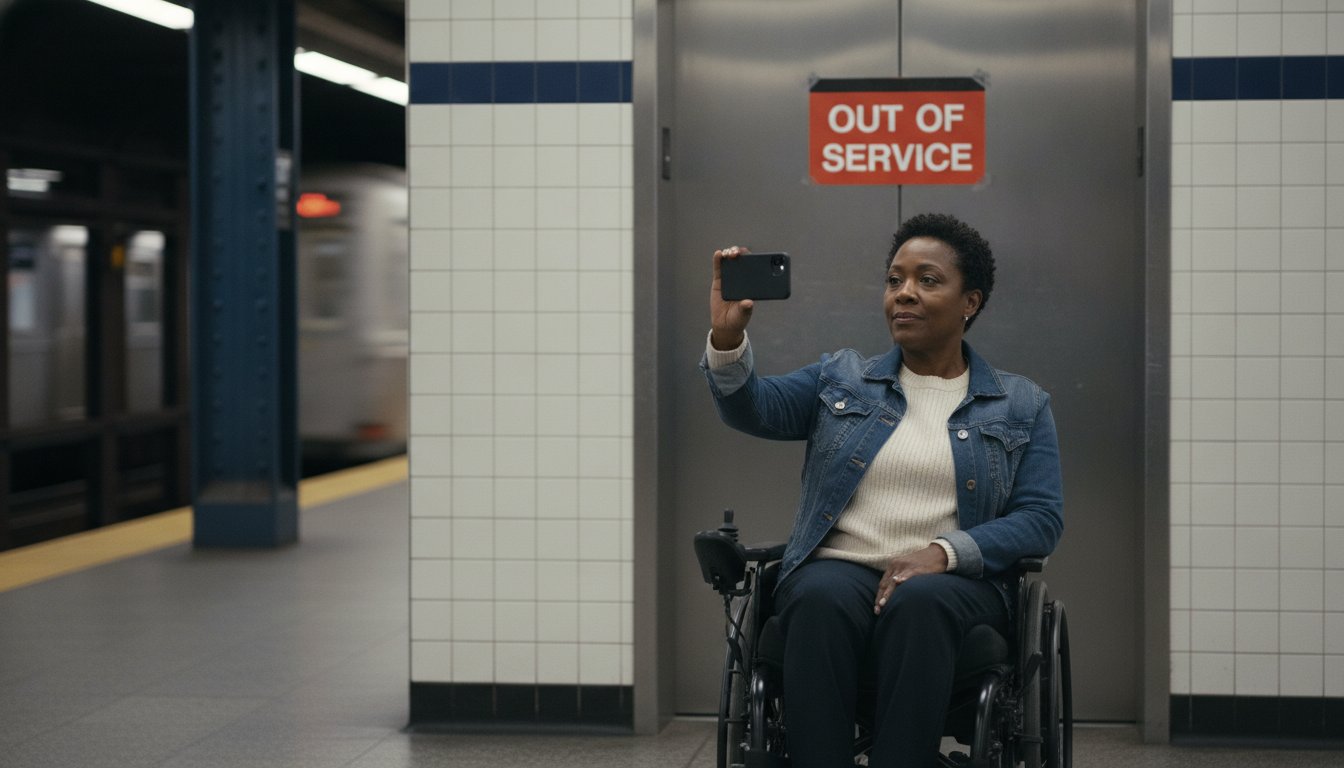
- Take photos and video: Capture the broken equipment, such as a ramp that won't deploy. If a station elevator is out, take a photo of the "out of service" sign or the dark screen.
- Find witnesses: Ask nearby passengers for their names and phone numbers. A quick statement from a stranger who saw the driver pass you by is incredibly powerful.
Writing your incident description
Write down exactly what happened as soon as possible. Use plain language and avoid guessing. Focus on the facts of the interaction. What did you ask for? What was the specific response? If a driver said something dismissive or rude, record those exact words. Describe how the incident affected your day. Did you miss a job interview? Were you left in the cold for an hour? These details help show the real-world impact of the discrimination you faced. This narrative is essential for the case-management services we provide to help you find the right legal path forward.
Understanding New York transit laws: ADA vs. City and State protections
Many New Yorkers assume the federal Americans with Disabilities Act (ADA) is the only law that protects them. It's a vital foundation; however; it isn't the only tool available. When you experience public transportation disability discrimination New York laws offer layers of protection that go beyond federal standards. While the ADA focuses on removing barriers; the New York State Human Rights Law (NYSHRL) and the New York City Human Rights Law (NYCHRL) focus on the victim. These local laws allow you to seek financial recovery for the harm you endured. Understanding how these laws work together is the first step toward a successful claim.
The legal system in New York is unique because it provides multiple paths to justice. You don't have to choose just one law; instead; a strong claim often uses all three. Federal law sets the minimum standard; but New York City and State laws raise the bar. This is why our case management services focus specifically on the local landscape. We help you identify which specific violations under the NYCHRL or NYSHRL apply to your situation. This ensures that your claim isn't just about fixing a bus ramp; it's about getting you the recovery you deserve.
Why the ADA alone is often not enough
The ADA is designed to ensure accessibility; but its primary goal is "injunctive relief." This means a court can order a bus company or the MTA to fix a broken elevator or change a discriminatory policy. It rarely results in a direct payout to the individual who was harmed. If you were left on a curb in the rain; the ADA might help fix the bus ramp; but it won't compensate you for your time or distress. Filing under the ADA is a necessary step to stop future violations; but it isn't the final goal for most recovery claims. You need a broader legal strategy to address the personal impact of discrimination.
Recovering damages under NYCHRL and NYSHRL
The NYCHRL is widely considered one of the strongest civil rights laws in the United States. It applies to the MTA and any private transportation company operating within the five boroughs. Unlike federal law; the NYCHRL allows you to seek compensatory damages for emotional distress. This covers the humiliation and frustration caused by being denied service. In some cases; it also allows for punitive damages. These are intended to punish the agency for willful neglect. The NYSHRL provides similar protections across the entire state; ensuring that your rights are protected regardless of where the incident happened. Typical recoveries vary based on the severity of the incident; but these laws make a financial payout possible.
Using these local laws requires a specific approach to case management. We help you organize your documentation to meet the standards set by the New York State Division of Human Rights. By focusing on the harm you suffered; we can better connect you with independent attorneys who specialize in these high-impact local statutes.
Filing your bus accessibility complaint: The step-by-step process
You have two main paths when you face a barrier on New York transit. The first path is an internal complaint through the MTA's website or by calling 511. This is helpful for reporting a broken elevator or a specific driver's behavior; however; it will not result in a financial payout. The second path is a formal legal claim through a government agency. This is the only way to seek money damages for the discrimination you suffered. If you want to hold the agency accountable and receive a recovery; you must file with the correct city or state office. We help you distinguish between these options to ensure you don't waste time on a process that cannot provide compensation. Our step-by-step guide to filing an ADA complaint in New York walks through each office and form.
Timing is everything in New York law. If you miss a filing deadline; your right to seek a recovery ends permanently. For incidents involving the NYC Department of Transportation; you have only 180 days from the date of the incident to file a complaint. Other agencies provide more time; but acting quickly is always better while your evidence is fresh. If the process feels confusing; you can start your free case check today to find the right path for your specific situation.
Filing with the New York State Division of Human Rights
The New York State Division of Human Rights (NYSDHR) handles complaints against both public and private transit providers. For any act of discrimination occurring on or after February 15, 2024; you have three years to file a complaint with this agency. Once you file; the agency will investigate your claim to determine if there is probable cause. Probable cause means there is enough evidence to suggest that discrimination likely occurred. If the agency finds probable cause; your case can move forward to a public hearing or a settlement. This state-level process is a vital tool for New Yorkers living outside the five boroughs or those facing issues with regional rail lines.
The role of the New York City Commission on Human Rights
The New York City Commission on Human Rights (NYCCHR) is the primary agency for incidents occurring within the five boroughs. This agency is often the most effective route for transit riders because it enforces the New York City Human Rights Law. They have the authority to order the MTA or private bus companies to change their practices and; more importantly; they can award damages to victims for emotional distress. Understanding your disability discrimination rights New York is essential when filing here; as the city's standards for access are often stricter than federal rules. We manage the intake for these claims to ensure your story is told clearly and meets the commission's requirements.
Where to file: agencies and deadlines
- NY State Division of Human Rights (DHR): transit discrimination anywhere in the state, public or private carrier. Three years from the incident for acts on or after February 15, 2024.
- NYC Commission on Human Rights (CCHR): incidents inside the five boroughs, under the NYCHRL. One year to file an administrative complaint, or three years to bring the claim in court.
- U.S. Department of Justice (DOJ): ADA Title II complaints against the MTA and other public transit agencies. File within 180 days of the incident; DOJ may extend that for good cause.
- EEOC: only if the discrimination was employment-related, such as a transit employee denied an accommodation. 300 days in New York.
Filing with one agency does not automatically preserve your rights with the others, and an internal MTA feedback form is not a legal filing. If you are unsure which door to knock on first, start the free case check and we will map your deadlines.
How ADAhelp manages your transit discrimination claim
Dealing with a government agency like the MTA or a private bus company is exhausting. Most people give up because the paperwork is confusing and the deadlines are short. We handle the entire intake and case management process for you. Our team reviews your photos; witness statements; and incident reports to see if you have a valid claim under New York law. We focus on the details that lead to a recovery; such as specific violations of the NYCHRL. If you have faced public transportation disability discrimination New York laws are on your side; and we make sure the system hears your story.
You never have to worry about the cost of seeking justice. Our case evaluations are free; and we manage your file without any out-of-pocket fees. We only get paid if you receive a financial recovery. This removes the financial risk from your shoulders and places the burden of effort on the service provider. We file the necessary paperwork with the appropriate city or state authorities to ensure you meet every legal deadline.
Our free three-minute case check
Starting your claim is simple and fast. You can answer a few questions about your transit incident right from your phone while the details are still fresh. Our digital intake tool asks for the specific information needed to evaluate your rights; such as the vehicle number and the location of the barrier. You get an immediate evaluation of whether your rights were likely violated. This process takes minutes but can lead to a resolution that reflects the harm you experienced.
Connecting you with contingency-fee attorneys
ADAhelp is not a law firm; but we are your proactive partner in the recovery process. Once we verify that you have a strong case; we connect you with independent attorneys who specialize in New York transit law. These lawyers handle the legal heavy lifting; such as depositions and settlement negotiations. We continue to manage your case file and support you through every step of the process. This ensures you have expert representation without paying hourly legal fees. Start your free bus accessibility case check now to see if you are eligible for a recovery.
Hold the transit system accountable for your recovery
You don't have to accept being left on a New York sidewalk. While the federal ADA focuses on fixing broken elevators and ramps; the New York City and State Human Rights Laws focus on compensating you for the harm you've suffered. Remember that documentation is your strongest tool. Collect vehicle numbers and witness contacts as soon as an incident occurs. Filing a formal claim is the only path to a financial payout; but you must act before the strict city and state deadlines pass. Our local experts handle the intake and case management so you can focus on your life while we manage the paperwork.
If you've faced public transportation disability discrimination New York offers some of the most powerful legal protections in the country. We provide a free case evaluation to determine if your rights were violated. There are no out-of-pocket costs and you never pay anything unless you receive a recovery. Don't let a transit barrier stop your progress any longer. Check if you have a transit discrimination case in 3 minutes. You deserve a system that works for everyone; and we are here to help you fight for it.
Frequently Asked Questions
Can I get money if a bus ramp was broken in NYC?
Yes, you can seek financial compensation under the New York City Human Rights Law if a broken ramp prevented you from boarding. While federal law usually only requires the agency to fix the equipment, local city and state laws allow for money damages to cover emotional distress and the impact on your daily life. Typical recoveries vary from case to case; however, these local statutes are designed to provide a payout for the discrimination you experienced.
How long do I have to file a transit discrimination complaint in New York?
Your deadline depends on the specific agency you choose for your claim. For incidents involving public transportation disability discrimination New York residents have three years to file with the State Division of Human Rights for acts occurring on or after February 15, 2024. If you are filing a complaint with the NYC Department of Transportation, you must act much faster; usually within 180 days of the incident. Missing these deadlines can permanently end your right to a recovery.
Do I need a lawyer to file an ADA complaint against the MTA?
You don't need a lawyer to submit a basic feedback form to the MTA; but that process rarely leads to a financial recovery. If you want to seek money damages through a legal claim, having professional support is vital. We manage the intake and paperwork for you and connect you with independent contingency-fee attorneys. These experts handle the legal heavy lifting so you don't have to face a large agency's legal department alone.
What if the bus driver was rude but the ramp worked?
Verbal harassment or a dismissive attitude can still qualify as discrimination if it interferes with your ability to use the transit system. If a driver’s behavior was based on your disability and caused you to feel unsafe or humiliated, it may be a violation of the New York City Human Rights Law. You should record the driver’s badge number and the bus number; then write down exactly what was said as soon as possible to support your claim.
How much does it cost to use ADAhelp for my transit claim?
There are no out-of-pocket costs to use our case management services. Our initial case check is free; and we only get paid if you receive a financial recovery from the transit provider. We work with independent attorneys who also operate on a contingency basis. This means you never have to worry about hourly fees or upfront expenses while you pursue the justice and compensation you deserve.
What information do I need to report an inaccessible subway station?
You need to identify the station name, the specific platform or entrance, and the exact time of the incident. If an elevator is out of service, look for the identification number printed on the unit or the "out of service" sign. Take photos of the barrier and any screens that show the elevator is down. This specific evidence makes it much harder for the agency to deny that a violation occurred when we review your case.

Article by
ADA Help
Written by the ADAhelp editorial team and reviewed for accuracy before publishing. ADAhelp helps New Yorkers find out if they have a disability discrimination claim and manages the process end to end, working with independent attorneys who handle the legal work. We are not a law firm and do not provide legal advice.
Disclaimer
This article is general information about New York law, not legal advice, and reading it does not create an attorney-client relationship. ADAhelp is a case-management and intake service, not a law firm; legal representation is provided by independent attorneys. Recovery amounts and timelines vary by case, and past outcomes do not guarantee future results. For advice about your specific situation, speak with a qualified attorney or start the free case check.
Tags
Discriminated against in New York because of a disability?
A free three-minute check tells you if you can pursue a claim.
Check my case →New York onlyNo upfront costIndependent NY attorneysFree 3-minute check