Wheelchair Access Discrimination NYC: Build Your Case
Reviewed for accuracy by the ADAhelp team before publishing. ADAhelp is not a law firm; legal work is handled by independent New York attorneys.
Wheelchair access discrimination NYC? Learn to document violations, file a claim, and seek money damages under NY law. Free 3-minute case check.
What if that single step at the entrance of your favorite West Village cafe is more than just an inconvenience; it is a violation of your civil rights that could entitle you to money damages? You likely already know the frustration of planning your day around accessible subway stations only to find a locked door or a "no ramp" sign when you arrive. It feels like the city isn't built for you. You don't have to accept these barriers as a permanent part of New York life.
This article explains how to identify and report wheelchair access discrimination NYC businesses often ignore. You will learn how to document violations and build a strong case to secure the accessibility you need. While the federal Americans with Disabilities Act (ADA) requires businesses to remove barriers, New York City and State laws allow you to seek financial compensation for the discrimination you faced. We provide a clear path to filing a claim without the fear of expensive legal fees. You will see how our case management services connect you with independent attorneys who work on a contingency basis. This means your case check is free; you only pay if you receive a recovery. We will walk you through the three year filing deadline for state claims and the specific steps to turn a physical barrier into a closed case.
Key Takeaways
- Learn how to identify wheelchair access discrimination NYC and understand your right to enter any public business.
- Discover why New York laws offer money damages for accessibility violations while federal law only focuses on fixing the barrier.
- Find out how to document physical barriers with simple photos and details to build a strong foundation for your claim.
- Follow a clear process to report violations and start the journey toward removing barriers for yourself and others.
- See how a free three-minute case check connects you with professional case management on a contingency basis.
What is wheelchair access discrimination in NYC?
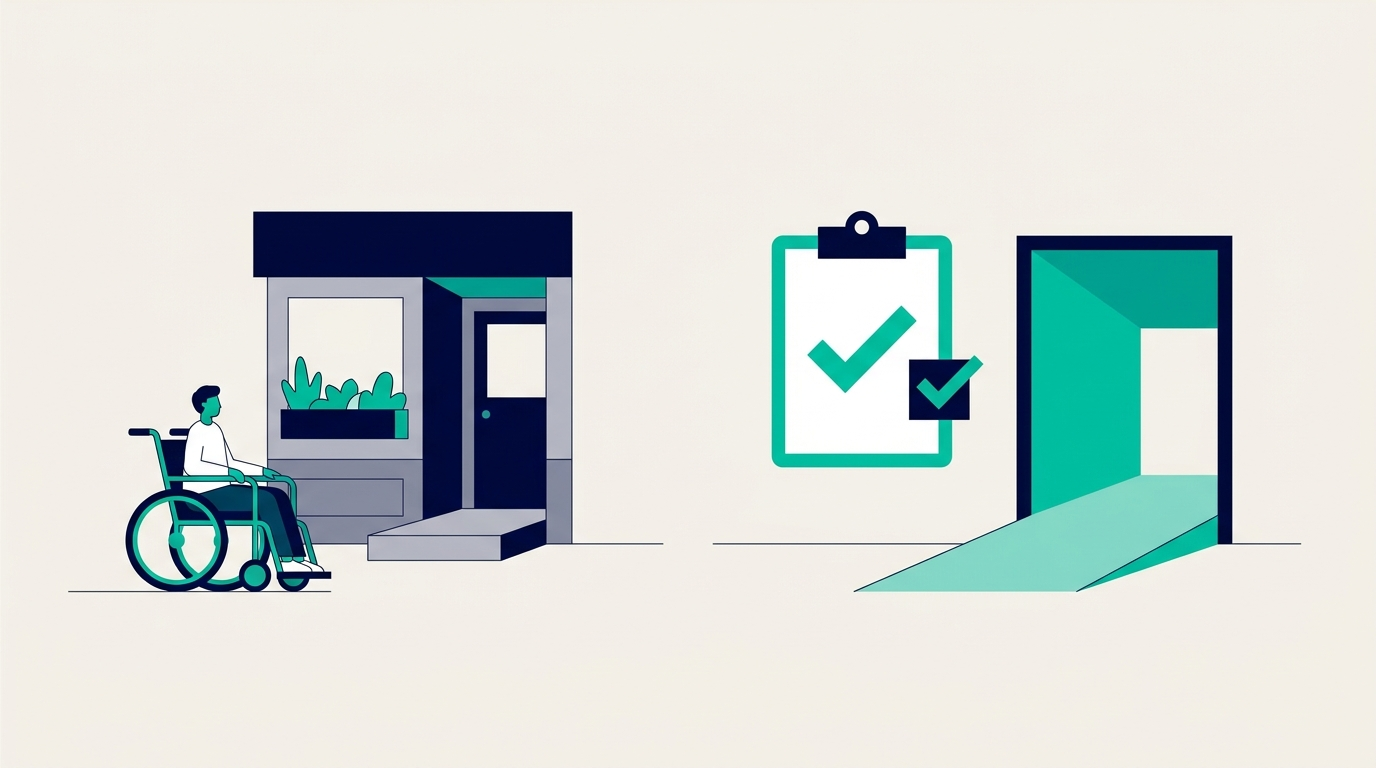
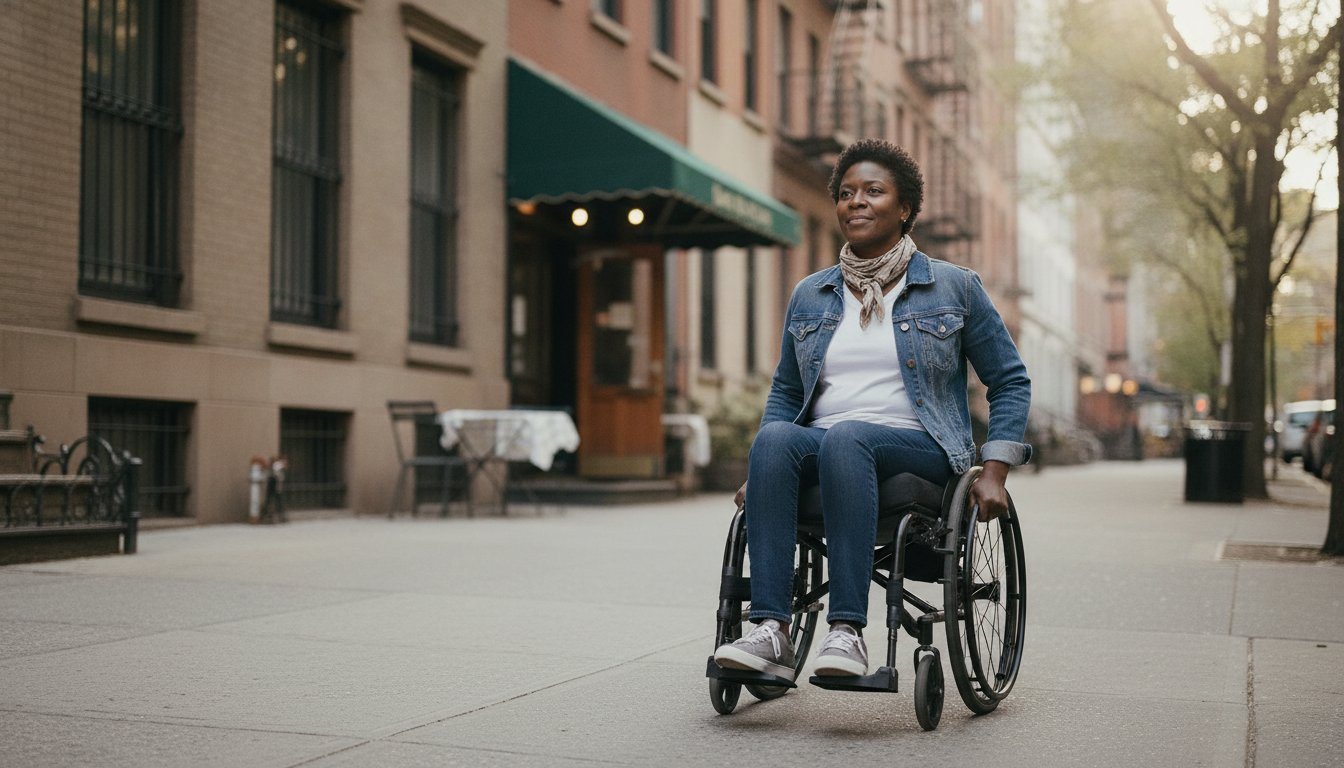
Have you ever tried to grab a quick coffee in Chelsea or browse a boutique in SoHo only to find a six-inch step blocking the door? This is more than just a design flaw. It is a form of wheelchair access discrimination NYC businesses are legally required to fix. Discrimination occurs when a place of public accommodation fails to remove architectural barriers that prevent you from entering or using their services. Under the New York City Human Rights Law, businesses must make these changes if they are "readily achievable." This means if the fix is easy to carry out without much difficulty or expense, the business has no excuse for keeping you out.
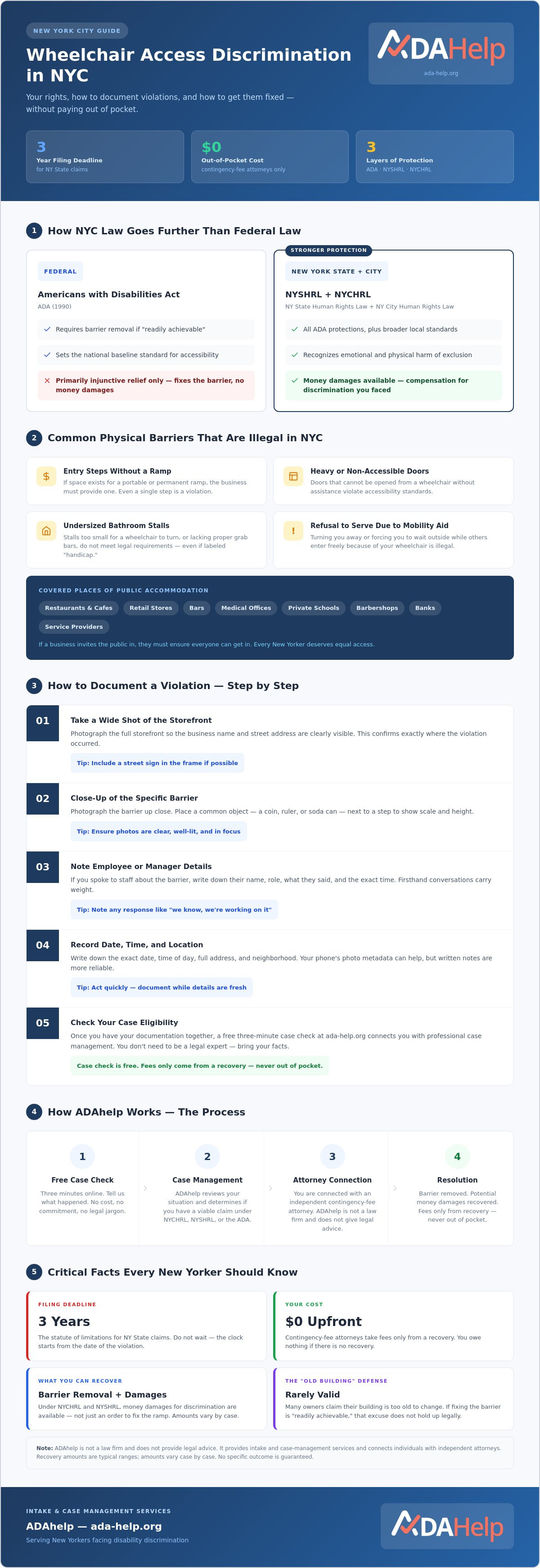
While the Americans with Disabilities Act of 1990 set the national standard for accessibility, New York City provides even stronger protections. Federal law mostly focuses on getting the barrier fixed, which is known as injunctive relief. In contrast, local New York laws recognize the emotional and physical impact of being excluded. This is why you can often seek money damages under the NYCHRL that aren't available under federal law alone. It isn't just about the physical ramp; it's about your right to be treated with dignity in your own city. If a business refuses to serve you because of your mobility aid, they are breaking the law.
Common physical barriers in New York City
Many business owners claim their buildings are too old to change. This is rarely true. Common violations include entryway steps without a permanent or portable ramp. If there is space for a ramp, the store should have one. You might also encounter heavy doors that are impossible to open from a wheelchair without assistance. Another frequent issue is bathroom stalls that are too small for a wheelchair to turn. A "handicap" sign on a door doesn't mean the stall actually meets the legal requirements for space and grab bars. These barriers are not just inconveniences; they are legal violations.
What counts as a public accommodation?
Most places you visit daily fall into this category. Retail stores, restaurants, and bars are the most common examples. However, the law also covers medical offices, private schools, and even some service providers like barbershops or banks. A common example is doctor's office wheelchair accessibility in NY, where exam rooms and entrances must be usable too. If a business invites the public in, they must ensure everyone can get in. If you've been turned away or forced to wait outside while others enter freely, you may have a case. You can explore more details on what constitutes an ADA public accommodation violation NYC to see if your experience matches the legal definition. Every New Yorker deserves equal access to the city's services.
How to document accessibility barriers at NYC businesses
Strong documentation is the foundation of a successful accessibility claim. You don't need to be a legal expert to gather useful information; you just need to be observant. When you encounter a barrier, act quickly while the details are fresh in your mind. Facts, dates, and visual proof carry the most weight when building your case. If you've experienced wheelchair access discrimination NYC businesses often ignore, your records will show the reality of the situation. This evidence helps prove that the barrier exists and that it prevented you from equal access.
Gathering this information doesn't have to be stressful. Your goal is to create a clear picture of what happened for the professionals who will manage your case. If you're unsure where to start, you can always check your case eligibility online to see what specific details might be needed for your situation. Remember, the burden of proof shouldn't fall solely on you, but having these details ready makes the process much faster.
Taking photos of the violation
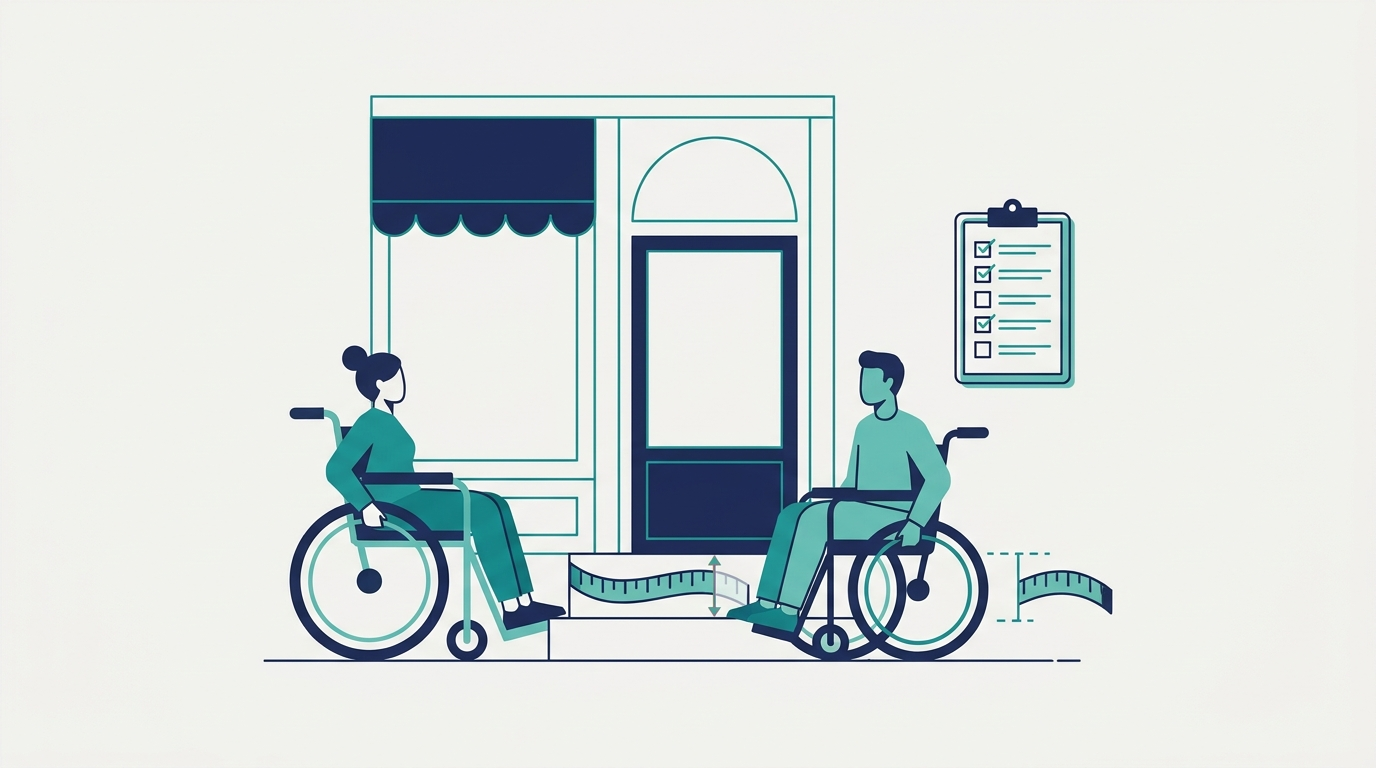
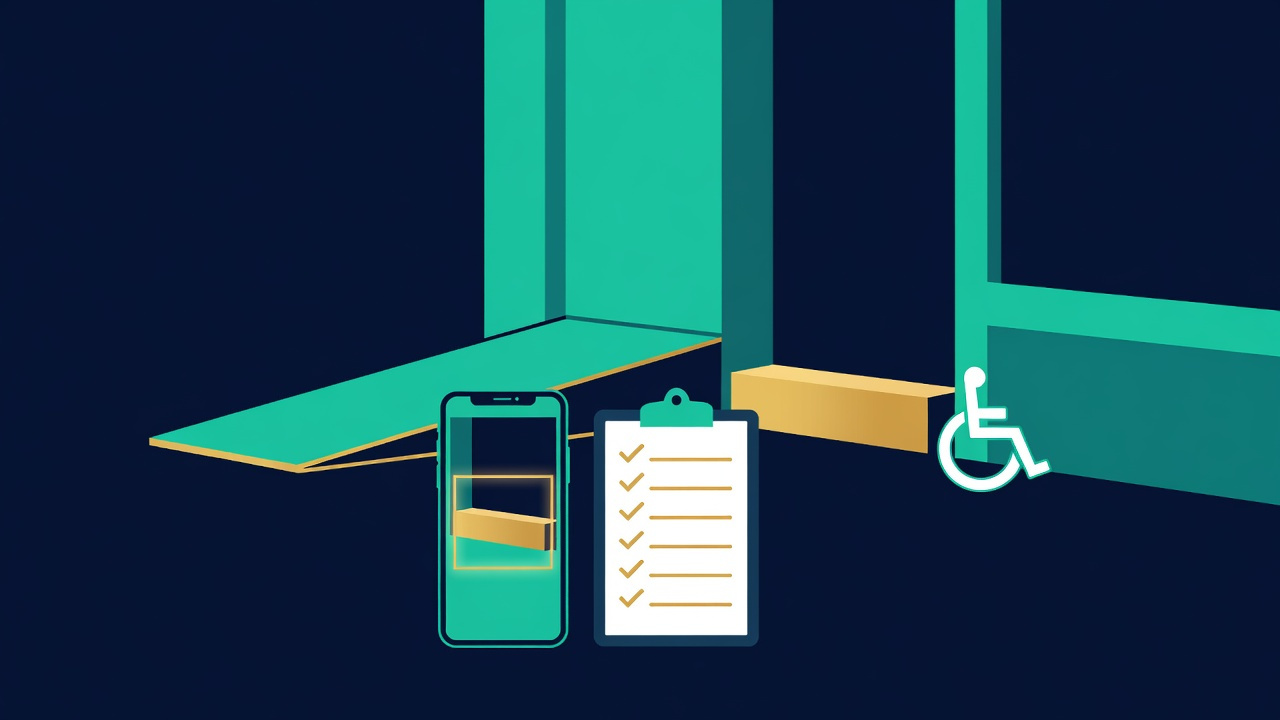
Your smartphone is your best tool for documenting violations. Start by taking a wide shot of the storefront that clearly shows the business name and the street address. This confirms exactly where the incident happened. Next, take close-up photos of the specific barrier. If there is a step at the entrance, place a common object like a coin, a ruler, or even a soda can next to it. This provides a sense of scale and shows the height of the threshold. If a doorway is too narrow, a photo showing your wheelchair unable to pass through is powerful evidence. Ensure your photos are clear and well-lit so there is no doubt about the architectural barrier.
Gathering witness and business information
Personal accounts add a human element to your documentation. If you spoke to an employee or manager about the barrier, note their name and the time of the conversation. Write down exactly what they said. Did they offer a portable ramp, or did they simply say "we don't have one"? Get contact information from anyone who saw you struggle to enter or who witnessed a refusal of service. Witnesses can verify your experience if the business tries to deny it later. Finally, save any digital records or physical receipts from your visit. Even if you couldn't get inside, a credit card statement showing a purchase nearby or a GPS check-in can help establish your timeline. These small details build a timeline that is hard to dispute.
Why NYC accessibility laws offer more protection than the ADA
Many people assume the Americans with Disabilities Act (ADA) is the only law protecting them. While this federal law is important, it has a major limitation for individuals. The ADA primarily focuses on injunctive relief. This is a legal term meaning the court orders the business to fix the problem; like installing a ramp or widening a door. It ensures future access, but it often provides no financial recovery for the person who was actually excluded. If you've faced wheelchair access discrimination NYC, you deserve more than just a promise that the store will do better next time.
This is where New York City and State laws offer a different path for you. The New York City Human Rights Law (NYCHRL) and the New York State Human Rights Law (NYSHRL) go much further than federal rules. These local statutes recognize that being turned away from a restaurant or store causes real harm. They allow you to hold businesses accountable for the past; not just the future. You can pursue a claim for the discrimination you already experienced. This remains true even if the business eventually fixes the physical barrier after you report it. You shouldn't have to ignore the frustration you felt just because a ramp was eventually built.
The difference between federal and local laws
The ADA applies nationwide, but its enforcement often feels distant. It sets the minimum standards for every state. New York City has chosen to set a much higher bar. The NYCHRL is one of the strictest civil rights laws in the country. It covers almost every business in the five boroughs; from the smallest deli to the largest department store. While federal law treats accessibility as a technical building requirement, local laws prioritize your personal dignity. They acknowledge that every time you are blocked by a step, your rights are being violated. This local focus makes it easier for New Yorkers to seek justice close to home.
Seeking money damages for discrimination
Can you actually receive money for an accessibility violation? Under New York law, the answer is often yes. You can seek money damages. These are financial payments intended to compensate you for the humiliation and frustration of being excluded. These damages aren't just for physical injuries; they are for the emotional impact of discrimination. Typical recoveries vary based on the severity of the access barrier and how it affected you. Every situation is unique; and amounts vary case by case. The goal is to make the situation right and to ensure the business understands that excluding New Yorkers with disabilities has a real cost. You don't have to settle for just a fixed ramp when the law allows for much more.
Step-by-step guide to reporting a wheelchair access violation
Reporting wheelchair access discrimination NYC starts with gathering the basic facts. You need the exact address and the legal name of the business. Don't just guess based on the sign outside. Check your digital receipts or look them up online to be sure. Next, look closely at the barrier. Is it a permanent part of the building, like a concrete step? Or is it a temporary obstacle, like a delivery box? Permanent barriers are much easier to litigate because they show a long-term failure to provide access. If your experience happened while dining out, you should check your restaurant ADA violation New York specifics to see if the cafe missed other requirements like accessible seating or bathroom grab bars.
Once you have your facts, you must decide how to move forward. You can file a complaint with a government agency or pursue a private claim through an attorney. Government agencies focus on civil penalties and fines that go to the city or state. Private claims, often handled by contingency-fee lawyers, focus on getting you money damages for the discrimination you faced. This is a critical choice that affects what you might recover. If you want to ensure the barrier is removed and you are compensated for your experience, a private claim is often the most direct route. It holds the business accountable for the harm they caused you personally.
Filing with the proper authorities
The New York City Commission on Human Rights handles local complaints within the five boroughs. They investigate violations of the city's specific civil rights laws. If your claim is better suited for the state level, the New York State Division of Human Rights is the agency to contact. For federal Title III public-accommodation complaints, you can also file with the U.S. Department of Justice, though that route seeks a fix rather than money damages. These agencies can be helpful, but their processes are often slow and bureaucratic. Case management services can help you choose the right path and connect you with independent attorneys who can move your case forward more efficiently. You don't have to handle the paperwork or the follow-up calls yourself.
Avoiding common reporting mistakes
Timing is everything in New York law. As of February 15, 2024, you have three years to file a discrimination complaint with the New York State Division of Human Rights. However, if you choose the NYC Commission on Human Rights, you generally only have one year for most claims. If you wait too long, you lose your right to seek justice. Another mistake is failing to be precise. Avoid exaggerating the barrier; stick to the physical measurements and photos you gathered. Finally, remember that certain federal claims require the business to have at least 15 employees. Our team can help you verify these details so you don't waste time on a claim that won't stick. Start your free three-minute case check to see if your situation meets these requirements.
How ADAhelp manages your NYC accessibility case
Do you feel overwhelmed by the thought of filing a legal claim? You aren't alone. Many New Yorkers ignore wheelchair access discrimination NYC because the process seems too complicated or expensive. ADAhelp changes that by handling the heavy lifting for you. We provide end-to-end case management that guides you from the moment you find a barrier to the moment you secure a resolution. It is important to understand that ADAhelp is not a law firm and we do not provide legal advice. Instead, we act as your proactive partner to determine if you have a claim and then connect you with independent contingency-fee attorneys who can fight for your rights.
Our goal is to make the path to justice as simple as possible. We focus on the specific interplay between federal and local laws. While we help you address the physical barrier, we also prioritize your right to money damages under the NYCHRL and NYSHRL. These damages are intended to compensate you for the humiliation of being excluded from public spaces. Every situation is unique; typical recovery amounts vary case by case and a specific payout is never guaranteed. However, by using a structured case management approach, we ensure your documentation is solid and your claim is filed correctly with the right authorities.
Our free three-minute case check
You don't need to spend hours researching statutes to know if you have a case. Our free three-minute case check is designed for busy New Yorkers. You can start the process directly from your phone or computer by answering a few simple questions about your experience. We ask about the location of the business, the type of barrier you encountered, and how it affected your access. This quick check gives you an immediate sense of whether your situation meets the legal standards for a discrimination claim. It is a low-risk way to stop wondering "what if" and start taking action to remove barriers for yourself and others.
How our contingency model works
Fear of legal fees should never stop you from seeking fairness. This is why we operate on a contingency model. Contingency means we and the attorneys we connect you with only get paid if your case is successful. You never pay anything out-of-pocket. If there is no recovery, there is no fee. This model removes the financial risk and ensures that the burden of effort lies with the service provider rather than the client. We handle the information gathering and the filing process while you focus on your daily life. It's a results-oriented approach that turns your frustration into a clear path toward resolution.
Your Next Step Toward Equal Access Starts Now
Wheelchair access discrimination NYC businesses practice every day is illegal, and you don't have to accept it. You now know how to spot a violation, document it properly, and understand why New York's local laws give you more options than federal law alone. The path to money damages is real, and the filing deadlines are firm.
The most important thing to remember is this: you carry no financial risk. The case check is free. If attorneys take your case, fees come only from a recovery. Nothing comes out of your pocket. ADAhelp handles the case management so you can focus on your life while the process moves forward.
Don't let another blocked entrance go unaddressed. Every report you file makes New York more accessible for every wheelchair user who follows. Start your free three-minute case check now and find out exactly where you stand. You have rights, a clear process, and a team ready to back you up.
Frequently Asked Questions About Wheelchair Access Discrimination in NYC
How long do I have to report wheelchair access discrimination in NYC?
Your deadline depends on where you file. If you file with the New York State Division of Human Rights, you have three years from the date of the discrimination. If you file with the New York City Commission on Human Rights, you generally have one year. These deadlines are firm. Missing them means losing your right to seek any recovery, so don't wait to find out where you stand.
Can I get money if a store doesn't have a wheelchair ramp?
Yes, you can often seek money damages under the New York City Human Rights Law and the New York State Human Rights Law if a store's missing ramp prevented you from entering. These local laws go beyond the federal ADA, which focuses on getting the ramp installed rather than compensating you for the exclusion you already experienced. Every case is different, and typical recovery amounts vary based on the specific facts of your situation.
Do I need to pay a lawyer upfront for a wheelchair access discrimination NYC case?
No. ADAhelp connects you with independent attorneys who work on a contingency basis. This means fees are only taken from a recovery. You pay nothing out-of-pocket at any point during the process. The free three-minute case check is also completely free. If there's no recovery, there's no fee. The financial risk stays off your plate entirely.
What if the business is in a landmarked or old building?
Age and landmark status don't automatically excuse a business from its accessibility obligations. The legal standard under the NYCHRL is whether barrier removal is "readily achievable," meaning possible without significant difficulty or expense. A business must still explore all available options, including portable ramps, alternative service entrances, or other accommodations. Claiming the building is historic is a defense a business must prove, not a blanket exemption.
Does a portable ramp count as being ADA compliant in NYC?
A portable ramp can satisfy the legal requirement in some situations, but only if it's actually available and usable when you arrive. If the ramp is locked in a back office, requires you to call ahead, or depends on staff who aren't present, it likely doesn't meet the standard. Compliance isn't just about having the equipment; it's about ensuring you can access the business on the same basis as everyone else, without extra steps or delays.
What should I do if a restaurant says they can't accommodate my wheelchair?
Write down exactly what was said, who said it, and when. This statement alone can be strong evidence of wheelchair access discrimination NYC law prohibits. Take photos of the entrance, the seating area, and any specific barriers you observed. Don't argue on the spot; gather your facts and start a case check. A restaurant refusing service because of your mobility aid is a direct violation of your rights under local law, and you may be entitled to money damages for that experience.

Article by
ADA Help
Written by the ADAhelp editorial team and reviewed for accuracy before publishing. ADAhelp helps New Yorkers find out if they have a disability discrimination claim and manages the process end to end, working with independent attorneys who handle the legal work. We are not a law firm and do not provide legal advice.
Disclaimer
This article is general information about New York law, not legal advice, and reading it does not create an attorney-client relationship. ADAhelp is a case-management and intake service, not a law firm; legal representation is provided by independent attorneys. Recovery amounts and timelines vary by case, and past outcomes do not guarantee future results. For advice about your specific situation, speak with a qualified attorney or start the free case check.
Tags
Discriminated against in New York because of a disability?
A free three-minute check tells you if you can pursue a claim.
Check my case →New York onlyNo upfront costIndependent NY attorneysFree 3-minute check