School Disability Discrimination New York: Your Rights
Reviewed for accuracy by the ADAhelp team before publishing. ADAhelp is not a law firm; legal work is handled by independent New York attorneys.
Facing school disability discrimination in New York? Your child may be owed money damages under local laws. See if you have a claim with a free case check.
What if the school's refusal to accommodate your child is actually a violation of their civil rights? You likely have a case if a New York school is ignoring an IEP, refusing physical access, or using unfair discipline; your claim could be worth financial damages under local human rights laws. It's exhausting to watch your student struggle while the district fails to provide the support they're legally required to give. You deserve to know that school disability discrimination New York laws offer powerful protections that go far beyond what most parents realize.
We understand the confusion between federal rules like the ADA and Section 504; we also know that worrying about legal fees often stops families from taking action. This guide will show you how New York laws allow you to seek a resolution without any out of pocket costs. ADA Help - NY disability discrimination claims provides expert case management to help you determine if you have a valid claim. We'll preview the steps to stop discriminatory behavior and help you understand if your student is entitled to financial damages for the harm they've suffered under state and city laws.
Key Takeaways
- Learn how the New York State and City Human Rights Laws allow students to seek financial recovery for unfair treatment.
- Identify common examples of school disability discrimination New York students face; such as blocked access to classrooms or gyms.
- Discover how to document incidents and save evidence to build a strong claim against a school district.
- Understand the difference between federal access rules and local laws that provide for money damages.
- See how a free case check can determine if you have a valid claim without paying any out of pocket fees.
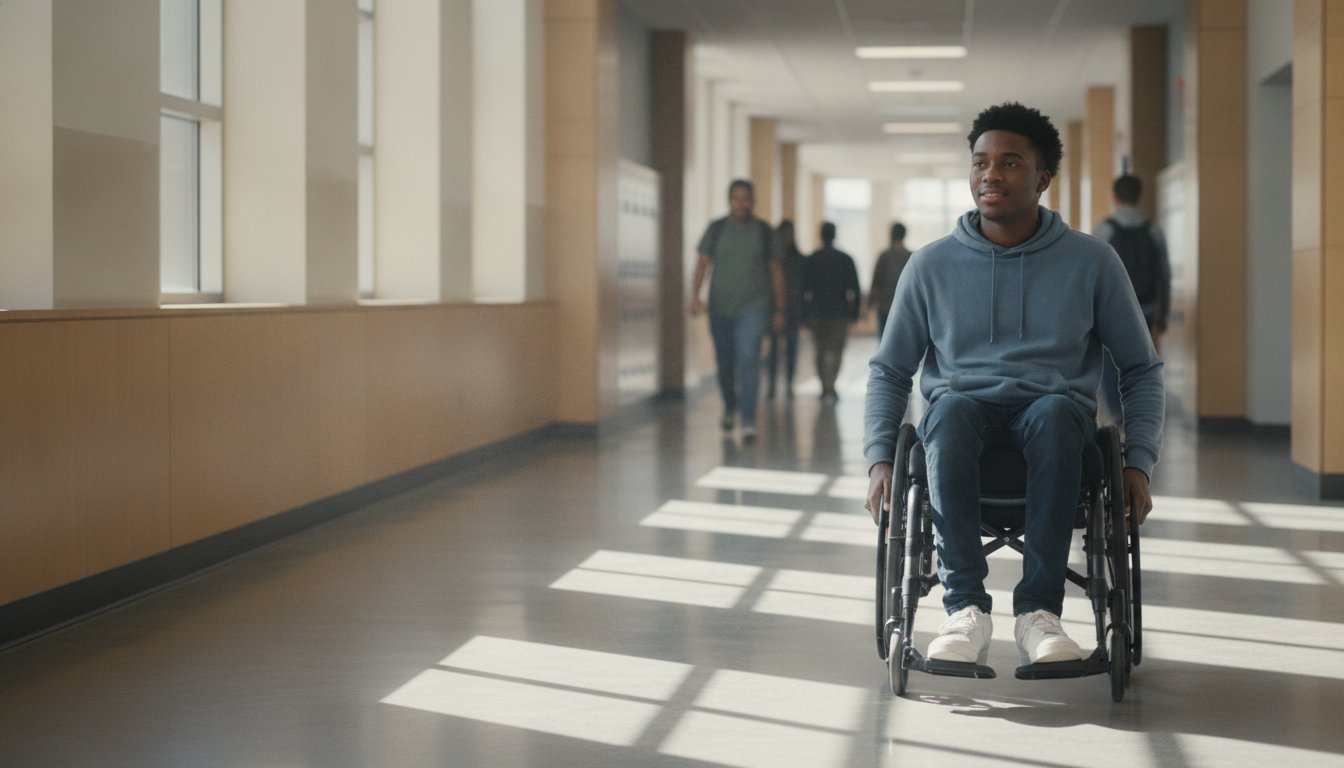
What counts as school disability discrimination in New York?
Discrimination occurs when a school treats a student poorly because of a physical or mental impairment. This doesn't only mean obvious harassment or bullying. It also includes refusing to provide reasonable changes to policies or failing to remove physical barriers that prevent a student from participating. Both public and private schools in New York must follow these accessibility rules. Discrimination can be a single major event; such as an illegal expulsion; or a long pattern of unfair treatment that makes it impossible for your child to succeed in the classroom.
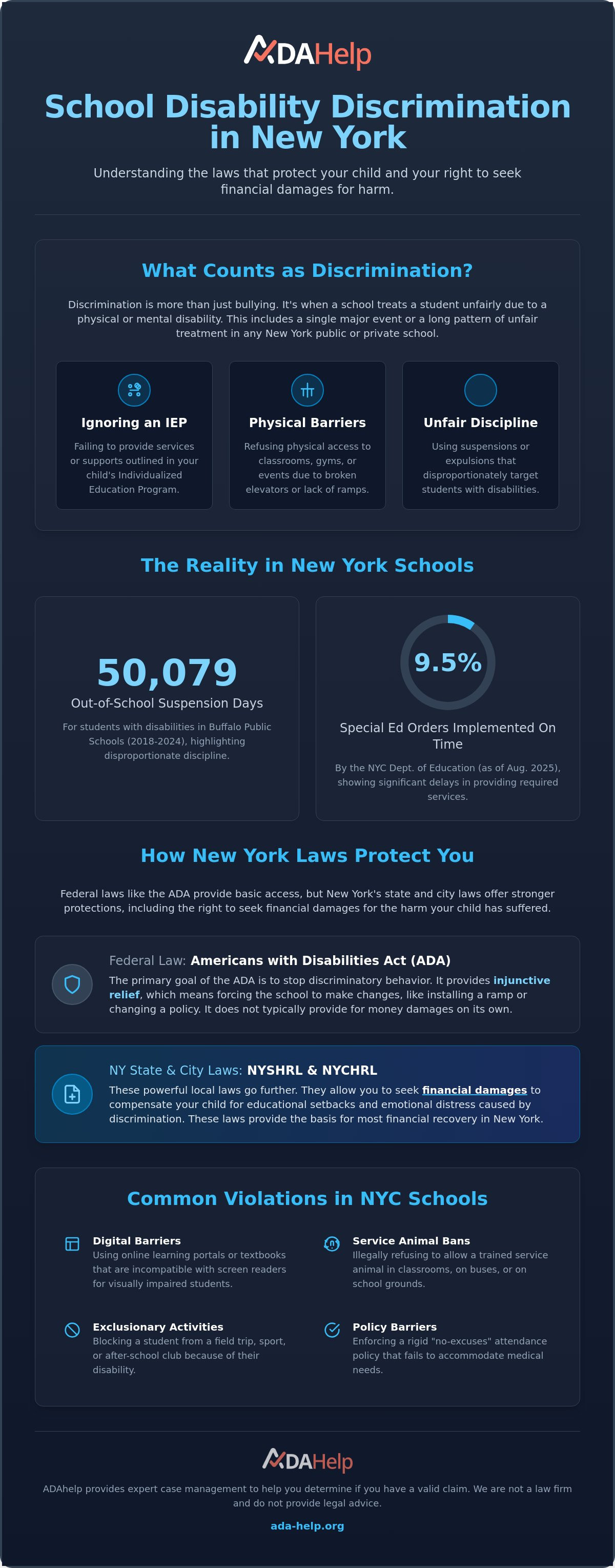
Recent data proves how systemic these issues are within the state's education system. In Buffalo Public Schools; students with disabilities accounted for 50,079 out of school suspension days between 2018 and 2024. This kind of disproportionate discipline is a major indicator of school disability discrimination New York. Furthermore; as of August 2025; the NYC Department of Education only implemented 9.5% of special education service orders on time. If your student is being denied services or targeted with unfair punishment; ADA Help - NY disability discrimination claims can help you determine if the school is violating state or city laws.
Who is protected in New York schools?
Protection in New York is broad and covers more than just visible disabilities. As of October 2025; New York State requires districts to provide special education services until a student's 22nd birthday. This applies to students with physical disabilities like mobility or sensory impairments. It also covers students with mental health conditions or learning disabilities like ADHD; autism; or dyslexia. Parents or guardians are also protected if they face discrimination because of their association with a person with a disability.
The difference between policy and discrimination
A school policy that seems fair on the surface can still be discriminatory if it unfairly harms students with disabilities. Schools have a legal duty to provide accommodations to ensure every child has equal access to education. This right is a cornerstone of federal disability rights law; which mandates that students be educated in the least restrictive environment. For example; a strict "no-excuses" attendance policy is often illegal if it doesn't account for medical appointments or flare-ups. Failing to provide these accommodations is a violation of your civil rights under the New York State Human Rights Law. Typical recovery amounts vary case by case; but they are intended to compensate the student for the educational and emotional harm they have suffered.
Common ADA violations in New York City schools
Many parents think school issues are only about the Individualized Education Program (IEP). While special education plans are vital, your student also has civil rights that exist outside of those meetings. If a school prevents your child from using the library or participating in a field trip, it may be a case of school disability discrimination New York. These violations often involve physical access or rigid rules that ignore a student's medical needs.
The New York Attorney General's Office takes these violations seriously; they monitor how schools treat students with disabilities to ensure equal access. Common violations we see in NYC include:
- Digital Barriers: Schools using online learning portals or digital textbooks that don't work with screen readers for blind or low-vision students.
- Service Animal Bans: Refusing to allow a trained service animal in the classroom or on school grounds.
- Exclusionary Activities: Telling a student they cannot go on a class trip or join an after-school club because of their disability.
If these scenarios sound familiar, you might be wondering if you have a claim for damages. You can check your case online to see how New York laws protect your student's rights.
Physical barriers and building access
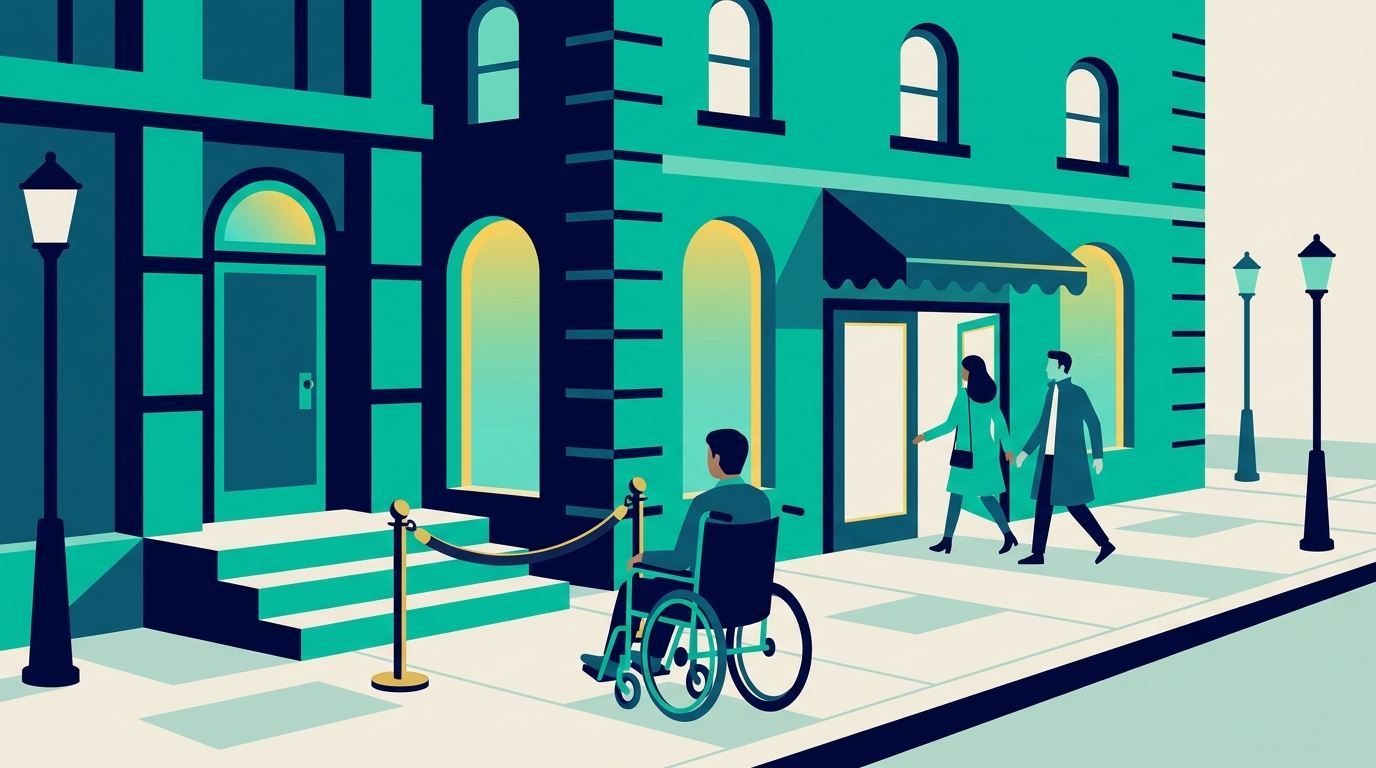
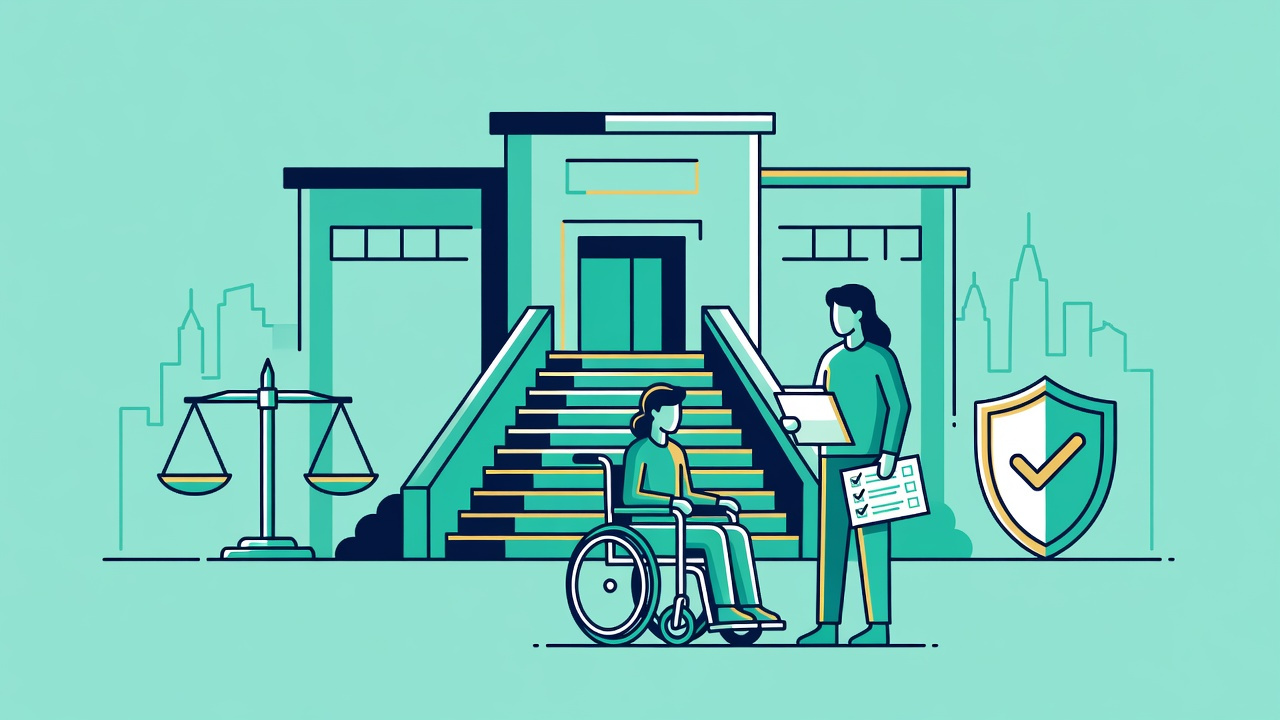
New York City is home to many older school buildings that aren't fully accessible. A school violates the law when it fails to provide a path for every student. This includes broken elevators that trap students on one floor or heavy doors that a child in a wheelchair cannot open. It also includes the lack of accessible bathrooms or locker rooms. Ramps that are too steep or entrances that are kept locked also count as illegal barriers to education. If your student is being blocked by the building itself, the school is failing its legal duty.
Policy and communication barriers
Discrimination isn't always a physical wall. Sometimes it's a lack of communication or a stubborn rule. Schools must provide sign language interpreters for school plays, graduations, and parent-teacher conferences when requested. They must also adjust attendance policies. If a student has a medical flare-up or needs frequent appointments, a "zero tolerance" attendance policy is discriminatory. Similarly, refusing to provide a quiet space or extra time for testing can be a violation of the student's right to a fair learning environment. These failures often cause lasting educational harm.
Understanding the New York laws that protect students
Federal law like the ADA ensures schools provide equal access. It forces a district to fix a broken elevator or add a ramp; but it rarely provides money for the time your student spent excluded. This is where school disability discrimination New York laws offer a distinct advantage. The New York State Human Rights Law (NYSHRL) applies to all schools in the state. It allows you to seek a resolution that includes compensation for the harm caused. While federal law stops the bad behavior; New York laws address the actual damage done to your family's well-being.
If the incident happened in Manhattan; Brooklyn; Queens; the Bronx; or Staten Island; you are protected by the New York City Human Rights Law (NYCHRL). This is one of the most powerful civil rights laws in the country. It defines disability much more broadly than federal law. It doesn't just look at physical or mental impairments; it looks at the student's actual experience. The NYCHRL specifically allows you to recover damages for emotional distress and other harms that schools often ignore. ADA Help - NY disability discrimination claims focuses on these local laws because they offer the most protection for NYC families.
Why New York City laws are different
The NYCHRL applies specifically to incidents happening within the five boroughs. It covers a wider range of conditions and doesn't require the same strict medical proof that federal courts often demand. This law is designed to be interpreted broadly to protect the victim. It recognizes that being excluded from a classroom or a school event causes real; measurable harm to a child's development. This is why NYC students often have a stronger path to a fair resolution than those in other states.
Recovering damages for discrimination
Recovering damages is about restoring what was lost. Typical recovery amounts vary based on the severity of the discrimination and the length of the exclusion. These funds are intended to compensate you for the harm caused by the school's failure to follow the law. You can read more about how this works in our guide on government building accessibility complaint NY. Our case management approach ensures that your claim is filed correctly under the laws that provide the best chance for a financial resolution.
How to handle a school discrimination incident in NY
When you realize your child is being treated unfairly; you must act quickly. Schools often promise to look into things; but these internal reviews can drag on for months while your student falls behind. Protecting your rights starts the moment you notice a problem. To successfully address school disability discrimination New York; you need a solid foundation of evidence. This isn't just about being right; it's about being able to prove it to the authorities who can enforce the law.
Start a detailed log of every interaction. Write down exactly what happened; including dates; times; and the names of every school staff member involved. If a teacher makes a comment about your child's service animal or a principal refuses an accommodation; put it in your notes immediately. Real New Yorkers know that memories fade; but a written record is hard to argue against. If the school denies a request for a change in policy or a physical accommodation; ask for that denial in writing. This creates a paper trail that schools cannot easily ignore later.
Documentation also includes digital and physical evidence. Save every email; letter; and progress report related to the incident. If the issue involves physical access; use your phone to take photos or videos. Capture images of broken ramps; heavy doors without automatic openers; or inaccessible bathrooms that we discussed in previous sections. This visual proof is vital for showing that the school is failing to meet legal standards. If you have this evidence ready; you can start your free case check today to see if you are entitled to a resolution.
Where to file: agencies and deadlines
Reporting is a formal step that starts the process of holding the school accountable. Each agency has its own deadline, so note them before you act on your school disability discrimination New York claim:
- NY State Division of Human Rights (DHR) — handles NYSHRL violations; file within 1 year administratively (or 3 years to sue in court). Start at dhr.ny.gov/complaint.
- NYC Commission on Human Rights (CCHR) — for schools in the five boroughs under the NYCHRL; 1 year to file. See nyc.gov/site/cchr.
- U.S. Dept. of Education, Office for Civil Rights (OCR) — investigates ADA/Section 504 discrimination in schools; file within 180 days at ed.gov OCR.
- U.S. Department of Justice (DOJ) — for ADA access violations, report via ada.gov/file-a-complaint.
Against a public school district, you often must also serve a formal Notice of Claim within 90 days of the incident — a much shorter window. For a step-by-step walkthrough, see our guide on ADA violation reporting New York. Filing these reports puts the school district on notice that you are serious about protecting your student's rights.
Avoiding common mistakes
Do not wait too long to act. New York has strict deadlines for filing claims against school districts; and missing a cutoff can end your case before it starts. Avoid signing any waivers; settlements; or agreements without fully understanding your rights. Schools may try to offer a small fix in exchange for you giving up your right to sue for damages. Keep your documentation organized and clear. A messy pile of papers is hard to use; but a chronological file of evidence makes your claim much stronger.
Get help with your school disability discrimination case
You shouldn't have to fight a school district alone while trying to support your child's education. ADAhelp is here to handle the heavy lifting for you. We are not a law firm; but we specialize in Government and School Discrimination Case Management in New York. Our goal is to take the stress out of filing a claim for school disability discrimination New York by managing the entire process from start to finish. We help you determine if the treatment your student faced violates the specific protections of the NYSHRL or NYCHRL. If you have a valid claim; we connect you with independent attorneys who work on a contingency fee basis. This means you never pay anything out of pocket. We only get paid if you win a recovery.
Many families feel ignored by school administrators or confused by the overlapping rules of the ADA and Section 504. We bridge that gap by providing a clear; stress-free path toward a resolution. You don't need to be a legal expert to seek justice. We focus on the outcomes that matter to you; such as stopping discriminatory behavior and securing a fair resolution for the student. While federal law might only force a school to fix a ramp; we use New York's broader laws to help you seek financial damages for the harm your child has suffered. Typical recovery amounts vary case by case; but our case check will help you understand what is possible for your situation.
The free three-minute case check
Taking the first step is simple and fast. Start with our free three-minute case check. You will answer a few direct questions about the incident at the school. This helps us understand if your rights were violated under New York's specific civil rights laws. You will get an immediate sense of whether your claim is worth pursuing. There is no risk; no upfront cost; and no obligation to move forward. It is the fastest way to turn your frustration into a plan for action.
Why choose case management?
Most families feel overwhelmed by the paperwork and strict deadlines of the New York legal system. When you choose our case management services; we gather the necessary evidence and handle the filing with the proper authorities. You can focus on your child's education while we manage the technical details of the claim. You can learn more about how we assist families in our guide on ADA case filing service New York. We ensure that your story is told clearly and that the school is held accountable for its actions with minimal friction for your family.
Secure your student's future today
Your student deserves an education free from physical barriers and unfair treatment. You now know that local laws provide the strongest protections in the nation; often allowing for financial recovery that federal rules do not cover. By acting now and keeping your evidence organized; you can hold school districts accountable for their failures. Dealing with school disability discrimination New York is exhausting; but you don't have to carry the burden alone. Expert New York case management ensures that every technical detail is handled while you focus on your child's well-being.
Our team connects you with contingency-fee attorneys; which means there are absolutely no out-of-pocket fees for you. We only succeed when you win a recovery for your student. Don't let a school district's inaction define your child's future. You have the right to a fair resolution; and the path forward is simple and low-risk. Start your free three-minute case check now. You are one step away from turning your frustration into a results-oriented plan for justice.
Frequently Asked Questions
Can I sue a New York school for disability discrimination?
Yes, you can hold a school accountable by filing a claim under federal and state laws. In New York, the State Human Rights Law and City Human Rights Law allow you to seek financial recovery for the harm your child suffered. While federal law often focuses on fixing a physical barrier, New York laws focus on compensating the student for emotional distress and educational loss. You should start with a free case check to see if your specific situation qualifies for a claim.
What is the difference between the ADA and Section 504 in NY schools?
The ADA is a broad civil rights law that prohibits discrimination in all public and private schools, while Section 504 specifically requires schools receiving federal funds to provide necessary services. In New York, these federal rules work alongside the NYSHRL to protect students. While Section 504 often handles the details of a student's learning plan, the ADA and New York laws protect their right to access the building and participate in school activities without bias.
How long do I have to file a discrimination claim in New York?
You generally have one year to file with the New York State Division of Human Rights or three years to file a lawsuit in court. However, if you are filing against a public school district, you must often file a formal "Notice of Claim" within 90 days of the incident. These deadlines are very strict and missing them can end your case. It is vital to organize your evidence and seek a case check as soon as the school disability discrimination New York occurs.
What are typical damages for school discrimination in NYC?
Typical damages in New York City include money for emotional distress, the cost of catch-up tutoring, and compensation for the loss of educational opportunities. Recovery amounts vary case by case depending on how much the school's actions harmed the student's well-being and future. The New York City Human Rights Law is especially powerful because it allows for higher recovery amounts than federal law. We help you connect with attorneys who can help determine what your specific case might be worth.
Does it cost money to start a case with ADAhelp?
No, it does not cost any out of pocket money to start your case check or use our management services. ADAhelp provides a free three-minute case check to help you identify if your rights were violated. If we determine you have a valid claim, we connect you with independent attorneys who work on a contingency basis. They only collect a fee if they successfully win a recovery for you, so there is no financial risk to your family.
Can private schools in New York discriminate based on disability?
No, private schools in New York must follow the New York State Human Rights Law, which prohibits discrimination in almost all educational institutions. Even if a school does not receive federal funding, they are still required to provide reasonable accommodations and remove physical barriers. This includes making changes to their policies to ensure a student with a disability has the same access as everyone else. If a private school refuses to help your child, they may be in violation of state law.

Article by
ADA Help
Written by the ADAhelp editorial team and reviewed for accuracy before publishing. ADAhelp helps New Yorkers find out if they have a disability discrimination claim and manages the process end to end, working with independent attorneys who handle the legal work. We are not a law firm and do not provide legal advice.
Disclaimer
This article is general information about New York law, not legal advice, and reading it does not create an attorney-client relationship. ADAhelp is a case-management and intake service, not a law firm; legal representation is provided by independent attorneys. Recovery amounts and timelines vary by case, and past outcomes do not guarantee future results. For advice about your specific situation, speak with a qualified attorney or start the free case check.
Tags
Discriminated against in New York because of a disability?
A free three-minute check tells you if you can pursue a claim.
Check my case →New York onlyNo upfront costIndependent NY attorneysFree 3-minute check