Disability Access Complaint Queens: Step-by-Step Guide
Reviewed for accuracy by the ADAhelp team before publishing. ADAhelp is not a law firm; legal work is handled by independent New York attorneys.
Our guide shows you how to file a disability access complaint in Queens. Learn to document barriers and seek financial recovery at no out-of-pocket cost.
You're trying to grab a quick coffee on Austin Street or browse a shop in Long Island City, but a high step or narrow door stops you at the entrance. It's more than just an inconvenience; it's a violation of your rights that happens every day across the borough. You might be ready to file a disability access complaint in Queens, but the fear of high legal costs or confusing paperwork often holds people back. You've likely felt the sting of being excluded and wondered if speaking up would actually change anything for your community.
This guide shows you exactly how to hold these businesses accountable. You'll learn how to document a barrier properly and see if you qualify for financial recovery under the New York City Human Rights Law. While federal laws focus on fixing the building, local New York laws allow you to seek money damages for the discrimination you faced. We'll break down the filing process step-by-step and show you how to start a case check at no out-of-pocket cost. ADA Help - NY disability discrimination claims isn't a law firm; we act as your guide to determine if you have a claim and connect you with independent attorneys who work on a contingency basis. You can see the barrier removed and receive compensation without the stress of handling the process alone.
Key Takeaways
- Identify common public access barriers in Queens businesses like high steps or narrow entrances.
- Learn the exact steps to document a violation on the spot to strengthen your potential claim.
- Understand the difference between federal ADA filings and local NYC options for your disability access complaint Queens.
- Determine if you are eligible for financial recovery under the New York City Human Rights Law.
- Discover how to access professional case management and attorney connections with no upfront legal fees.
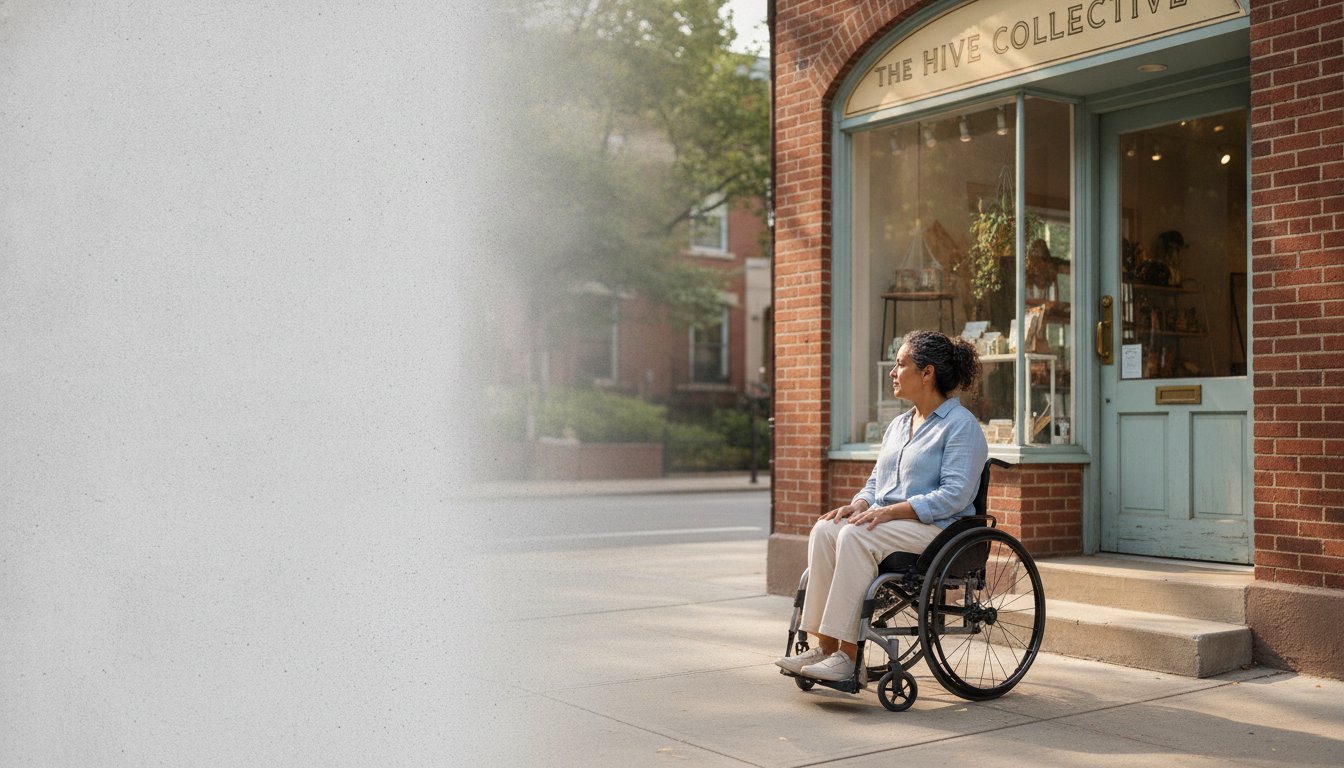
What counts as a disability access violation in Queens?
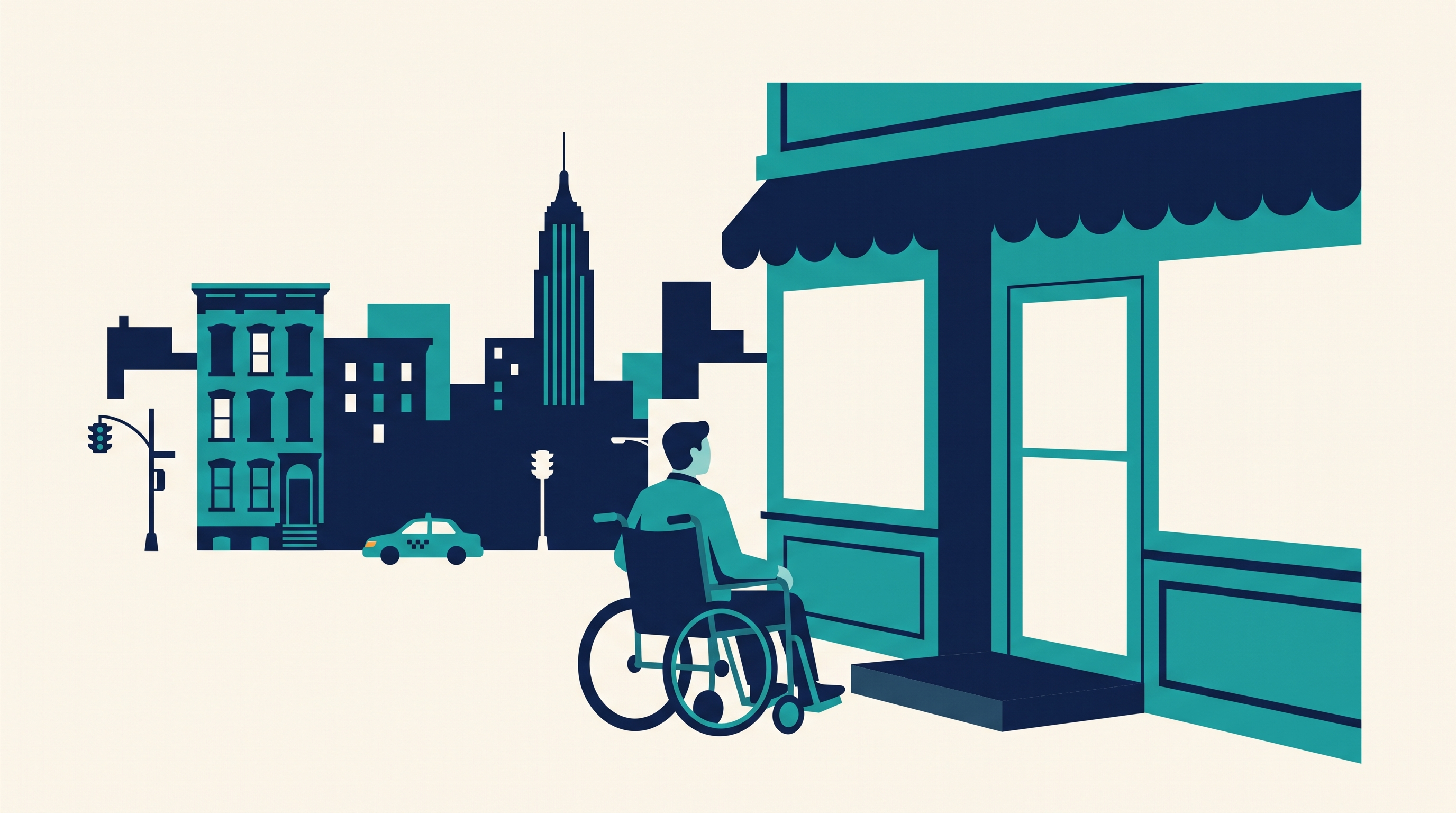
Have you ever tried to enter a deli in Astoria or a shop in Flushing only to be blocked by a single step? A disability access violation occurs when a public business denies you equal entry. It's more than just an inconvenience; it's a breach of your civil rights. The Americans with Disabilities Act (ADA) sets the federal baseline for these rules. If you can't get inside or use the services like everyone else, you may have grounds for a disability access complaint Queens.
These violations happen in private businesses that serve the public. Think about local grocery stores, pharmacies, or doctor's offices. If a physical barrier prevents you from shopping or receiving care, the business is likely in violation. To better understand this concept, watch this helpful video:
Common barriers in Queens restaurants and shops
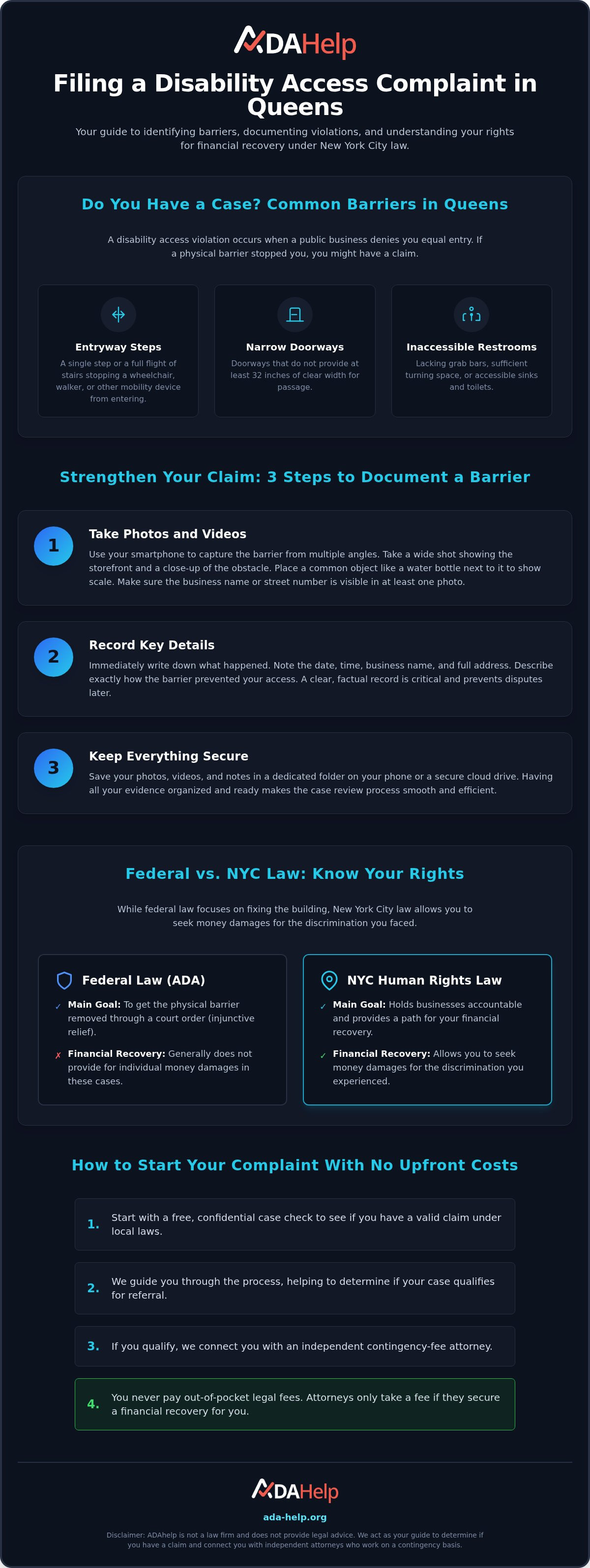
Queens has many older buildings, but that doesn't excuse a lack of access. Many business owners ignore their responsibility to remove barriers, and the pattern looks similar whether you're in a Queens deli or a restaurant elsewhere in New York. Common violations include:
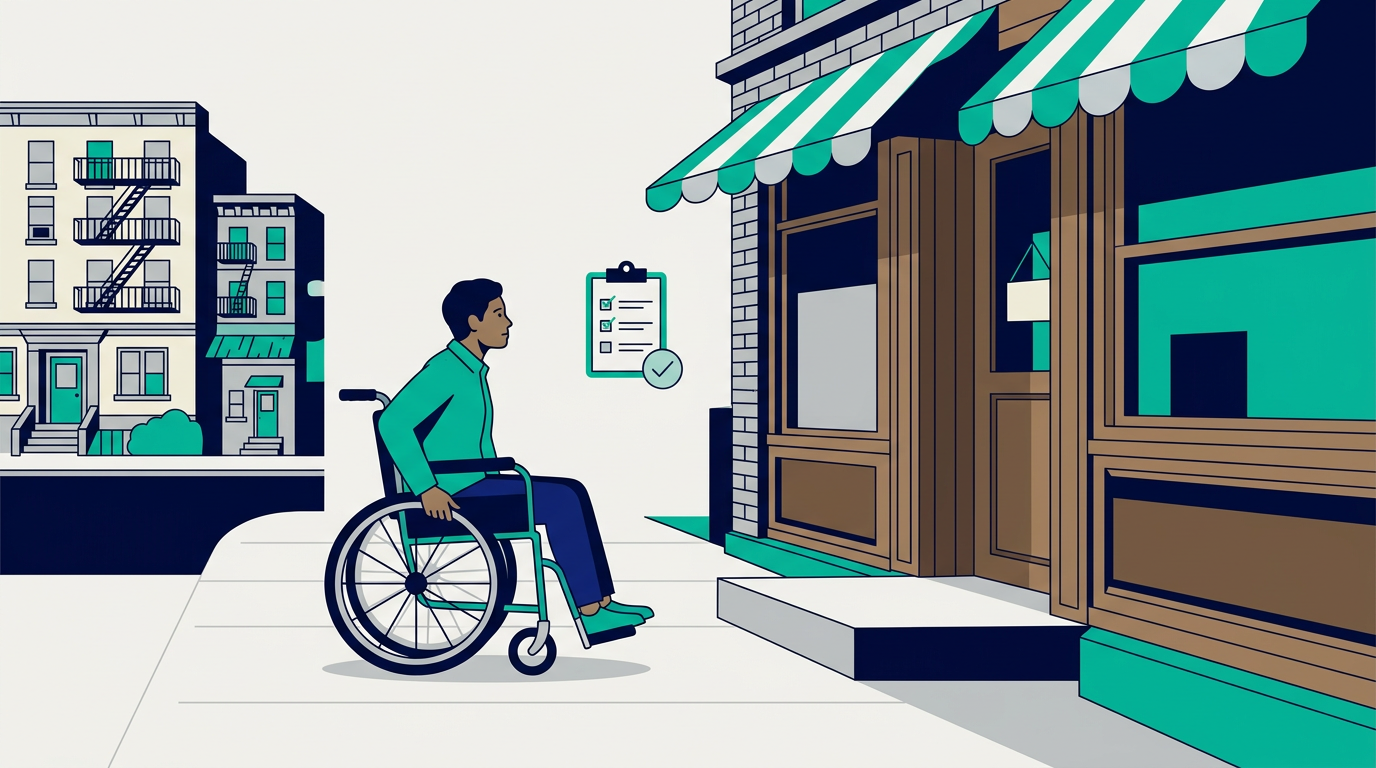
- Entryway steps that stop a wheelchair or walker from entering the building.
- Narrow doorways that don't provide at least 32 inches of clear width.
- Inaccessible restrooms that lack grab bars or enough floor space to turn around.
- High service counters that make it impossible to pay or speak with staff comfortably.
- Inaccessible seating in dining rooms where tables are too low or fixed chairs block mobility devices.
Your rights under the New York City Human Rights Law
The New York City Human Rights Law (NYCHRL) is one of the strongest civil rights laws in the United States. It applies to almost all businesses open to the public in the five boroughs. The NYCHRL acts as a tool for local accountability by holding business owners responsible for the barriers they maintain. While federal law often only results in a court order to fix the building, local New York laws allow you to seek financial recovery for the discrimination you faced.
At ADAhelp, we help you determine if you have a valid case under these local laws. We aren't a law firm and don't provide legal advice. Instead, we offer a free three-minute case check to see if you are eligible for a claim. If you qualify, we connect you with independent attorneys who work on a contingency-fee basis. This means you never pay out-of-pocket for their services; they only take a fee if they secure a recovery for you. You deserve to move through your neighborhood without being stopped by avoidable barriers.
How to document an ADA violation at a Queens business
Gathering evidence immediately is the most important step for your claim. When you face a barrier, it's natural to feel frustrated and want to leave the area as quickly as possible. However, taking a few minutes to collect proof makes it much harder for a business to deny the problem existed later on. You don't need to be an expert or a professional inspector to do this effectively. Simple, clear documentation provides the necessary foundation for any successful disability access complaint Queens.
Clear proof protects your rights. It turns a "he-said, she-said" situation into a factual record that a business owner cannot ignore. Your goal is to show exactly why the location was inaccessible to you. Keep all your records in a safe place, such as a dedicated folder on your phone or a secure cloud drive, so they are ready for your case manager to review.
Take photos and videos of the barrier
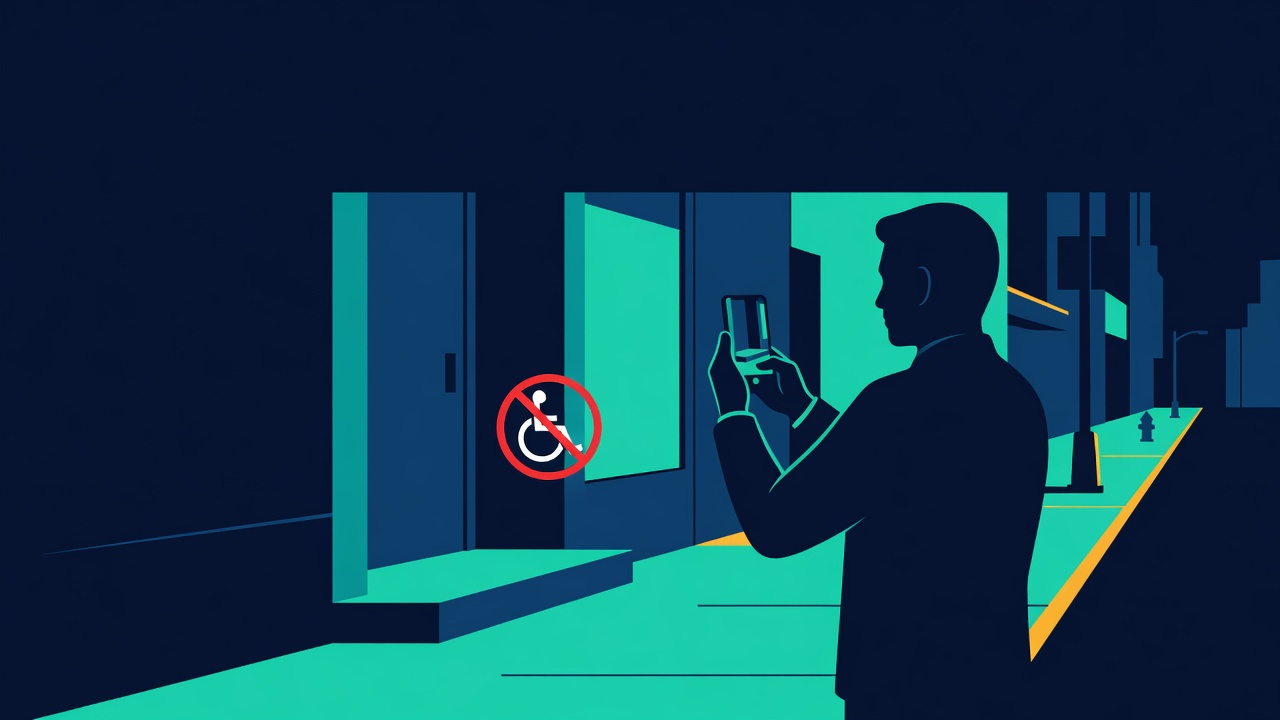
Start by pulling out your smartphone to capture the scene. Photograph the barrier from several different angles to give a full view of the obstacle. If there is a steep step at the entrance, take one photo from the sidewalk to show the whole storefront and another close-up of the step itself. Use a common object, such as a standard water bottle or your own phone, and place it next to the barrier. This helps show the scale and height of the issue to someone who isn't standing there with you. Always ensure the business name, street number, or a recognizable Queens landmark is visible in at least one of your photos to prove the exact location.
Record the date and location details
Accuracy is vital when you eventually File a complaint with the Department of Justice or pursue local recovery. Write down the exact address of the business, including the specific neighborhood like Astoria, Jamaica, or Ridgewood. Note the date and the specific time of day you encountered the barrier. If you spoke with an employee or a manager about the lack of access, try to get their name or a physical description.
Don't forget to record how the experience affected your day. Did you have to cancel a lunch meeting because you couldn't get inside? Did the encounter make you feel humiliated or excluded? Under the New York City Human Rights Law, these personal details are important. They help demonstrate the real-world impact of the discrimination you faced. If you have questions about whether your evidence is sufficient, you can start a free case check to see if your situation qualifies for a claim. Having these details ready allows our team to help you move forward without unnecessary delays.
Filing your complaint: Federal vs. New York City options
You have multiple ways to report a lack of access in Queens. Choosing the wrong path can limit the outcome of your case. Many people assume there is only one way to hold a business accountable, but the results vary wildly depending on where you file. If you want to see a barrier removed and receive compensation for your experience, you must understand the difference between federal and local options. Your choice determines whether you simply fix a building or get paid for the discrimination you suffered.
The federal Department of Justice (DOJ) path
Filing an ADA complaint with the DOJ is a common first thought for many. This process focuses on Title III of the Americans with Disabilities Act. The primary goal of a federal complaint is injunctive relief. This means the court orders the business to fix the physical barrier, like installing a ramp or widening a door. However, this process can take years to resolve. It often ends without any personal payout for the individual who filed the report. The DOJ path is best for creating broad changes in how businesses operate across the country rather than providing individual justice for your specific situation.
The New York City Human Rights Law (NYCHRL) path
The local path through the New York City Human Rights Law (NYCHRL) focuses on your personal recovery. This law is much broader than federal standards. It allows you to seek money damages for the discrimination you faced. These damages compensate you for the emotional distress and humiliation of being turned away from a public place. Claims under the NYCHRL are handled through local agencies or private claims right here in New York. This is the most effective way to secure a financial settlement while also forcing the business to comply with access rules.
ADAhelp specializes in managing these local New York claims. We help you through the process of a disability access complaint Queens by handling the intake and case management for you. We are not a law firm and do not provide legal advice. Instead, we act as your guide to determine if you have a valid claim under city and state laws. If your case is eligible, we connect you with independent attorneys who work on a contingency-fee basis. This means you never pay out-of-pocket. They only receive a fee if you get a recovery. Starting a free three-minute case check is the easiest way to find the right path for your situation.
Why Queens residents should seek financial recovery
Discrimination is not just a building problem; it is a personal injury. When a business fails to provide access, the impact on you is immediate and real. You might feel humiliated, frustrated, or excluded from your own neighborhood. New York laws recognize this emotional distress. They provide a path for you to hold a business accountable through a disability access complaint Queens. Seeking financial recovery is about more than just money. It is a way to ensure that businesses in Astoria, Jamaica, and across the borough take their legal obligations seriously.
A successful claim ensures you are compensated for the specific barrier you encountered. If a local shop ignores the law, they are neglecting their duty to the community. By filing a claim, you force them to acknowledge the harm they caused. This process helps prevent other neighbors from facing the same exclusion in the future. Accountability is the only way to ensure that the "open" sign on a door actually applies to everyone.
Typical recovery ranges in New York
Recovery amounts vary significantly based on the specific facts of your case. There is no fixed schedule for what a claim is worth. Typical settlements cover both emotional distress and statutory damages. It is important to remember that money damages come from the New York City Human Rights Law (NYCHRL) and the New York State Human Rights Law (NYSHRL). The federal ADA does not usually provide for these payouts. In fiscal year 2025, the NYC Commission on Human Rights enforcement efforts resulted in over 15 million dollars in compensatory damages for victims. Every situation is unique. Your potential recovery depends on the details of your experience and the severity of the barrier.
No out-of-pocket costs for your claim
You should never have to pay upfront to fight for your rights. Many people hesitate to start a disability access complaint Queens because they fear high legal bills. ADAhelp removes this barrier by using a contingency model. This means that if you are connected with an attorney, their fees are only taken from a successful recovery. If there is no recovery, you owe nothing. We handle the case management and intake process to make the path forward as simple as possible. You can start a free three-minute case check today to see if you are eligible for financial compensation without any financial risk to yourself. Our goal is to make the system work for you with minimal friction.
Where to File: Agencies & Deadlines
Once you've documented the barrier, you have several places to file formally. The New York State Division of Human Rights (DHR) accepts complaints from anywhere in the state, and because Queens is one of the five boroughs, the NYC Commission on Human Rights (CCHR) is available too. You can also file a Title III complaint with the U.S. Department of Justice (DOJ), though the DOJ generally pursues injunctive relief rather than money damages. The Equal Employment Opportunity Commission (EEOC) only handles workplace disability claims, not public accommodation issues like a blocked storefront, so it does not apply to a disability access complaint Queens case like this one.
Deadlines matter. For 2026, both the DHR and the NYCHRL generally require an administrative complaint within one year of the incident, while a direct NYSHRL lawsuit in court generally allows up to three years. You don't have to file with an agency before pursuing money damages through an independent attorney, and many claims move through the business discrimination filing process without ever needing a courtroom. If your barrier involved a public building rather than a private business, our guide to courthouse accessibility complaints walks through how that process differs.
How to start your disability access complaint in Queens
Starting your disability access complaint Queens takes less time than a trip to your local pharmacy. We know that real New Yorkers don't have time for endless paperwork or confusing legal jargon. Our process is designed to be stress-free and efficient. We handle the heavy lifting of information gathering and filing with the proper authorities, such as the New York City Commission on Human Rights. You focus on your daily life while we manage the complex case details for you. It is a focused way to turn your frustration into a clear path toward resolution.
Many people hesitate to speak up because the system feels too big to handle alone. We act as your capable guide through the entire process. We organize your evidence, verify the business details, and ensure your claim meets the specific requirements of the New York City Human Rights Law. This organized approach builds momentum for your case from the very first day. You won't have to guess about deadlines or which forms to fill out. We are here to make the system work for you with minimal friction.
The three-minute case check
The first step is simple. You answer a few straightforward questions about the incident you experienced in Queens. Did a high step at a Sunnyside cafe stop you from entering? Was a bathroom in a Flushing retail shop too small for your mobility device? These details help us determine immediately if you have a valid claim for discrimination. This check is the fastest way to find out if you are eligible for financial recovery. You can access this check for free at ada-help.org. It provides a low-friction way to evaluate your situation without any commitment.
Connecting with case management experts
After your check, our case management experts take over the details. It is vital to understand that we are not a law firm and do not provide legal advice. Our role is to manage your intake and connect you with independent attorneys who specialize in New York disability laws. These attorneys work on a contingency-fee model. This means they only take a fee from the money they recover for you. If there is no recovery, you don't owe them a cent. This structure ensures that justice is accessible to everyone, regardless of their financial situation. Take the first step toward holding businesses accountable by visiting learn more. You have the right to access every part of your borough, and we are here to help you protect that right.
Take the Next Step Toward Accessibility in Queens
Facing a barrier in your neighborhood doesn't have to be the end of the story. You now know that documenting a lack of access is the first step toward real accountability. While federal rules focus on fixing physical structures; local New York City laws prioritize your personal experience and potential financial recovery. Filing a disability access complaint Queens is a powerful way to ensure that local businesses respect the rights of every resident. You have the right to visit any shop or restaurant in your community without being excluded.
You don't have to manage this process alone or worry about high legal fees. Our expert New York case management team handles the intake and paperwork so you can focus on your life. We connect you with independent attorneys who operate on a contingency basis. This means there is no recovery; no fee. You face zero financial risk while fighting for justice and fairness in your community. Every successful claim helps make Queens more accessible for everyone who lives and works here. You deserve to move through your city without being stopped by avoidable obstacles.
Start your free three-minute case check now to see if your situation qualifies for a claim. We are ready to help you turn your frustration into a clear path forward.
Frequently Asked Questions
How long do I have to file an ADA complaint in Queens?
You have one year to file a complaint under the New York City Human Rights Law. If you are filing a federal disability access complaint Queens with the Department of Justice; the deadline is typically 180 days from the date of the incident. It's best to act quickly while your memory is fresh and the physical evidence of the barrier still exists. Waiting too long can result in your claim being dismissed.
Do I need a lawyer to file a disability access complaint?
Filing an initial report doesn't require a lawyer; but having professional representation is vital for securing financial recovery. Government agencies handle the enforcement of building codes; but they don't represent your personal interests. ADAhelp manages your intake and connects you with independent attorneys. These experts handle the complex legal filings so you don't have to navigate the system alone.
Can I get money for a wheelchair access violation in Queens?
Yes, you can seek money damages under the New York City Human Rights Law and the New York State Human Rights Law. While federal law usually only forces a business to fix the barrier; local laws allow for compensatory damages for emotional distress and humiliation. Recent settlements in New York have resulted in significant awards for victims of public access discrimination. Every case is different; and recovery depends on the specific facts of your experience.
What happens after I submit my case for a check?
Our team reviews your information to determine if you have a valid claim under city or state laws. We look at the photos of the barrier and the details of the business location in Queens. If your situation qualifies; we connect you with an independent attorney who specializes in disability rights. This process is designed to be fast and transparent; giving you a clear answer about your disability access complaint Queens within days.
Is there a cost to report a business for lack of access?
There is no out-of-pocket cost to start your case check or work with the attorneys we recommend. We operate on a contingency model; which means fees are only deducted if you receive a financial recovery. If your case does not result in a payout; you owe nothing. This ensures that every New Yorker can hold businesses accountable regardless of their current financial situation or ability to pay.
What if the business says they are in a landmark building?
Being a landmark building doesn't give a business a free pass to ignore accessibility laws. While certain structural changes might be limited; businesses are still required to provide "readily achievable" access under the ADA and reasonable accommodations under the NYCHRL. This might include installing portable ramps or providing service at the door. If a shop in a historic Queens neighborhood turns you away; they must prove that providing access was technically impossible.

Article by
ADA Help
Written by the ADAhelp editorial team and reviewed for accuracy before publishing. ADAhelp helps New Yorkers find out if they have a disability discrimination claim and manages the process end to end, working with independent attorneys who handle the legal work. We are not a law firm and do not provide legal advice.
Disclaimer
This article is general information about New York law, not legal advice, and reading it does not create an attorney-client relationship. ADAhelp is a case-management and intake service, not a law firm; legal representation is provided by independent attorneys. Recovery amounts and timelines vary by case, and past outcomes do not guarantee future results. For advice about your specific situation, speak with a qualified attorney or start the free case check.
Tags
Discriminated against in New York because of a disability?
A free three-minute check tells you if you can pursue a claim.
Check my case →New York onlyNo upfront costIndependent NY attorneysFree 3-minute check