Business Discriminating Against Disabled Customers NYC?
Reviewed for accuracy by the ADAhelp team before publishing. ADAhelp is not a law firm; legal work is handled by independent New York attorneys.
Is a business discriminating against disabled customers NYC? Find out if you have a case for money damages and learn how to file a claim at no upfront cost.
Imagine heading to a local shop only to find a steep step with no ramp or a staff member who refuses to help you. It is a common scene in the city; however, it is also illegal. If you feel a business discriminating against disabled customers NYC has ignored your rights, you don't have to just walk away. You deserve to access every store and restaurant in your neighborhood without struggle or disrespect.
Do you have a case? If you encountered a physical barrier or a dismissive employee at a public place in New York, the answer is likely yes. This article explains how to identify these violations and hold owners accountable. You will learn how to start a claim for money damages with no upfront cost. We provide the case management you need and connect you with independent attorneys who work on a contingency basis; this means they only get paid if you receive a recovery.
While federal laws like the ADA focus on fixing the physical problem, the New York City Human Rights Law allows you to seek financial compensation for the discrimination you experienced. We will break down the simple steps to document your experience and show you how to use our free case check to get started today.
Key Takeaways
- Learn how to identify physical and service barriers in local shops that violate your rights as a New Yorker.
- Find out if a business discriminating against disabled customers NYC owes you money damages under city and state laws.
- Discover why the New York City Human Rights Law offers stronger financial protections for you than federal laws alone.
- See exactly what evidence you need to document a violation and build a successful claim for compensation.
- Learn how to start our free three-minute case check to connect with a contingency-fee attorney at no upfront cost.
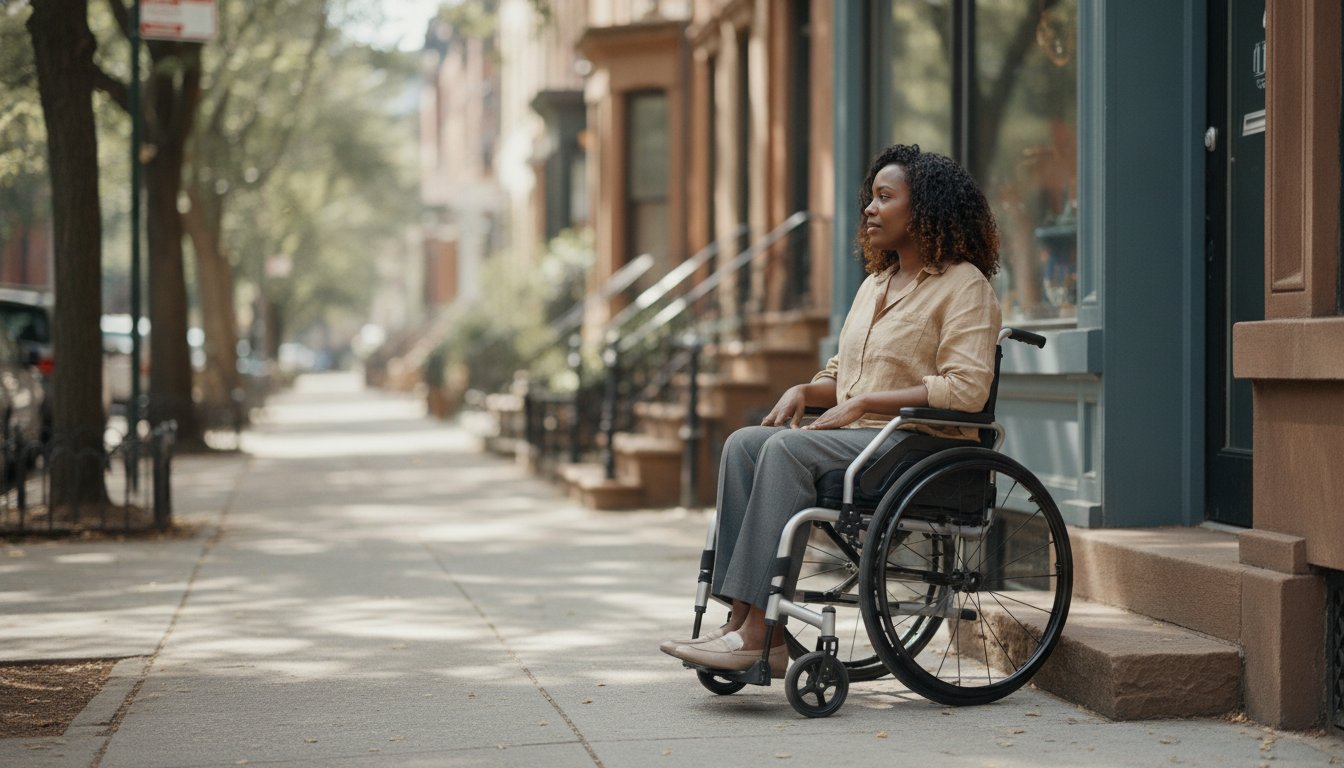
Does your experience count as business discrimination in NYC?
Public access discrimination happens when a business treats you differently or makes it impossible to use their services because of your disability. In New York City, local shops, restaurants, and offices must be accessible to everyone. If you encounter a business discriminating against disabled customers NYC, it is more than just a personal frustration; it is a legal violation. The Americans with Disabilities Act of 1990 established the baseline for these rights, but New York City laws provide even stronger protections.
Discrimination is not always about a staff member being rude. It often looks like a physical obstacle that stops you from entering a building or a digital barrier on a store's website. If a website does not work with screen readers, that business is effectively locking its doors to blind or low-vision customers. Similarly, if a policy prevents you from bringing a service animal inside, that business is violating your rights. You have the right to shop, dine, and work in your city without facing these unnecessary hurdles.
Common physical barriers in New York City
New York's older buildings often present challenges; however, age is rarely a valid excuse for non-compliance. You might encounter several common violations during your daily routine:
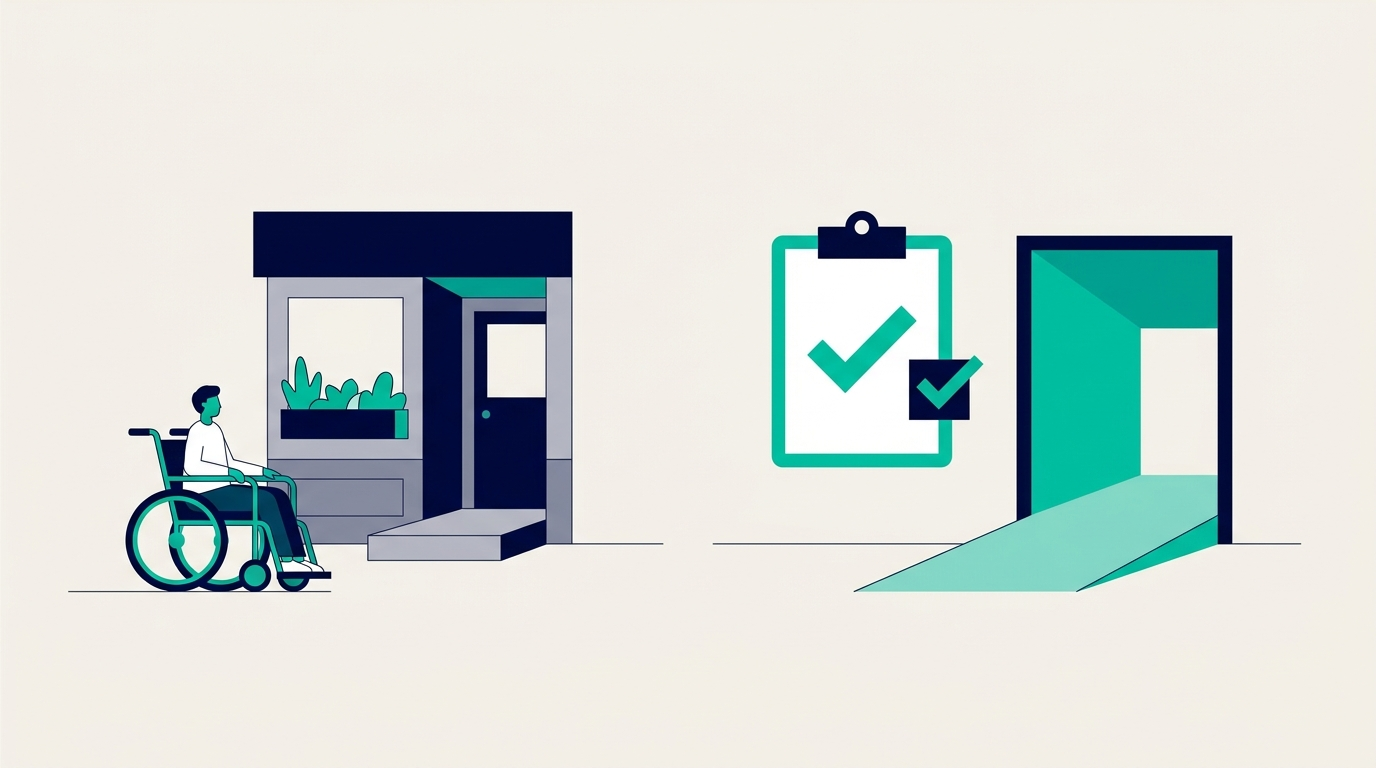
- Steps at the entrance without a portable or permanent ramp.
- Heavy doors that are impossible to open from a wheelchair or without assistance.
- Aisles blocked by merchandise or displays that prevent movement.
- Restrooms that lack grab bars or have doorways that are too narrow.
If a business discriminating against disabled customers NYC ignores these barriers, they are violating the law. These obstacles are not just inconveniences; they are signs that a business is not following the NYCHRL. Documenting these physical blocks is a vital part of starting your claim.
Service and policy violations
Discrimination also occurs through poor policies or untrained staff. If a waiter refuses to read a menu to a person with a visual impairment, they are failing to provide a reasonable accommodation. Some businesses try to charge extra fees for accessible seating or services, which is strictly prohibited. One of the most common issues involves service animals. A business cannot turn you away because you have a trained service dog. Even if they have a "no pets" sign, your service animal is legally allowed to accompany you.
Identifying these issues is the first step toward justice. You don't need to be a legal expert to know when something is unfair. If you've experienced any of these scenarios, our team at ADAhelp can help you determine if you have a valid case. We handle the heavy lifting of case management so you can move forward with confidence and hold the business accountable.
Understanding the laws that protect New Yorkers
You have rights under multiple layers of government. The federal Americans with Disabilities Act (ADA) sets a national standard for accessibility. However, New York City has its own set of rules that go much further. If you've encountered a business discriminating against disabled customers NYC, you need to know which law applies to your specific situation to get the best result.
Federal ADA vs NYC Human Rights Law
The ADA primarily focuses on physical changes to a property. If a court finds a violation under federal law, it usually grants what is known as injunctive relief. This is a court order that forces the business to fix the physical barrier, such as installing a ramp or widening a doorway. While this helps the community, it does not typically result in money for the person who was actually discriminated against. It simply makes the business follow the rules for the next visitor.
The NYC Human Rights Law is much more powerful for individuals seeking justice. It allows you to seek money damages for emotional distress and the loss of dignity you suffered during the incident. While federal law might ignore very small businesses or those with few employees, the city law covers almost every business that serves the public regardless of its size. You can find a complete breakdown of these local rules in our guide to Disability Discrimination Rights New York. This local law ensures that the burden of discrimination is felt by the business, not the customer.
Who is covered by these laws?
Most places you visit every day are classified as "public accommodations". This category is very broad in New York. It includes:
- Restaurants, bars, and nightclubs.
- Retail stores and grocery shops.
- Coffee shops and bakeries.
- Doctors' offices, pharmacies, and banks.
- Theaters and sports stadiums.
Federal law sometimes excludes private clubs or religious organizations from these requirements. New York City law is different. It often applies to these entities if they provide services to the general public or lease their space for public events. If you were turned away or couldn't get inside a building, don't assume the business is exempt because it is a private organization. Most businesses in the five boroughs must comply with these strict city standards.
Laws are complicated; however, justice should be simple. You don't need to memorize these statutes to stand up for yourself. We can help you identify which laws were broken and connect you with the right support. If you aren't sure where to start, you can check your case eligibility in just a few minutes without any upfront cost.
What is your disability discrimination case worth?
A business discriminating against disabled customers NYC owes you more than just an apology. While federal rules like the ADA Title III public accommodations requirements focus on fixing physical barriers, New York City law focuses on the person who was harmed. Money damages are intended to compensate you for the emotional distress and loss of dignity you experienced. You should not have to feel like a second-class citizen in your own neighborhood.
Typical recovery amounts vary based on the specific facts of your incident. There is no fixed price for a violation; however, the impact on your life is the primary factor. If you were denied entry to a pharmacy for your medication or turned away from a restaurant during a special celebration, the harm is significant. We help you document these details to show exactly how the discrimination affected your daily routine and well-being.
How damages are calculated in NYC
Courts in New York look at several factors when determining what a case is worth. They consider how many times you were denied access and how the business staff reacted to your presence. If a manager was intentionally rude or dismissive, it can strengthen your claim. In some instances, punitive damages may be available. These are extra fines meant to punish a business if their behavior was especially malicious or reckless. The goal is to ensure the business changes its ways so no one else has to go through what you did.
The no-cost contingency model
You might worry about the cost of holding a business accountable. In New York, justice is accessible to everyone regardless of their income. We operate on a contingency model; this means you never pay anything out-of-pocket for our case management services. The independent attorneys we work with also use this model. Their fees are taken only from the final recovery if your case is successful. If there is no recovery, you do not owe any service fees. This setup removes the financial risk from you and places the burden of effort on the service providers.
Your loss of dignity has a value, and the law is on your side. You can hold a business accountable without spending a dime of your own money. If you want to see if your experience qualifies for compensation, you can start a free three-minute case check today. We handle the paperwork and the process so you can focus on moving forward.
How to document a business violation in NYC
Evidence is the bridge between a bad experience and a successful claim. When you feel a business discriminating against disabled customers NYC has treated you unfairly, you must act quickly. Your memory is sharpest right after the event. Collecting facts now prevents the business from denying the incident later. You don't need to be a professional investigator; you just need to be thorough and organized. Strong proof ensures that your claim is taken seriously from the very beginning.
Step 1: Take photos and video
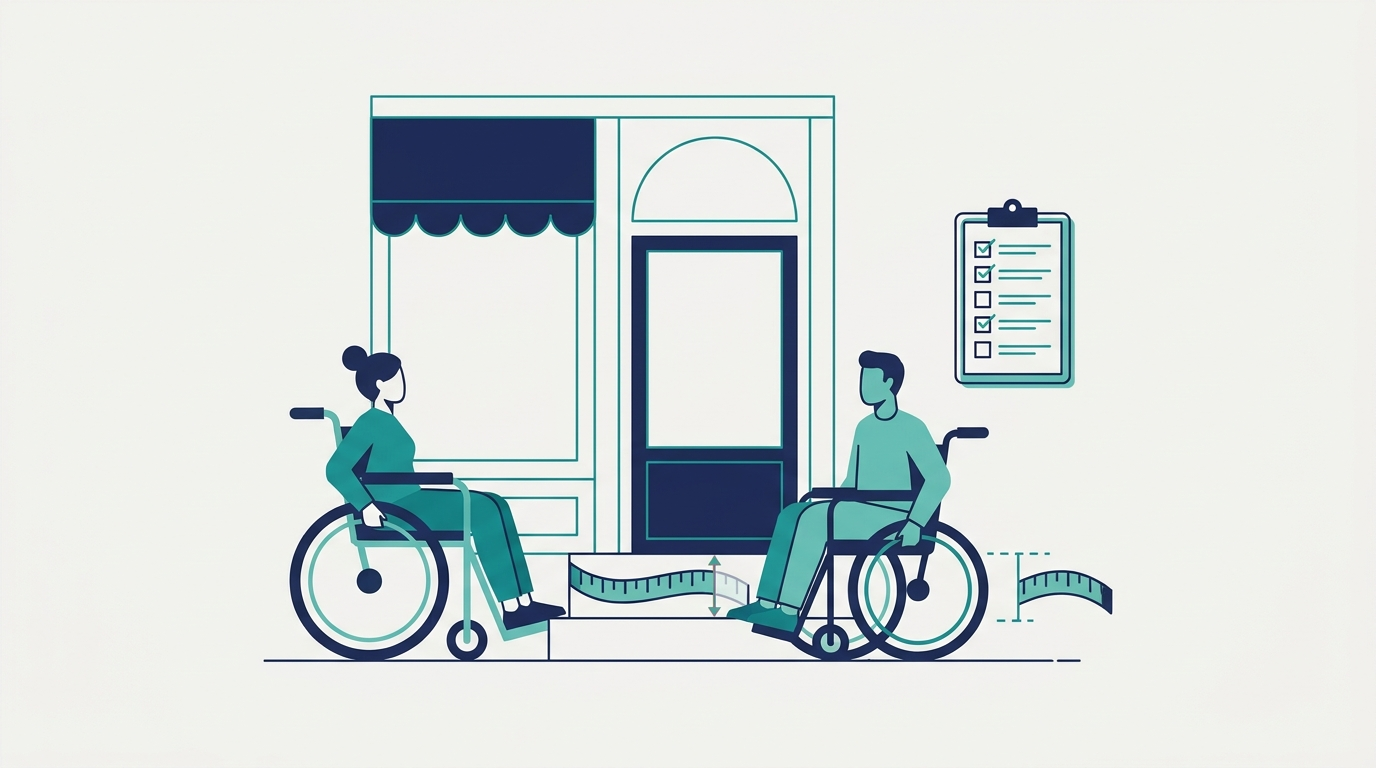
Visual proof is hard to argue with. Take clear pictures of the physical barrier from several angles. If there is a step at the entrance, place a common object like a soda can or a ruler next to it. This provides a clear scale for the height of the obstacle. Video is also helpful to show how difficult a door is to open or how narrow an aisle feels when you try to pass. Make sure you capture the storefront, the business sign, and the street address. There should be no confusion about which specific location is responsible for the violation.
Step 2: Note the details
Write down everything while it is fresh in your mind. Record the exact date and time of your visit. If you spoke to a manager or a clerk, describe them or get their names if possible. What did they say to you? If they were rude, dismissive, or refused to provide a reasonable accommodation, write down their exact words. These details are vital for proving emotional distress under the NYCHRL. Keep your notes factual and avoid exaggerating. The reality of the barrier is enough to prove your case without adding extra drama.
Step 3: Keep your receipts
Always save your proof of visit. If you were able to buy something despite the barrier, keep the receipt. It proves you were at the location on that specific day. If you sent an email or a social media message to the business to complain, save those digital records as well. Did anyone else see what happened? If a friend, family member, or another customer witnessed the discrimination, ask for their contact information. Their statement can strengthen your claim significantly by providing an outside perspective on the incident.
Once you have your evidence, the next step is simple. You don't have to figure out the legal paperwork on your own. We can help you organize your proof and determine if you have a valid claim. If you are ready to hold a business accountable, start your free case check to see how we can help you move forward.
Where to File: Agencies & Deadlines
When a business discriminating against disabled customers NYC has denied you access, you can report it to more than one agency. The right venue depends on where it happened and whether you want money damages. Watch the deadlines closely, because a missed cutoff can end an otherwise strong claim.
- NYC Commission on Human Rights (CCHR) — for incidents in the five boroughs under the NYCHRL, the strongest law for emotional-distress and punitive damages. You generally have three years to file. Start at nyc.gov/cchr.
- NY State Division of Human Rights (DHR) — for discrimination anywhere in the state under the NYSHRL. For incidents on or after February 15, 2024, you have three years to file; earlier incidents keep the old one-year limit. File at dhr.ny.gov.
- U.S. Department of Justice (DOJ) — enforces ADA Title III for public accommodations (service-animal denials, physical and digital barriers). There is no set deadline to report to the DOJ, but act quickly. File at ada.gov.
- EEOC — if the discrimination happened at your job rather than as a customer, the federal charge deadline is 300 days. See ada.gov for how ADA employment claims work.
Start your free case check with ADAhelp
You don't have to face the legal system alone. If you encountered a business discriminating against disabled customers NYC, the path to justice is simpler than you think. We act as your proactive partner. Our team handles the entire process from gathering your initial information to helping file your claim. We believe the burden of effort should lie with the service provider, not with the person who suffered the discrimination. You have already dealt with enough frustration; let us handle the heavy lifting for you.
It is vital to remember that ADAhelp is not a law firm. We do not provide legal advice. Instead, we are professional case managers who specialize in New York public access claims. We bridge the gap between your experience and the legal resolution you deserve. We connect you with independent experts who know the local system intimately. This ensures your case is handled with the seriousness and speed required to get results in the five boroughs.
How our case management works
Our process is designed to be fast and streamlined. You start by providing the details of your encounter through our secure online form. This is where you can share the photos and notes you gathered. Once you submit your info, we review the facts to determine if a legal violation occurred under the NYCHRL or state laws. If we find that you have a valid claim, we match you with an independent contingency-fee attorney. These lawyers only get paid if you receive a recovery. You never have to worry about out-of-pocket costs or hourly fees. If there is no recovery, you owe nothing.
Take the first step now
Do not let a business ignore your rights or treat you like a second-class citizen. Every time a New Yorker stands up to discrimination, it makes the city more accessible for everyone else. You have the power to hold local shops and restaurants accountable. Your action ensures that the next person with a disability doesn't face the same barrier you did. It is about fairness, justice, and making our city work for every individual.
Why wait to get started? Our three-minute case check is the fastest way to see if you have a claim. It is free, secure, and requires no financial commitment. Click the link to begin your evaluation and see if you qualify for money damages today. Start your free three-minute case check now and let us help you move toward a stress-free resolution.
Take action against discrimination today
You now have the tools to identify and document a business discriminating against disabled customers NYC. Remember that physical barriers like steep steps and policy violations like refusing service animals are illegal. While federal laws focus on fixing the building, the New York City Human Rights Law allows you to seek the money damages you deserve for your loss of dignity. You don't have to accept being treated unfairly in your own neighborhood.
Our team at ADAhelp is ready to be your proactive partner. We are not a law firm; however, we are New York City experts in public access case management. We handle the paperwork and connect you with independent attorneys who work on a contingency basis. This means there is no financial risk to you. You get a free case evaluation, and you never pay a fee unless there is a recovery. Every person who stands up makes New York a fairer place for everyone. Start your free three-minute case check right now and hold the business accountable.
Frequently Asked Questions
Do I need a lawyer to report a business for discrimination in NYC?
If you are dealing with a business discriminating against disabled customers NYC, you don't technically need a lawyer to file a report with a city agency. However, if you want to seek money damages for your experience, working with an attorney is the most effective path. We are not a law firm; instead, we manage your case and connect you with independent contingency-fee lawyers who handle the legal work for you.
How long does a disability discrimination case usually take in New York?
Every case moves at its own pace. Some resolutions happen in a few months; others can take a year or more if they proceed to court. The duration depends on the complexity of the violation and how the business chooses to respond to the claim. We work to keep your case moving forward quickly so you can reach a resolution and receive your recovery without unnecessary delays.
Can I file a claim if the business is a small mom-and-pop shop?
Yes, the law applies to almost every business in the city. The New York City Human Rights Law is very broad and covers small mom-and-pop shops just like large corporations. A business discriminating against disabled customers NYC cannot use its small size as an excuse to ignore accessibility requirements. Every shop, deli, and local boutique must ensure that all New Yorkers can access their services safely.
What if the business says they cannot afford to build a ramp?
Businesses must provide reasonable accommodations even if they claim they cannot afford a permanent ramp. If a structural change is too expensive or physically impossible, they must offer an alternative like a portable ramp or curbside service. They are legally required to find a way to serve you. A business cannot simply ignore your needs because of the cost of construction or the age of their building.
Can I be retaliated against for filing a discrimination claim?
No, retaliation is strictly illegal under both city and state laws. A business cannot ban you, harass you, or threaten you because you filed a discrimination claim. If a business owner tries to punish you for standing up for your rights, they are committing a separate and serious violation. This behavior often leads to additional legal consequences and can increase the final recovery amount for your case.
What is the statute of limitations for an ADA claim in NYC?
You generally have three years from the date of the incident to file a lawsuit in court. If you choose to file an administrative complaint with the NYC Commission on Human Rights, you must do so within one year. It is always best to start your case check as soon as possible while your memory is fresh. Acting quickly ensures your claim stays within these legal time limits and evidence is preserved.

Article by
ADA Help
Written by the ADAhelp editorial team and reviewed for accuracy before publishing. ADAhelp helps New Yorkers find out if they have a disability discrimination claim and manages the process end to end, working with independent attorneys who handle the legal work. We are not a law firm and do not provide legal advice.
Disclaimer
This article is general information about New York law, not legal advice, and reading it does not create an attorney-client relationship. ADAhelp is a case-management and intake service, not a law firm; legal representation is provided by independent attorneys. Recovery amounts and timelines vary by case, and past outcomes do not guarantee future results. For advice about your specific situation, speak with a qualified attorney or start the free case check.
Tags
Discriminated against in New York because of a disability?
A free three-minute check tells you if you can pursue a claim.
Check my case →New York onlyNo upfront costIndependent NY attorneysFree 3-minute check