How to Prove Disability Discrimination in Housing NY (2026)
Reviewed for accuracy by the ADAhelp team before publishing. ADAhelp is not a law firm; legal work is handled by independent New York attorneys.
Learn how to prove disability discrimination in housing NY. Collect key evidence, seek money damages under NY laws, and start a free three-minute case check.
What if your landlord was legally responsible for the costs of making your home accessible; and they simply haven't told you? It is frustrating to feel stuck in a home that does not meet your physical needs because a property owner ignores your requests. You may feel small when facing a large management company or a stubborn landlord. Learning how to prove disability discrimination in housing NY is the first step toward taking back control and securing a safe place to live.
You can hold them accountable and potentially recover money damages for the stress and barriers you have faced. While federal law often focuses on fixing the physical problem; the New York State Human Rights Law and New York City Human Rights Law allow for financial compensation; especially in NYC buildings with three or more units. This guide outlines the exact evidence you need to collect and the simple steps to start a claim. We are not a law firm; but we provide the case management you need to evaluate your situation and connect with independent attorneys. You will learn what your claim is worth and how to start a free three minute case check with no out of pocket costs.
Key Takeaways
- Identify discriminatory actions under New York State and City laws that offer more protection than the federal ADA.
- Build a strong paper trail by saving every text, email, and letter sent between you and your landlord or management company.
- Learn how to seek money damages for your suffering rather than just asking for a physical repair or modification.
- Follow our guide on how to prove disability discrimination in housing NY to hold property owners accountable.
- See if you have a case with a free three minute check that involves no out of pocket costs or financial risk.
Do You Have a Case for Housing Discrimination in New York?
You might wonder if your landlord's behavior is just rude or actually illegal. In New York; discrimination is often subtle. It does not always involve a landlord shouting a slur or being openly hostile. Instead; it often looks like a "no" that does not make sense or a sudden change in lease requirements. If you suspect your rights were violated; understanding how to prove disability discrimination in housing NY starts with identifying the specific illegal act. You have a case if a landlord; broker; or management company treats you differently because of a physical or mental impairment. This applies even if they never mention your disability out loud.
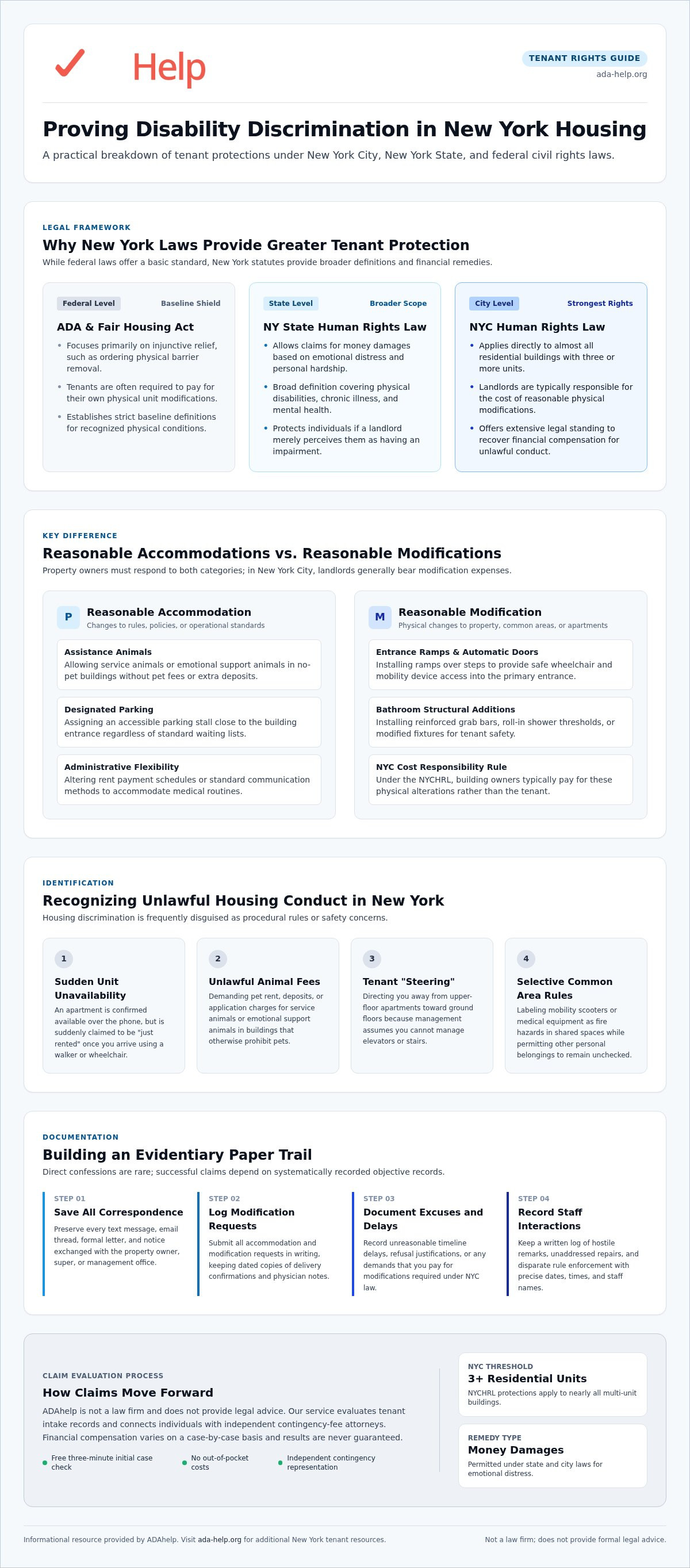
New York laws protect you from more than just a flat-out refusal to rent. Discrimination includes any "different treatment" in the terms; conditions; or privileges of housing. For example; if a landlord charges you a higher security deposit because you use medical equipment; they are violating the law. If other tenants can leave personal items in common areas but you are told your mobility scooter is a fire hazard; you may have a claim. The burden is not on you to find a "smoking gun" email. You only need to show that your disability was a factor in the landlord's decision to treat you poorly.
Common Signs of Housing Discrimination
Landlords often hide their bias behind excuses that sound professional. You might call about an apartment and hear it is available; but once you arrive with a walker or wheelchair; the unit is suddenly "just rented." This is a classic sign of a violation. Another frequent issue involves assistance animals. Refusing to allow a service animal or an emotional support animal in a "no-pet" building is illegal. Property owners cannot charge you pet rent or a pet deposit for these animals. You should also watch out for "steering." This happens when a landlord tries to push you into a specific building or floor; such as the ground floor; because they assume you cannot handle the elevator or stairs. They are making a choice for you; which the law forbids.
Defining Disability Under New York Law
The federal Fair Housing Act provides a baseline for protection; but New York laws go much further. The New York State Human Rights Law (NYSHRL) and the New York City Human Rights Law (NYCHRL) define disability very broadly. These protections cover physical disabilities; chronic illnesses; and mental health conditions. In New York City; these rules apply to almost all buildings with at least three units. New York law protects anyone who is discriminated against because a housing provider perceives them as having a disability; regardless of whether a formal diagnosis exists. Knowing how to prove disability discrimination in housing NY requires showing that your medical condition; or the perception of one; was the reason for the unfair treatment. While federal law mainly focuses on fixing physical barriers; New York laws allow you to seek money damages for the emotional distress and hardship you endured.
Recognizing Discriminatory Statements and Actions
Landlords rarely hand you a signed confession. Instead; they use excuses to push you away or make your living situation difficult. If you want to know how to prove disability discrimination in housing NY; you must look for the subtext in your daily interactions. Hostility from building staff; such as a super who ignores your repair requests or a doorman who makes snide remarks about your equipment; can be vital evidence. These actions create a hostile housing environment. It is a violation of your rights just as much as a direct refusal to rent. Documenting these moments helps build a pattern of behavior that is hard for a property owner to deny.
Reasonable Accommodations vs. Modifications
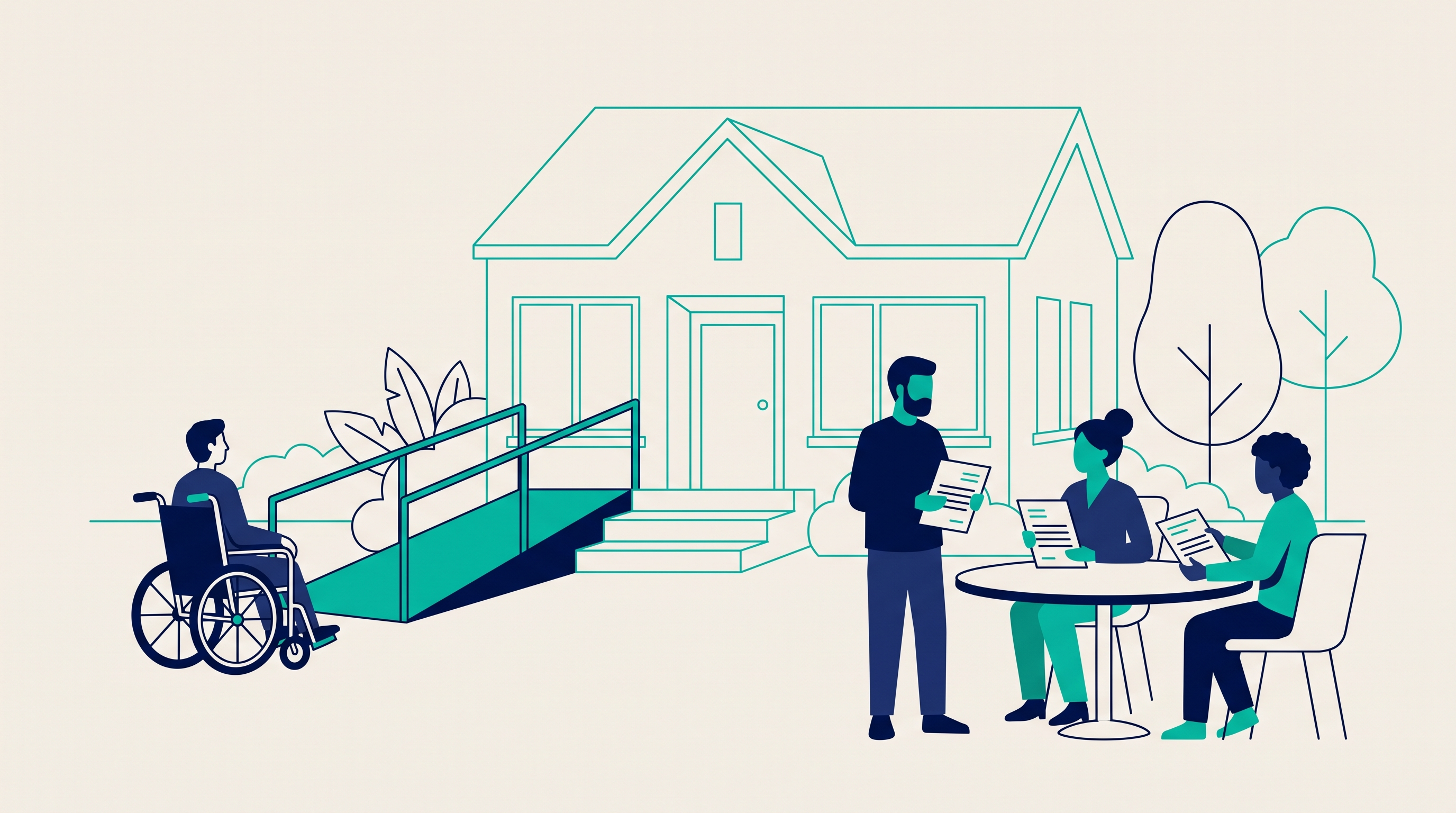
A primary form of evidence in any claim is the denial of a request for a change. You have the right to ask for both accommodations and modifications. An accommodation is a shift in a rule or policy. This might include an assigned parking spot near the entrance or allowing a service animal in a building with a "no pets" rule. A modification is a physical change to the property; like a ramp or grab bars in a bathroom. Under the New York City Human Rights Law; the landlord is typically responsible for the cost of these reasonable modifications. This is a major advantage for New Yorkers; as federal law often requires tenants to pay for these changes themselves. If a landlord says "no" or tries to charge you for a ramp; they are likely breaking the law.
How Landlords Use Coded Language
Watch for phrases that sound helpful but actually aim to discourage you from living in a building. A landlord might say; "This building has a lot of stairs; you might be happier in a newer complex." This is a common way to steer you away without being direct. They might also claim "insurance risks" when you ask about installing a simple ramp or elevator access. This is a red flag. Some landlords even ask for excessive medical records that go beyond what is needed to prove your disability. You don't need to share your entire medical history to get a fair shake. If you have been told an apartment is "not a good fit" after disclosing a disability; you should start a free case check to see if those statements qualify as legal discrimination.
Proving these patterns of behavior is a major part of learning how to prove disability discrimination in housing NY. Every text message; email; or recorded voicemail helps build your case for money damages. New York law focuses on the impact of the landlord's actions rather than just their intent. If their words or rules make it harder for you to enjoy your home; you have grounds to take action. Keeping a log of these comments ensures you have the evidence needed when you are ready to move forward.
Why New York Laws Offer More Protection Than the ADA
Many New Yorkers think the Americans with Disabilities Act (ADA) is their only shield. While the ADA is a landmark law; it has limits. If you are learning how to prove disability discrimination in housing NY; you need to look beyond federal rules. The ADA focuses on injunctive relief. This means a court can order a landlord to fix a broken elevator or install a ramp; but it rarely awards money to the person who was hurt. New York laws are different. They recognize that discrimination causes real pain and financial loss. They allow you to seek compensation for the actual harm you suffered.
Local laws fill the gaps that federal law leaves behind. When a landlord ignores your request for a grab bar or blocks your service animal; they aren't just creating a physical barrier. They're disrupting your life. New York laws treat these actions as serious civil rights violations. These statutes provide a path to hold property owners accountable in ways that go far beyond a simple repair order. This is why focusing on state and city rules is the smartest move for your claim. It shifts the focus from just fixing a building to compensating you for your experience.
Recovering Money Damages in New York
In New York; a successful claim often results in money damages. This compensation covers more than just out-of-pocket costs. You can recover money for emotional distress; which accounts for the humiliation and stress of being treated unfairly. In some cases; you may even receive punitive damages. These are meant to punish a landlord for especially bad behavior. Typical recovery amounts vary from case to case; but they are designed to make you whole. Independent contingency-fee attorneys handle these cases to secure the highest possible recovery. You don't have to worry about hourly bills or upfront costs. Fees are only taken if you win a settlement or award; so the financial risk stays off your shoulders.
The Role of the NYSHRL and NYCHRL
The New York State Human Rights Law (NYSHRL) and the New York City Human Rights Law (NYCHRL) apply to almost all housing providers. Federal laws sometimes exempt small buildings; but the NYCHRL covers nearly every building in the city with at least three units. This is vital because many New Yorkers live in older or smaller buildings managed by local landlords. These local laws are your strongest tools. Filing under the NYSHRL or NYCHRL is the most effective way to seek justice. When you understand how to prove disability discrimination in housing NY through these local statutes; you gain access to protections that federal law simply does not offer. These authorities; like the New York State Division of Human Rights; provide the framework to ensure your rights are respected and your voice is heard.
How to Document Your Housing Discrimination Claim
Your word against theirs is a difficult battle. Landlords often rely on the fact that you might forget the specific details of a conversation months later. To stop this; you must build a paper trail that speaks for itself. Successful claims rely on a clear record of every interaction you have with building management. Save every email; text message; and letter you receive. If you are learning how to prove disability discrimination in housing NY; you must treat your housing search or residency like a professional project. This level of organization makes it much easier for an independent attorney to see the strength of your claim.
Creating an Evidence Log
Start an evidence log today. This is not just a diary; it is a factual record of events that occurred. For every interaction; record the date; time; and location. Note the names and titles of everyone you spoke with; from the leasing agent to the building superintendent. Write down exact quotes whenever possible. If a landlord says "we don't think this building is right for someone in your condition;" that specific phrase is high-value evidence. If a neighbor or friend witnessed the interaction; add their name and contact information to your log. Witnesses provide the outside perspective needed to confirm your account of the events.
Handling Verbal Interactions
Many landlords prefer to discuss sensitive topics over the phone or in person to avoid a written record. You can counter this by following up every phone call with a summary email. Start the email with a phrase like "Per our conversation earlier today" and list the main points discussed. This forces the landlord to either agree with your summary or correct it in writing. Always submit your reasonable accommodation requests via email or certified mail. Never rely on a verbal promise to fix a ramp or allow a service animal. Keep copies of your original rental application and any rejection letters you receive. These documents are the foundation of your case. If you have collected this evidence; you can submit your details for a free case check to see if your documentation supports a claim for money damages.
Remember that New York laws; including the NYSHRL and NYCHRL; prioritize the facts of the interaction over the landlord's stated intent. Even if they claim they were "trying to help;" their refusal to provide an accommodation is what matters. When you have a clear timeline and copies of all communications; you remove their ability to change their story later. This documentation is the most powerful tool you have to secure justice and compensation for the barriers you have faced in your own home.
Where to File: Agencies & Deadlines
Once you have documented the pattern of discrimination, you can file a formal complaint with more than one agency. Filing with the right office, before your deadline passes, is what turns your evidence into a legal claim.
- New York State Division of Human Rights (DHR): Handles complaints under the NYSHRL for housing statewide. You generally have one year from the discriminatory act to file. Learn more at dhr.ny.gov.
- NYC Commission on Human Rights (CCHR): Enforces the NYCHRL for New York City housing providers. Complaints are also generally due within one year. Details are available through nyc.gov/cchr.
- U.S. Department of Justice (DOJ): Investigates pattern-or-practice violations of the federal Fair Housing Act and can refer individual complaints to HUD. Federal Fair Housing Act complaints must generally be filed within one year, and you have up to two years to sue in federal court.
- Equal Employment Opportunity Commission (EEOC): Does not handle housing claims, but is the right agency if the same landlord or management company also discriminated against you as an employee. EEOC charges generally must be filed within 300 days.
If you choose to sue in New York state court instead of filing with an agency, you generally have three years from the discriminatory act. ADA.gov also publishes general guidance on federal disability rights that can help you understand how these laws interact.
How ADA Help - NY disability discrimination claims Manages Your New York Housing Claim
Taking on a landlord or a large management company is exhausting. You already deal with daily accessibility barriers in your own home. Adding a legal battle to your plate often feels impossible. ADA Help - NY disability discrimination claims simplifies the process by handling the heavy lifting for you. We understand how to prove disability discrimination in housing NY by organizing your evidence into a professional format that authorities and attorneys can use. You don't have to spend hours researching statutes or worrying about filing deadlines alone. Our team is here to act as your proactive partner through a system that is often confusing and slow.
The Three-Minute Case Evaluation
The first step is fast and stress-free. You can start with a free three-minute case check to see if you have a claim. This evaluation asks a few simple questions about your housing situation and the specific barriers you have faced. There is no legal jargon to decode and no confusing forms are required for the check. You get an immediate sense of whether your rights were violated under the NYSHRL or NYCHRL. It is a low-risk way to find out where you stand without committing to a long; expensive process. Most New Yorkers find this initial check provides the clarity they need to move forward with confidence.
End-to-End Case Management
Once we determine you have a strong case; ADA Help - NY disability discrimination claims manages the entire filing process from start to finish. We are not a law firm and do not provide legal advice; but we act as a guide in a system that often feels rigged against tenants. Our team handles the intake; gathers your documentation; and ensures your claim is filed correctly with the New York State Division of Human Rights or other relevant agencies. We then connect you with independent attorneys who work on a contingency fee basis. These lawyers take their fees from the final recovery; never from your own pocket. This model ensures that everyone is motivated to secure the highest possible amount for your emotional distress and hardship. Follow this link to start your free case check today.
Our service is designed for real New Yorkers who need results without the typical stress of the legal system. We use the evidence you have collected; like the logs and emails discussed earlier; to build a professional case file. This organized approach is often the difference between a dismissed complaint and a successful recovery. By using local New York laws to seek money damages; ADA Help - NY disability discrimination claims helps turn your frustration into a path for justice. You deserve a home that is accessible and a landlord who respects the law. Let us handle the details while you focus on your future.
Secure Your Rights and Compensation Today
You don't have to accept an inaccessible home or a landlord who ignores your legal rights. You now know that New York laws provide powerful protections that go far beyond federal rules. By keeping a detailed log of interactions and saving every email, you have already started the process of how to prove disability discrimination in housing NY. These local laws exist to ensure you can recover money for the emotional and physical barriers you have faced in your own home.
ADA Help - NY disability discrimination claims is ready to handle the heavy lifting for you. Our New York specific case management service operates on a contingency fee model, which means you never pay out of pocket. We only take a fee if you secure a recovery. Start your free three-minute case check now to see if your situation qualifies for a claim. Let us help you hold your landlord accountable and secure the justice you deserve. You have the right to live with dignity and we are here to help you protect it.
Frequently Asked Questions
Do I have a housing discrimination case in New York?
You likely have a case if your housing provider treats you differently due to a physical or mental impairment. This includes refusal to rent; steering; or denying modifications. New York laws provide broader protections than the federal ADA. The New York City Human Rights Law covers almost all buildings with at least three units. If you face barriers in your own home; you can seek money damages for the hardship you endured.
What is my housing discrimination claim worth?
The value of your claim depends on the severity of the discrimination and its impact on your life. Successful New York claims typically lead to money damages for emotional distress and financial loss. In extreme cases; you may even receive punitive damages to punish the landlord. Every situation is unique; so amounts vary case by case. Independent attorneys handle these claims to secure the highest possible recovery for the barriers you faced.
Can a landlord refuse my service animal in NYC?
No; landlords in New York City cannot refuse a service animal or an emotional support animal. These animals are medical accommodations; not pets. Even buildings with "no-pet" policies must allow them. Property owners cannot charge you pet rent or security deposits for these animals. If a landlord asks for excessive medical proof or says no; they are likely violating the New York City Human Rights Law and your rights.
How long do I have to file a housing discrimination claim in NY?
You generally have one year to file a complaint with the New York State Division of Human Rights. If you choose to sue in court; the limit is typically three years. Learning how to prove disability discrimination in housing NY requires acting before these deadlines pass. Collecting your evidence early ensures your paper trail is strong. Missing these dates can prevent you from ever recovering the money damages you deserve for your suffering.
Do I need to pay for an ADA case management service upfront?
No; you pay nothing upfront for our services. ADA Help - NY disability discrimination claims operates on a contingency fee model. We only get paid if you secure a recovery. There are no out of pocket costs for your initial three minute case check or the filing process. This keeps the financial risk on us rather than you. We connect you with independent attorneys who also work on a contingency basis to resolve your housing claim.
What if my landlord says the building is too old for a ramp?
An old building is rarely a valid excuse to deny a ramp or other access. Under the New York City Human Rights Law; property owners must provide reasonable modifications unless they can prove it is an extreme financial burden. For buildings with at least three units; the landlord often must pay for these changes themselves. If they claim it is impossible; you should check your case to see if they are breaking the law.

Article by
ADA Help
Written by the ADAhelp editorial team and reviewed for accuracy before publishing. ADAhelp helps New Yorkers find out if they have a disability discrimination claim and manages the process end to end, working with independent attorneys who handle the legal work. We are not a law firm and do not provide legal advice.
Disclaimer
This article is general information about New York law, not legal advice, and reading it does not create an attorney-client relationship. ADAhelp is a case-management and intake service, not a law firm; legal representation is provided by independent attorneys. Recovery amounts and timelines vary by case, and past outcomes do not guarantee future results. For advice about your specific situation, speak with a qualified attorney or start the free case check.
Tags
Discriminated against in New York because of a disability?
A free three-minute check tells you if you can pursue a claim.
Check my case →New York onlyNo upfront costIndependent NY attorneysFree 3-minute check