HOA Disability Discrimination Complaint NY: Housing Hub
Reviewed for accuracy by the ADAhelp team before publishing. ADAhelp is not a law firm; legal work is handled by independent New York attorneys.
HOA denied your ramp, parking spot or service animal? See how to file an HOA disability discrimination complaint in NY, the deadlines, and what recovery looks…
Your HOA or co-op board does not have the final word on whether your home is accessible. It is exhausting to feel trapped in your own apartment because a board refuses to approve a ramp, blocks a grab bar, or tells you a service animal violates the no-pet rule. Filing an HOA disability discrimination complaint in NY is often the clearest way to get the change you need and to document what the board did.
This page is also the starting point for our full New York housing library. Whether your issue is an HOA board, a landlord, an eviction notice, or an assistance animal, you will find the right guide linked below. ADA Help is a case-management and intake service, not a law firm. We help you figure out whether you have a claim, organize your evidence, and connect you with independent attorneys who work on a no recovery, no fee basis.
Key Takeaways
- A board's refusal to allow a ramp, an accessible parking space, or a service animal can violate the federal Fair Housing Act (FHA), the New York State Human Rights Law (NYSHRL), and the New York City Human Rights Law (NYCHRL).
- State and city human rights agencies are usually the most practical path when you want money damages, including damages for emotional distress.
- Deadlines differ by agency: HUD administrative complaints are generally filed within one year of the discriminatory act, and NYC Commission on Human Rights complaints generally within one year.
- Written records decide these cases. Save your request, the board's response, and photos of the barrier.
- A free three-minute case check tells you whether your situation looks like a claim, with no out-of-pocket cost.
What This Guide Covers
- What counts as HOA disability discrimination in New York
- Common HOA and co-op accessibility violations
- Where to file your complaint
- How to document the incident
- What recovery can look like
- New York housing rights library
- How ADA Help manages your case
- Frequently asked questions
What Counts as HOA Disability Discrimination in New York?
Living in a New York condo, co-op, or HOA community means following house rules. A board cannot use those rules to override your housing rights. Discrimination often hides behind phrases like "board policy," "building aesthetics," or "we have never allowed that." If you have a disability and the board denies a request that would let you use and enjoy your home on equal terms, that refusal may be unlawful.
The protection covers your unit and the shared spaces: the lobby, hallways, elevators, laundry room, mail area, gym, parking, and meeting rooms. If the board excludes you from any of those, the problem is not "just" inconvenience.
Reasonable Accommodations vs. Reasonable Modifications
These two terms drive almost every housing case, so it helps to keep them straight.
- Reasonable accommodation means a change to a rule, policy, or service. Example: waiving a no-pet rule for a service animal, or assigning you the parking space closest to the ramp.
- Reasonable modification means a physical change to the property. Example: a ramp at the entrance, a grab bar in a common restroom, or a lowered intercom panel.
Boards frequently deny modifications for cosmetic reasons, which is exactly the pattern described in our guide on what to do when a landlord or board refuses a reasonable modification in NYC. If the denial came from a managing agent or sponsor rather than the board itself, our guide to landlord disability discrimination in NYC walks through the same analysis from a tenant's side.
Which Laws Apply to Your Building
Most HOA and co-op housing disputes in New York are governed by three overlapping laws:
- The federal Fair Housing Act (FHA), which requires housing providers to grant reasonable accommodations and to permit reasonable modifications.
- The New York State Human Rights Law (NYSHRL), which covers housing statewide and allows claims for compensatory damages.
- The New York City Human Rights Law (NYCHRL), which applies in the five boroughs and is generally read broadly. Under the city law, the question is whether you were treated less well because of your disability.
The ADA is the law most people know, but its Title III mainly reaches places of public accommodation, such as a rental or sales office open to the public, rather than the private residential portions of a building. That is why housing claims usually run through the FHA and New York's human rights laws. For a broader overview of how these pieces fit together, see our New York housing disability discrimination overview.
Common HOA and Co-op Accessibility Violations
Boards often assume that preserving a uniform look outweighs a resident's access. Patterns we see repeatedly in New York buildings include:
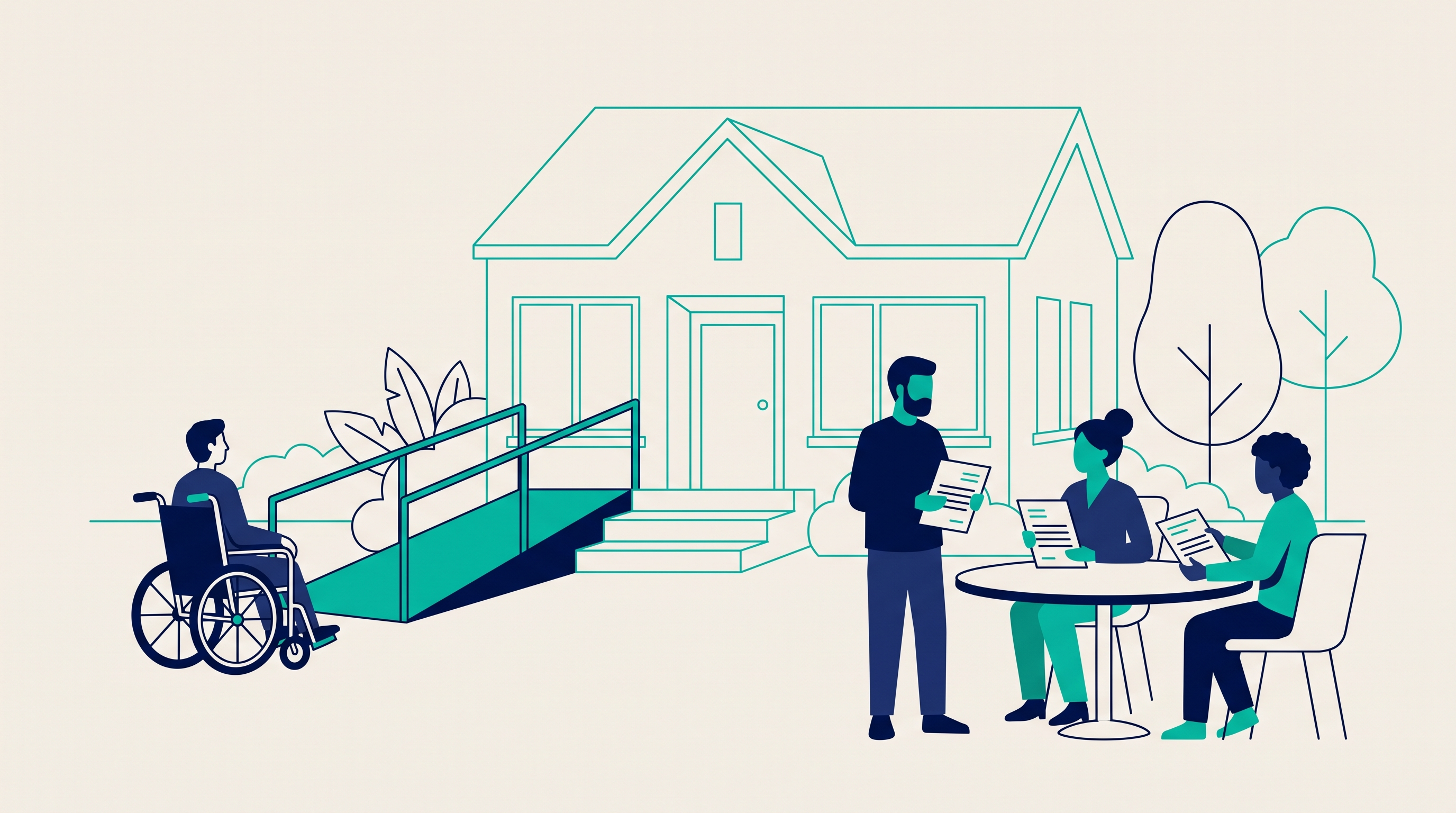
- Denying a ramp, lift, or threshold change at the main entrance because of appearance.
- Refusing to assign an accessible or closer parking space, or charging extra for one.
- Holding board and shareholder meetings in rooms you cannot physically reach.
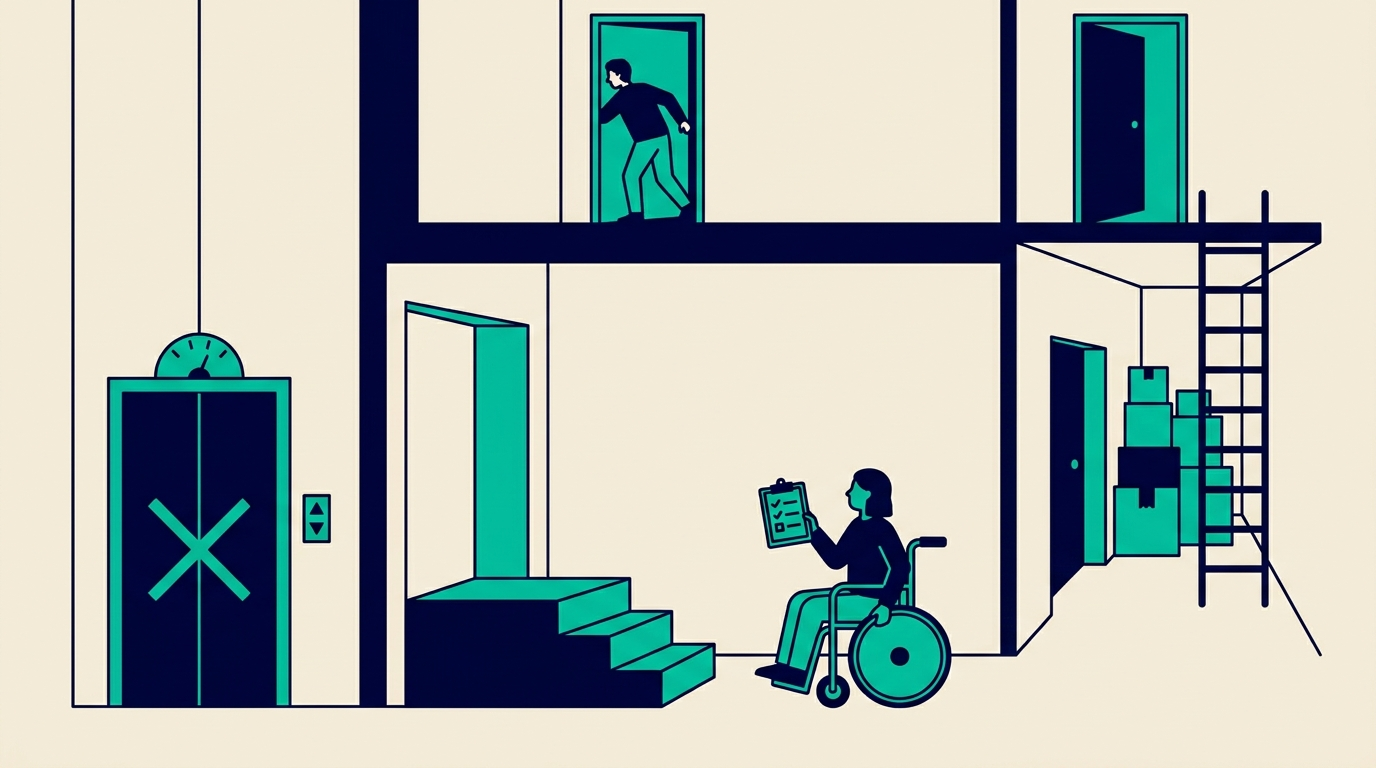
- Leaving an elevator out of service for long stretches with no plan for residents who cannot use stairs.
- Laundry rooms, storage areas, or clubhouses reachable only by steps.
- Heavy entry doors with no automatic opener or accessible hardware.
- Refusing accessible formats for notices, minutes, or ballots for a resident with a vision impairment.
- Ignoring a written accommodation request for weeks with no response, which can function as a denial.
If your complaints are about the shared parts of the building, our apartment building accessibility checklist for NYC residents gives you a room-by-room way to write the problems down before you file.
Assistance Animals and No-Pet Rules
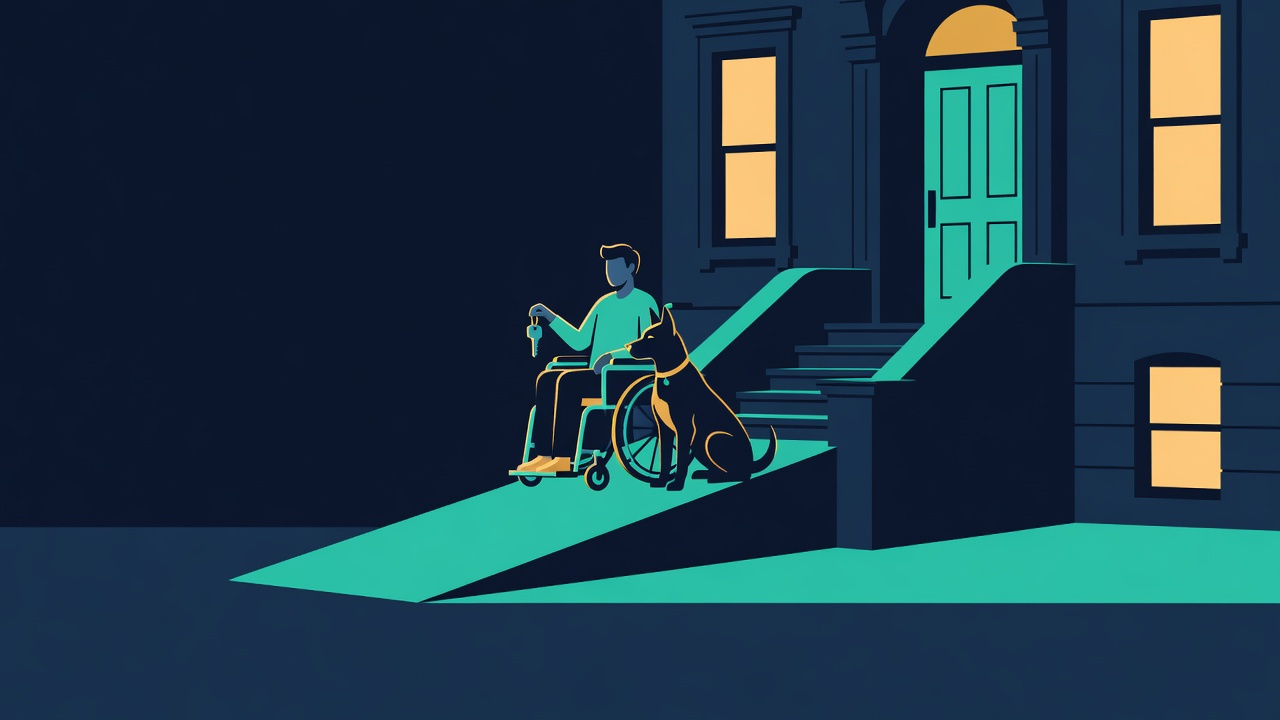
Assistance animal disputes are one of the most common reasons residents contact us. A service animal or an assistance animal that supports a disability is not treated as a pet under fair housing rules, so a blanket no-pet policy does not automatically apply, and boards generally cannot impose pet fees or deposits for that animal. Two guides cover the details: service animal housing laws in NYC and emotional support animal housing rights in NYC. Both explain what documentation a board may reasonably ask for and what it may not demand.
When the Discrimination Starts Before You Move In
Some boards create problems at the application stage: intrusive questions about your condition, rejecting a purchase or sublet after an accommodation request, or steering you toward specific units. If that is your situation, read what to do when you are denied housing because of a disability in New York.
Where to File Your Complaint
You do not have to exhaust the board's internal grievance committee first. Internal reviews are often used to run the clock. You can go to a government agency as soon as the discrimination happens, and choosing the right forum matters, because agencies differ in what they can order and how fast they move.
New York State Division of Human Rights (NYS DHR)
NYS DHR investigates housing discrimination anywhere in the state, including Westchester, Long Island, the Hudson Valley, and upstate. The agency investigates, can hold a public hearing before an administrative law judge, and can order relief including compensatory damages for a resident who was harmed. Filing is free and you are not required to have an attorney.
NYC Commission on Human Rights (NYC CCHR)
If your building is in the five boroughs, the NYC Commission on Human Rights enforces the NYCHRL. Complaints generally must be filed within one year of the discriminatory act. The Commission investigates, offers mediation, and can order relief for the resident as well as civil penalties against the respondent. Our step-by-step guide to the NYC Commission on Human Rights complaint process walks through intake, investigation, and mediation so you know what the next letter in your mailbox means.
HUD and the Fair Housing Act
You can also file an administrative housing discrimination complaint with the U.S. Department of Housing and Urban Development under the FHA. HUD complaints are generally filed within one year of the discriminatory act, and HUD may refer the matter to a state or local agency that enforces a substantially equivalent law. FHA claims tend to focus heavily on getting the accommodation or modification in place.
Choosing One Forum
You generally should not file the same housing claim in multiple places at once without understanding how the election-of-remedies rules work, because filing with a state or city agency can affect your ability to bring the same claim in court. That single decision is one of the main reasons people ask for help with intake. Our guide on getting help filing a housing discrimination complaint in NYC compares the routes side by side.
How to Document Your HOA Accessibility Incident
These cases turn on records. Boards commonly claim they never received the request, that you accepted a different solution in a hallway conversation, or that the delay was just scheduling. Treat every interaction as something an investigator will read later.
- Put the request in writing. Email or a letter sent by certified mail with return receipt establishes the date the board learned of your need.
- Keep the whole thread. Save board replies, managing agent emails, meeting minutes, and any denial letter, plus the bylaw or house rule the board cites.
- Log conversations. After a call or meeting, write down the date, who spoke, and what was said.
- Photograph the barrier. Steps, curbs, door widths, out-of-service elevator notices, inaccessible restrooms, signage.
- Track the delay. Note every week that passes without a substantive answer.
- Record the impact. If you cannot leave your home alone, miss medical appointments, or must ask neighbors for help with a door, write it down the same day.
That last point matters more than most residents expect, because emotional distress is part of what state and city human rights laws address. For a deeper walkthrough of proof, including comparator evidence and how investigators weigh a board's stated reason, see how to prove disability discrimination in housing in New York.
If the board reacted to your request with fines, hostility, or a sudden new violation notice, document that separately. Retaliation for requesting an accommodation or filing a complaint is treated as its own violation under fair housing and New York human rights law. When pressure escalates into a notice to cure or an eviction or ejectment proceeding, read your rights if you are being evicted because of a disability in New York right away, because those cases move on court deadlines rather than agency deadlines.
What Recovery Can Look Like
Outcomes vary a great deal, and no one can tell you what your case is worth before the facts are reviewed. Relief in housing cases generally falls into a few categories:
- An order or agreement approving the accommodation or modification you asked for.
- A change to the bylaw, house rule, or fee policy that caused the problem.
- Out-of-pocket costs, such as expenses you paid because the building was inaccessible.
- Damages for emotional distress under state and city human rights law.
- Civil penalties payable to the government in city cases, which are separate from anything you receive.
Reported New York housing and disability resolutions range widely, with some reaching up to $60,000 or more depending on severity, duration, and documentation. Our guide to disability discrimination settlement amounts in New York explains which factors tend to move that number.
New York Housing Rights Library
HOA disputes rarely arrive alone. Use whichever of these applies to your situation:
- Housing disability discrimination in New York: your rights — the broad overview of FHA, NYSHRL, and NYCHRL coverage.
- Landlord or board refusing a reasonable modification in NYC — ramps, grab bars, door hardware, and who pays.
- Landlord disability discrimination in NYC — rights and recovery for renters.
- Evicted for a disability in New York — what to do when pressure becomes a legal proceeding.
- Denied housing because of a disability — application, board approval, and sublet denials.
- Apartment building accessibility issues: tenant checklist — document common-area barriers room by room.
- Service animal housing laws in NYC and emotional support animal housing rights in NYC — no-pet rules, fees, and documentation.
- Mental illness discrimination in New York housing — privacy, disclosure, and accommodation requests.
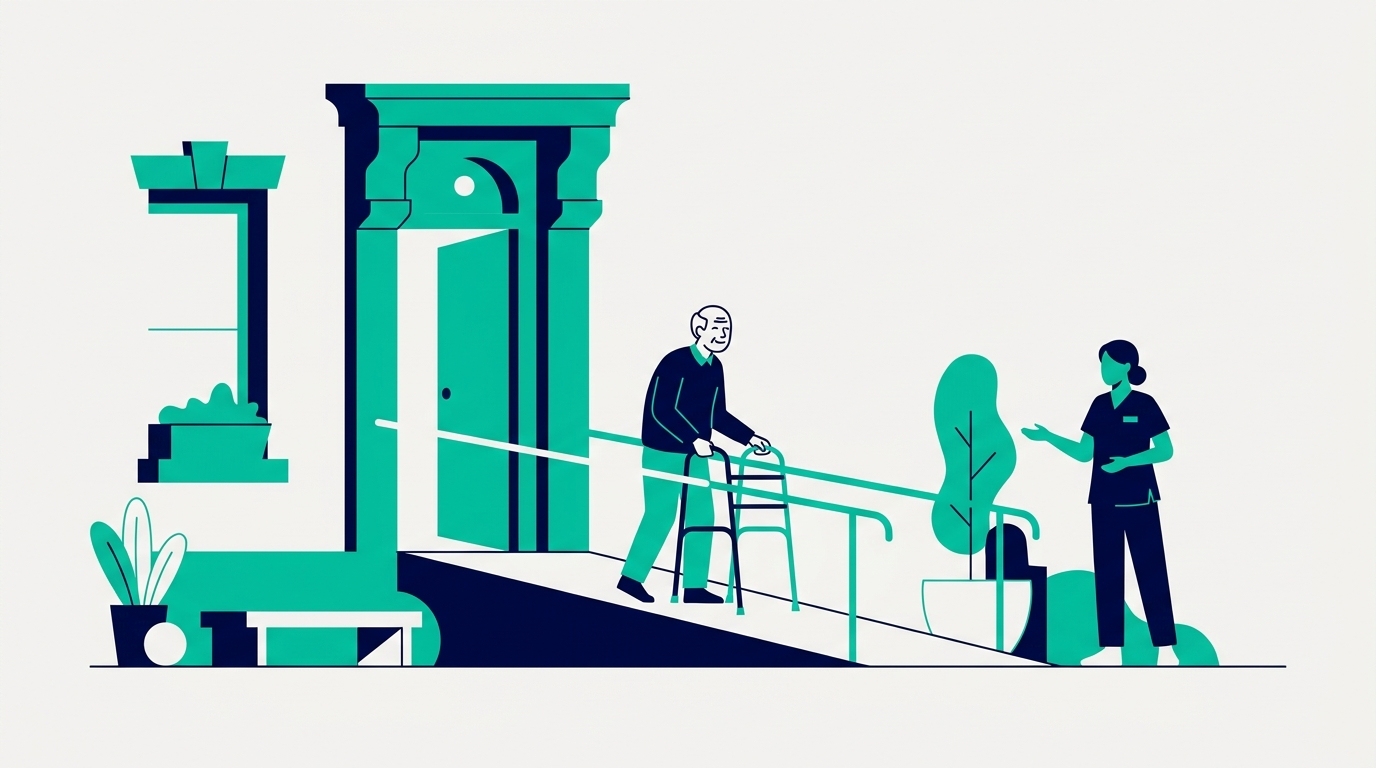
- Assisted living facility discrimination in New York — for residents and family members.
- How to prove disability discrimination in housing — the evidence that carries weight.
- Help filing a housing discrimination complaint in NYC — forms, forums, and what happens next.
How ADA Help Manages Your Case
Fighting a board can feel like a second job. ADA Help handles the intake and organization so you are not reading bylaws at midnight. We review what happened, identify which law and which agency fit your situation, help you assemble the written record, and connect you with independent attorneys who handle the legal work. We are not a law firm and we do not give legal advice.
There are no consultation fees and no hourly billing. The independent attorneys we work with take housing cases on a contingency basis: no recovery, no fee. You can start the free three-minute case check and find out where you stand before you commit to anything.
If you are weighing whether to handle the filing yourself, that is a legitimate option too. Deadlines are the part people miss most often, so the sooner your dates are pinned down, the more options you keep.
Frequently Asked Questions
Can I bring an ADA claim against my HOA?
Usually not for the residential parts of the building. ADA Title III covers places of public accommodation, such as a sales or rental office open to the public. Claims about your unit and the shared residential areas typically run through the federal Fair Housing Act, the New York State Human Rights Law, and, in the five boroughs, the New York City Human Rights Law. Those are also the laws that allow claims for emotional distress damages.
What is the difference between a reasonable accommodation and a reasonable modification?
An accommodation is a change to a rule, policy, or service, such as waiving a no-pet rule for a service animal or assigning a closer parking space. A modification is a physical change to the property, such as a ramp or a grab bar. Housing providers, including HOA and co-op boards, are required to consider both when the change is connected to a disability and is reasonable.
Who pays for a ramp in a condo or co-op?
In private housing, the resident requesting a reasonable modification is often responsible for the cost of the physical work, while the board is required to permit it when the request is reasonable. A board generally cannot charge extra fees for the accommodation itself or impose conditions designed to make the change impractical. Federally assisted housing follows different cost rules, so the type of building matters.
How long do I have to file an HOA housing discrimination complaint in New York?
It depends on the forum. HUD administrative complaints under the Fair Housing Act are generally filed within one year of the discriminatory act, and NYC Commission on Human Rights complaints are generally filed within one year. Deadlines for the New York State Division of Human Rights and for court actions can differ, and a continuing refusal can affect how dates are counted. Get your timeline reviewed early rather than assuming you still have time.
Can the board charge a pet fee for my service or assistance animal?
An assistance animal that is needed because of a disability is not treated as a pet under fair housing rules, so pet fees, pet deposits, and pet rent generally do not apply to it. If the board demands a fee anyway, keep the written demand. That document is often the clearest evidence in the file.
What if the board retaliates after I file?
Retaliation for requesting an accommodation or filing a housing discrimination complaint is prohibited under fair housing and New York human rights law, and it can be pursued as a separate violation. Sudden fines, new violation notices, or withdrawal of services after your request should be documented with dates and copies, and reported alongside your original complaint.
Disclaimer
This article is general information about New York law, not legal advice, and reading it does not create an attorney-client relationship. ADAhelp is a case-management and intake service, not a law firm; legal representation is provided by independent attorneys. Recovery amounts and timelines vary by case, and past outcomes do not guarantee future results. For advice about your specific situation, speak with a qualified attorney or start the free case check.
Tags
Discriminated against in New York because of a disability?
A free three-minute check tells you if you can pursue a claim.
Check my case →New York onlyNo upfront costIndependent NY attorneysFree 3-minute check