Inaccessible Public Transportation NYC: Rights & Recovery
Reviewed for accuracy by the ADAhelp team before publishing. ADAhelp is not a law firm; legal work is handled by independent New York attorneys.
Facing inaccessible public transportation NYC? Broken elevators and bus ramps are discrimination. Learn your rights to financial recovery under NY law. Free ...
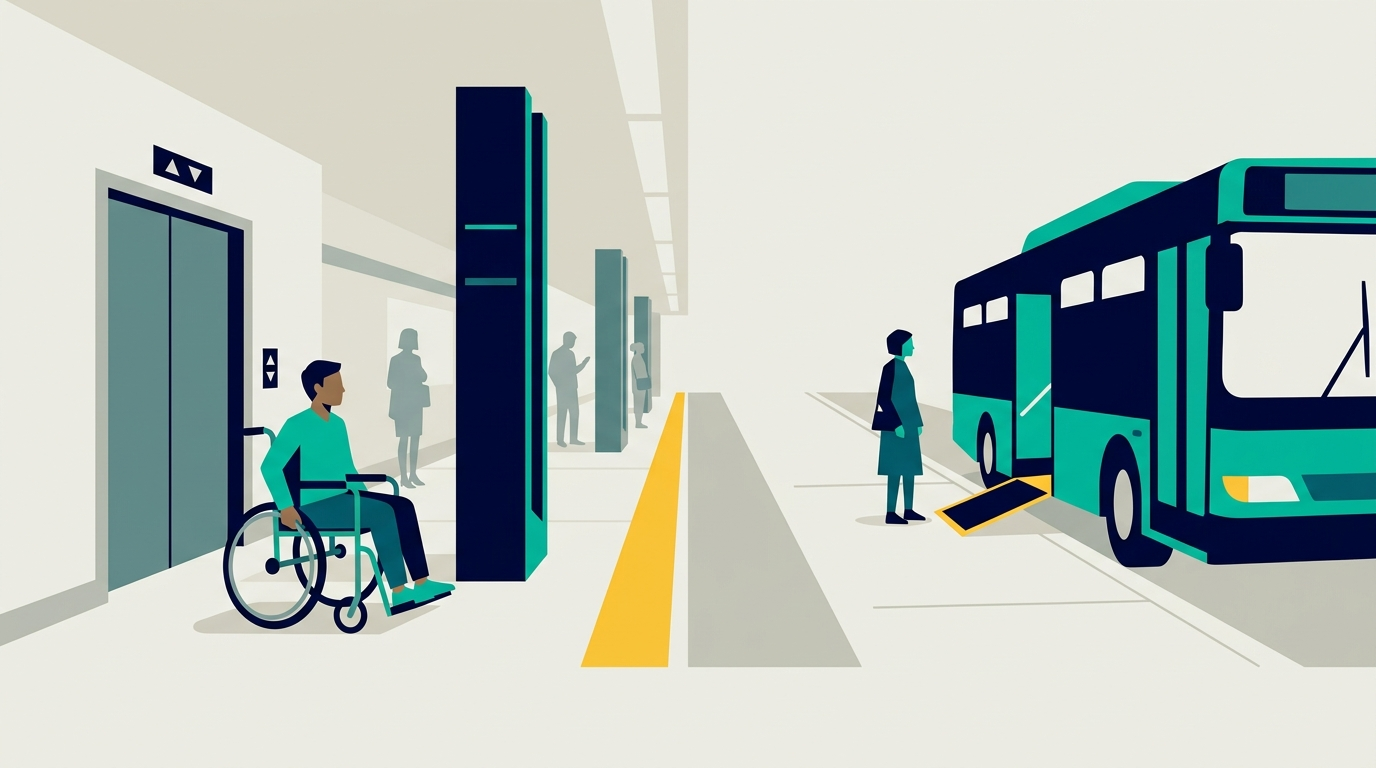
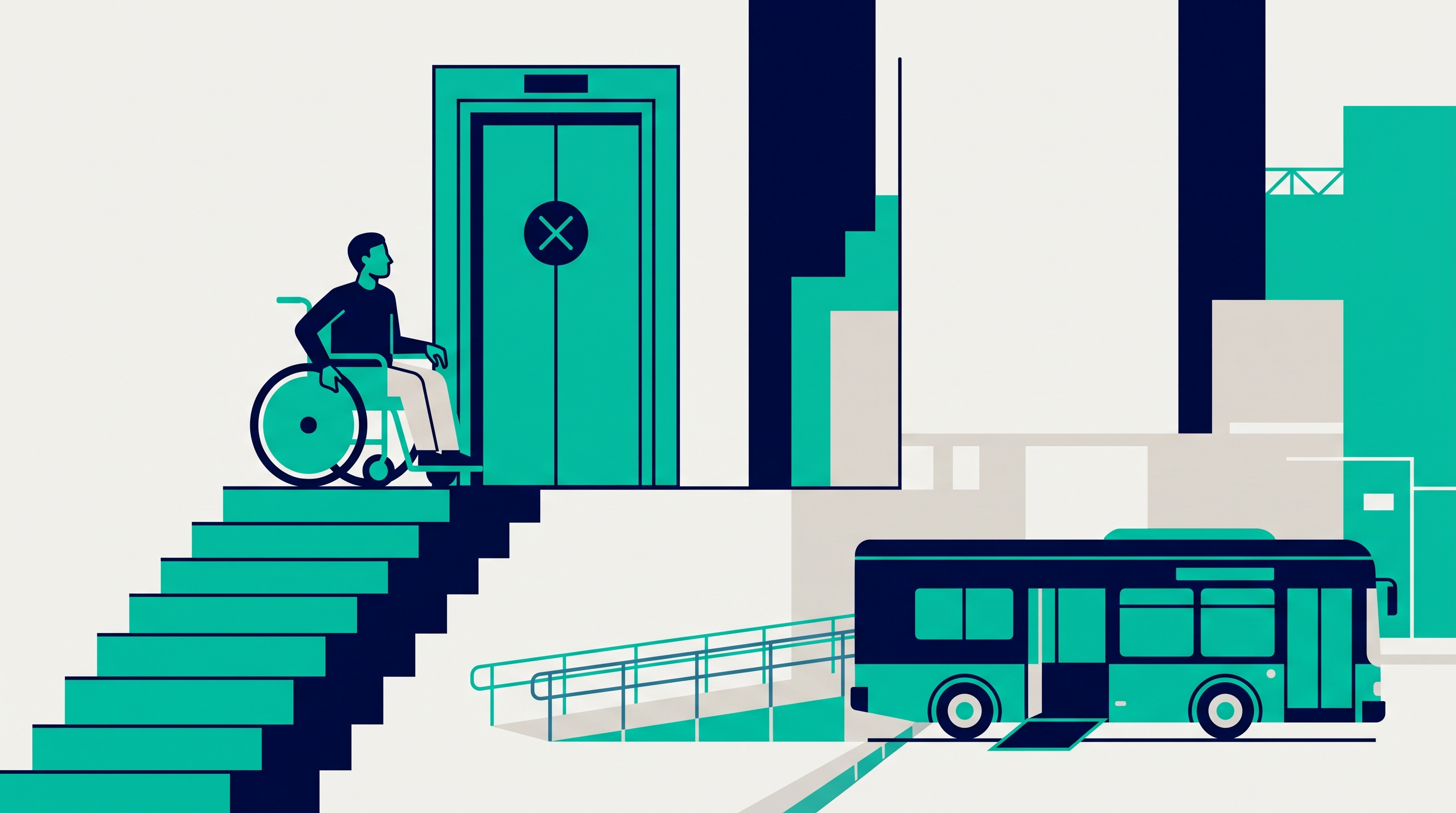
You arrive at the subway station only to find the elevator is broken for the third time this week. Maybe a bus driver refused to lower the ramp, or an Access-A-Ride delay caused a missed appointment. Facing inaccessible public transportation NYC can make you feel like a second-class citizen in your own neighborhood. You shouldn't have to struggle just to move through the city.
We understand the daily frustration of being stranded by a system that is supposed to serve everyone. New York laws provide a clear path to hold transit providers accountable. While the federal Americans with Disabilities Act (ADA) focuses on fixing physical barriers, the New York State Human Rights Law (NYSHRL) and the New York City Human Rights Law (NYCHRL) allow you to seek financial compensation for discrimination.
This article explains your legal rights and how to secure a recovery for your time and dignity. ADAhelp is not a law firm; instead, we are your proactive partners in the case management process. We offer a free three-minute case check to see if you have a valid claim. You never pay anything out-of-pocket because fees are only taken if you receive a settlement. Here is how you can turn transit barriers into a path for justice.
Key Takeaways
- Learn what qualifies as inaccessible public transportation NYC and why transit barriers are legal violations rather than simple delays.
- Discover how the New York City Human Rights Law allows you to seek financial recovery for discrimination when federal laws only offer fixes.
- Get a clear checklist of the evidence you need to document, including photos and incident details, to start your claim for justice.
- Find out how to access a free three-minute case check to determine if your situation qualifies for professional case management.
- Understand our contingency-fee model where you never pay out-of-pocket because costs are only taken from your successful recovery.
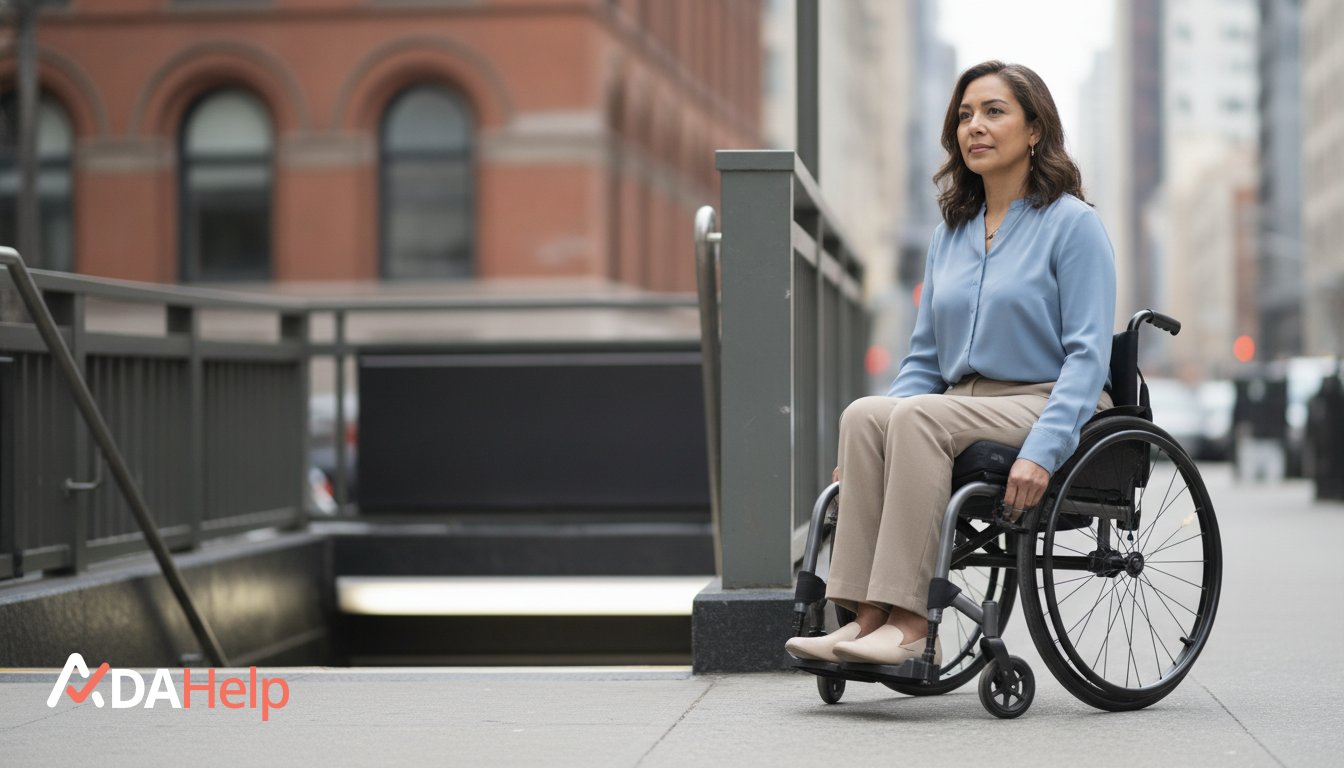
What counts as inaccessible public transportation in NYC?
Do you struggle to use the subway because of a broken elevator? Have you been left on a street corner because a bus driver wouldn't lower the ramp? If you aren't sure if your experience qualifies for a claim, take our free three-minute check at ADAhelp. We help you determine if inaccessible public transportation NYC has violated your rights. ADAhelp is not a law firm; instead, we are your proactive partners in the case management process. We help you identify violations and connect you with independent attorneys who work on a contingency basis.
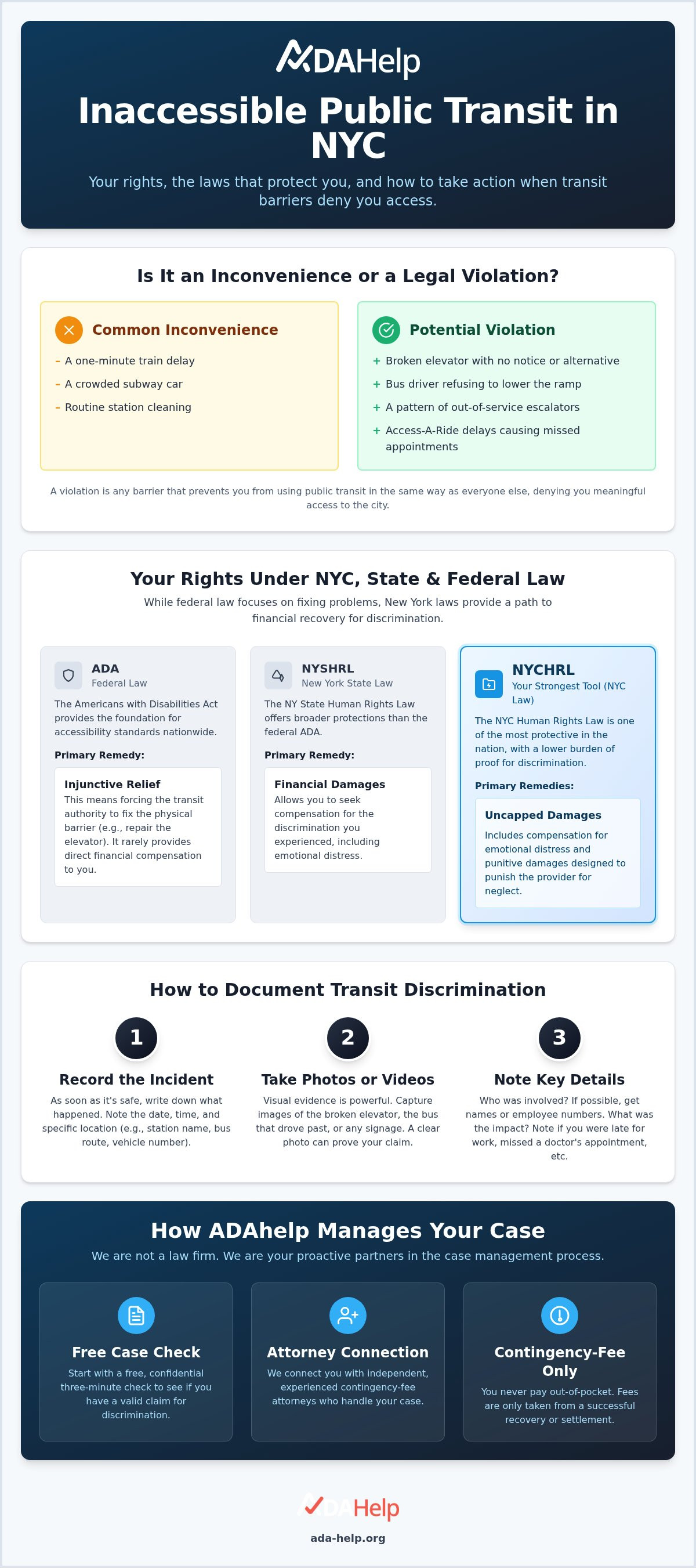
Inaccessibility means more than just a minor annoyance. It is any barrier that prevents you from using public transit in the same way as everyone else. These barriers often fall into two categories: physical and service-based. Physical barriers include broken elevators, escalators that are out of service, or ramps that are too steep for a wheelchair. Service barriers happen when staff members fail to do their jobs. This includes bus drivers who refuse to assist with wheelchair securement or paratransit drivers who leave before you can reach the vehicle. Transit inaccessibility is a denial of meaningful access to the city.
The difference between an inconvenience and a violation
It is important to know where the line is drawn. A one-minute delay in train service is usually just an inconvenience. However, arriving at a station to find the only elevator is broken without any prior notice is a violation. If there is no alternative path provided, you have been denied access. These barriers must be documented to prove a pattern of neglect. One broken elevator might be an accident; a history of broken elevators at the same station shows a failure to maintain the system. If you face these issues, your right to travel is being ignored.
Private vs. public transit providers in New York
Your rights aren't limited to government-run systems. While the MTA is a public authority, private companies like rideshare apps, shuttles, and tour buses must also provide access. You can find a detailed overview of MTA accessibility efforts to see how the public system has evolved; however, private providers face similar requirements. Both must follow the Americans with Disabilities Act. In New York City, local laws like the NYCHRL often set even stricter rules for how these companies treat people with disabilities. If mobility barriers extend beyond transit for you, see our guide to mobility impairment discrimination in NYC for more on your rights. If you face inaccessible public transportation NYC, don't just accept it. While the ADA focuses on fixing the problem, the NYCHRL allows you to seek financial recovery for the discrimination you experienced. Our case check is free, and fees are only taken from a recovery, never out-of-pocket.
Understanding your rights under New York City and State laws
When you encounter inaccessible public transportation NYC, you might think the federal Americans with Disabilities Act (ADA) is your only shield. It isn't. The ADA is a powerful tool for fixing broken systems, but it rarely puts money in your pocket. To secure financial recovery for the frustration and harm you've faced, you must look to local laws. ADAhelp is not a law firm; instead, we are your proactive partners who help you determine if these local protections apply to your situation.
New York City and State have some of the most protective civil rights laws in the nation. You don't have to choose just one. A strong claim often combines the ADA, the New York State Human Rights Law (NYSHRL), and the New York City Human Rights Law (NYCHRL). This multi-layered approach ensures that the barriers are fixed and that you are compensated for being treated unfairly. Our team handles the heavy lifting of evaluating these claims so you don't have to.
Why the NYCHRL is your strongest tool
The NYCHRL is designed to be broader than federal law. It uses a standard called being treated less well because of your disability. This is a lower threshold than the ADA, which makes it easier to prove discrimination occurred. Under this city law, you can seek damages for emotional distress and the impact the barrier had on your daily life. Unlike federal law, the NYCHRL allows for uncapped punitive damages. These are payments meant to punish the provider for willful or malicious conduct. If you've been ignored by the MTA or a private service, this law is your primary path to justice. You can start a case evaluation today to see which laws protect you.
Injunctive relief vs. financial recovery
It's important to understand what you can actually win. Injunctive relief is a court order that forces a provider to change. For example, a judge might order the MTA to fix a specific elevator or update its bus ramp maintenance schedule. This helps everyone, but it doesn't address the specific harm you suffered. Financial recovery is different. This is a settlement or award paid directly to you. It compensates you for the time you lost, the appointments you missed, and the emotional toll of being excluded. While the ADA provides the fix, the NYCHRL and NYSHRL provide the recovery. ADAhelp focuses on inaccessible public transportation NYC cases where both outcomes are possible. We manage the intake and documentation process to build the strongest possible claim for your recovery.
Common transit barriers in the MTA and private services
Facing inaccessible public transportation NYC is a daily reality for many New Yorkers. You might head to the subway only to find the only elevator is broken without any notice. Perhaps a bus driver claims the ramp is "out of order" to avoid the extra time it takes to assist you. These aren't just minor delays; they are barriers that prevent you from reaching work, school, or medical care. While the MTA has made progress, with 160 fully accessible stations as of July 2026, the remaining 312 stations often leave riders stranded. When these systems fail, you have the right to hold them accountable.
MTA subway and bus violations
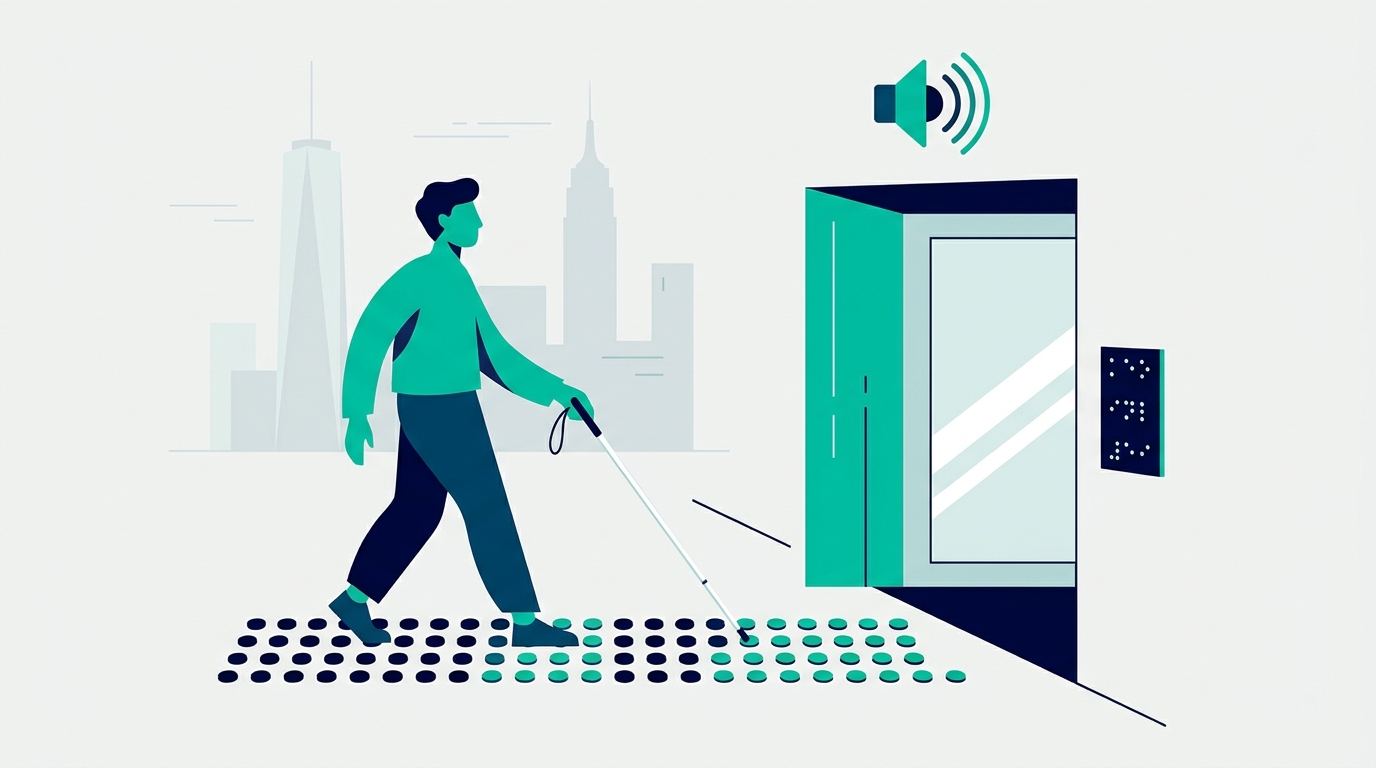
The MTA is legally required to maintain its accessible features. Frequent outages of elevators or escalators are often signs of systemic neglect rather than simple mechanical failure. Beyond elevators, the law requires safety features like gap fillers and tactile platform edge warnings to protect riders. An "out of service" sign does not excuse the provider's failure to maintain a path of travel for people with disabilities. If you encounter these barriers, document the station name and the specific feature that was broken. This evidence is vital for showing a pattern of discrimination under the New York City Human Rights Law.
Access-A-Ride and Paratransit failures
Access-A-Ride is the city's paratransit service, and it is legally required to provide service comparable to the fixed-route bus and subway system. This means the service should be just as reliable as a standard bus line. Unfortunately, many users face vehicles that arrive hours late or fail to show up at all. These "no-shows" can have devastating consequences for your schedule and well-being. Excessive wait times or dangerous driving are common grounds for a claim. You should keep a detailed log of every trip where the service failed you. Note the exact date, the vehicle number, and the dispatcher's name to support your case.
Private transit and service animal refusals
Discrimination also happens in the private sector. Drivers for rideshare apps or yellow taxis sometimes refuse to pick up passengers with service animals. This is a direct violation of both the ADA and the NYCHRL. Private providers cannot deny you service because of your disability or your need for a service animal. If a driver cancels a ride or refuses to let you in the car, try to capture the license plate or the driver's profile in the app. ADAhelp manages the intake and evaluation process for these claims for free. We help you determine if you have a case and connect you with attorneys who work on a contingency basis.
How to document transit discrimination and start a claim
When you find yourself stuck at the bottom of a subway stairwell because of inaccessible public transportation NYC, your first instinct might be frustration. Turn that energy into action. Documentation is the foundation of any successful discrimination claim. Without specific details, the MTA or a private provider can simply claim the incident never happened. You need to prove the barrier existed and that it directly impacted your life.
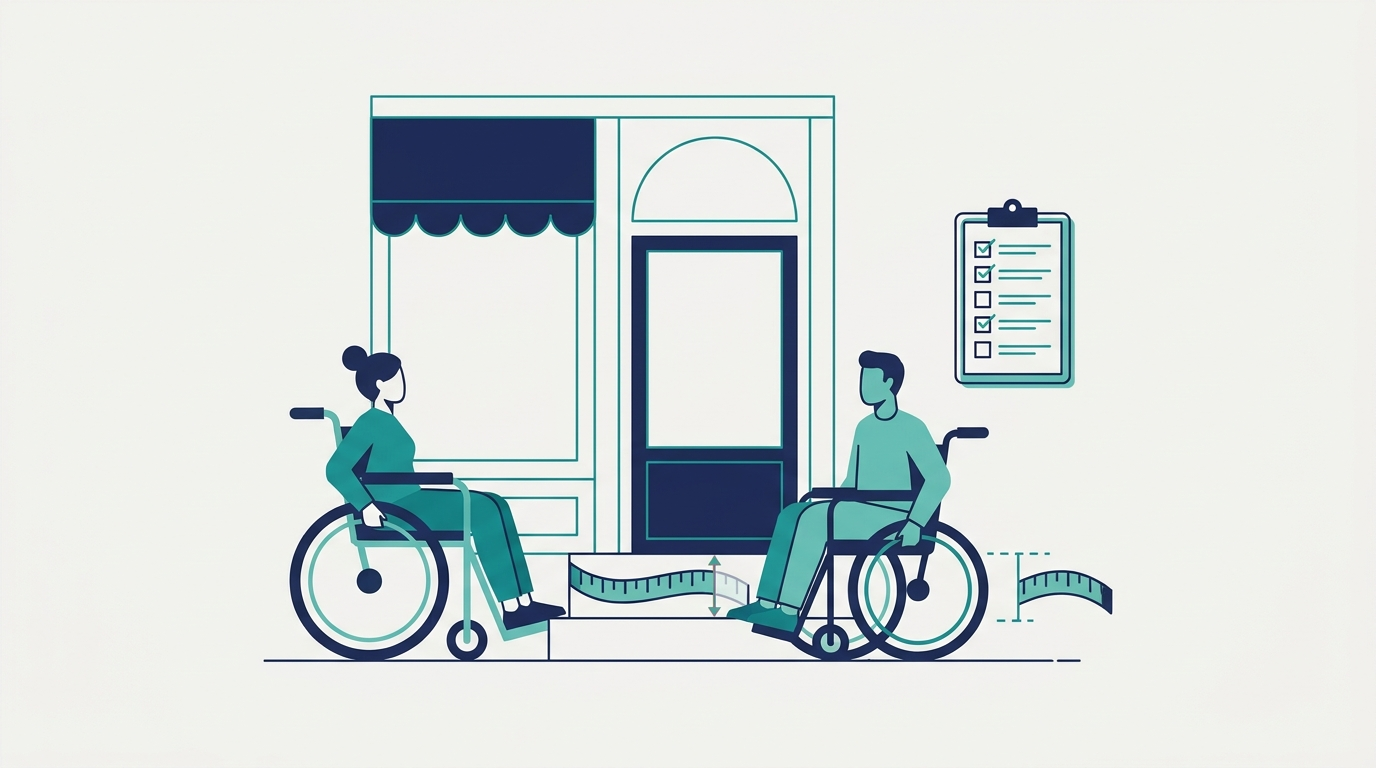
Start by noting the exact date and time. Use your phone to record the non-working elevator or the bus driver who refused to lower the ramp. If you are at a subway station, make sure the station name is visible in your video. Look for vehicle numbers on the side of buses or inside Access-A-Ride vans. If an employee is involved, ask for their badge number. These small details are the difference between a dismissed report and a successful recovery. When you encounter inaccessible public transportation NYC, your phone is your best tool for justice.
Gathering evidence on the spot
Capture as much as you can while you are still at the location. Recording a video of a broken sign that has been there for weeks shows a pattern of neglect. If other passengers saw the incident, ask for their contact information. Their witness statements can provide powerful support for your claim. Don't forget digital evidence. Save your OMNY history, Uber ride logs, or any transit receipts as proof of travel. This data places you at the scene of the discrimination and makes it harder for providers to deny your presence.
Why documentation matters for your recovery
Evidence turns your personal experience into a provable fact. Independent attorneys use your logs to calculate the value of your case based on the severity of the violation. Did you miss a shift at work? Did you arrive late to a critical doctor visit? Keep a daily log of how the incident changed your schedule. This documentation helps prove the emotional and financial toll of the barrier. To begin the process, you can start your free ADA case review New York today. ADAhelp handles the intake and helps you organize this evidence so you don't have to manage it alone.
Personal records are more effective than simply calling 311. While city reports might lead to a repair, they rarely lead to a settlement for the victim. By documenting the barrier yourself, you take control of the situation. If you are ready to see if your evidence supports a claim, start your free case check now. We make the process simple and stress-free.
How ADAhelp manages your transportation discrimination case
Do you have a case for inaccessible public transportation NYC? Finding out shouldn't be a second job. At ADAhelp, we handle the intake and evaluate your situation for free. We are not a law firm and do not provide legal advice; instead, we act as your proactive guide through the complex world of transit rights. If your rights were violated, we gather the evidence needed to build a strong claim. We then connect you with independent attorneys who work on a contingency basis. This means you pay nothing out-of-pocket. We only get paid if you win a recovery.
Our team understands the specific transit rules of New York. We know how the MTA operates and where private providers often fail. We don't just listen to your story; we turn it into a structured case that demands attention. By handling the initial evaluation, we save you from the stress of cold-calling law offices or filling out confusing government forms alone. We make the path to justice clear and manageable for every New Yorker.
The ADAhelp process: simple and fast
Our three-minute check identifies if a violation occurred without requiring you to learn legal jargon. We look at the facts of your incident, such as broken elevators or service animal refusals. Once we determine you have a valid claim, we handle the heavy lifting. This includes organizing your evidence and filing the necessary paperwork with the appropriate authorities in New York. You stay informed at every step while we manage the logistics of your case. We act as the bridge between your experience and the legal system.
No-risk advocacy for New Yorkers
Justice should not have an hourly rate. Many New Yorkers hesitate to report discrimination because they fear high legal fees. Our model removes those financial barriers entirely. Our goal is to make the transit system work for you and ensure you receive the compensation you deserve under the NYCHRL and NYSHRL. We fight for your recovery because we believe in a city that is accessible to everyone. You can learn more about the ADA complaint process New York by visiting our site. We are here to turn your frustration into a stress-free path toward a resolution.
The burden of effort lies with the service provider, not you. You have already dealt with the barrier; you shouldn't have to deal with a complicated filing process. Let us handle the details while you focus on your daily life. If you are tired of being ignored by the system, it's time to take the next step toward the recovery you deserve. Inaccessible public transportation NYC is a violation of your rights, and we are here to help you fix it.
Where to File: Agencies & Deadlines
Once you've documented a transit barrier, you have several paths for filing a formal complaint. Each agency covers slightly different situations and runs on its own deadline, so it helps to know which one fits your case.
- NYC Commission on Human Rights (CCHR): Handles complaints about public accommodations in New York City, including transit services. You generally have one year from the incident to file.
- New York State Division of Human Rights (DHR): Covers discrimination across the state; you can file a complaint with DHR within one year of the incident.
- U.S. Department of Justice (DOJ): Enforces the federal Americans with Disabilities Act for public transportation. There's no strict filing deadline, but reporting sooner helps preserve evidence.
- Equal Employment Opportunity Commission (EEOC): If a transit-related incident involved your employer rather than a rider experience, you generally have 300 days to file with the EEOC.
If you're not sure which agency applies to your situation, that's exactly what our case management team helps you figure out, including whether you're still within the filing window. Our guide on ADA claim statute of limitations in New York breaks down these deadlines in more detail.
Take Action for an Accessible New York
You shouldn't have to navigate a city that isn't built for you. You've learned how local laws like the NYCHRL provide a path for financial recovery that federal laws often miss. You also know that documenting inaccessible public transportation NYC is the first step toward holding the MTA or private providers accountable. These barriers are more than inconveniences; they are violations of your rights.
ADAhelp is here to handle the heavy lifting of case management. As New York disability rights specialists, we offer a free case evaluation to determine if you have a claim. Our model is built on low-risk reassurance. We operate on a contingency basis, meaning there is no recovery and no fee. You never pay anything out-of-pocket for our intake services.
Don't let another broken elevator or missed bus go unreported. Start your free three-minute case check now to see if you qualify for a settlement. You have the power to demand a better system, and we are ready to help you secure the justice you deserve.
Frequently Asked Questions
Do I need a lawyer to report an inaccessible subway station?
You don't need a lawyer just to file a report with the MTA, but a simple report won't secure financial recovery. If you've faced inaccessible public transportation NYC, your goal should be accountability and compensation. ADAhelp evaluates your situation for free and connects you with independent attorneys. These professionals handle the legal filings while we manage the intake process. This ensures your claim is taken seriously without you having to pay hourly legal fees.
How much money can I get for a transit discrimination claim in NYC?
Recovery amounts vary case by case because every situation is unique. While federal law focuses on repairs, the New York City Human Rights Law (NYCHRL) allows for money damages. This can include compensation for emotional distress and even uncapped punitive damages for willful neglect. Typical settlements depend on the evidence you provide and the impact on your life. We help you determine if your case has the potential for a financial award during our free evaluation.
What should I do if a bus driver refuses to lower the ramp?
You should immediately document the details of the refusal. Note the bus number, the route, and the exact time and location of the incident. If possible, record a video of the driver refusing to lower the ramp. This is a clear service barrier under New York law. Once you have this evidence, you can use our free three-minute check to see if this specific instance of inaccessible public transportation NYC qualifies for a formal discrimination claim.
Can I file a claim against Access-A-Ride for being late?
Yes, you can file a claim if paratransit failures create a barrier to your travel. Access-A-Ride is legally required to provide service comparable to the standard bus and subway system. Excessive wait times or missed pickups can be grounds for a discrimination case under the NYSHRL or NYCHRL. Keep a detailed log of every trip where the service failed you. This documentation is essential for building a case for financial recovery for missed appointments or lost wages.
Does it cost anything to start a case with ADAhelp?
It costs nothing out-of-pocket to start your case with ADAhelp. We provide a free three-minute case check to see if a violation occurred. If we move forward with your claim, we operate on a contingency model. This means our fees are only taken from a successful recovery. If you don't win, you don't pay. This removes the financial risk and allows every New Yorker to seek justice regardless of their current budget or income level.
What if the elevator was only broken for one day?
A single day of downtime might still be a violation if the provider failed to provide notice or a stair-free alternative path. While a pattern of neglect is easier to prove, a one-time denial of meaningful access can still qualify for a claim. This is especially true if the broken elevator caused you to miss a critical event or left you stranded in a dangerous situation. We can evaluate the specific details of your encounter to see if it meets the legal threshold.
How long does a transit discrimination case typically take in New York?
The duration of a transit discrimination case in New York varies based on the complexity of the claim and the provider involved. Some cases reach a settlement in a few months; others may take longer if they require extensive evidence gathering. ADAhelp streamlines this timeline by handling the heavy lifting of case management from the start. We ensure your information is organized and filed correctly with the appropriate authorities to keep the process moving toward a resolution.

Article by
ADA Help
Written by the ADAhelp editorial team and reviewed for accuracy before publishing. ADAhelp helps New Yorkers find out if they have a disability discrimination claim and manages the process end to end, working with independent attorneys who handle the legal work. We are not a law firm and do not provide legal advice.
Disclaimer
This article is general information about New York law, not legal advice, and reading it does not create an attorney-client relationship. ADAhelp is a case-management and intake service, not a law firm; legal representation is provided by independent attorneys. Recovery amounts and timelines vary by case, and past outcomes do not guarantee future results. For advice about your specific situation, speak with a qualified attorney or start the free case check.
Tags
Discriminated against in New York because of a disability?
A free three-minute check tells you if you can pursue a claim.
Check my case →New York onlyNo upfront costIndependent NY attorneysFree 3-minute check