Building Code Accessibility Violations NYC: 2026 Checklist
Reviewed for accuracy by the ADAhelp team before publishing. ADAhelp is not a law firm; legal work is handled by independent New York attorneys.
Face building code accessibility violations in NYC? Learn how to spot them and use NYC law to seek a cash settlement. Free 3-min case check. No out-of-pocket...
Did you know that a heavy door or a steep curb in Manhattan isn't just a physical barrier; it's a violation of your civil rights that could result in a cash settlement? You likely feel frustrated when you can't enter a store or use a restroom like everyone else. It is exhausting to deal with spaces that ignore your needs while you wonder if reporting it is even worth the hassle or the legal fees. You shouldn't have to fight for basic access on your own.
This guide shows you how to spot building code accessibility violations NYC property owners often overlook and how to see if you qualify for a financial recovery. While the federal ADA focuses on fixing the physical problem; the New York City Human Rights Law allows you to seek money damages for the discrimination you faced. We will break down the 2026 expanded accessibility requirements and the simple steps to hold businesses accountable without any out of pocket costs. You can learn if you have a case in just three minutes; and we handle the heavy lifting of connecting you with the right legal support.
Key Takeaways
- Understand why NYC accessibility laws often provide more protection and stricter requirements than federal standards.
- Learn how to identify common building code accessibility violations NYC property owners ignore; such as narrow doorways or missing ramps.
- Discover why the New York City Human Rights Law is the primary path for seeking financial compensation rather than just physical repairs.
- Get a simple list of the specific photos and notes you need to document barriers and support your potential claim.
- Find out how to start a free three-minute case check to see if you're eligible for a recovery with no out-of-pocket costs.
What Are Building Code Accessibility Violations in NYC?
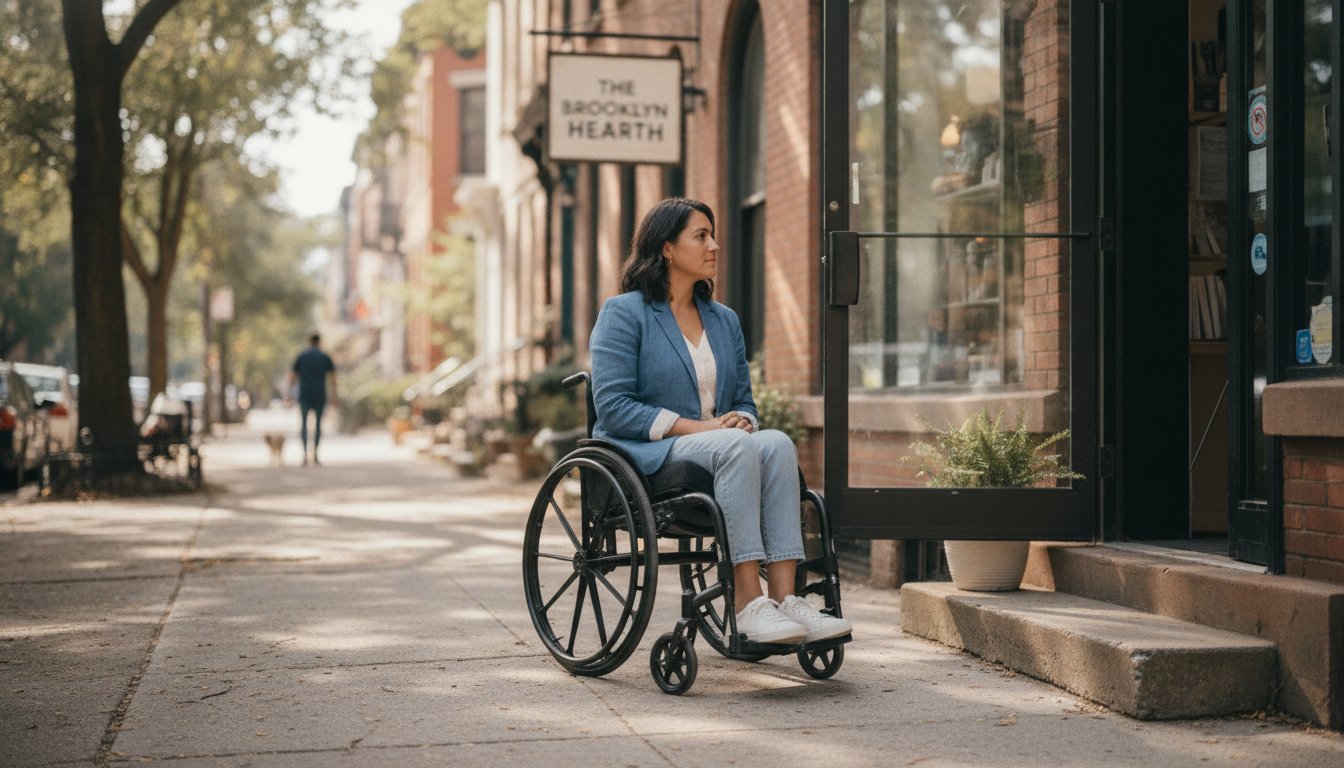
You find yourself standing outside a popular restaurant in Brooklyn; but there is a six-inch step at the entrance and no ramp in sight. You try to visit a new retail store in Manhattan; but the heavy front door is impossible to open from a wheelchair. These aren't just minor inconveniences or "old building" quirks. In the five boroughs; these are building code accessibility violations NYC property owners are legally required to fix. A violation occurs whenever a public space fails to meet the strict requirements of NYC Building Code Chapter 11. This code ensures that everyone; regardless of physical ability; can enter and use a building safely.
To better understand this concept, watch this helpful video:
These rules apply to almost every building you visit during your day. This includes restaurants; coffee shops; clothing stores; doctors' offices; and even the lobbies or laundry rooms of large apartment complexes. The same rules reach government offices, too — see our guide on filing a government building accessibility complaint in NY. If a barrier prevents you from accessing a service or moving through a space; it is likely a violation. New York City often enforces standards that are much tougher than those found in other parts of the country.
The Intersection of Building Codes and Civil Rights
Building codes might seem like technical manuals for contractors; but they are actually the foundation of your civil rights. While the Americans with Disabilities Act of 1990 set a federal baseline for access; New York City created its own even higher standards. When a landlord or business owner fails to follow Chapter 11; they aren't just breaking a construction rule. They are engaging in public access discrimination. Every missing grab bar in a restroom or narrow hallway is a sign that the business has failed to respect your right to equal access. These codes exist to prevent you from being excluded from the community.
Why Local NYC Laws Matter for Your Claim
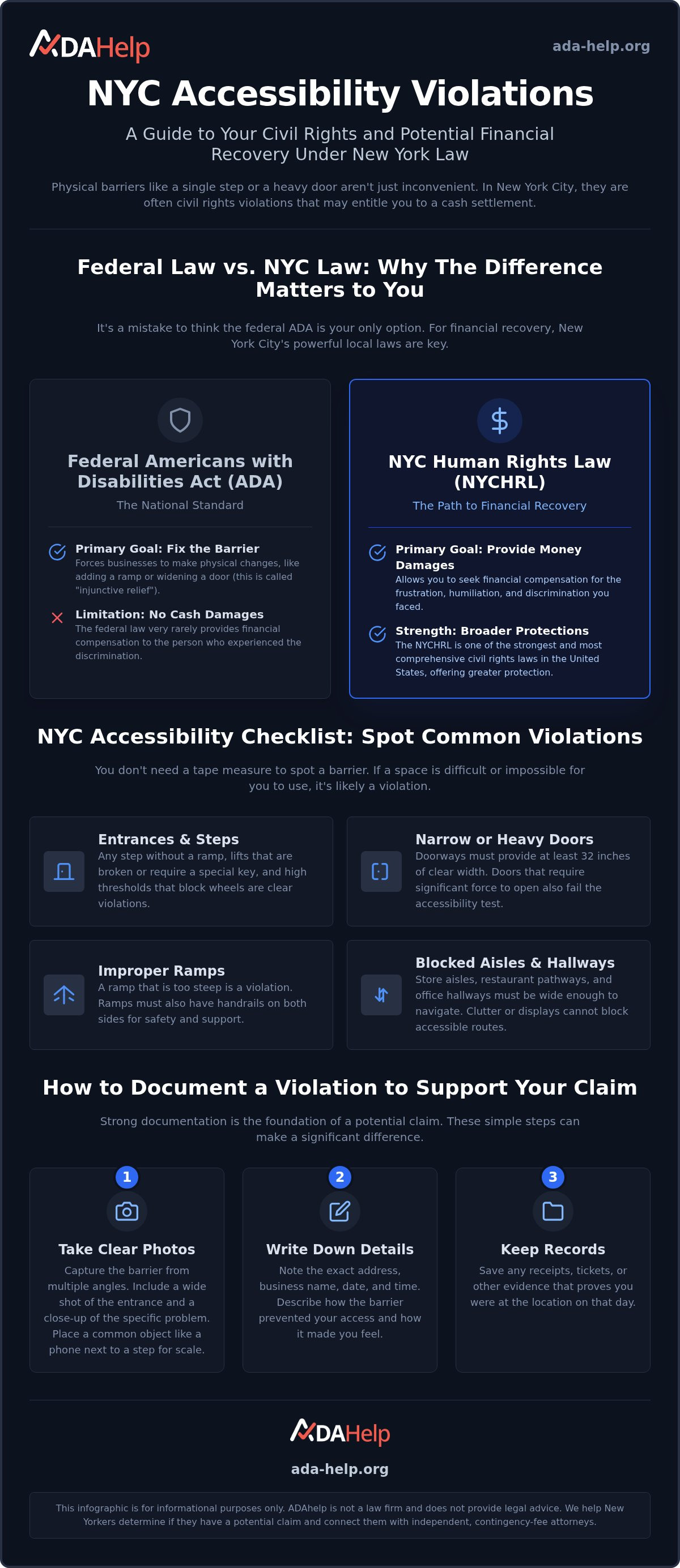
It's a common mistake to think that the federal ADA is your only path to justice. In reality; the federal law usually only forces a business to fix the physical barrier. It rarely provides money for the person who suffered the discrimination. This is where local laws like the New York City Human Rights Law (NYCHRL) and the New York State Human Rights Law (NYSHRL) become vital. These are some of the strongest protections in the nation. They allow you to seek financial compensation for the humiliation and frustration caused by building code accessibility violations NYC.
At ADAhelp; we specialize in these local New York protections. We aren't a law firm and we don't give legal advice; but we handle the heavy lifting of determining if you have a valid claim. We connect you with independent attorneys who work on a contingency basis. This means they only get paid if you win a recovery. You can check your eligibility in just three minutes without any out-of-pocket costs.
The NYC Accessibility Checklist: Common Building Code Violations
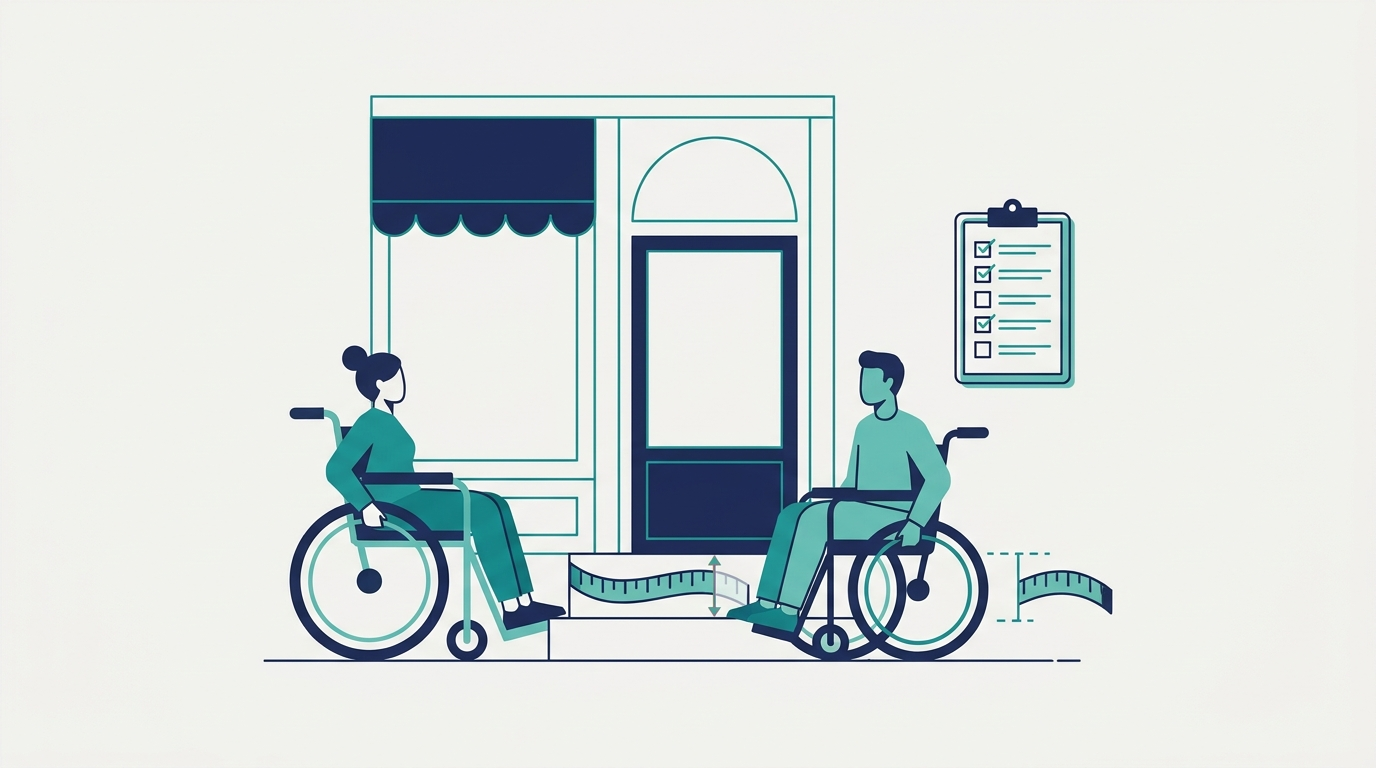
Identifying building code accessibility violations NYC businesses ignore is the first step toward your claim. You don't need a tape measure to know when a space feels wrong. If you struggle to get through a door or find yourself stuck at a single step; the law is on your side. NYC codes require a specific level of access. This means you should move as freely as any other customer. When a business fails to meet these standards; they are effectively telling you that you are not welcome.
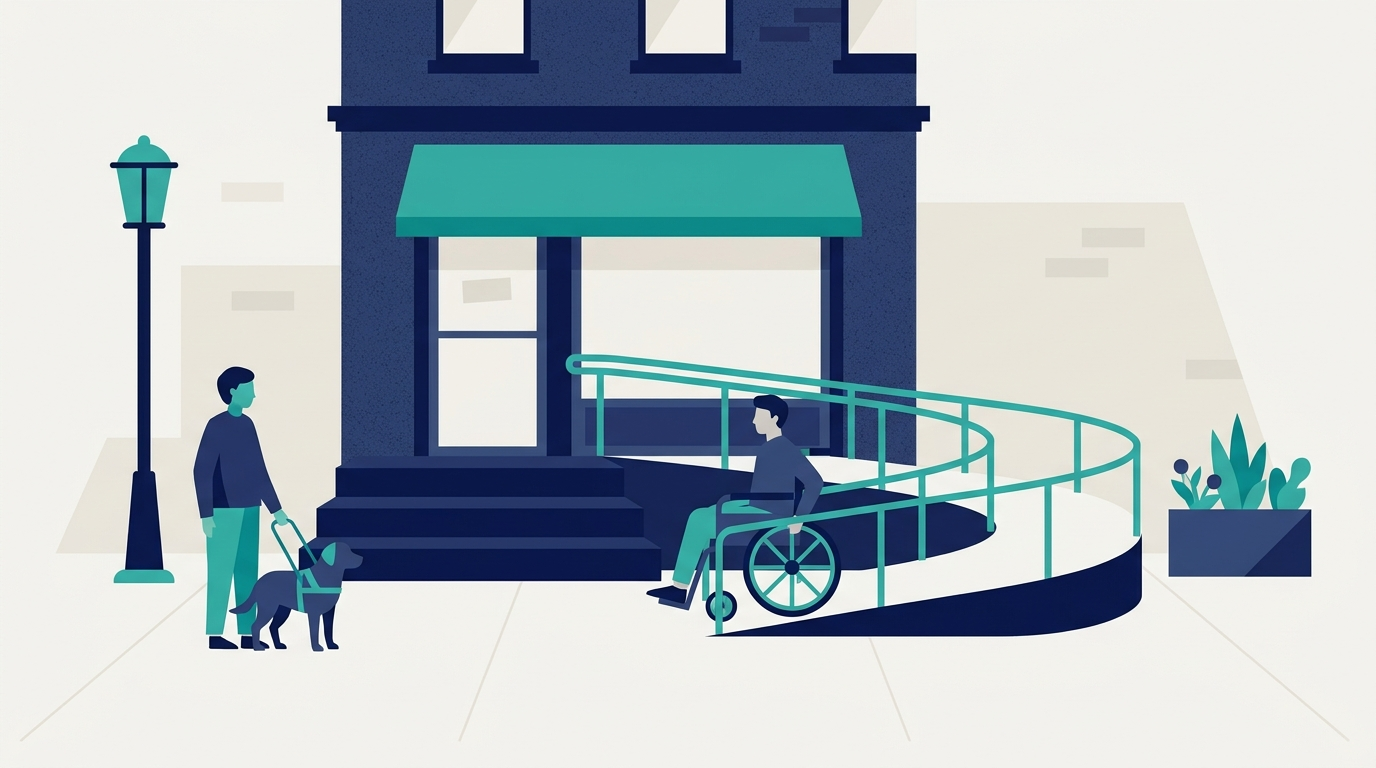
Check the entrance first. Are you facing a step without a ramp? Is there a lift that has a "broken" sign or requires a key you can't find? These are clear violations. Doorways must be wide enough for a wheelchair; which usually means at least 32 inches of clear space. If you have to use significant force to push a door open; it fails the accessibility test. High thresholds or "lips" at the entrance that catch your wheels are also illegal barriers. These small bumps can be just as blocking as a full flight of stairs. For a deeper look at entrance barriers, see our guide on wheelchair access discrimination in NYC and how to build your case.
Ramps must follow strict rules too. If a ramp feels like a mountain climb; it is likely too steep. The slope must be gentle enough for safe use. Handrails are not optional. They must be present on both sides to provide safety and support. If you see a ramp that is narrow; shaky; or missing rails; it is a violation of your rights.
Entrance and Interior Route Barriers
Once you are inside; the access must continue. An accessible entrance is useless if the path to the counter or the seating area is blocked by boxes or narrow displays. You have a right to a clear path throughout the entire public area. If you can't reach the "accessible" section because of interior stairs or narrow aisles; the business is failing you. Check for high thresholds at interior doorways that prevent smooth movement between different rooms of the store or office.
Public Restroom Accessibility Standards
Bathrooms are frequent sites for building code accessibility violations NYC. A stall must be large enough for you to close the door and turn a wheelchair around completely. Sinks must be low enough for a seated person to reach the faucet and soap. Grab bars must be securely mounted in the correct positions near the toilet. According to the NYC Human Rights Law Disability Protections; these standards apply to almost all public accommodations in the city. Look for hardware on the door that you can use without tight grasping or twisting your wrist.
Signage and Communication Violations
Access isn't just about floor space. It's about information. Permanent rooms like restrooms and exits must have Braille signs. These signs must be mounted at a specific height so they are easy to reach and read. Look for the International Symbol of Accessibility at entrances to confirm the business is identifying accessible routes correctly. If these barriers look familiar; you might have a claim for financial recovery. You can start a free case check to see if these violations entitle you to compensation.
Federal ADA vs. NYC Human Rights Law: Where the Recovery Is
You might think that because the ADA is a federal law; it is the best way to get justice. This is a common mistake that many New Yorkers make. The federal Americans with Disabilities Act (ADA) is powerful for one specific thing: forcing a business to fix a physical barrier. It is designed to change the building; not necessarily to compensate you for what you went through. If you encounter building code accessibility violations NYC; the federal law usually only results in a court order to install a ramp or widen a door. It rarely puts money in your pocket.
New York laws work differently. The New York State Human Rights Law (NYSHRL) and the New York City Human Rights Law (NYCHRL) are designed to protect your dignity. These local laws allow you to seek financial compensation for the discrimination you experienced. In NYC; these protections apply to almost every business with at least one employee. You don't have to prove the owner intended to discriminate against you. If the barrier exists and it violates the code; the business is responsible. This "strict liability" makes it much easier for you to hold them accountable for their neglect.
Understanding Money Damages in New York
Money damages are not a "windfall." They are meant to compensate you for the emotional impact of being excluded from a public space. This includes the frustration; humiliation; and inconvenience of being turned away or forced to use a side entrance. Typical recovery amounts vary case by case. The specific details of your incident will determine what your claim is worth; our guide on what an ADA violation financial settlement in NY is worth walks through the factors involved. At ADAhelp; we manage the process of documenting these impacts. We help you gather the facts needed to show how the violation affected your life; so you can seek a fair settlement.
The Role of the NYC Commission on Human Rights
The NYC Commission on Human Rights is the agency that enforces these local protections. They ensure that businesses follow the rules that make our city accessible to everyone. Filing a claim through the right channels is essential for a successful outcome. However; you don't have to handle the government bureaucracy alone. We help you determine the best path for your specific situation. Whether your case goes through a commission or directly to court with an independent attorney; our team handles the heavy lifting. We connect you with professionals who work on a contingency basis; meaning you never pay out-of-pocket fees to get started.
How to Document a Building Code Accessibility Violation
You see a barrier and you know it's wrong. Now; you need to prove it. Reporting a problem to 311 or the Department of Buildings might lead to a city inspector visiting the site; but it doesn't automatically start a claim for your personal damages. To seek financial recovery for building code accessibility violations NYC; you must gather your own evidence. This information tells the story of what happened to you and why the business is at fault. It's the difference between a city fine and a settlement that compensates you for the discrimination you faced.
Start with your phone. Take clear photos of the barrier from several angles. Capture the obstacle itself and the area around it. Make sure you note the date; the exact time; and the address of the building. If you bought something or had an appointment; save your receipt or confirmation email. This proves you were a customer at that location. These small details are the building blocks of a strong case. Without proof of your visit; it's much harder to hold the property owner accountable for their neglect.
Best Practices for Photo Documentation
Photos need to show scale and context. If a step is too high; place a common object like a dollar bill next to it before you snap the picture. This makes the height of the violation obvious to anyone looking at the photo. Capture any signage; especially if it's an "out of order" sign on a lift or a missing Braille sign. Ensure that the business name or the street address is visible in at least one of your shots. This connects the violation directly to the specific property owner and the specific day you were there.
Recording Your Personal Experience
The physical barrier is only half the story. Your personal experience is what drives a claim under the NYC Human Rights Law. Write down exactly what happened while it's fresh in your mind. Did you have to ask a stranger for help? Were you forced to wait outside while a friend went in? Note if you felt embarrassed; frustrated; or singled out by the lack of access. These details demonstrate the emotional impact of the discrimination. They are vital for determining what your claim might be worth during the case management process.
You don't have to be a legal expert to start this process. We handle the heavy lifting of organizing your evidence and determining if you have a valid claim. If you have photos or notes about building code accessibility violations NYC; we can help you take the next step. Start your free three-minute case check today to see if you are eligible for a financial recovery with no out-of-pocket costs.
Start Your Free NYC Case Check with ADAhelp
Do you have a case? What is it worth? These are the questions we answer every day for New Yorkers who are tired of being excluded. If you've encountered building code accessibility violations NYC property owners have failed to fix; you deserve a clear path to justice. We offer a free three-minute case check to help you determine if you qualify for a financial recovery. You don't have to be a legal expert to stand up for your rights. Our team handles the heavy lifting so you can focus on your life.
We provide comprehensive case management services tailored to the specific needs of our city. We are not a law firm and we do not provide legal advice. Instead; we act as your advocate and guide through a system that can often feel cold or intimidating. We manage the entire process from the moment you identify a barrier to the final resolution. By handling the documentation and organization of your claim; we ensure that your story is heard by the right people.
The ADAhelp Case Management Process
We've designed a streamlined system to help you move from frustration to resolution quickly. Step one is our quick online evaluation. You provide the basic details about where you were and what happened. If your situation looks like a valid claim; we move to step two. We gather the necessary information and evidence to build a professional file. This includes the photos and receipts you collected. Finally; our team manages the filing of the claim with the appropriate New York authorities. We track every milestone so you are never left in the dark about your progress.
No Risk, No Upfront Fees
Fear of high legal costs should never stop you from holding a business accountable. We remove that barrier entirely. You never pay anything out-of-pocket for our case management services. We connect you with independent attorneys who work on a contingency basis. A contingency fee model means the attorney only gets paid if they win a money recovery for you. If you don't win; you don't owe them a fee. Their payment comes directly from the settlement; never from your own pocket.
Our goal is to make the process stress-free and accessible for everyone. We believe in fairness and justice for all New Yorkers who face building code accessibility violations NYC. You can start your check now at ada-help.org to see if you have a claim. It only takes three minutes to find out if you are eligible for the compensation you deserve. Let us help you turn your frustration into a clear path toward a resolution.
Take the Next Step Toward Your Recovery
You now have the tools to identify building code accessibility violations NYC businesses frequently overlook. You understand that local laws like the NYCHRL provide a path to money damages that federal law simply doesn't offer. By gathering photos and noting your experience; you've already done the hardest part of the work. Now; it's time to let experts handle the rest of the process for you. You don't have to fight these barriers alone.
Our team of New York City specialists is ready to manage your claim from start to finish. We work on a contingency model; which means there is no financial risk to you. You will never pay any out-of-pocket fees; and our independent attorneys only get paid if you win a recovery. We handle the heavy lifting of filing and information gathering so you don't have to worry about the details or the paperwork.
Don't let another day go by feeling excluded from the spaces you have a right to visit. Take your free three-minute case check now to see if you have a valid claim. It's a simple; low-risk way to stand up for your rights and seek the justice you deserve. We are here to support you every step of the way.
Where to File: Agencies & Deadlines
If a barrier kept you out, you have more than one place to bring a claim for building code accessibility violations NYC. Each agency has its own deadline, so acting early protects your options. We help you pick the right path, but here is where these cases go:
- NYC Commission on Human Rights (CCHR) — enforces the NYC Human Rights Law, the strongest local path for money damages. You generally have one year to file an administrative complaint (three years if you go directly to court). See the CCHR disability protections.
- NY State Division of Human Rights (DHR) — enforces the NY State Human Rights Law statewide. The administrative deadline is three years for disability discrimination. File through dhr.ny.gov.
- U.S. Department of Justice (DOJ) — handles federal ADA Title III public-access complaints (these force a fix, not money). File at ada.gov.
- EEOC — for workplace disability discrimination (ADA Title I), file within 300 days at eeoc.gov. Public-access barriers usually belong with CCHR or DHR, not the EEOC.
Deadlines run from the date you encountered the barrier, so don't wait. Our guide to ADA public accommodation violations in NYC explains how these paths fit together. You can also start a free three-minute case check and we will help you file with the right agency.
Frequently Asked Questions
Is a small step at a store entrance a building code violation in NYC?
Yes; even a single step can be one of the most common building code accessibility violations NYC property owners ignore. The law requires an accessible route into any building that serves the public. If a person using a wheelchair or walker cannot enter without help; the entrance is likely illegal. Small thresholds higher than half an inch also violate the code because they create a tripping hazard and block wheels.
How much money can I get for an ADA violation in New York?
Financial recovery depends on the specific details of your case and the impact the discrimination had on your life. While the federal ADA does not usually provide money for individuals; the New York City Human Rights Law does. Typical recovery amounts vary case by case. These damages are meant to compensate you for the humiliation and frustration of being excluded from a public space.
Does it cost anything to report a building code accessibility violation through ADAhelp?
No; our initial evaluation and intake services are completely free for New Yorkers. You never pay anything out-of-pocket for our case management. If we determine you have a claim; we connect you with independent attorneys who work on a contingency model. This means they only get paid a percentage of the recovery if you win your case. If there is no recovery; you don't owe any fees.
Do I need a lawyer to file a disability discrimination claim in NYC?
You can technically file a claim yourself; but the legal process is complex and involves strict deadlines. Most people find it much easier to work with a professional team that understands the system. ADAhelp handles the heavy lifting of organizing your evidence and connecting you with an independent attorney. This ensures your claim follows the correct path to maximize your chances of a successful recovery.
What happens if a business says they cannot afford to fix the barrier?
A business owner's claim that they lack funds does not automatically excuse them from following the law. While federal rules mention fixes that are easy to carry out; NYC laws are often much stricter regarding building code accessibility violations NYC. If a business serves the public; they have a duty to ensure everyone can access their services. Their financial situation may be a factor; but it doesn't change the fact that your civil rights were violated.
Can I file a claim if the building is very old and has a 'grandfather' status?
There is no absolute "grandfather" clause that allows old buildings to remain inaccessible forever. When an older building undergoes renovations or changes its occupancy; it must meet modern accessibility standards. Even without renovations; the law requires businesses to remove barriers whenever it is achievable. If an old building prevents you from entering or using a restroom; it is always worth checking to see if you have a valid claim.

Article by
ADA Help
Written by the ADAhelp editorial team and reviewed for accuracy before publishing. ADAhelp helps New Yorkers find out if they have a disability discrimination claim and manages the process end to end, working with independent attorneys who handle the legal work. We are not a law firm and do not provide legal advice.
Disclaimer
This article is general information about New York law, not legal advice, and reading it does not create an attorney-client relationship. ADAhelp is a case-management and intake service, not a law firm; legal representation is provided by independent attorneys. Recovery amounts and timelines vary by case, and past outcomes do not guarantee future results. For advice about your specific situation, speak with a qualified attorney or start the free case check.
Tags
Discriminated against in New York because of a disability?
A free three-minute check tells you if you can pursue a claim.
Check my case →New York onlyNo upfront costIndependent NY attorneysFree 3-minute check