Landlord Disability Discrimination NYC: Rights & Recovery
Reviewed for accuracy by the ADAhelp team before publishing. ADAhelp is not a law firm; legal work is handled by independent New York attorneys.
Facing landlord disability discrimination in NYC? Learn your rights under city law, how to get accommodations, and how to seek money damages with no upfront ...
What if your landlord's refusal to install a ramp or accept your service animal could result in a $250,000 penalty? If your landlord ignores your accommodation requests or threatens eviction, you likely have a case for money damages under the New York City Human Rights Law. Recent settlements in NYC have reached over $250,000; and you can pursue these claims with no upfront cost. It's exhausting to fight for basic access in your own home; but you don't have to do it alone.
This guide will help you identify landlord disability discrimination NYC and explain how to start a case for recovery. You'll learn how the New York City Human Rights Law (NYCHRL) and state laws provide for the financial compensation that federal law often misses. We'll show you how to hold your landlord accountable and secure a functional living space. We'll also preview the process of using our case management services to connect with independent contingency-fee attorneys who only get paid if you win.

Key Takeaways
- Learn how to identify landlord disability discrimination NYC in private apartments, public housing, and co-ops.
- Understand why federal laws focus on building access while New York City and State laws allow you to seek money damages.
- Discover your rights regarding reasonable accommodations; including structural changes and the use of service animals.
- Find out what evidence you need to prove your claim and how the severity of the violation impacts typical recovery amounts.
- Learn how to start a free case check to see if you qualify for professional case management at no upfront cost.
Understanding Landlord Disability Discrimination in New York City
Living in New York City is hard enough without your landlord making it impossible. Landlord disability discrimination NYC happens when a property owner treats you poorly because of a physical or mental impairment. This behavior is illegal in private apartments; public housing complexes; and even luxury co-ops. You have rights under the Federal Fair Housing Act; but NYC laws often go even further to protect you from unfair treatment.
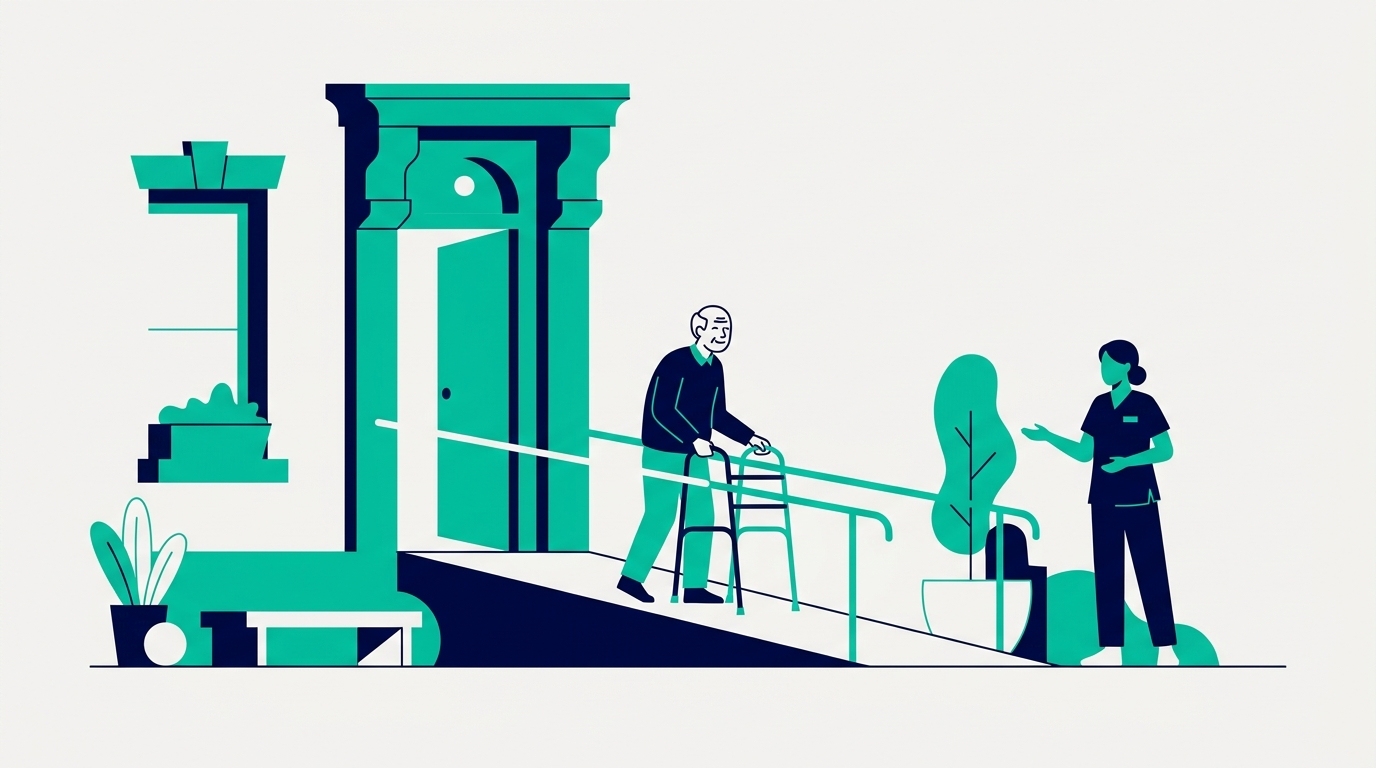
Discrimination isn't always a flat-out refusal to rent. It can be active; like a landlord telling you that you can't live there because of your mobility aid. It can also be passive; like a management company refusing to install a ramp or ignoring your request for a grab bar. You're protected even if your disability isn't visible to others. If your landlord's actions make it harder for you to live in or enjoy your home; they're likely breaking the law.
To see how these issues affect real New Yorkers, watch this report on discriminatory treatment in a local housing complex:
Who Is Protected Under NYC Housing Laws?
NYC housing laws use a very broad definition of disability. You're protected if you have a physical; medical; mental; or psychological impairment. This includes chronic conditions that might not be obvious at first glance. The law also covers you if you have a history of an impairment or if a landlord simply thinks you have a disability. If you've been treated unfairly based on these factors; you may have a valid claim for money damages under the New York City Human Rights Law.
Common Signs of Housing Bias
Identifying bias can be tricky because it's often subtle. Watch for these red flags in your building or during your apartment search:
- An agent says an apartment was just rented right after they see your wheelchair or service animal.
- The landlord charges you "pet rent" or an extra security deposit for a service animal.
- Management refuses to let you move to a ground-floor unit even when one is available.
- Building staff make jokes or offensive comments about your condition or equipment.
- Management ignores your emails or calls regarding a needed repair that relates to your disability.
If any of this sounds familiar; you don't have to accept it. At ADAhelp; we are not a law firm; but we handle the heavy lifting of case management for you. We help you determine if you have a case and connect you with independent contingency-fee attorneys. You don't pay anything out of pocket to hold your landlord accountable for landlord disability discrimination NYC.
Comparing Federal; State; and City Disability Laws
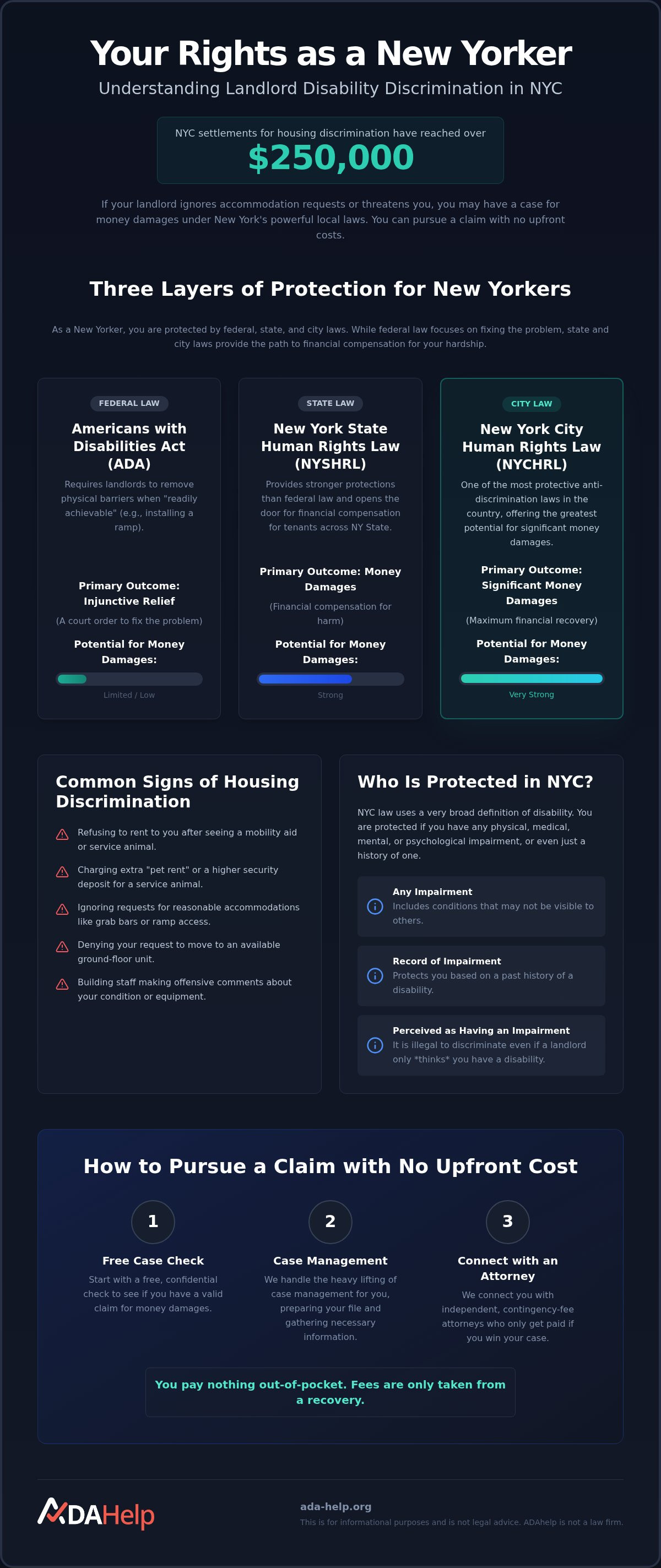
As a New Yorker; you are protected by three separate layers of law. This can be confusing; but it's actually a major advantage. Most states only have the federal Americans with Disabilities Act (ADA). In New York City; you also have the New York State Human Rights Law (NYSHRL) and the New York City Human Rights Law (NYCHRL). Each law serves a different purpose in your fight against landlord disability discrimination NYC.
The interaction between these laws determines what you can get out of a case. While federal law sets a baseline; local laws provide the actual path toward financial recovery. Understanding these differences helps you set realistic expectations for your claim.
The ADA and Injunctive Relief
The ADA is a federal law that applies across the entire country. Title III of the ADA requires landlords to remove physical barriers when it is "readily achievable." This means if a ramp can be installed without extreme difficulty or expense; the landlord must do it. However; the ADA has a major limitation for individual tenants. It primarily offers injunctive relief. This is a legal term meaning the court orders the landlord to fix the physical problem or change a policy. It rarely provides money damages directly to you for the pain and suffering you've endured.
Money Damages via NYSHRL and NYCHRL
If you want financial compensation for the stress and hardship caused by your landlord; you look to state and city laws. The NYSHRL covers everyone in New York State. For those living in the five boroughs; the NYC Human Rights Law Disability Protections are even stronger. These local laws allow you to sue for compensatory damages. This includes money for emotional distress; mental anguish; and any out-of-pocket costs you paid because of the discrimination. The NYCHRL is widely considered one of the most powerful civil rights laws in the United States because it requires courts to interpret the law as broadly as possible to protect tenants.
Because the city and state laws are so strong; you have a much better chance of holding your landlord accountable for landlord disability discrimination NYC. This is why it's helpful to have your situation reviewed by experts who understand the local rules. If you aren't sure which law applies to your building; you can start a free case check to see if your situation qualifies for a claim. We help you determine if you have a case and connect you with independent contingency-fee attorneys who only get paid if you win.
Denied Accommodations and Common Housing Violations
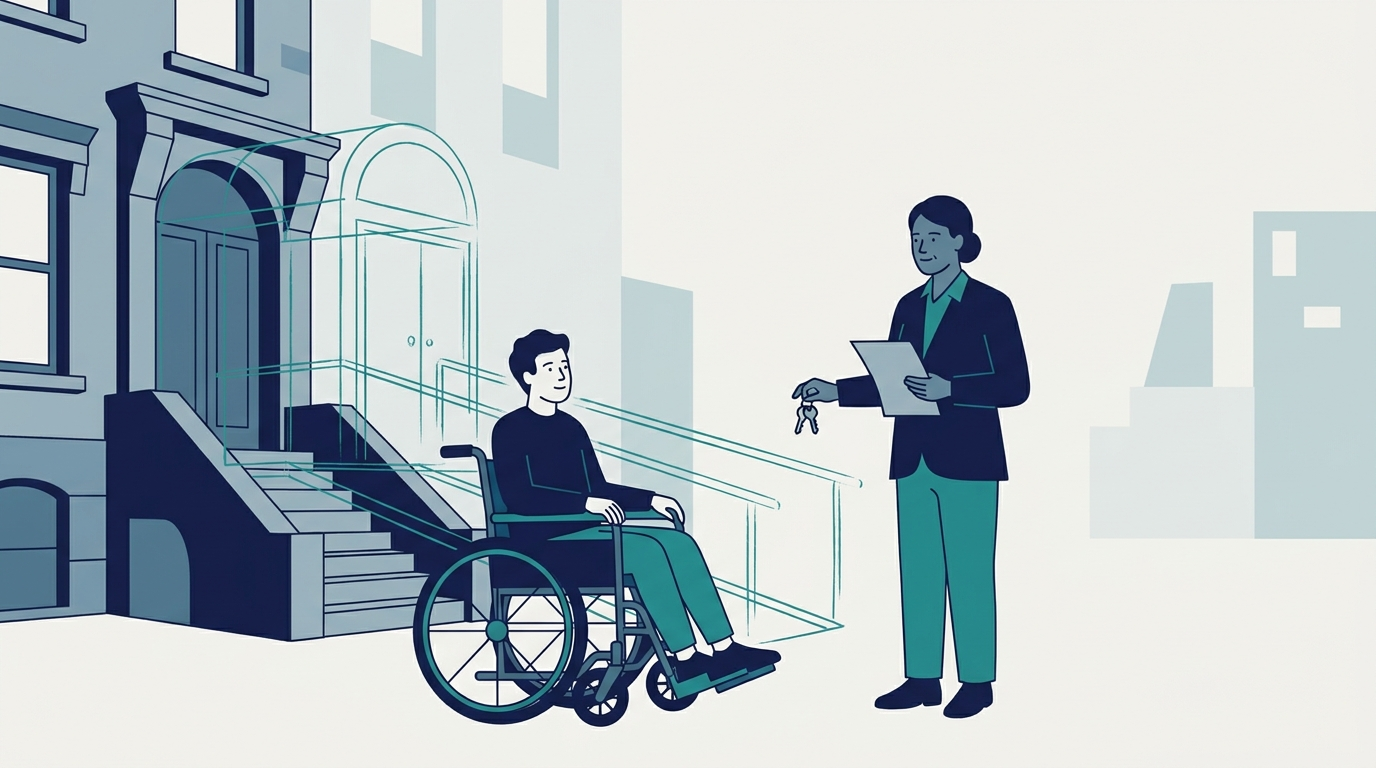
You shouldn't have to struggle to get through your front door or use your own bathroom. A reasonable accommodation is simply a change to a building's rules; policies; or physical structure that allows you to live comfortably with a disability. In many cases; a landlord's refusal to make these changes is a clear example of landlord disability discrimination NYC. You don't need to quote specific statutes to your landlord to start this process. Simply stating that you have a disability and need a specific change is enough to trigger their legal obligations.
Landlords must grant these requests unless they can prove the change would cause an "undue financial burden." In a city filled with major real estate companies; this is a very high bar for a property owner to meet. New York City laws also require landlords to engage in a "cooperative dialogue." This means they can't just say no; they must work with you to find a solution that works. If they stop responding or flatly refuse your request; they may be liable for significant money damages.
Service and Support Animal Rights
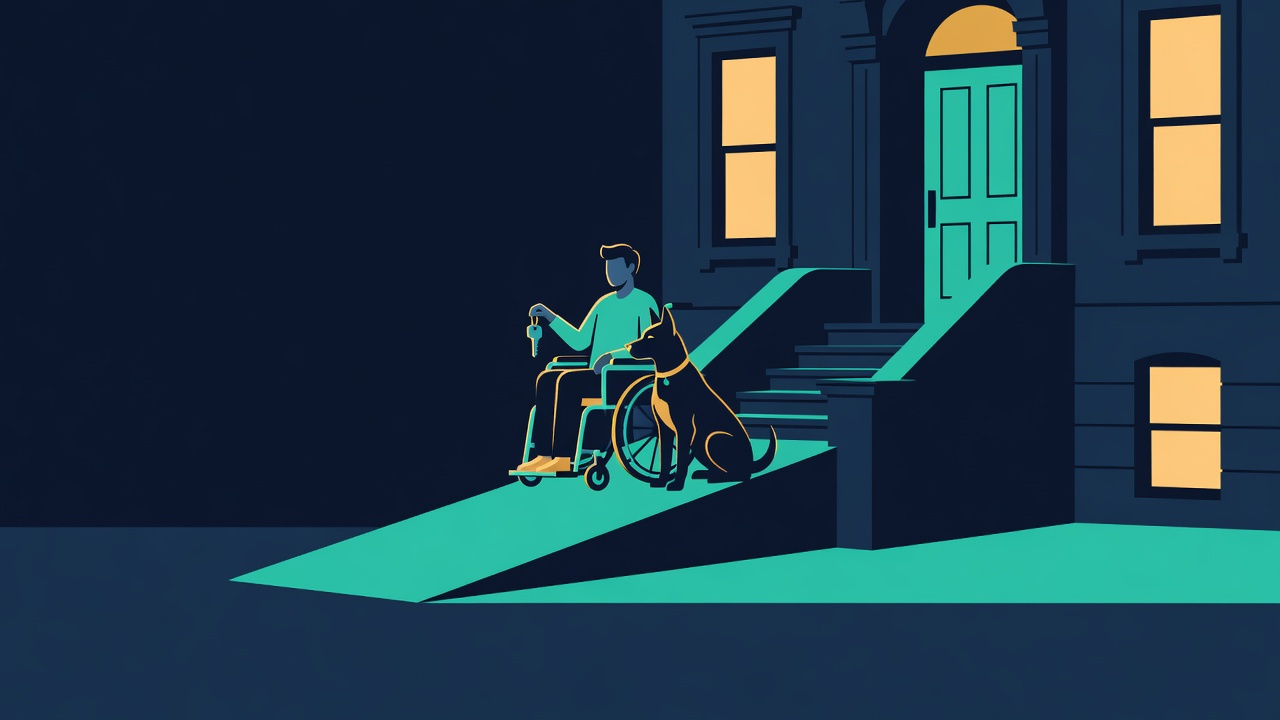
NYC landlords cannot use "no-pet" rules to keep out your service or support animal. These aren't pets; they're medical necessities. You don't have to pay a pet deposit or monthly pet fees for an assistance animal. It's important to know that as of May 22, 2026; the U.S. Department of Housing and Urban Development (HUD) changed how it handles federal complaints regarding untrained emotional support animals. However; this does not change the New York City Human Rights Law; which continues to offer broader protections for emotional support animals than federal law. While a landlord can ask for a letter from a healthcare provider; they cannot demand your entire medical history or specific details about your diagnosis. If they threaten you with eviction over your animal; they are likely violating your rights.
Physical Access and Modifications
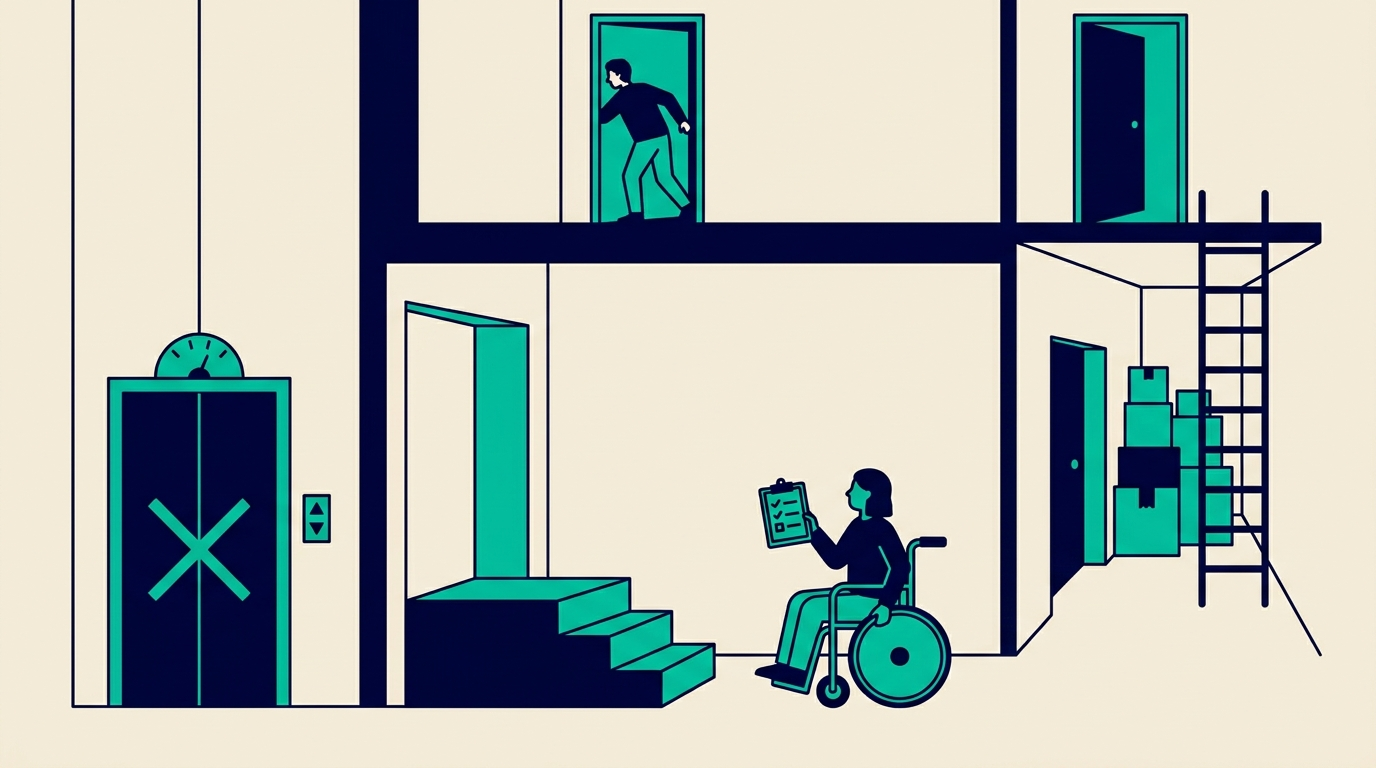
Structural changes are a frequent source of landlord disability discrimination NYC. If you need grab bars in the shower; a ramp in the lobby; or a lowered mailbox; your landlord usually has to allow it. In many NYC buildings; the landlord is actually responsible for the cost of these changes. This is especially true for buildings built after 1991 or those governed by the strict requirements of the NYCHRL. If a landlord tells you that you must pay for a ramp yourself; don't take their word for it. They might be trying to shift a legal cost onto you. Our NYC apartment accessibility checklist can help you spot and document barriers to report. You can use a free case check to see if your landlord is legally required to pay for the modifications you need to live safely in your home.
Determining Your Claim Value and Necessary Evidence
Proving landlord disability discrimination NYC requires a clear trail of evidence. You know what you experienced; but a court or a landlord's insurance company needs to see proof of the violation. The value of your claim depends on how much the discrimination impacted your daily life. Did you lose your home? Did you suffer from severe anxiety or physical pain? Typical recovery amounts vary significantly based on these specific factors.
There are no guaranteed payouts in these cases. However; New York laws are designed to make you whole again. Documentation is the most critical part of a successful claim. Without it; a case often becomes your word against theirs. By keeping a detailed log of every interaction with your landlord; you build a foundation for holding them accountable.
What Is Your Case Worth?
Recovery isn't just about getting a ramp built or a policy changed. Under the New York City Human Rights Law; you can seek money for emotional pain and suffering. This covers the mental anguish caused by being treated like a second-class citizen. If the discrimination forced you to move; your claim may cover the cost of finding a new; accessible apartment. In 2025; the New York State Division of Human Rights secured $939,557 in financial compensation for housing discrimination victims. In extreme cases of intentional bias; the NYCHRL allows for civil penalties of up to $250,000. These figures are typical for the region; but your individual results will depend on the evidence provided.
How to Document Discrimination
Documentation is your best weapon against a dishonest landlord. Don't rely on your memory alone. Start a file today and include these items:
- Save every email; text message; and letter sent to or received from building management.
- Take clear photos or videos of physical barriers; such as a broken elevator or a blocked wheelchair entrance.
- Keep a log of dates and times when your requests for accommodation were ignored or denied.
- Write down the names and contact information of neighbors or friends who witnessed the discrimination.
Even small details can be the difference between a dismissed claim and a successful recovery. If you have already started gathering this proof; you are ahead of the curve. You can start a free three-minute case check today to see if your evidence supports a claim for money damages. We manage the intake process and connect you with independent attorneys who work on contingency; meaning they only get paid if you win.
Start Your NYC Housing Discrimination Case Management
You have already learned how to spot the signs and document the evidence. Now it's time to act. ADAhelp is not a law firm; we are case managers who handle the heavy lifting for you. We understand that dealing with landlord disability discrimination NYC is exhausting. You don't have to manage the paperwork or the filing deadlines alone. Our team reviews your situation to see if you have a valid claim under the city and state laws we discussed earlier.
We manage the gathering of information and the filing process with the correct authorities. Our goal is to turn your frustration into a clear path toward resolution. We handle the administrative burden so you can focus on your life. By acting as your proactive partner; we ensure your case stays on track and meets all necessary legal requirements.
The Free Three-Minute Case Check
Taking the first step shouldn't be a chore. You can visit ADAhelp to start our simple digital intake right now. The process is straightforward. You answer a few questions about your landlord; the building; and the specific incident you faced. We will tell you quickly if your case qualifies for professional management. It's a fast; stress-free way to find out if you have a path to financial recovery for landlord disability discrimination NYC.
No Risk; No Upfront Fees
Many New Yorkers worry about the cost of fighting a powerful property owner. We remove that barrier. You never pay out-of-pocket for our case check or the filing process. We connect you with independent attorneys who work on a contingency basis. This means they only earn a fee if you receive a successful resolution. This model ensures that every tenant can fight for justice regardless of their bank balance. For more details on current protections; read our guide on housing disability discrimination in New York. If you were turned away from an apartment entirely; see what to do when you are denied housing because of a disability. We are here to be your advocate and make the system work for you with minimal friction.
Take Control of Your Housing Rights Today
You shouldn't have to struggle with inaccessible entrances or face threats over a service animal in your own home. New York City laws provide some of the strongest protections in the country; and they offer a clear path to financial recovery that federal laws often miss. By understanding your rights and keeping detailed records; you've already taken the first steps toward justice. Remember that your landlord has a legal duty to provide reasonable accommodations; and their failure to do so could lead to significant money damages.
Fighting landlord disability discrimination NYC is much easier when you have a dedicated partner to manage the process. We specialize in New York housing laws and offer a free initial evaluation to see if you have a claim. Our contingency-fee model ensures that you pay nothing unless you win. This means you can pursue fairness and accountability without any financial risk to yourself.
Start your free three-minute case check now to see if your situation qualifies for professional case management. You deserve a home that is safe; functional; and accessible. Let us handle the heavy lifting so you can focus on moving forward with your life.
Where to File: Agencies & Deadlines
If you decide to file a housing disability discrimination complaint in New York; these are the agencies that handle these claims and the deadlines that apply. You do not have to pick the right one on your own — the strongest venue depends on your building and the facts.
- NYC Commission on Human Rights (CCHR) — enforces the NYCHRL for incidents in the five boroughs; the broadest protections available. File within 3 years. See nyc.gov/cchr.
- NYS Division of Human Rights (DHR) — enforces the NYSHRL statewide. File within 3 years of the discriminatory act. See dhr.ny.gov/complaint.
- U.S. Dept. of Housing & Urban Development (HUD) — enforces the federal Fair Housing Act. File within 1 year. See HUD housing complaints.
- U.S. Dept. of Justice (DOJ) / ADA — handles ADA public-accommodation and accessible-design issues. See ada.gov.
Frequently Asked Questions
Can a NYC landlord refuse to rent to me because I use a wheelchair?
No; a landlord cannot refuse to rent to you just because you use a wheelchair or any other mobility aid. This is a direct violation of the New York City Human Rights Law. Property owners must evaluate your application based on your financial qualifications and rental history; not your physical or mental impairments. If an agent tells you an apartment is no longer available after seeing your wheelchair; you may be a victim of landlord disability discrimination NYC.
Does my landlord have to pay for a ramp in my NYC apartment building?
In many cases; yes. NYC landlords are generally responsible for the cost of structural modifications like ramps if they are necessary for you to use and enjoy your home. This requirement is especially strict for buildings constructed after 1991. If a landlord claims the cost is too high; they must prove it would cause an "undue hardship;" which is a very difficult standard for most New York City property owners to meet.
Can I be evicted for having an emotional support animal in a no-pet building?
You cannot be legally evicted for having a legitimate emotional support animal; even in a building that prohibits pets. While federal HUD policies regarding untrained animals changed in May 2026; the New York City Human Rights Law continues to provide broad protections for assistance animals. You must provide documentation from a healthcare professional; but you are not required to disclose your specific medical diagnosis or full health records to your landlord.
What should I do if my landlord ignores my request for a reasonable accommodation?
You should immediately begin documenting the lack of response. Save copies of every email; letter; or text message you sent to building management. New York City law requires landlords to participate in a "cooperative dialogue" with you to find a solution. If they refuse to engage or stop responding entirely; they are likely violating your rights. This is the point where you should start a free case check to hold them accountable.
How much does it cost to file a disability discrimination claim in New York?
It costs you nothing out-of-pocket to start the process with ADAhelp. We provide a free three-minute case check to determine if you have a valid claim for landlord disability discrimination NYC. Because we connect you with independent attorneys who work on a contingency-fee basis; you only pay a fee if you win a financial recovery. This ensures that every New Yorker can seek justice regardless of their current financial situation.
How long do I have to report landlord discrimination in NYC?
You generally have three years from the date of the incident to file a complaint with the New York State Division of Human Rights. This three-year statute of limitations applies to all discriminatory acts that occurred on or after February 15, 2024. If you choose to file a lawsuit in New York State Court; the deadline is also three years. However; if you are pursuing a federal claim with the EEOC; you must act much faster as the deadline is only 300 days.
What is the difference between the ADA and the New York City Human Rights Law?
The ADA is a federal law that primarily focuses on access and removing physical barriers. While the ADA can force a landlord to install a ramp; it rarely provides money damages to the individual tenant. The New York City Human Rights Law is a local statute that offers much broader protections. It allows you to sue for compensatory damages; including money for emotional distress and mental anguish; which are not typically available under federal law.

Article by
ADA Help
Written by the ADAhelp editorial team and reviewed for accuracy before publishing. ADAhelp helps New Yorkers find out if they have a disability discrimination claim and manages the process end to end, working with independent attorneys who handle the legal work. We are not a law firm and do not provide legal advice.
Disclaimer
This article is general information about New York law, not legal advice, and reading it does not create an attorney-client relationship. ADAhelp is a case-management and intake service, not a law firm; legal representation is provided by independent attorneys. Recovery amounts and timelines vary by case, and past outcomes do not guarantee future results. For advice about your specific situation, speak with a qualified attorney or start the free case check.
Tags
Discriminated against in New York because of a disability?
A free three-minute check tells you if you can pursue a claim.
Check my case →New York onlyNo upfront costIndependent NY attorneysFree 3-minute check