Denied Housing Disability New York? What to Do in 2026
Reviewed for accuracy by the ADAhelp team before publishing. ADAhelp is not a law firm; legal work is handled by independent New York attorneys.
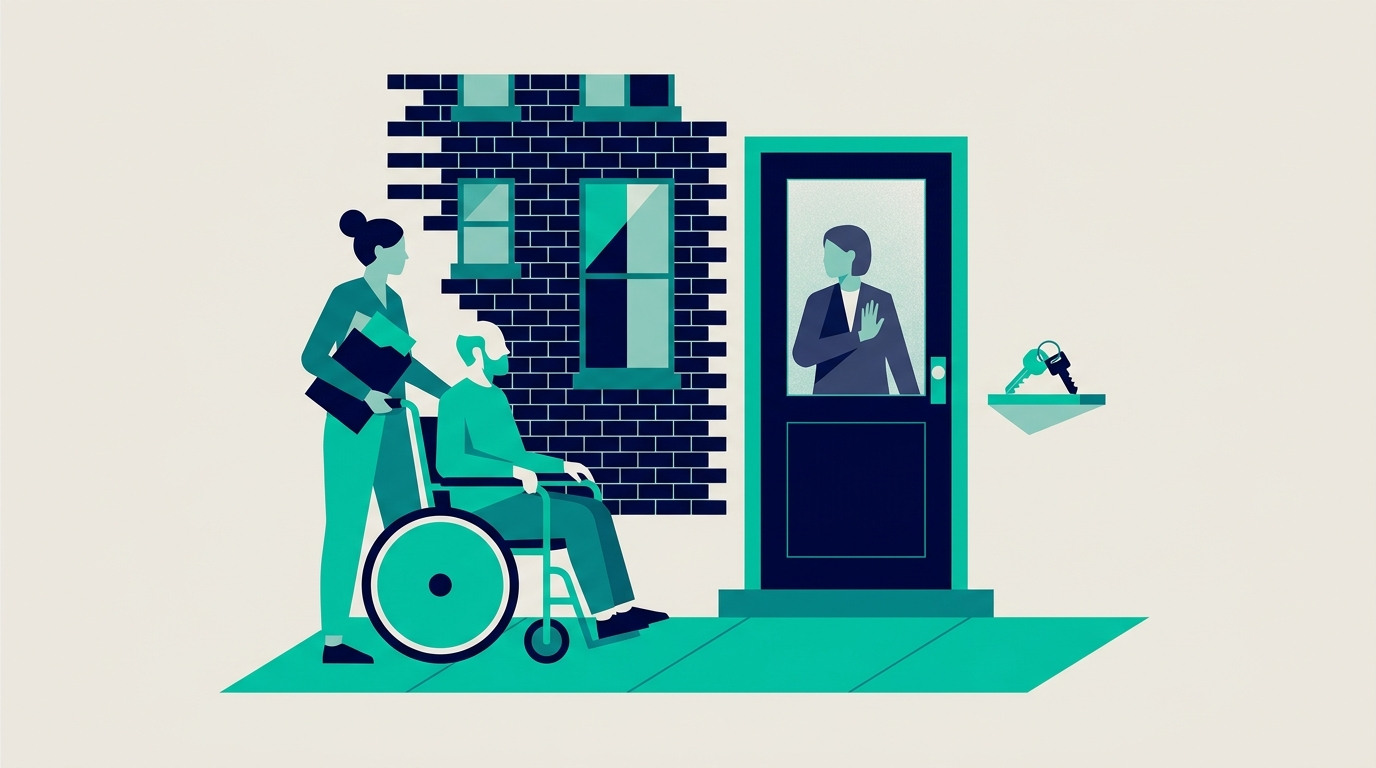
Denied housing disability New York? You may be owed money. Learn your rights under NY law and start a claim with no out-of-pocket costs. Free case check.
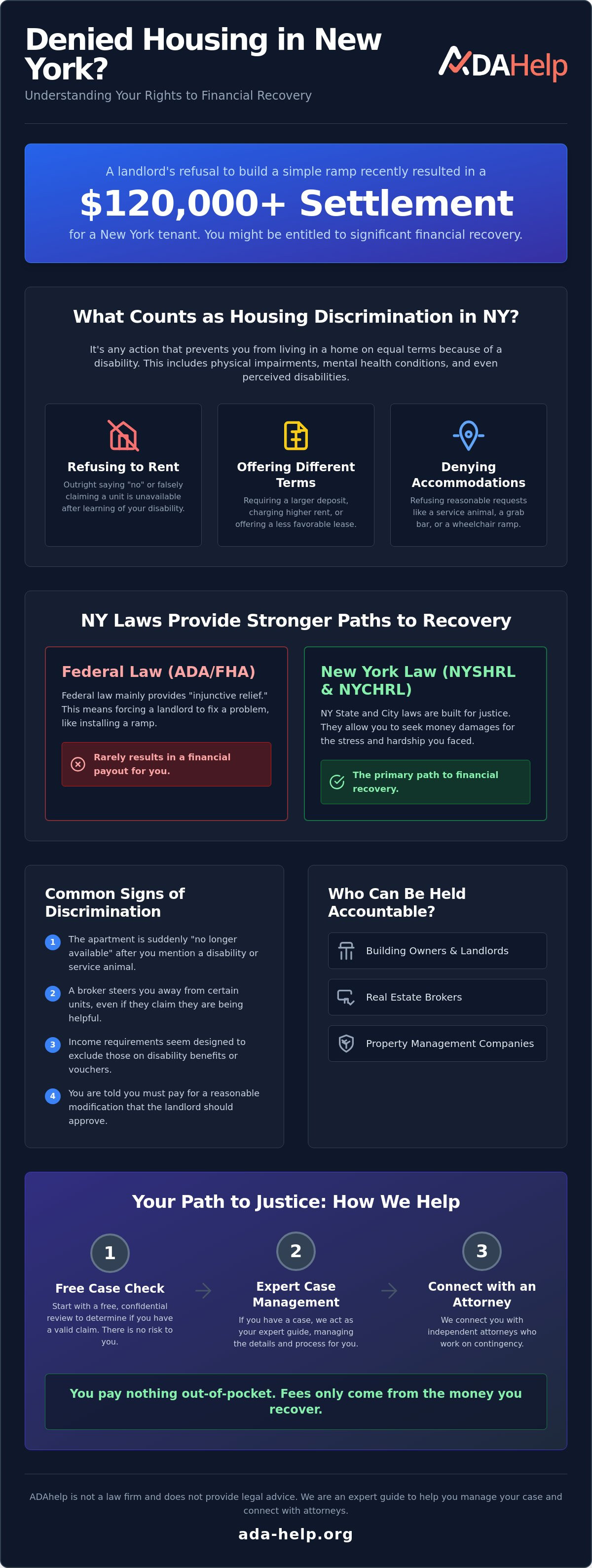
Did you know that a landlord’s refusal to build a simple ramp recently resulted in a settlement of over $120,000 for a New York tenant? If you were denied housing disability New York, you aren't just facing a frustrating rejection. You might be the victim of a serious legal violation that entitles you to significant financial recovery. It's common to feel powerless when a landlord says no. You might worry about expensive legal fees or feel buried by confusing housing codes.
You deserve a fair shot at the apartment you want, and you shouldn't have to risk your savings to get it. This guide explains how to identify illegal denial under the New York State Human Rights Law and the NYC Human Rights Law. You will learn the exact steps to start a claim with zero financial risk. We will show you how to confirm if your situation was illegal and how to connect with independent attorneys who work on a contingency basis. ADAhelp is not a law firm. We act as your expert guide to manage your case and ensure you pay nothing out-of-pocket; fees only come from the money you recover.

Key Takeaways
- Identify if your situation meets the legal definition of discrimination to see if you have a valid claim.
- Understand why New York City and State laws offer stronger protections and better recovery options than federal law.
- Follow a clear sequence of actions if you were denied housing disability New York to protect your rights.
- Learn which types of digital evidence are most effective for securing a fair settlement.
- Start a free three-minute case check to access professional case management with no financial risk.
What counts as being denied housing because of a disability in New York?
If you believe you were denied housing disability New York, you likely have a strong case for recovery. You don't need a written rejection letter to prove discrimination; any action that prevents you from living in a home on equal terms counts. New York law defines disability broadly. It covers physical impairments, mental health conditions, and even perceived disabilities that a landlord might assume you have. If you faced barriers during your application or while living in your unit, the law is on your side.
The federal Fair Housing Act sets the baseline for your protections, but New York's local laws go much further. Discrimination happens when a housing provider treats you differently because of your condition. This includes refusing to rent to you, offering different lease terms, or failing to make a reasonable accommodation. The New York State Human Rights Law (NYSHRL) and the New York City Human Rights Law (NYCHRL) provide some of the most powerful protections in the country. They define disability as any physical, medical, mental, or psychological impairment. This is much broader than the federal definition. It means you don't have to prove your disability is permanent to seek justice.
To better understand how these situations look in real-world New York apartments, watch this helpful video:
Common signs of illegal housing discrimination
Discrimination is often subtle. You might hear that an apartment is "no longer available" the moment you mention a service animal or a wheelchair. This is a classic tactic used to avoid saying "no" directly. Other signs include a landlord refusing to let you install a grab bar or a portable ramp at your own expense. Under the NYSHRL, these are mandatory approvals in most cases. If your building has broader physical barriers, our tenant checklist for apartment building accessibility issues in NYC can help you spot what to document. If a broker steers you away from a ground floor unit because they think you shouldn't live there, they are violating your rights. Even if they think they are being helpful, restricting your choices based on your mobility is illegal.
The role of brokers and management companies
Many New Yorkers think only the building owner is responsible for these actions. That isn't true. Brokers and management companies are equally liable for discrimination under New York law. Brokers often act as gatekeepers. If a broker stops answering your texts after you ask about accessibility, that is a red flag. Sometimes, they use income requirements as a mask for bias, specifically targeting those who receive disability benefits or vouchers. Even a verbal denial during a phone call can serve as the basis for a strong claim. Whether the denial was a blunt rejection or a polite excuse, the result is the same. You were denied housing disability New York and you have the right to hold them accountable. At ada-help.org, we help you sort through these interactions to see if a broker's behavior was illegal.
Understanding your rights under New York State and City laws
You might think federal law is your only shield. It isn't. While the Americans with Disabilities Act (ADA) is famous, it mostly focuses on physical changes. If you were denied housing disability New York, state and city laws are where you find financial justice. These local rules apply to nearly all New York housing with three or more units, and they reach beyond private apartments; if you or a loved one faced bias in a care setting, see our guide to assisted living facility discrimination in New York. They ensure that landlords can't just ignore your needs or push you out of the application process. These protections are designed to make you whole after you've been mistreated.
In New York, you aren't just limited to asking for a ramp or a policy change. You can seek actual money for the stress and hardship the discrimination caused. Local laws are built to protect the underdog. They force property owners to take your rights seriously or face heavy financial consequences. You can verify your eligibility for these damages in just a few minutes.
ADA vs. NYSHRL and NYCHRL
The ADA provides what is called injunctive relief. This is a legal term for making the landlord "stop" or "fix" something; such as adding an elevator or allowing a service dog. It rarely results in a payout for you. To get money, we look to New York State fair housing laws. The NYSHRL provides a path for compensatory damages. These are payments for your mental anguish and any out-of-pocket costs you faced. If you live in the five boroughs, the NYCHRL is even more aggressive. It allows for punitive damages; these are extra fines meant to punish the landlord for bad behavior. It also covers your attorney fees, so those costs don't come out of your pocket.
Why New York City residents have extra protection
New York City has some of the toughest civil rights protections in the world. Local courts use a "preponderance of evidence" standard. This means you only need to show that it's more likely than not that discrimination happened. This is a lower bar than many federal claims. NYC also protects you from discrimination based on your "lawful source of income." This prevents landlords from rejecting you because you pay rent using disability benefits or vouchers. If you were denied housing disability New York within the city limits, you are protected by a system specifically built to favor tenants. The NYC Commission on Human Rights actively enforces these rules. They can order landlords to pay significant civil penalties and emotional distress damages. Recent settlements in 2026 have seen landlords pay over $110,000 for failing to provide basic accommodations. These laws exist to ensure you have a safe and accessible place to call home.
How to respond when a landlord denies you housing
If you were just denied housing disability New York, you might feel like you've reached a dead end. You haven't. You likely have a strong case for financial recovery if a landlord or broker rejected you because of your medical condition or your need for an accommodation. Your next steps are critical. Do not lose your temper or get into a shouting match. Instead, focus on building a case that holds them accountable. You can start this process right now with a free three-minute case check.
Arguing with a landlord usually leads to a dead end. They may become defensive or stop communicating entirely. Your goal is to gather facts, not win a debate. When you stay calm and document every interaction, you collect the evidence needed to prove your case later. This shift from applicant to investigator is the most important move you can make. Every text, email, and rental listing you save helps build a bridge to a resolution.
Step-by-step response guide
- Get the reason in writing. Send a text or email asking for the specific reason for your denial. If they told you over the phone, send a summary email confirming what they said. This creates a permanent record of their exact words.
- Do not sign waivers. Some management companies might offer to return your application fee if you sign a document releasing them from liability. Never sign these "settlement" papers without having your case evaluated first.
- Evaluate your claim. Contact a case management service like ADAhelp to see if the denial violates New York State fair housing laws. We manage the process and connect you with attorneys who work on contingency.
Requesting a reasonable accommodation
A reasonable accommodation is a simple change in a policy or rule that allows you to enjoy your home. It isn't a favor from the landlord; it's a legal requirement. This could be an exception to a pet policy for a service animal or a change in a rent payment date to align with disability checks. To make a request, send a formal email. Clearly state what you need and why it relates to your disability. This creates a vital paper trail that proves you asked for help. If the landlord ignores your request or issues a flat denial, they may be denied housing disability New York. This failure to engage is often the key evidence needed to secure a settlement or force the landlord to comply.
How to document your housing discrimination case for recovery
Your evidence is the bridge between a frustrating rejection and a successful recovery. If you were denied housing disability New York, you need more than just a memory of the event. You need a file that proves what happened. Landlords and brokers often change their stories once a claim is filed. Having a clear record of your interactions prevents them from hiding the truth. This documentation is exactly what an independent attorney needs to secure a settlement for you. You can start your free case check to see if your current evidence is enough to move forward.
Digital evidence is your strongest asset. Save every Zillow message, StreetEasy notification, and text thread. Do not delete voicemails; instead, record them onto a second device or save them to a cloud drive. Brokers frequently delete listings the moment they realize they might face a claim. Take screenshots of the "available" status immediately. If you have friends or family who witnessed a phone call or attended a viewing with you, ask them to write down what they saw. These witness statements add weight to your account and make it harder for a landlord to deny your claims.
Start a contemporaneous log today. This is simply a diary of events written as they happen. Record the date, the time, and the names of everyone you spoke with. Describe the conversation in plain language. Did the broker's tone change when you mentioned a service animal? Did they suddenly mention a "pending application" that wasn't there before? These details matter. A log written at the time of the incident is viewed as highly reliable in New York courts.
Essential evidence checklist
- Listing Screenshots: Capture the original ad showing the price, amenities, and "available" status.
- Call Logs: Keep a record of the time and duration of every call made to the management office or broker.
- Medical Documentation: Have a letter from a healthcare provider that confirms your status as a person with a disability. You do not need to share your specific diagnosis; you only need to establish that you have a medical need for an accommodation.
Proving "Pretext" in New York housing
Pretext is a legal term for a fake reason. Landlords often use pretext to hide discrimination. For example, they might tell you the unit was "just rented" to avoid admitting they don't want a tenant with a disability. To prove this, check if the unit remains listed online after your rejection. If a non-disabled friend calls about the same unit and is told it is still available, you have caught the landlord in a lie. This "testing" is a powerful tool in New York housing cases. It turns a simple denial into clear proof of bias. When you document these contradictions, you build a case for compensatory damages under the NYSHRL and NYCHRL. These laws are designed to pay you for the emotional distress caused by these deceptive tactics.
How ADAhelp manages your New York housing claim
You don't have to face a landlord or a management company alone. If you were denied housing disability New York, the path to justice should be simple and stress-free. We handle the heavy lifting so you can focus on your life. Our service is built specifically for New Yorkers who need results but want to avoid the cold, intimidating atmosphere of a traditional legal office. We act as your proactive partner to determine if your rights were violated and help you move toward a fair settlement.
Everything starts with a free three-minute case check at ada-help.org. This tool is designed to help you self-identify if your situation meets the legal requirements for a claim under the NYSHRL or NYCHRL. You don't need to be a legal expert to use it. Just answer a few plain-English questions about your experience. If you have a case, we move quickly to organize your evidence into a professional filing that gets attention.
We use a contingency model for all the cases we manage. This means you pay nothing unless there is a recovery. There are no hidden fees, no hourly rates, and no out-of-pocket costs to start your claim. The financial risk stays with the service providers; not with you. This ensures that every New Yorker has access to high-quality case management regardless of their current budget.
The case management process
- Start with the online check. Use our website to see if your situation meets New York's strict legal requirements for disability discrimination.
- Organize your evidence. Work with a dedicated manager to turn your Zillow messages, call logs, and emails into a professional filing.
- Follow your progress. Stay informed as your claim moves forward without the stress of managing deadlines or complex paperwork yourself.
Why a case manager is different from a law firm
ADAhelp is not a law firm and we do not provide legal advice. We focus on the intake and administrative burden of your claim. We handle the information gathering and the filing process to ensure your case is presented as strongly as possible. Once your claim is ready, we connect you with independent, contingency-fee attorneys who handle the legal work. This service is designed for New Yorkers who want results without the personal financial risk of hiring an hourly lawyer. If you are ready to see if you have a case, go to ada-help.org to start your free check today.
Where to file: agencies & deadlines
If you were denied housing disability New York, several agencies can accept your complaint. Deadlines are strict, so act early. For a step-by-step walkthrough of the process, see our 2026 guide to filing an ADA complaint in New York.
- NY State Division of Human Rights (DHR) — dhr.ny.gov. Deadline: 3 years for incidents on or after February 15, 2024; otherwise 1 year.
- NYC Commission on Human Rights (CCHR) — nyc.gov/site/cchr. Deadline: 1 year to file an administrative complaint, or 3 years to sue in court.
- U.S. Department of Justice — ADA — ada.gov. Federal disability rights information and complaint filing.
- U.S. Equal Employment Opportunity Commission (EEOC) — eeoc.gov. Deadline: 300 days (relevant if the discrimination is employment-related).
Take control of your housing future today
You don't have to accept a landlord’s rejection as the final word. New York City and State laws provide powerful tools to secure financial recovery for the distress you’ve faced. If you were denied housing disability New York, your evidence is the key to holding property owners accountable. By staying calm and documenting every interaction; you’ve already done the hardest part. Now it’s time to let experts handle the rest.
ADAhelp is here to turn your frustration into a clear path forward. We provide NY-specific expertise to manage your claim and connect you with independent contingency-fee attorneys. You will never face out-of-pocket costs; fees only come from a successful recovery. There is no reason to wait while your rights are being ignored. You deserve a safe and accessible home; we are ready to help you secure it. Start your free three-minute housing case check now. You have nothing to lose and your future home to gain.
Frequently Asked Questions
What is the most common disability housing violation in New York?
Refusing to provide a reasonable accommodation is the most frequent violation reported to state and city authorities. This often happens when a landlord says no to a service animal or blocks the installation of a grab bar in a bathroom. In New York City; rejecting a tenant because they use disability benefits or housing vouchers to pay rent is also a common illegal practice.
Can a landlord in NYC deny me because of a service dog?
No; a landlord cannot deny your application or evict you because of a service animal. Under the NYCHRL; these animals are not considered pets but are essential medical tools. Even buildings with strict "no-pet" policies must make an exception for you. If you were denied housing disability New York because of your service dog; you likely have a strong case for financial recovery.
How much can I recover in a New York housing discrimination case?
Recovery amounts vary case by case; but recent settlements in 2026 show that damages can be substantial. For example; the NYC Commission on Human Rights recently secured over $122,000 in emotional distress damages and civil penalties for a tenant denied a ramp. Other typical recoveries for voucher discrimination have reached $35,000. These payments are meant to compensate you for the actual hardship and mental anguish you suffered.
Do I need to pay a lawyer upfront to file a housing claim?
You never have to pay out-of-pocket costs or upfront fees to start your claim through ADAhelp. We connect you with independent attorneys who work on a contingency-fee model. This means their fees are only taken as a percentage of the final recovery they win for you. If you don't win a settlement; you don't owe any legal fees. This ensures every New Yorker can seek justice regardless of their bank account balance.
What if the landlord says the apartment is not accessible?
A landlord cannot reject you simply because their building currently lacks accessible features. In New York; you have the right to request reasonable modifications; such as widening a doorway or adding a ramp. Landlords are generally required to approve these changes if they are necessary for you to use the home. Using "lack of access" as a reason for a flat denial is often a direct violation of the NYSHRL.
How long do I have to file a housing discrimination claim in New York?
For most incidents occurring in 2026; you have three years to file a complaint with the New York State Division of Human Rights or file a lawsuit in State Supreme Court. If you choose to file a federal complaint with HUD; the deadline is much shorter at only one year from the date of the denial. It is vital to start your case check early so that important digital evidence like rental listings and text messages don't disappear.

Article by
ADA Help
Written by the ADAhelp editorial team and reviewed for accuracy before publishing. ADAhelp helps New Yorkers find out if they have a disability discrimination claim and manages the process end to end, working with independent attorneys who handle the legal work. We are not a law firm and do not provide legal advice.
Disclaimer
This article is general information about New York law, not legal advice, and reading it does not create an attorney-client relationship. ADAhelp is a case-management and intake service, not a law firm; legal representation is provided by independent attorneys. Recovery amounts and timelines vary by case, and past outcomes do not guarantee future results. For advice about your specific situation, speak with a qualified attorney or start the free case check.
Tags
Discriminated against in New York because of a disability?
A free three-minute check tells you if you can pursue a claim.
Check my case →New York onlyNo upfront costIndependent NY attorneysFree 3-minute check