Library Accessibility Complaint New York: File & Rights
Reviewed for accuracy by the ADAhelp team before publishing. ADAhelp is not a law firm; legal work is handled by independent New York attorneys.
Facing library barriers? Learn how to file a library accessibility complaint in New York, your rights under the ADA, and how to seek financial recovery.
You arrive at your local branch to find a heavy door that won't budge. Maybe the elevator is broken, or the library's website fails your screen reader. These aren't just minor inconveniences. They are barriers to your legal right to information. If you have faced these obstacles, you likely want to know how to file a library accessibility complaint New York and if you can recover damages for the discrimination you experienced.
It is frustrating to be shut out of public services. You deserve equal access to every shelf and digital resource in the state. This guide explains how to identify legal violations under the Americans with Disabilities Act (ADA) and New York's state and city human rights laws. You will learn the steps to document a barrier and how to start a claim to fix the problem. We also clarify how you can seek financial recovery for emotional distress. From understanding your three-year filing window to finding a contingency-fee attorney, we provide a clear path toward justice. The process is simple; the initial case check is always free and involves no out-of-pocket costs.
Key Takeaways
- Identify common physical and digital barriers that prevent you from using New York libraries as required by law.
- Learn how a library accessibility complaint New York uses state and city human rights laws to seek monetary compensation.
- Discover the best methods for documenting violations with photos and records to support your request for barrier removal.
- Understand the zero-risk process of filing a claim where you only pay if you receive a financial recovery.
- Find out how a free three-minute case check can connect you with an attorney to handle the filing process.
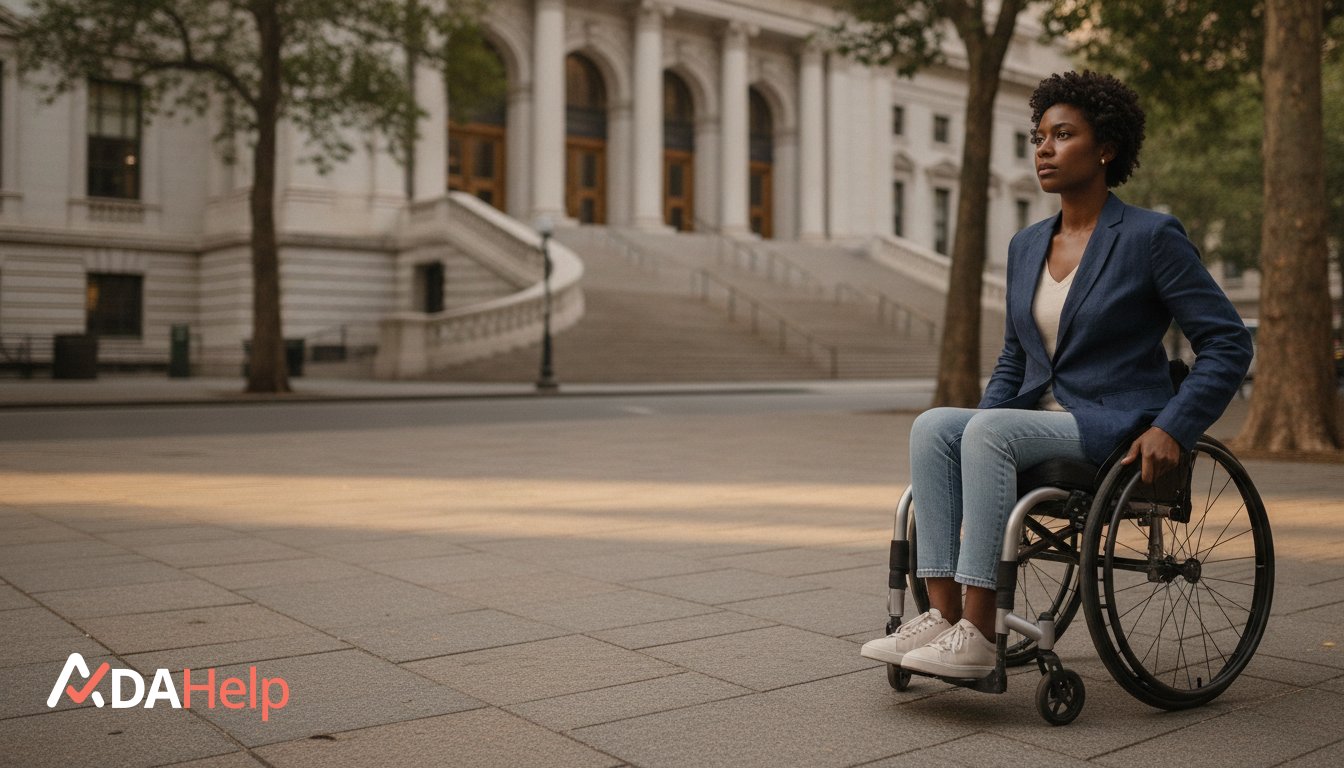
Common Accessibility Violations in New York Libraries
You visit your local library branch to find a world of information. Instead, you find a heavy door that won't open or an elevator with a "temporarily out of service" sign. These are not just bad luck. They are violations of the Americans with Disabilities Act of 1990. When a public space is off-limits to you, a library accessibility complaint New York is the first step toward fixing the problem.
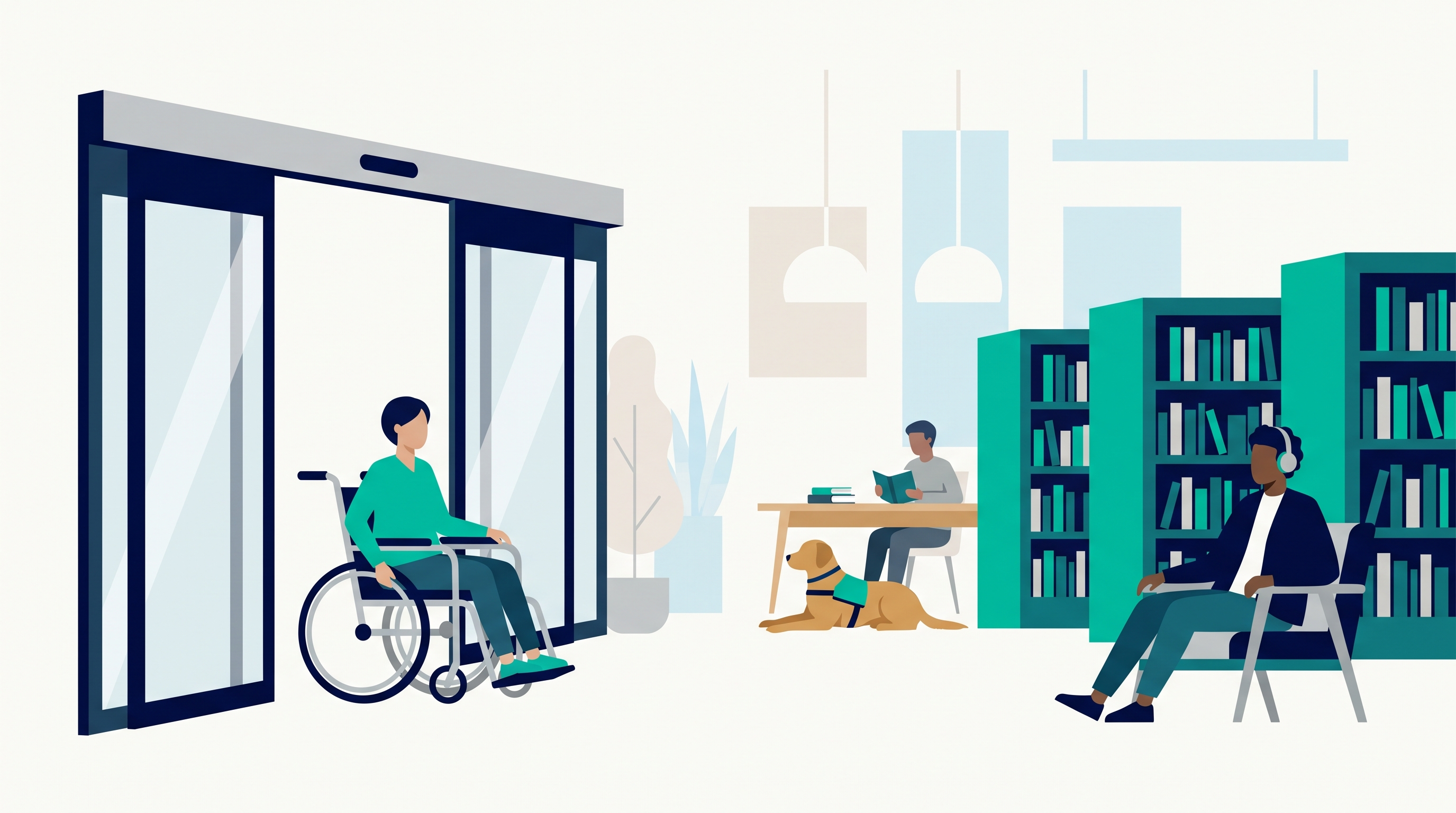
Access is a legal requirement for every New Yorker. Libraries must ensure their facilities and programs are open to everyone. This includes people with mobility, visual, and hearing disabilities. When they fail, filing a library accessibility complaint New York helps you hold them accountable. State and city laws often provide more protection than federal law alone. They allow you to seek compensation for the discrimination you faced.
To see a first-hand account of accessibility features and challenges in a New York library, watch this video:
Physical Barriers in Public and Private Libraries
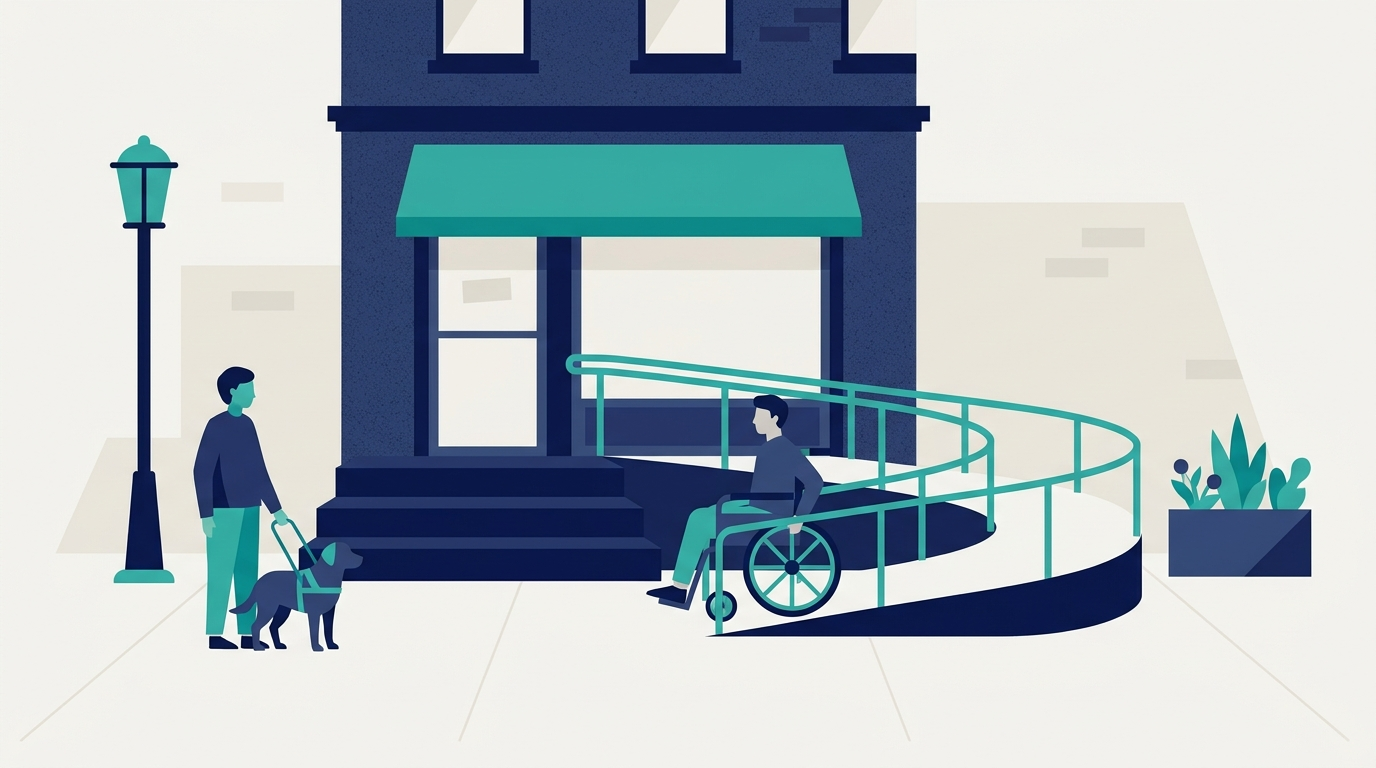
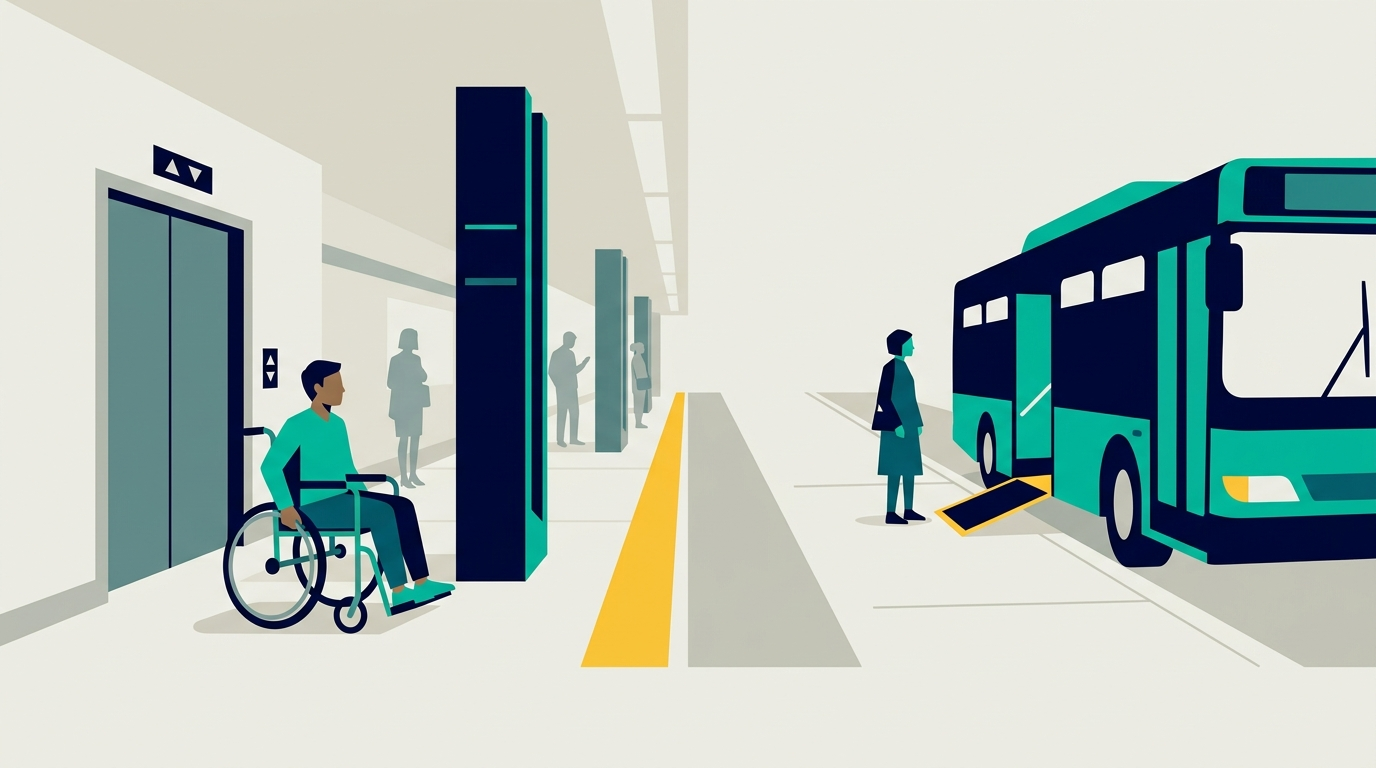
Many New York libraries are located in older buildings with significant architectural hurdles. You might encounter narrow aisles that make it impossible to reach specific book sections in a wheelchair. High service counters can make it hard to talk to staff or check out books. Restrooms are another common problem area. They often lack the necessary grab bars or turning space for a power chair. Even ramps can be a violation if they are too steep or lack proper handrails. If a library has multiple levels but the elevator is broken or non-existent, they are denying you equal service. These physical barriers are direct violations of your rights.
Digital and Programmatic Access Issues
Accessibility does not stop at the front door. It also covers the library's website and digital resources. You must be able to use the online catalog and book study rooms with a screen reader. Websites that don't work with a keyboard are a major barrier for many users. New federal rules require larger libraries to meet strict digital standards by April 26, 2027. Smaller libraries have until 2028. Programmatic access is just as important. Libraries must provide sign language interpreters for public events if you ask for them. If a library workshop or lecture is not accessible to you, it is a violation of your rights. ADA Help - NY disability discrimination claims can check if these digital or physical barriers qualify you for a claim under the New York State Human Rights Law (NYSHRL) or the New York City Human Rights Law (NYCHRL). These laws are the primary source for money damages in discrimination cases. If the barrier you faced was on a library's site rather than in its building, see our guide on how to file a website accessibility complaint in New York.
Your Rights Under New York Accessibility Laws
Do you have a case? If you were denied access to books or digital resources because of a disability, the answer is likely yes. What is it worth? While federal law focuses on fixing the facility, New York laws allow you to seek money damages for the discrimination you faced. A library accessibility complaint New York relies on three specific layers of legal protection. Each layer serves a different purpose in securing your rights and your recovery.
The federal Americans with Disabilities Act (ADA) is the foundation. It requires libraries to remove architectural and communication barriers. However, the ADA is often limited to "injunctive relief." This means a court can order the library to fix the problem, but it rarely results in a direct check for you. To get the physical barrier fixed, you can File an ADA Complaint with the Department of Justice. This helps future visitors, but it doesn't address the personal frustration you felt during your visit.
The Role of the Americans with Disabilities Act
The ADA is divided into different sections called "Titles." Title II covers public libraries run by local or state governments. This includes the major New York City systems and small town branches. Title III covers private libraries, such as those at private universities or research centers. Both titles require libraries to make reasonable changes to their policies or physical space. This might include adding ramps or providing auxiliary aids like braille materials. If you aren't sure which title applies to your branch, a free case check can give you the answers you need.
Seeking Damages with NYSHRL and NYCHRL
Real New Yorkers have access to much stronger tools for recovery. The New York State Human Rights Law (NYSHRL) applies to libraries across the entire state. It allows you to seek compensatory damages for emotional distress. If the library is in the five boroughs, the New York City Human Rights Law (NYCHRL) provides even more protection. It is one of the most powerful civil rights laws in the country.
The NYCHRL allows for civil penalties up to $125,000 for unintentional acts and up to $250,000 for intentional discrimination. These amounts are typical maximums and vary based on your specific case facts. Unlike federal law, these city and state laws focus on the personal impact of the discrimination. This makes them the primary way to secure a financial settlement. You don't have to choose between fixing the library and receiving compensation. You can pursue both outcomes at the same time.
How to Document a Library Accessibility Violation
Do you have a case? Documentation is the proof that turns your experience into a legal claim. What is it worth? Your evidence determines the strength of your recovery under New York laws. When you encounter a barrier, your first instinct might be to tell the branch manager. While that feels proactive, internal reports often lead nowhere. To build a strong library accessibility complaint New York, you need objective proof that a service provider cannot ignore.
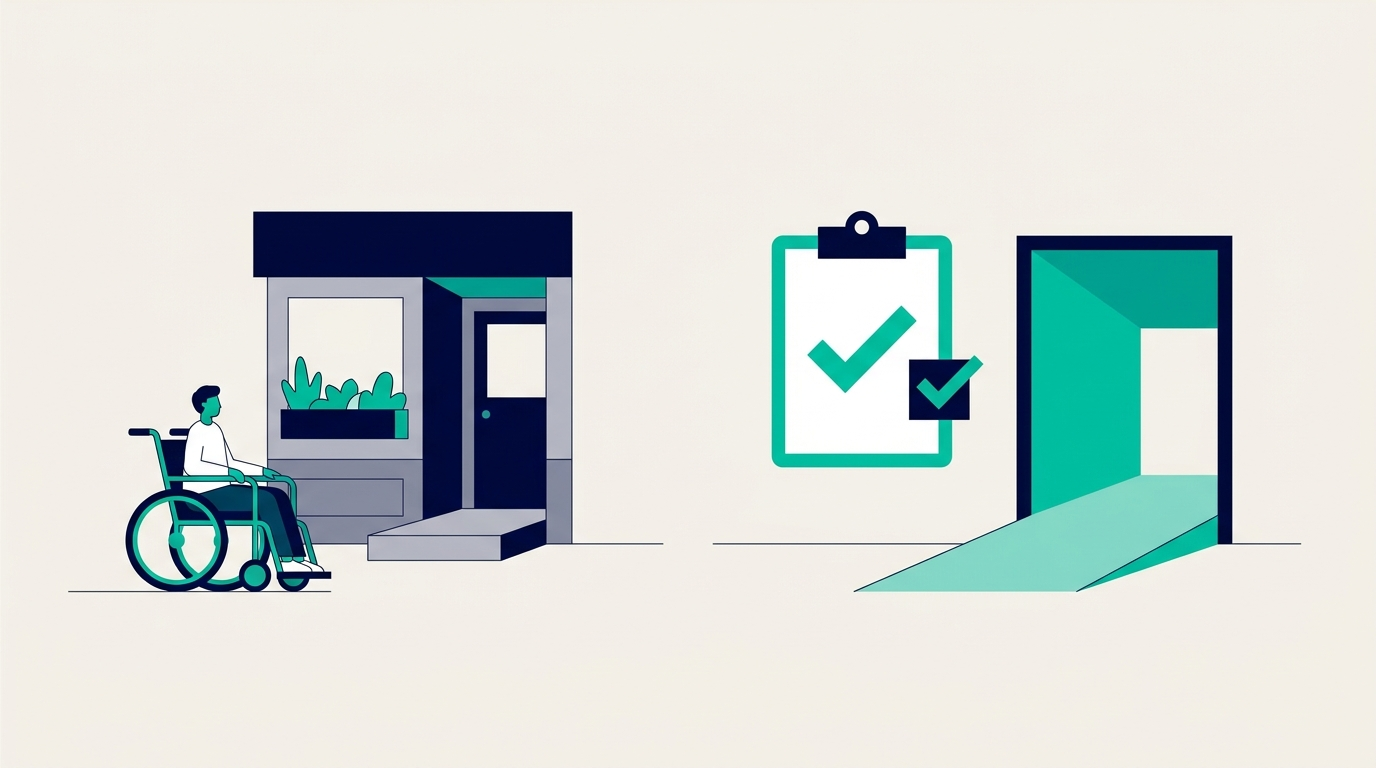
Start by taking clear photos with your phone camera. If an elevator is broken, take a picture of the "out of service" sign. If a door is too heavy to open, capture the lack of an automatic opener button. These visuals provide the proof needed for Filing an ADA Complaint with the Department of Justice. This evidence forces the library to fix the physical problem for everyone.
Gathering Physical Evidence
Physical barriers are often measurable. If you can, use a measuring tape to check door widths or the height of a service counter. Accessible doors should be at least 32 inches wide. If a ramp feels like a mountain, it might be too steep for code. Take photos from multiple angles. Include landmarks like library signs to prove exactly which branch you visited. Don't forget the restrooms. If there are no grab bars or the stalls are too narrow, take a picture. This data turns your frustration into a factual claim. For restroom-specific issues, our guide to filing an inaccessible public restroom complaint in NYC walks through what to document.
Keeping a Detailed Log
A written record is just as vital as a photo. Write down the exact date and time you visited. If you spoke with a librarian or security guard, get their names. Note their exact words if they made a discriminatory comment. If you are dealing with digital issues, take screenshots. Capture the error message or the page where your screen reader failed to move through the catalog. These details help show the emotional distress required for damages under the NYSHRL or NYCHRL. If you have gathered this information, you are ready for a free three-minute case check with ADA Help - NY disability discrimination claims to see if your documentation supports a claim.
The Filing Process for Your Complaint
Do you have a case? To move forward, you must choose between an administrative complaint or a lawsuit. A library accessibility complaint New York can be filed with government agencies or through a private court action. While you can file on your own, the process is often complex and time-consuming. Most New Yorkers prefer to work with experts who handle the intake and paperwork. This ensures that every deadline is met and every barrier is correctly documented.
Administrative filings are a common first step. They are designed to be more accessible than a formal lawsuit. However, they still require precise documentation and strict adherence to deadlines. If you miss a filing window, you lose your right to seek recovery. Federal law through the ADA focuses on fixing the physical barrier. State and city laws are where you seek a financial settlement for the discrimination you experienced.
Administrative Filing Options
You can file a claim with the New York City Commission on Human Rights (NYCCHR) if the library is within the five boroughs. For libraries across the rest of the state, the New York State Division of Human Rights (NYSDHR) is the primary agency. These bodies investigate your claim and can order the library to pay damages. In Fiscal Year 2023, the NYSDHR awarded nearly $7 million in compensation to victims of discrimination. If you are a library employee facing discrimination, you may also need to file with the U.S. Equal Employment Opportunity Commission (EEOC). The EEOC requires a charge to be filed within 300 days of the discriminatory act.
Timelines and Expectations
Deadlines vary depending on which law you use. For discriminatory acts that happened on or after February 15, 2024, the statute of limitations for the NYSDHR is three years. If you are filing with the NYC Commission on Human Rights, you typically only have one year to act. Filing a lawsuit in state court under the NYSHRL also carries a three-year limit. It is vital to start your claim as soon as possible to preserve your rights. See our full breakdown of the ADA claim statute of limitations in New York for every deadline that could apply.
Resolution is not instant. You should expect a response period from the library administration after your claim is served. Some cases settle quickly when the barrier is obvious. Others may take longer if the library disputes the violation. Using a case management service simplifies this. We help you determine if you have a claim and connect you with independent contingency-fee attorneys. You never pay out-of-pocket; fees only come from the money you recover. Ready to start? Use our free three-minute case check to see if you qualify for a claim today.
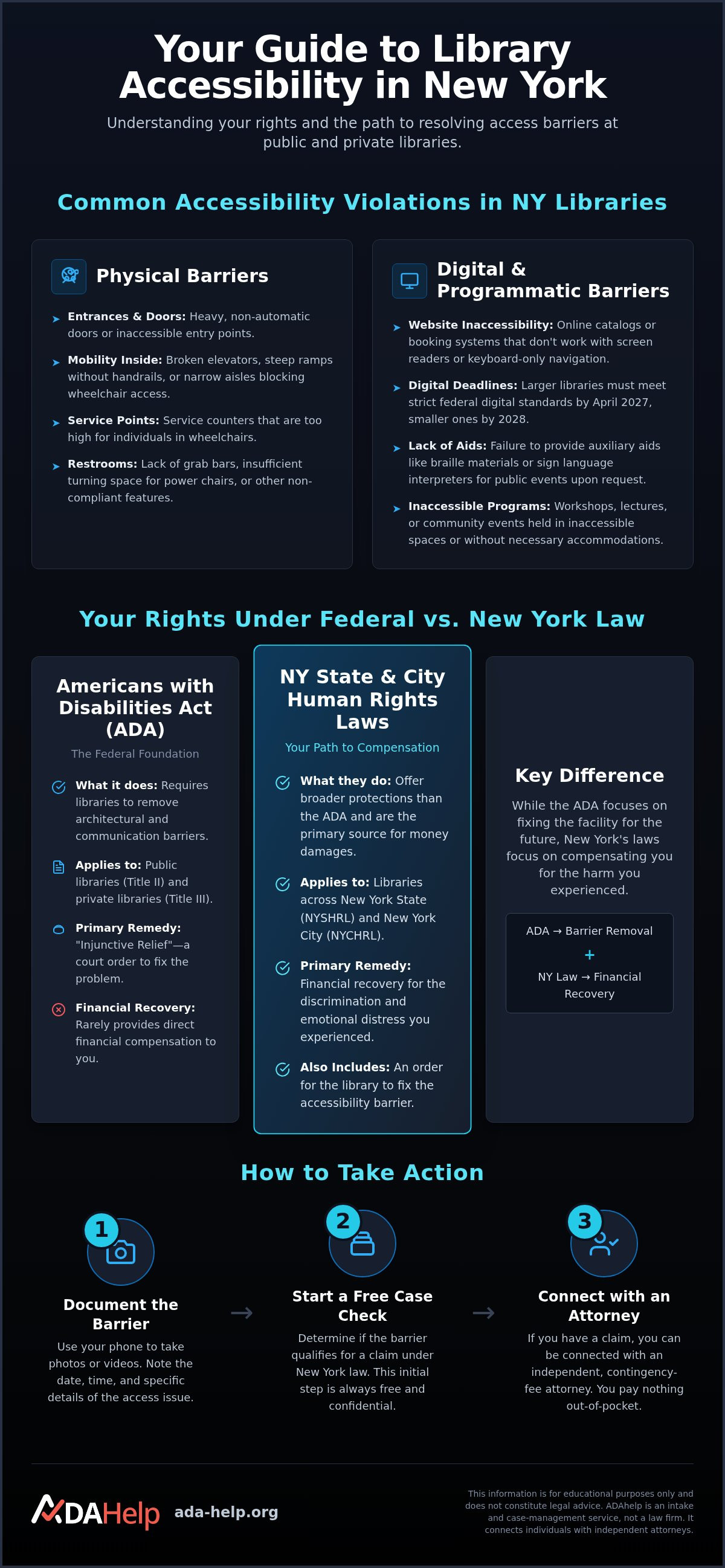
Where to File: Agencies & Deadlines
Knowing exactly where to send your complaint matters as much as the evidence you gather. Depending on where the library sits and what happened, you may have more than one agency option, and each comes with its own clock.
- U.S. Department of Justice (DOJ): Handles ADA Title II and Title III complaints nationwide. File directly at ada.gov. There is no strict statute of limitations for a DOJ complaint, but filing sooner strengthens your case.
- New York State Division of Human Rights (NYSDHR): Covers libraries anywhere in New York State under the NYSHRL. You generally have three years from the discriminatory act to file. Learn more at dhr.ny.gov.
- NYC Commission on Human Rights (CCHR): Covers libraries within the five boroughs under the NYCHRL. The filing window is typically one year from the incident. Details are available at nyc.gov/cchr.
- U.S. Equal Employment Opportunity Commission (EEOC): If you are a library employee rather than a patron, workplace disability discrimination claims go here, and you generally have 300 days to file.
Missing a deadline can permanently close the door on financial recovery, so confirm which agency applies to your situation as soon as possible.
How ADA Help - NY disability discrimination claims Manages Your New York Library Claim
Do you have a case? You can find out in minutes without any financial risk. Starting a library accessibility complaint New York should not be a second job. You have already dealt with the frustration of the barriers described earlier in this guide. Now, you need a proactive partner to handle the heavy lifting. ADA Help - NY disability discrimination claims is not a law firm and does not provide legal advice. Instead, we provide the intake and case management services required to turn your experience into a formal claim.
Our process begins with a free three-minute case check. You provide the basic facts about the barrier you faced. We then gather your documentation and evaluate the strength of your claim. This includes reviewing the photos and logs you collected during your visit. Our team ensures your file meets the strict requirements of the New York State Human Rights Law (NYSHRL) and the New York City Human Rights Law (NYCHRL). By organizing your evidence early, we create a clear path toward resolution.
Our Case Management Process
You provide the facts and we do the work. We take the information from your visit and organize it into a professional claim file. You stay informed at every step without the stress of legal jargon. Our team handles the paperwork and filing with the correct New York authorities. We know which agencies handle specific library branches, saving you hours of research. If your claim qualifies, we connect you with independent contingency-fee attorneys who specialize in New York discrimination cases. These advocates understand that while the ADA fixes the barrier, state and city laws are the keys to your financial recovery.
No Cost and No Risk to You
You never pay out-of-pocket fees for our services. We believe that access to justice should be low-risk for every New Yorker. We operate on a contingency-fee model. This means we only collect a fee if your case is successful and you receive a financial recovery. If you do not receive a payout, you owe us nothing. This approach ensures the burden of effort and risk lies with the library rather than you.
- Start with a free three-minute case check to see if you have a claim.
- We handle all the intake and documentation review for you.
- Connect with expert attorneys without paying anything upfront.
It is time to turn your frustration into progress. You can start your journey today at ada-help.org. We handle the filing process so you can secure the access you deserve and the recovery you are entitled to under the law.
Take Action for Equal Library Access
You don't have to accept a library that shuts you out. Whether it's a broken elevator in Manhattan or an inaccessible website in Albany, you have a legal right to full access. New York laws like the NYSHRL and NYCHRL are powerful tools. They don't just fix the physical problem; they allow you to seek financial recovery for the frustration you experienced. By documenting these barriers now, you protect your rights and help every New Yorker who follows in your footsteps.
Filing a library accessibility complaint New York shouldn't be a burden you carry alone. Our team handles the intake paperwork and connects you with independent contingency-fee attorneys who know the local system. You get expert guidance with no financial risk. We offer a free case evaluation and you never pay out-of-pocket fees. We only collect a fee if you win your case.
Don't wait for the library to fix itself. Start your free three-minute case check now to see what your claim is worth. You deserve a stress-free path to justice and the full use of every public resource in our state. We are ready to help you move forward today.
Frequently Asked Questions
Can I file a complaint if a library elevator is broken?
Yes, you can file a claim if a broken elevator prevents you from using library services. This is a clear physical barrier under the ADA. You should document the "out of service" sign and the date of your visit. A library accessibility complaint New York can lead to the library fixing the equipment and potentially providing you with money damages under the NYSHRL or NYCHRL for the discrimination you faced.
Do I need a lawyer to file an ADA complaint in New York?
You don't need a lawyer to submit an administrative report, but having professional support is vital for seeking a financial recovery. Federal agencies focus on fixing the barrier; they don't usually get you paid. We connect you with independent contingency-fee attorneys who focus on New York laws. These advocates handle the complex litigation required to secure money damages for your emotional distress without any out-of-pocket costs to you.
What is the difference between the ADA and New York City Human Rights Law?
The ADA is a federal law that primarily requires libraries to fix physical or digital barriers. It rarely results in a payout for the individual. The New York City Human Rights Law is much broader and more powerful. It allows you to sue for compensatory damages and civil penalties. While the ADA provides the right to access, the NYCHRL provides the path to financial compensation for the discrimination you experienced.
How much money can I get from a library accessibility settlement?
Typical settlements for disability discrimination in New York can range from a few thousand dollars to over $100,000 for emotional distress and civil penalties. Under the NYCHRL, civil penalties alone can reach $250,000 for intentional violations. These amounts vary based on the specifics of your case. We never guarantee a specific result, but our free case check helps you understand if your situation qualifies for a financial claim.
How long do I have to report a library barrier in NYC?
You must act quickly to preserve your rights. If you are filing with the New York City Commission on Human Rights, the limit is typically one year from the incident. For claims filed under the New York State Human Rights Law or in state court, the statute of limitations is three years for acts occurring after February 15, 2024. Starting your library accessibility complaint New York early ensures that evidence is fresh and deadlines are met.
Does ADA Help - NY disability discrimination claims provide legal advice for library claims?
No, ADA Help - NY disability discrimination claims is not a law firm and does not provide legal advice. We are a case management and intake service for New Yorkers facing discrimination. We help you determine if you have a valid claim by gathering facts and documentation. If your case qualifies, we connect you with independent attorneys who work on a contingency-fee basis. You only pay if they win a recovery for you.
What if the library is part of a private university?
Libraries at private universities are covered under ADA Title III as places of public accommodation. They must remove architectural barriers and ensure digital access just like public branches. These institutions are also subject to the New York State Human Rights Law. If a private library denied you access because of a disability, you have the same right to file a claim and seek money damages for the incident.

Article by
ADA Help
Written by the ADAhelp editorial team and reviewed for accuracy before publishing. ADAhelp helps New Yorkers find out if they have a disability discrimination claim and manages the process end to end, working with independent attorneys who handle the legal work. We are not a law firm and do not provide legal advice.
Disclaimer
This article is general information about New York law, not legal advice, and reading it does not create an attorney-client relationship. ADAhelp is a case-management and intake service, not a law firm; legal representation is provided by independent attorneys. Recovery amounts and timelines vary by case, and past outcomes do not guarantee future results. For advice about your specific situation, speak with a qualified attorney or start the free case check.
Tags
Discriminated against in New York because of a disability?
A free three-minute check tells you if you can pursue a claim.
Check my case →New York onlyNo upfront costIndependent NY attorneysFree 3-minute check