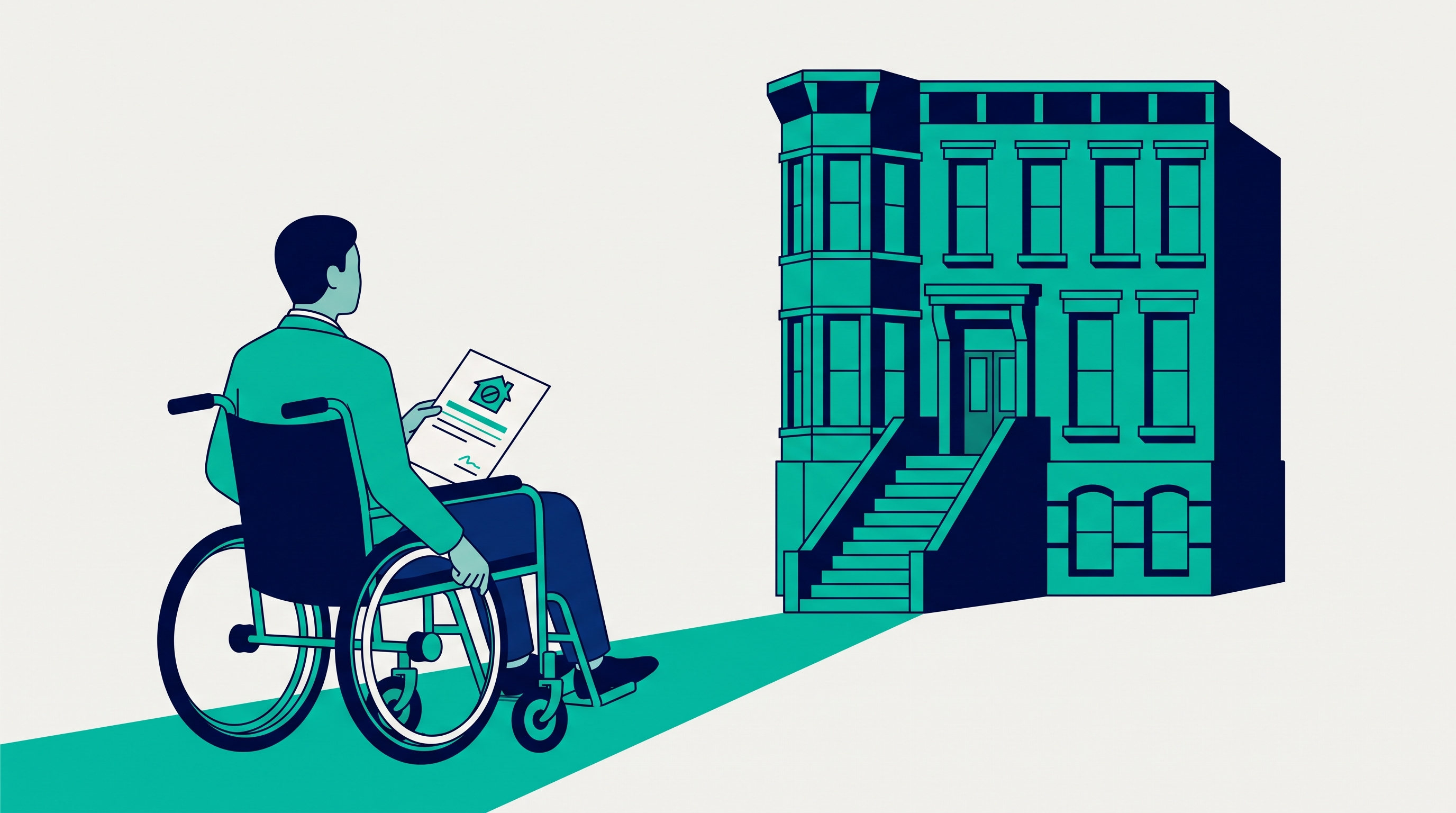
Evicted for Disability New York: Rights & Recovery Guide
Reviewed for accuracy by the ADAhelp team before publishing. ADAhelp is not a law firm; legal work is handled by independent New York attorneys.
Illegally evicted for disability in New York? Learn how NY laws can help you fight back and recover money for your losses. Start a free case check today.
What if the eviction notice on your door is actually an illegal act that could lead to a financial recovery? If your landlord is targeting you because of a medical condition or physical limitation, you likely have a valid discrimination case. Typical settlements in New York cover emotional distress and relocation costs; however, amounts vary case by case. Facing the threat of homelessness is a nightmare for any New Yorker. It is even more stressful when you are being evicted for disability New York. You might feel overwhelmed by the different rules in the city versus the state. You are not alone.
This guide explains how the New York State Human Rights Law and the New York City Human Rights Law provide protections that go beyond the federal ADA. While federal law helps stop discriminatory acts, New York laws are the tools used to secure money damages for your suffering. You will learn how to determine if your landlord broke the law and how to access case management services. We connect you with independent attorneys who work on a contingency basis. This means you never pay out of pocket. Fees only come from the money recovered for you. You can start a free case check in minutes to see if you qualify for a settlement.
Key Takeaways
- Identify if you were illegally evicted for disability New York and learn how to fight back using state and city laws.
- Learn how the NYSHRL and NYCHRL allow you to seek money damages for emotional distress and financial losses.
- Discover how a reasonable accommodation request can stop the eviction process and protect your right to stay in your home.
- Understand the difference between federal ADA rules and the broader protections offered by New York City and State authorities.
- Access a free three-minute case check to see if you qualify for professional case management with no out-of-pocket costs.
Can your landlord evict you because of a disability?
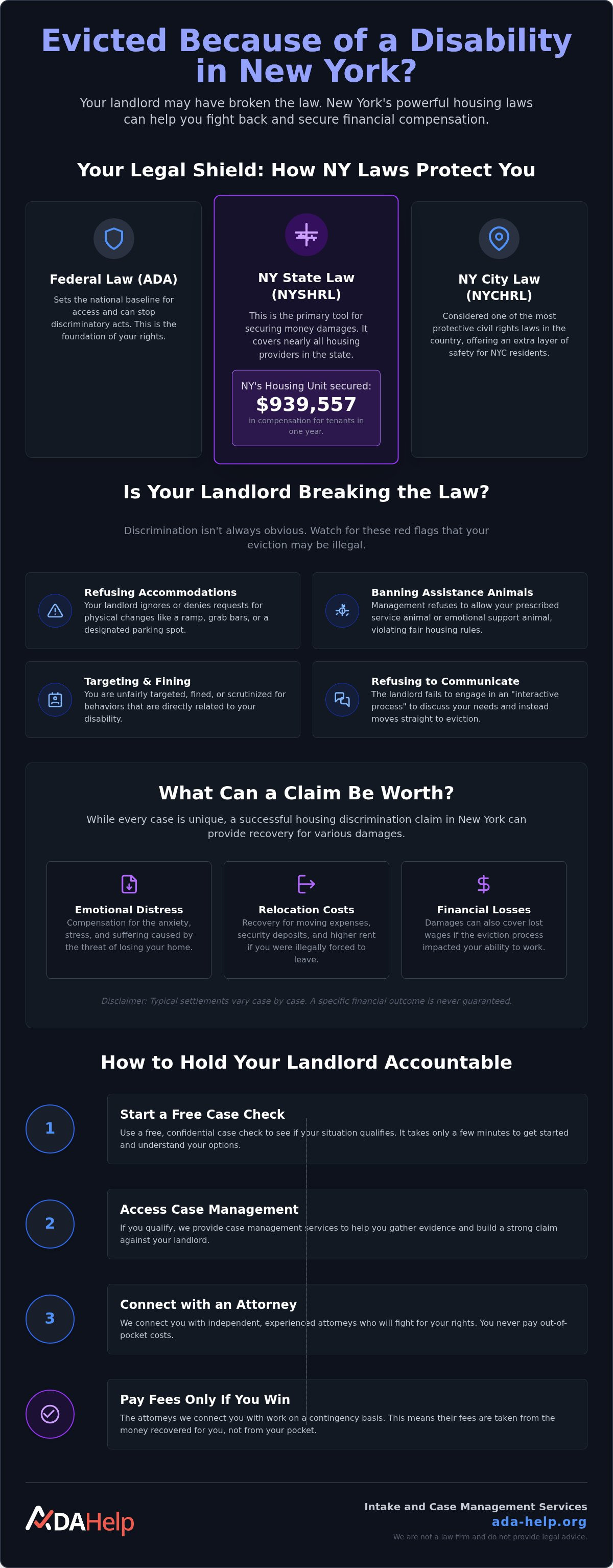
Landlords in New York cannot legally evict you just because you have a physical or mental disability. This is a violation of your civil rights. Discrimination happens when a property owner treats you differently because of your medical condition. If you are being evicted for disability New York, the law is on your side. Federal protections like the Fair Housing Act set the baseline; however, New York laws provide even stronger paths for financial recovery.
Many cases begin when a tenant asks for a simple change to help them live more comfortably. If your landlord suddenly starts the eviction process after you requested a ramp or a service animal, that is a major red flag. Illegal evictions often involve landlords who simply do not want to deal with the minor effort of making building changes. These actions are not just unfair; they are often grounds for a high value discrimination claim.
To better understand how these issues affect real people in our city, watch this report on housing challenges in Manhattan:
Signs of disability discrimination in housing
Discrimination is not always obvious or loud. Sometimes it is a slow process of management ignoring your needs until you feel forced to leave. Look for these specific signs of illegal treatment:
- Building management refuses to let you keep a service or emotional support animal.
- Your landlord ignores or denies your request for physical changes like grab bars or a doorway ramp.
- You are being targeted or fined for behaviors directly related to your disability.
- The landlord claims your disability makes you a liability or a danger to other tenants without any proof.
Do you have a valid case for recovery?
To determine if you have a claim for money damages, you need to look at the facts of your situation. Did the landlord know about your disability before the eviction started? If they were aware of your condition and then began the process, you may have a case. You should also check if other tenants who do not have disabilities are being treated differently for the same minor lease issues. Fairness is a legal requirement in New York housing.
Another key factor is whether the landlord failed to engage in an interactive process. This means they must talk with you in good faith to find a way to accommodate your needs. If they just said no and handed you an eviction notice, they likely broke the law. New York courts take this failure very seriously. You can use a free three minute case check at ADAhelp to see if your situation qualifies for professional case management. We help you gather evidence to hold your landlord accountable without any upfront costs to you.
New York laws that protect you from illegal eviction
If you suspect you were evicted for disability New York, you need to know which specific laws apply to your home. Most people have heard of the Americans with Disabilities Act (ADA) Title III. This federal law sets a national standard for access; however, it is often limited in what it can do for an individual tenant. In New York, we rely on a powerful combination of state and city rules to provide real justice. These New York State Fair Housing Laws often offer much broader protections than federal standards alone. For a broader look at your protections, see our guide to housing disability discrimination in New York.
The New York State Human Rights Law (NYSHRL) is a critical tool because it covers nearly every housing provider in the state. Recent changes have made this law even more tenant friendly. For any discriminatory act occurring on or after February 15, 2024, you now have three years to file a complaint with the New York State Division of Human Rights. This is a major increase from the old one year limit. This state agency is active and effective. In 2025, their Housing Investigations Unit secured $939,557 in financial compensation for victims of housing discrimination. This shows that the state takes these violations seriously.
The power of the New York City Human Rights Law
Residents of the five boroughs have an extra layer of safety. The New York City Human Rights Law (NYCHRL) is widely considered one of the most protective civil rights laws in the United States. It requires landlords to provide reasonable accommodations unless they can prove it causes an extreme financial or structural hardship. If a landlord fails to meet this high bar, they face significant penalties. In 2026, the NYC Commission on Human Rights ordered one landlord to pay a $100,000 civil penalty for harassment and illegal eviction. This law ensures that city landlords cannot simply ignore your medical needs.
Injunctive relief versus money damages
Understanding the difference between federal and local recovery is vital for your case. The federal ADA primarily focuses on injunctive relief. This means a court might order a landlord to stop an eviction or fix a physical barrier; however, it rarely results in a check for the tenant. Money damages are different. They are designed to compensate you for your actual losses.
Under New York state and city laws, you can seek payment for several things:
- Emotional distress: Compensation for the pain, humilation, and stress of being targeted.
- Compensatory damages: Reimbursing you for moving costs or higher rent if you were forced out.
- Civil penalties: Fines paid by the landlord to the city or state as punishment.
Because these financial rewards come from state and city statutes, your case must be filed correctly to target these specific funds. You can check your eligibility for a claim through our free case management intake process. We help New Yorkers determine if their situation meets the legal requirements for a high value discrimination case.
Reasonable accommodations and your right to stay
A reasonable accommodation is more than just a polite request. It is a mandatory change in building rules, policies, or physical spaces that allows you to live safely and comfortably. If you were evicted for disability New York, the process often starts with a landlord saying no to one of these requests. Under the New York City Human Rights Law, building owners must engage in a good faith conversation to find a solution. They cannot simply ignore you or tell you to move out because your medical needs have changed.
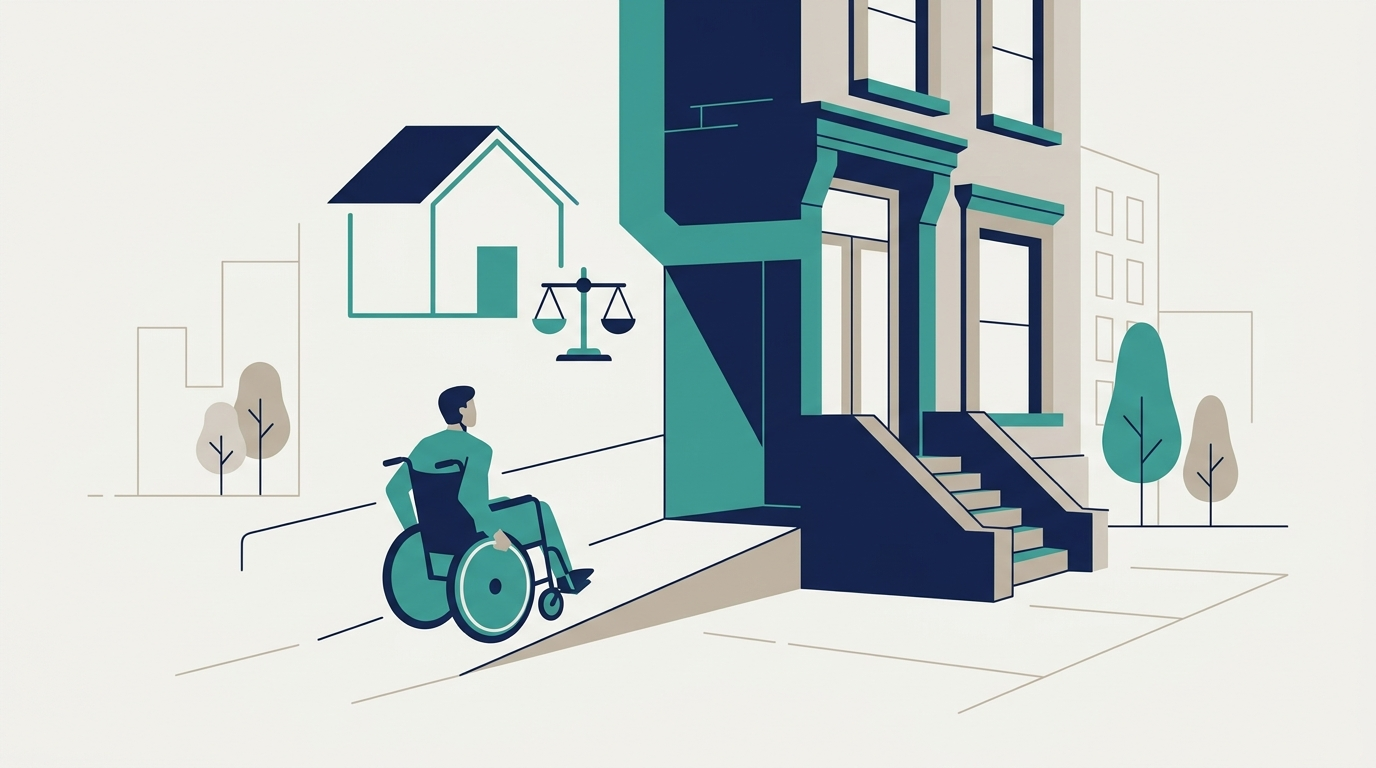
In many New York City buildings, the landlord is responsible for the cost of structural changes in common areas. This includes the lobby, hallways, and entrance. You should not have to pay for a ramp to get into your own building. If a landlord refuses to install a necessary lift or ramp, they are likely violating the NYCHRL. This refusal is a form of discrimination. It can be used as key evidence if you decide to file a claim for money damages. If your landlord has already said no, read our guide on what happens when a reasonable accommodation is denied in New York.
Common accommodation requests in New York apartments
Every situation is different; however, many New York tenants ask for similar changes to stay in their homes. You have the right to ask for a lower floor apartment if the elevator is unreliable or if you can no longer climb stairs. You can also request a designated parking spot near the entrance if you have mobility issues. Other frequent requests include:
- Installing a ramp at the main entrance or a lift in the lobby.
- Adding grab bars in the bathroom or widening a doorway for a wheelchair.
- Allowing a service or emotional support animal despite a no-pets policy in your lease.
- Requesting a transfer to a more accessible unit within the same building.
How to document your request for the landlord
Paperwork is your best defense against an unfair eviction. Always make your request in writing. Hand-delivered notes can be lost; therefore, email or certified mail is better. Keep a copy of everything you send and receive. You should also include a brief note from a medical provider. This note does not need to reveal your full medical history. It only needs to state that you have a disability and that the requested change is necessary for your health or safety.
If the landlord does not respond within a few weeks, send a follow-up. This creates a clear timeline that shows you tried to work with them in good faith. If your landlord responds with threats or an eviction notice, you should act immediately. You can use ADAhelp to start a free case check. We help you organize your documentation and determine if your landlord's refusal is a violation of your civil rights.
Calculating the value of a housing discrimination claim
How much is your housing discrimination claim worth? This is the first question most New Yorkers ask after being forced out of their homes. While every situation is unique, a successful claim can result in significant financial recovery. Typical settlements under the New York City Human Rights Law (NYCHRL) and state law include compensation for your emotional pain and suffering. You may also recover the actual costs of being displaced. This includes moving fees, storage costs, and the difference in rent if your new apartment is more expensive.
The data from 2025 and 2026 shows that these awards are increasing. In 2025, the New York State Division of Human Rights secured $939,557 in financial compensation for victims. This was a massive jump from the $172,214 awarded in 2021. In one specific 2026 case, a tenant was awarded over $66,000 in damages. In another settlement that same year, a landlord paid $35,000 for emotional distress alone. These numbers show that New York authorities are committed to making victims whole when they are evicted for disability New York. For a deeper breakdown of typical payouts, see our guide to disability discrimination settlement amounts in New York.
Factors that increase the value of your case
Several details can make your claim stronger and potentially increase the recovery amount. Having clear, written proof that the landlord refused to accommodate your disability is vital. If you have emails or texts where the landlord used derogatory language or harassed you about your condition, the value of your case may rise. The length of time you suffered in a hostile environment also matters. If you were subjected to months of neglect before the eviction process began, the court may award higher damages for your distress. Punitive damages may also be awarded if the landlord acted with extreme malice or neglect.
The role of contingency-fee attorneys
Many people fear they cannot afford to fight a large landlord or management company. You do not need to worry about hourly legal fees or upfront costs. The independent attorneys we work with operate on a contingency-fee basis. This means they only get paid if you win your case. Their fee is a percentage of the final settlement or court award. This model ensures that justice is not just for the wealthy. It allows every New Yorker to hold discriminatory landlords accountable without any financial risk.
We handle the heavy lifting of gathering evidence and managing your file so you can focus on your recovery. You can start your free three-minute case check today to see if you have a valid claim for money damages.
Where to File: Agencies & Deadlines
Housing discrimination complaints tied to being evicted for disability New York generally go through a state or city civil rights agency rather than a federal one, though a federal option exists too. Filing with the correct agency, and before the deadline runs out, is what preserves your right to money damages.
- New York State Division of Human Rights (DHR): Covers housing providers statewide, including most landlords and co-ops. For discriminatory acts on or after February 15, 2024, you have three years to file. Complaints can be filed online at dhr.ny.gov.
- NYC Commission on Human Rights (CCHR): Covers the five boroughs and can award both damages and civil penalties against the landlord. The filing deadline is generally one year from the discriminatory act. Learn more at nyc.gov/cchr.
- U.S. Department of Justice (DOJ): Handles Fair Housing Act referrals and ADA Title III public-access complaints at the federal level. The DOJ does not pay individual money damages the way DHR and CCHR can, but a federal finding can strengthen a state or city case. Details are at ada.gov.
- U.S. Equal Employment Opportunity Commission (EEOC): Applies if your eviction is connected to a disability-related job loss or workplace retaliation rather than the tenancy itself. EEOC charges generally must be filed within 300 days of the discriminatory act in New York.
Because deadlines run separately at each agency, and some claims can be filed with more than one at once, it is worth having your timeline reviewed before you file. You can start a free case check to confirm which agency and deadline apply to your situation.
Start your free New York case check today
You shouldn't have to face an illegal eviction by yourself. If you were evicted for disability New York, the path to justice starts with a simple step. ADAhelp provides a free three-minute case check to help you determine if your rights were violated. Our team specializes in the specific rules of the New York State Human Rights Law and the New York City Human Rights Law. We understand how these local protections offer you a path to money damages that federal law alone might not provide.
We handle the heavy lifting so you don't have to. Our case management team focuses on gathering the evidence needed for your file. This includes organizing your medical documentation, communication with your landlord, and the eviction notice itself. We then connect you with independent attorneys who work on a contingency basis. This means they only take a fee if they secure a recovery for you. You never have to pay out of pocket to hold your landlord accountable. There is no financial risk to you; if there is no recovery, there is no fee.
While we manage the complex filing process, you can focus on your health and your family. We are your advocates throughout the entire journey. We ensure your case stays on track and meets all the strict New York deadlines. Since the 2024 law change, you have more time to file; however, acting quickly is still the best way to protect your housing and your future.
Why choose ADAhelp for your New York claim?
We designed our process for real New Yorkers in stressful situations. Government forms are often long and intimidating. We strip away the confusion and provide a fast, supportive experience. It is important to remember that ADAhelp is not a law firm. We do not provide legal advice. Instead, we act as your proactive partner. We bridge the gap between your immediate crisis and the legal experts who can win your case. Our goal is to make the claim process as stress-free as possible.
How to get started right now
Starting your recovery doesn't have to be a full-time job. You can begin the process from your phone or computer in just a few minutes. Follow these simple steps to see if you have a case:
- Visit our website at ada-help.org and complete the short intake form.
- Provide basic details about the eviction notice or the discriminatory act you experienced.
- Wait for our team to review your information. We will contact you quickly with the next steps.
Don't let a discriminatory landlord have the last word. Take control of your situation today. A few minutes of your time could lead to the financial compensation you deserve for the unfair treatment you have faced.
Take control of your housing future
You now know that New York City and State laws provide much stronger protections than federal law alone. If you were evicted for disability New York, you have a path to recover money for the emotional and financial stress you've endured. Remember that your landlord has a legal duty to provide reasonable accommodations. Refusing these needs is a violation that often leads to high value claims. Typical settlements can cover moving costs and emotional distress; however, amounts vary based on your specific situation.
ADAhelp is here to handle the paperwork and process for you. We aren't a law firm; instead, we are your advocates who connect you with independent attorneys. Our case management services are free for New Yorkers to start. Because we use a contingency model, there is no recovery and no fee. You never pay out of pocket for justice. Start your free three-minute case check now to see if you qualify for a settlement. You deserve to feel safe in your home. Let us help you hold discriminatory landlords accountable and get your life back on track.
Frequently Asked Questions
Can a landlord evict me for having a service dog in New York?
No, you cannot be evicted for having a service animal in New York. Under the NYSHRL and NYCHRL, landlords must allow service dogs as a reasonable accommodation. This rule applies even if your lease has a strict no-pets policy. Landlords are also prohibited from charging you extra fees or pet deposits for a service animal. If you are being threatened with eviction for this reason, it is a clear sign of being evicted for disability New York.
What is the Disability Rent Increase Exemption (DRIE) in NYC?
DRIE is a program that freezes the rent for eligible tenants with disabilities in NYC. To qualify, you must be at least 18 years old and have a combined household income of $50,000 or less. You must also live in a rent-regulated apartment. This protection prevents you from being forced out of your home by rising costs. It is managed by the NYC Department of Finance and provides vital housing stability.
How long do I have to file a discrimination claim after being evicted?
You have three years to file a complaint with the New York State Division of Human Rights for acts occurring after February 15, 2024. If you are filing with the NYC Commission on Human Rights, you generally have one year. It is best to act as soon as you receive an eviction notice. Waiting too long can make it much harder to gather the evidence needed for a successful claim and financial recovery.
Do I need a lawyer to report a disability housing violation?
You do not need a lawyer to start the reporting process. You can file a complaint with the New York State Division of Human Rights or the NYC Commission on Human Rights for free. However, expert case management can help you organize your evidence effectively. We connect you with independent attorneys who work on a contingency basis. This means they only take a fee if they win your case and secure a recovery.
Can my landlord charge me for a reasonable accommodation?
No, landlords generally cannot charge you for the cost of a reasonable accommodation in New York. Under the NYCHRL, building owners are usually responsible for the costs of structural changes in common areas, such as entrance ramps or lifts. You are also not required to pay a higher security deposit or any monthly surcharge for needing these modifications. Charging you for your civil rights is a form of illegal housing discrimination.
What should I do if I receive an eviction notice and I am disabled?
First, do not ignore the notice. Check if the reason for the eviction is related to your disability or a request for an accommodation. Document every conversation with your landlord in writing and save all emails or texts. You should immediately start a free case check to see if your rights were violated. Acting early can help stop the process and preserve your right to seek money damages for the stress you suffered.
Is depression considered a disability for housing protections in NY?
Yes, mental health conditions like depression and anxiety are protected under New York state and city laws. A disability is defined as any physical or mental impairment that limits a major life activity. Your landlord must provide reasonable accommodations for these conditions just as they would for a physical limitation. Being evicted for disability New York includes any unfair treatment based on your mental health diagnosis or your need for emotional support.
What happens if my apartment building is not wheelchair accessible?
While older buildings may have different structural requirements, landlords must still make reasonable accommodations for you. If you need a ramp or grab bars to use your home safely, you have the right to request them. In NYC, the landlord must pay for these changes in common areas unless it causes an extreme financial hardship. If they refuse without a valid legal reason, they are violating your rights and you may have a claim.

Article by
ADA Help
Written by the ADAhelp editorial team and reviewed for accuracy before publishing. ADAhelp helps New Yorkers find out if they have a disability discrimination claim and manages the process end to end, working with independent attorneys who handle the legal work. We are not a law firm and do not provide legal advice.
Disclaimer
This article is general information about New York law, not legal advice, and reading it does not create an attorney-client relationship. ADAhelp is a case-management and intake service, not a law firm; legal representation is provided by independent attorneys. Recovery amounts and timelines vary by case, and past outcomes do not guarantee future results. For advice about your specific situation, speak with a qualified attorney or start the free case check.
Tags
Discriminated against in New York because of a disability?
A free three-minute check tells you if you can pursue a claim.
Check my case →New York onlyNo upfront costIndependent NY attorneysFree 3-minute check