Public Access Discrimination New York: Money Damages 2026
Reviewed for accuracy by the ADAhelp team before publishing. ADAhelp is not a law firm; legal work is handled by independent New York attorneys.
Faced public access discrimination New York? State law may entitle you to money damages, not just a fix. Learn your rights. Free 3-minute case check.
Have you ever been turned away from a business or felt unwelcome in a public space because of a disability? It's more than just a bad experience; it's often a violation of your rights under public access discrimination New York laws. We know how frustrating it is to face barriers and then feel even more overwhelmed by confusing legal jargon. You deserve to know if a violation occurred without worrying about expensive hourly fees or complex state rules.
This guide will help you understand exactly where you stand and how to move forward. You'll learn how to identify a claim and why New York's state and city laws offer more protection than the federal ADA. While the ADA usually only requires a business to fix a barrier, the NYSHRL and NYCHRL allow you to seek money damages for your experience. ADAhelp isn't a law firm; we are your case management partners. We handle the heavy lifting and connect you with independent attorneys who work on a contingency basis. This means you never pay out of pocket. We'll start by showing you how to confirm your claim with a free three minute case check.
Key Takeaways
- Learn how to identify illegal barriers and unfair treatment in New York businesses.
- Understand how public access discrimination New York laws allow you to seek money damages.
- Discover why New York State and City laws offer broader protection than the federal ADA.
- Find out what evidence you need to document a violation effectively while the details are fresh.
- Start your claim with a free three minute case check and pay nothing out of pocket.

Do you have a public access discrimination case in New York?
Public access discrimination New York happens when a business treats you unfairly because of a disability. It is not just about being rude. It is a violation of your civil rights when a business fails to provide the same experience to you as it does to everyone else. New York laws protect your right to enjoy stores, restaurants, and hotels without facing unnecessary hurdles. If a physical or policy barrier prevents you from using a public space, you likely have a case for recovery. You can start with a free three minute case check to see if you qualify for a claim.
To better understand how these rights apply to your situation, watch this helpful video regarding access and discrimination:
The legal system in our state is unique. While the federal Americans with Disabilities Act (ADA) focuses on fixing the physical problem, the New York City Human Rights Law and the New York State Human Rights Law allow you to seek money damages. This means you could receive financial compensation for the frustration and humiliation you experienced. We help you determine if your situation meets the criteria for these specific New York protections.
What is a place of public accommodation?
A place of public accommodation is essentially any business that is open to the general public. If the business invites people in to buy goods or use services, they must follow accessibility rules. This includes retail stores, grocery shops, and pharmacies. It also covers service providers like doctors offices, banks, and laundromats. Even places of recreation like theaters, gyms, and parks must be accessible. Private clubs and religious organizations are often exempt from these laws; however, almost every other business you visit daily is covered.
Identifying discrimination in your daily life
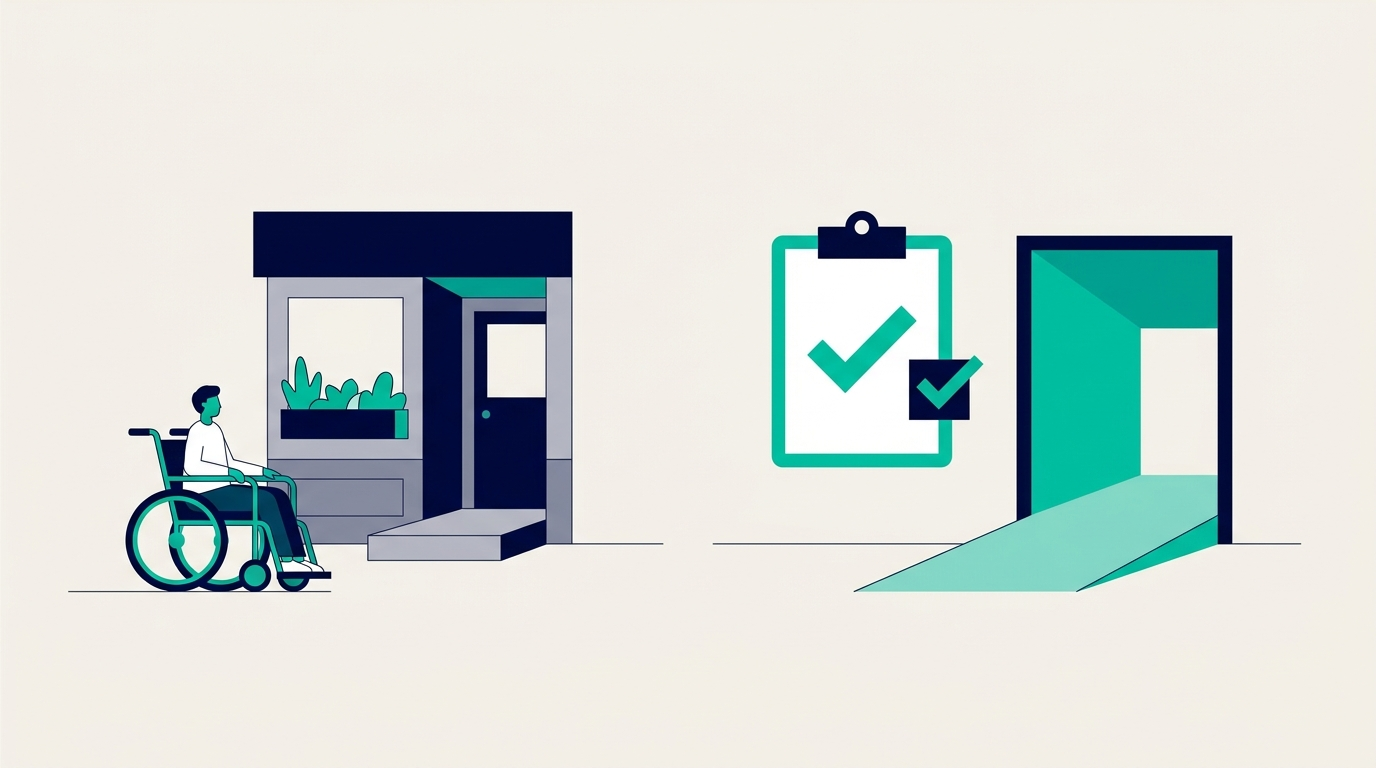
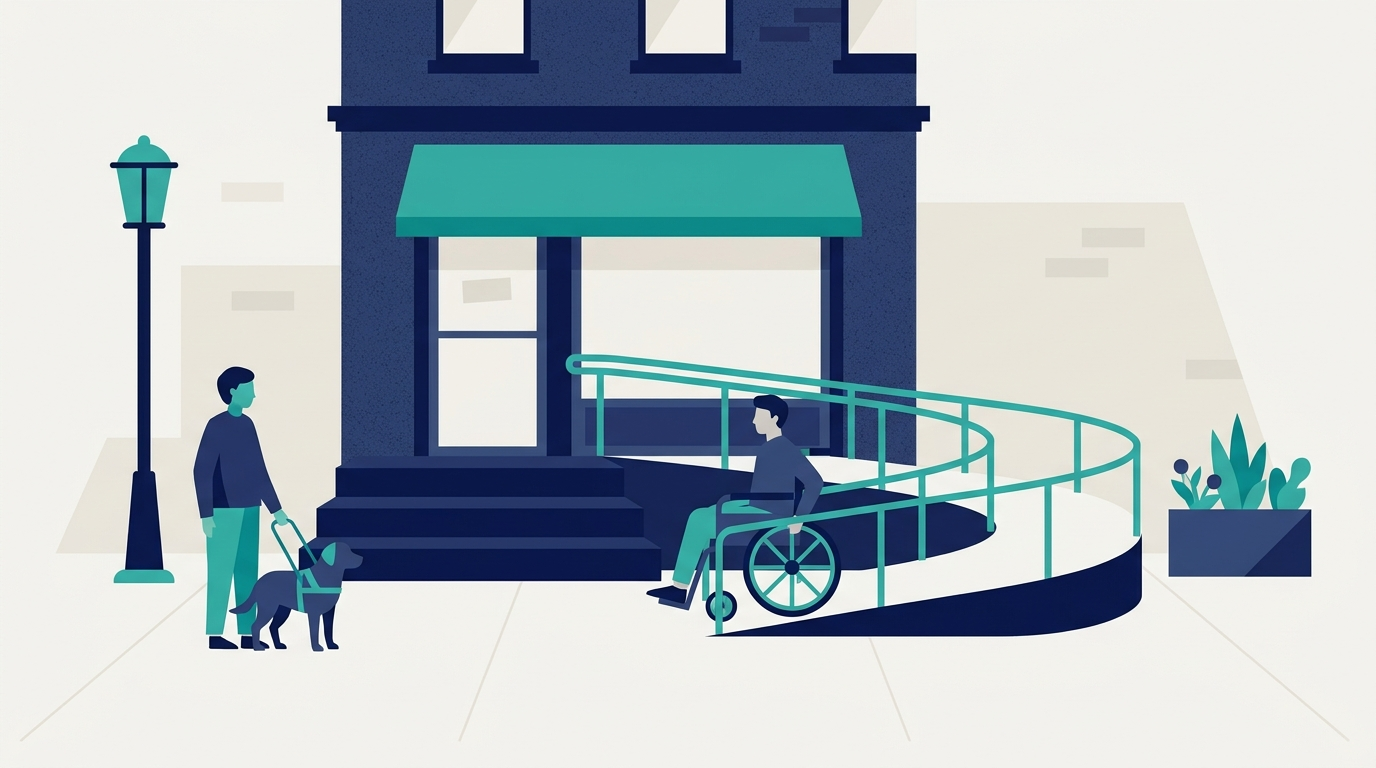
Discrimination is not always an outright refusal of service. It often looks like a physical barrier that makes it impossible or dangerous for you to enter a building. Common examples include stairs at the entrance without a ramp or heavy doors that do not have an automatic opener. Inside the business, you might find aisles that are too narrow for a wheelchair or counters that are too high to reach. Policy barriers are also a form of public access discrimination New York residents face. For example, a restaurant cannot have a "no pets" policy that excludes service animals. If a business policy makes it harder for you to use their services because of your disability, it is time to check your rights.
Common ADA violations in New York City businesses
NYC is famous for its history; however, that history often creates physical hurdles for residents with disabilities. Many buildings in the five boroughs pre-date modern accessibility standards. Being an "old building" is not a free pass to ignore the law. Under the New York State Human Rights Law, businesses have a legal duty to ensure everyone can use their services. In fact, the NYC Commission on Human Rights conducted 1,346 tests in fiscal year 2025. They identified 305 instances of public accommodation discrimination where barriers blocked access to business premises.
A violation exists even if a shop owner did not mean to be exclusionary. The law focuses on the effect of the barrier, not the intent behind it. If a barrier is "readily achievable" to remove, the business must fix it. This means if a fix is simple to complete and does not cost an unreasonable amount of money, it is required. If you have been blocked by a physical or policy hurdle, you may be facing public access discrimination New York.
Physical barriers in restaurants and stores
Crowded retail and dining spaces in Manhattan and Brooklyn often prioritize floor space over accessibility. You might encounter aisles that are too narrow for a wheelchair or walker to pass through safely, which is a common basis for a wheelchair access discrimination claim in NYC. High counters at checkout or ordering stations often prevent easy transactions for people who use mobility devices. Heavy entrance doors without automatic openers or a lack of level entry points are also common violations. These are not just inconveniences; they are legal failures that prevent you from enjoying your city. If the business was a restaurant or bar, our restaurant ADA violation checklist walks through what to look for.
Service animal and communication barriers
Discrimination also happens through rigid policies and poor communication. Some businesses still illegally turn away guests because they have a service dog. They might claim a "no pets" policy, but service animals are not pets under the law — see our guide to assistance animal discrimination in New York. Others fail to provide auxiliary aids, such as large-print menus for vision impairments or assistive listening devices. In 2026, digital access is just as important as physical access. Inaccessible digital kiosks or touchscreen menus that lack audio cues can also constitute a violation. If a business made you feel unwelcome or blocked your access, you can check your claim status in just a few minutes.
Understanding New York disability laws and money damages
What is your case actually worth? This is the most common question we hear from residents facing public access discrimination New York. To understand the answer, you must look at the difference between federal and local laws. Most people know about the Americans with Disabilities Act (ADA), but they do not realize its limits. The ADA is designed to change business behavior, not to provide personal financial payouts. If you want to recover money for your experience, you need the specific power of New York statutes.
The Americans with Disabilities Act and injunctive relief
The Americans with Disabilities Act (ADA) requires businesses to fix physical barriers so they are accessible to everyone. This federal law provides what is known as injunctive relief. In plain English, this means a court can force a store to install a ramp or widen an aisle. While this is the foundation for all accessibility claims in the US, it does not usually provide money to the individual who filed the complaint. If you want to recover damages for the frustration and embarrassment you suffered, you must look to the broader protections offered by the state and city.
New York State and City laws for money damages
New York provides some of the strongest protections in the country. The New York State Human Rights Law (NYSHRL) covers the entire state. If you live in the five boroughs, the New York City Human Rights Law (NYCHRL) provides even more layers of protection. These laws allow for compensatory damages for emotional distress. This means you can be paid for the mental anguish and loss of dignity caused by the discrimination. Unlike federal law, these New York statutes recognize that being excluded from a public space causes real, compensable harm.
The financial impact of these laws is significant. During fiscal year 2024, the New York State Division of Human Rights awarded over $8 million in compensation to people who filed complaints. In New York City, the Commission on Human Rights secured more than $17.46 million in total awards and penalties for fiscal year 2025. This city-wide total included $15.69 million specifically for compensatory damages. These figures show that the system is designed to hold businesses accountable.
Typical recovery amounts vary based on the severity of the incident. Factors like the specific impact on your daily life and how the business treated you will influence the final number. Because every situation is unique, results are never guaranteed and vary case by case. You can learn more about disability discrimination rights in New York to see how these laws apply to you. ADAhelp is not a law firm; however, we manage the intake process to connect you with independent attorneys who work on a contingency basis. You pay nothing out of pocket, as fees are only taken if you receive a recovery.
How to document a public access violation in New York
Facing discrimination is an emotional experience; however, resolving your claim depends on facts and evidence. Strong documentation is the foundation of any successful case for public access discrimination New York. Businesses often try to fix a barrier only after they receive a complaint. If you do not have proof of the original violation, it becomes much harder to prove your experience. We manage your case more effectively when you provide clear and accurate records of what happened.
You should act quickly while the details are fresh in your mind. Memory fades, and physical barriers can be removed overnight. Keeping your documentation factual and avoiding exaggerations will help your case remain credible. Once you have gathered your notes and photos, you can start your free three minute case check to see if your evidence supports a claim for recovery.
Gathering evidence at the scene
If it is safe and possible, collect evidence the moment you encounter a barrier. Use your phone to take clear photos from multiple angles. For example, if a ramp is too steep, take a photo showing the incline. If a door is too heavy, photograph the entrance. You should also look for signs that indicate discriminatory policies. If an employee or manager speaks to you, ask for their name and title. Note if there are any witnesses nearby who saw the incident. You do not need to confront anyone; just observe and record what is happening around you.
Writing down the details of the incident
As soon as you leave the business, write down exactly what happened. Use short and clear sentences to describe the event. You must include the following details:
- The exact date and time of the incident.
- The name and specific location of the business.
- The names or descriptions of the employees involved.
- A step by step account of the barrier or refusal of service you faced.
It is also vital to record how the incident made you feel at the time. Did you feel humiliated, frustrated, or unsafe? Since New York laws allow for money damages based on emotional distress, these notes are essential. Your personal account helps demonstrate the real impact the discrimination had on your life. Accurate records allow us to build a stronger intake profile before we connect you with an independent attorney.
Where to File: Agencies and Deadlines
Once you have your evidence together, the next question is where the complaint actually goes. Public access discrimination New York claims can be filed with more than one agency, and each one has its own deadline. Filing in the wrong place, or too late, is the most common way a valid claim is lost.
- New York State Division of Human Rights (DHR) — covers the whole state under the NYSHRL, and can award compensatory damages. You generally have three years from the discriminatory act to file. Start at dhr.ny.gov.
- New York City Commission on Human Rights (CCHR) — the strongest protections in the state, for incidents in the five boroughs. The administrative complaint deadline is one year from the last discriminatory act (three years if you go straight to court). Details at nyc.gov/cchr.
- U.S. Department of Justice (DOJ) — enforces ADA Title III for places of public accommodation. DOJ asks that complaints be filed within 180 days of the incident. This route produces a fix, not a payment to you. File at ada.gov.
- Equal Employment Opportunity Commission (EEOC) — for employment disability discrimination only, not public access. In New York the deadline is 300 days.
Because these windows run from the date of the incident and not the date you discovered your rights, timing matters more than most people expect. Our guide to the ADA discrimination claim statute of limitations in New York breaks down each deadline in detail. If you are unsure which agency fits your situation, the free three minute case check will point you to the right path.
How ADAhelp manages your New York discrimination claim
You don't have to face the legal system alone. Many people feel intimidated by government websites or worry about high legal fees from traditional law firms. ADAhelp is not a law firm and does not give legal advice; however, we are your dedicated case management partner. We handle the intake process and manage your claim from start to finish to save you time and stress. Our goal is to determine if you have a valid claim for public access discrimination New York as quickly as possible.
We focus on the heavy lifting so you can focus on your life. By gathering your records and organizing your evidence, we ensure your situation is ready for professional review. You can learn more about ADA Title III case management in New York to see how we protect your rights in public spaces.
Our free three minute case check
The first step to justice is knowing if you have a case. Our process starts with a free three minute case check. You will answer a few simple questions about your experience at the business. We review your information at no cost to you. This quick check removes the guesswork and the fear of the unknown. You will know within minutes if we can help you move forward with a claim for recovery.
How we connect you with contingency fee attorneys
If your case check shows a valid claim, we connect you with independent attorneys. These professionals handle cases on a contingency basis. This means you never pay out of pocket for their services. They only take a fee if they secure a successful recovery for you. This zero risk model ensures that every New Yorker has access to justice, regardless of their financial situation. We believe that businesses should be held accountable for their barriers without putting a financial burden on you. You can start your claim today and let us handle the paperwork.
Take Control of Your Rights Today
You shouldn't have to tolerate being excluded from the stores, restaurants, or offices that make New York great. We've seen how the combination of state and city laws provides a path to recovery that federal law alone cannot offer. By documenting the barriers you face and understanding your right to money damages, you turn a frustrating experience into a clear path for justice. Public access discrimination New York is a serious violation; however, the process to address it doesn't have to be complicated or expensive.
ADAhelp is here to handle the intake process for you. We focus on New York rights and ensure you are connected with independent attorneys without any upfront costs. Our model is built on low-risk reassurance. You never pay out of pocket, as fees are only taken from a successful recovery. It's time to stop feeling unwelcome and start moving toward a resolution.
Start your free three minute case check now to see if you qualify for a claim. Our simple three minute process is the fastest way to confirm your rights and begin your recovery. You've faced enough hurdles; let us handle the rest.
Frequently Asked Questions
What is a place of public accommodation in New York?
A place of public accommodation is any business or facility that offers goods, services, or facilities to the general public. This includes restaurants, hotels, retail stores, movie theaters, and hospitals. Under the New York State Human Rights Law, even non-physical spaces like websites can be considered places of public accommodation. Most businesses you visit in your daily life must follow these rules; however, private clubs and religious organizations are generally exempt.
How much does it cost to start a discrimination claim?
It costs you nothing out of pocket to begin your claim through ADAhelp. We provide a free three minute case check to help you identify if a violation occurred. If we move forward, we connect you with independent attorneys who work on a contingency fee basis. This means they only receive a fee if you win a recovery. You don't have to worry about expensive hourly legal fees or upfront costs.
Can I get money for an ADA violation in New York City?
Yes, you can recover money damages for public access discrimination New York through local and state laws. While the federal ADA usually only forces a business to fix a physical barrier, the New York City Human Rights Law allows for compensatory damages. These damages are meant to pay you for the emotional distress and humiliation you suffered. In fiscal year 2025, the NYC Commission on Human Rights secured over $15 million in compensatory damages for complainants.
How long do I have to report public access discrimination?
Your deadline depends on which law applies and where you file. For the New York State Human Rights Law, you generally have three years from the incident to file a complaint or start a court case. If you are filing with the New York City Commission on Human Rights, you must do so within one year of the last discriminatory act. It is best to act as soon as possible while your evidence and memory are still fresh.
What if the business says the building is too old to fix?
Being an "old building" is not a valid excuse to ignore accessibility requirements. Businesses are required to remove physical barriers if doing so is "readily achievable," which means the fix is easy to complete without much difficulty or expense. Even in historic New York City buildings, owners must make reasonable efforts to provide equal access. If a business claims they can't fix a barrier, they still have a duty to provide their services in an alternative, accessible way.
Do I need a lawyer to file an ADA complaint?
You are not required to have a lawyer to file a complaint with state or city agencies; however, having professional help can make the process much smoother. ADAhelp is not a law firm, but we handle the intake and case management to prepare your claim for review. We then connect you with experienced attorneys who understand the specific interplay between federal and New York laws. This ensures your case is handled correctly without you needing to learn complex legal procedures.
What happens after I complete the three minute case check?
Once you finish the check, our team reviews your information to determine if you have a valid claim. If your situation meets the criteria for public access discrimination New York, we will reach out to gather more details or evidence. We then work to connect you with an independent attorney who can handle the legal filings. This streamlined process is designed to turn your frustration into a stress-free path toward a resolution.

Article by
ADA Help
Written by the ADAhelp editorial team and reviewed for accuracy before publishing. ADAhelp helps New Yorkers find out if they have a disability discrimination claim and manages the process end to end, working with independent attorneys who handle the legal work. We are not a law firm and do not provide legal advice.
Disclaimer
This article is general information about New York law, not legal advice, and reading it does not create an attorney-client relationship. ADAhelp is a case-management and intake service, not a law firm; legal representation is provided by independent attorneys. Recovery amounts and timelines vary by case, and past outcomes do not guarantee future results. For advice about your specific situation, speak with a qualified attorney or start the free case check.
Tags
Discriminated against in New York because of a disability?
A free three-minute check tells you if you can pursue a claim.
Check my case →New York onlyNo upfront costIndependent NY attorneysFree 3-minute check