ATM Accessibility Complaint NYC: Your Rights & Recovery
Reviewed for accuracy by the ADAhelp team before publishing. ADAhelp is not a law firm; legal work is handled by independent New York attorneys.
Blocked by an ATM? File an ATM accessibility complaint NYC. NYC law provides money damages federal law doesn't. Learn your rights and start a free case check.
Did you know that while federal law requires banks to fix silent voice-guidance or high keypads, it's actually New York City's local laws that provide the money damages you deserve? If you've been blocked by a physical or digital barrier, you likely have a valid claim for compensation. Filing an ATM accessibility complaint NYC is the first step toward holding the bank accountable and receiving a settlement for the discrimination you faced. You shouldn't have to figure out these hurdles alone or wonder which specific statute applies to your situation.
We understand how exhausting it is to fight for basic access. This guide will teach you how to identify violations under the Americans with Disabilities Act and the New York City Human Rights Law. You will learn how to hold banks accountable and why New York laws often lead to settlements that federal law alone cannot provide. We'll also show you how to start a free three-minute case check. ADAhelp is not a law firm; we provide case management to connect you with independent attorneys. These professionals work on a contingency basis, so fees are only taken from a recovery and never out-of-pocket.
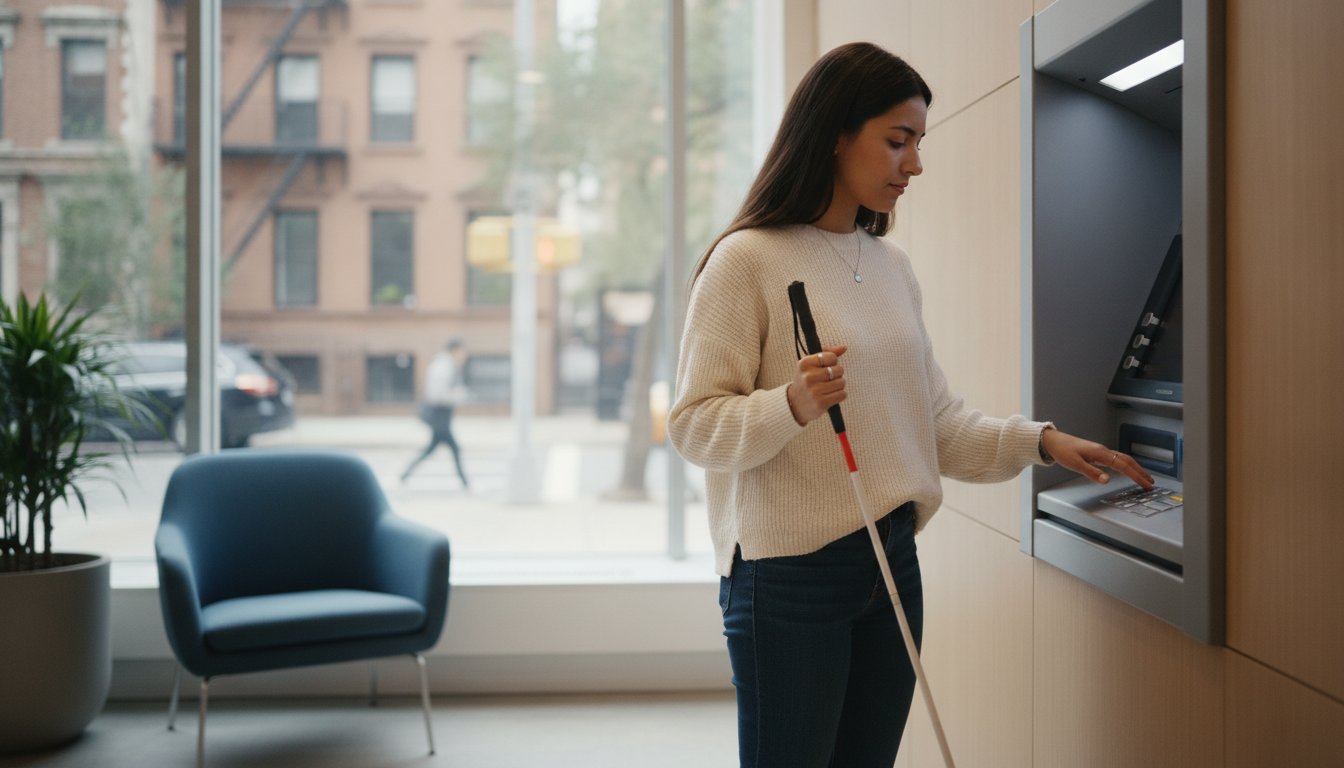
Key Takeaways
- Learn to identify physical and digital ATM barriers like high keypads or a lack of voice-guidance features.
- Understand why the New York City Human Rights Law is your best path for receiving money damages after being denied access to cash.
- Get clear steps on how to document a violation by recording the exact bank address and machine number.
- Discover how filing an ATM accessibility complaint NYC through a private claim differs from a simple government report.
- See if you have a valid claim with a free three-minute case check that requires no upfront costs.
Common ATM accessibility barriers in New York City
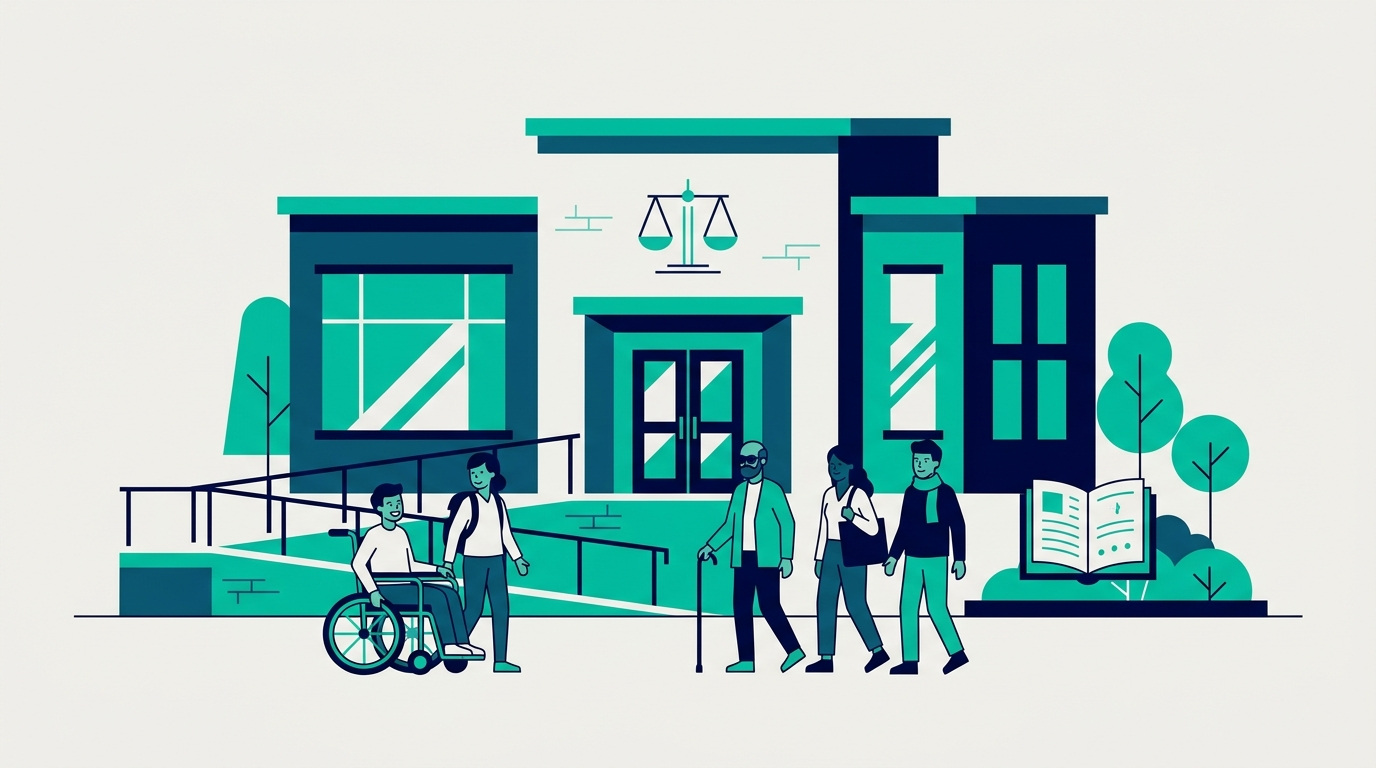
You walk up to a bank in Manhattan or Queens and find a single step blocking the entrance. Maybe you get inside, but the ATM screen is impossible to read. These aren't just minor annoyances; they are legal violations. Under the Americans with Disabilities Act (ADA), banks must ensure their services are accessible to every New Yorker. If they fail, you have the right to file an ATM accessibility complaint NYC to demand change and seek compensation.
To better understand your rights when facing these types of barriers, watch this helpful video:
Physical obstacles at the ATM
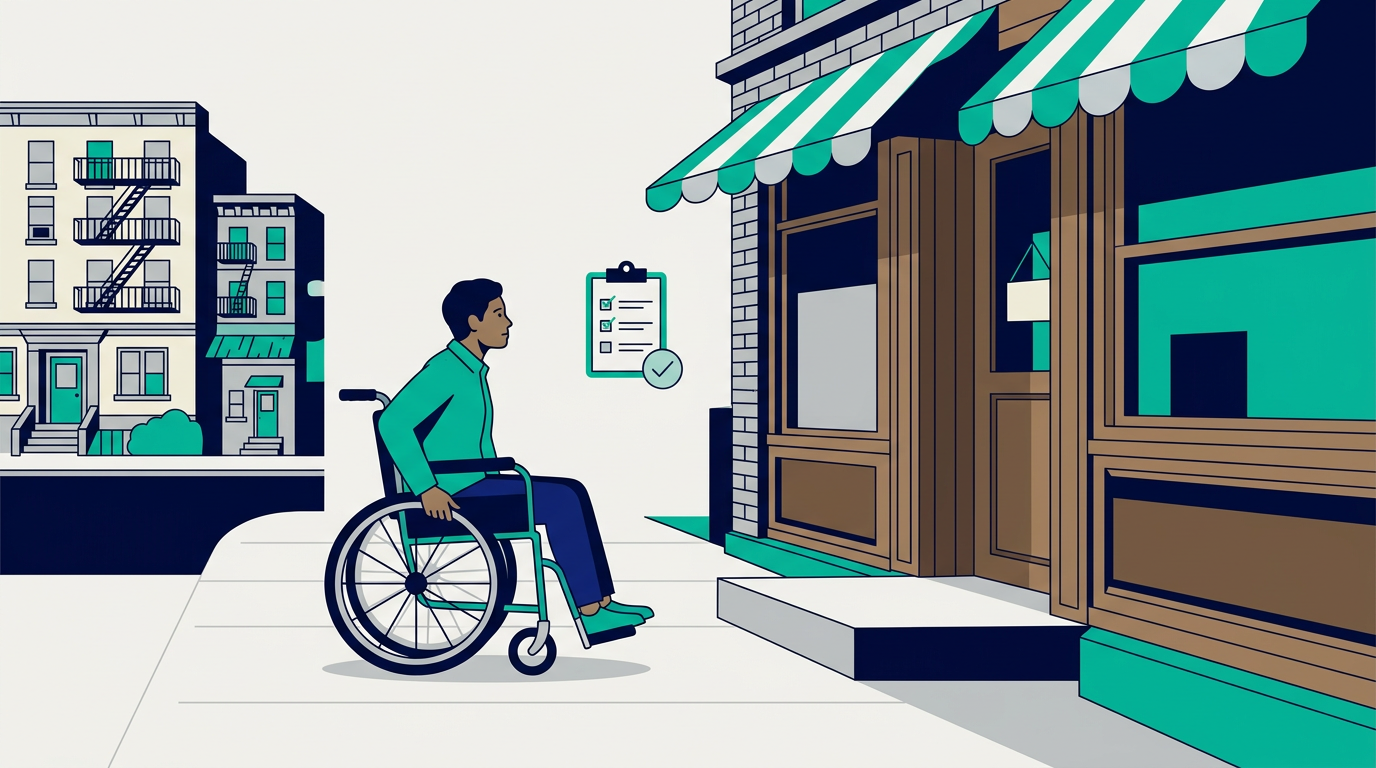
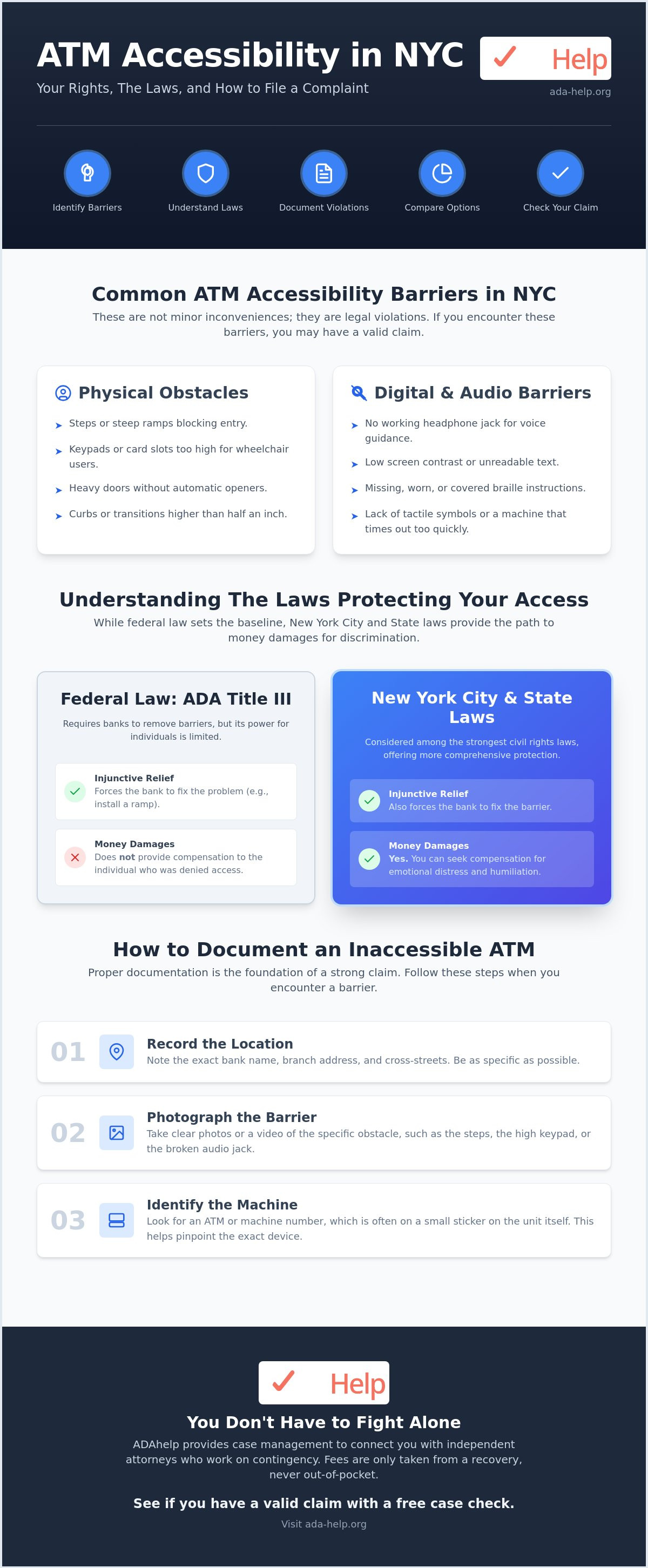
NYC bank branches often operate in older buildings; however, that doesn't excuse them from accessibility requirements. Look for steep ramps that are difficult to climb or steps that prevent entry entirely. Once inside, check the machine's height. If the keypad or card slot is too high for a wheelchair user to reach comfortably, the bank is in violation. Heavy vestibule doors are another common issue. If you can't open the door without help because it lacks an automatic opener or is too heavy, the barrier is real. Even a small curb or a transition higher than half an inch can be enough to ground a claim. The same evidence rules apply to any physical barrier — see our guide to wheelchair access discrimination in NYC. If you're unsure if a specific barrier counts, you can check your claim in three minutes.
Digital and audio barriers
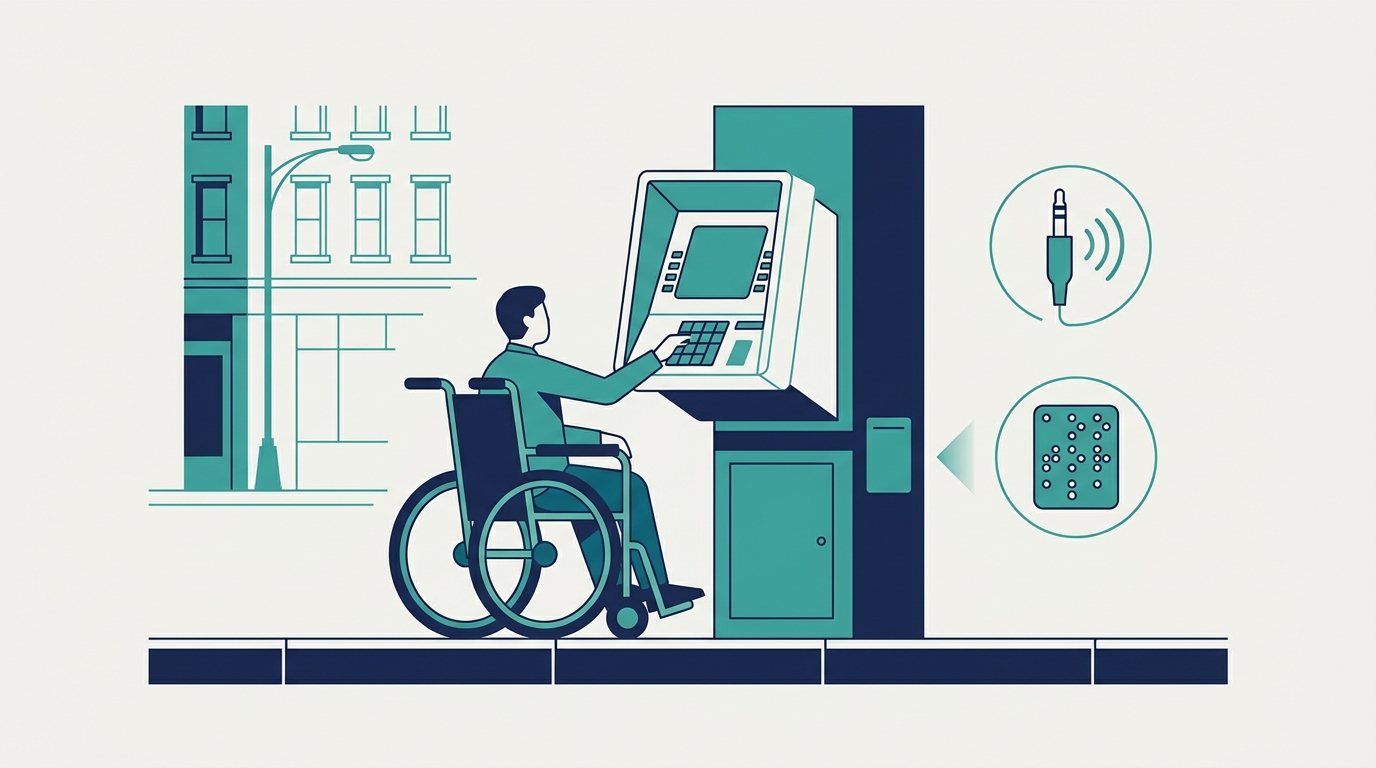
Accessibility isn't just about physical space; it's about the digital interface too. Blind or low-vision users must be able to use the machine privately and independently. Does the machine have a working headphone jack for voice guidance? If the audio is broken or the instructions are unclear, the bank has failed you. Check the screen contrast. If the text is faint or the colors bleed together, it excludes people with visual impairments. Finally, verify the braille instructions. If they are missing, worn down, or covered by tape, you have identified a clear barrier for an ATM accessibility complaint NYC.
Communication barriers also exist for those who are deaf or hard of hearing. If the ATM relies solely on sound without visual cues, it is not accessible. Don't ignore the small things. A keypad that lacks tactile symbols or a machine that times out too quickly can be just as discriminatory as a flight of stairs. New York laws like the NYCHRL and NYSHRL are designed to protect you from these specific hurdles. While the federal ADA focuses on fixing the machine, these New York laws allow you to seek money damages for the frustration and exclusion you experienced.
Understanding the laws protecting your access to cash
You might think the federal government is your only protection when a bank blocks your access. While federal law sets the baseline, it's often the local laws that provide the most support for New Yorkers. If you're considering an ATM accessibility complaint NYC, you need to understand how these different layers of protection work together to secure your rights. Banks are not above the law; New York provides some of the most powerful protections in the nation for people with disabilities.
The ADA Title III and federal standards
ADA Title III is the federal standard for business accessibility that requires public accommodations like banks to remove barriers. The U.S. Department of Justice outlines these specific technical requirements in the 2010 ADA Standards for Accessible Design. Under this law, banks must make changes that are readily achievable. This means they must fix barriers if the work is easy to accomplish without much difficulty or expense. However, federal law has a major limitation for individuals. It focuses on fixing the physical or digital problem rather than paying the victim. This is known as injunctive relief. You can force the bank to install a ramp or fix a screen, but you won't see a settlement check from an ADA claim alone.
New York City and State Human Rights Laws
This is where New York's specific protections become your greatest asset. The New York State Human Rights Law (NYSHRL) and the New York City Human Rights Law (NYCHRL) go much further than federal standards. The NYCHRL is widely considered one of the strongest civil rights laws in the United States. Unlike federal law, these statutes allow you to seek money damages for the emotional distress and humiliation you felt when you couldn't access your own cash. These local laws exist because New York recognizes that discrimination causes real harm that a simple repair cannot fix. A bank lobby is a public accommodation like any other, so the same framework covers an ADA public accommodation violation in NYC.
When you file an ATM accessibility complaint NYC under these local laws, you're not just asking for a fix. You're holding the bank financially accountable for the discrimination. Typical recovery amounts vary case by case and depend on the specific facts of your encounter. Because the burden of proof is often lower under the NYCHRL, New Yorkers have a better chance of reaching a settlement. ADAhelp is not a law firm, but we help you determine if these laws apply to your situation. If you want to see if your experience qualifies for a claim under these powerful local laws, you can start a free case check today. We connect you with independent attorneys who only take a fee if you win.
How to document an inaccessible ATM for your claim
The moment you realize an ATM is blocking your access is the best time to start your claim. Waiting until you get home can lead to missing details that make your case stronger. To file a successful ATM accessibility complaint NYC, you need specific evidence that proves the bank failed to meet legal standards. Your documentation turns a moment of frustration into a factual record that banks cannot ignore.
First, identify the exact location. Record the bank name and the street address. Most ATMs have a unique machine ID number printed on a small sticker near the screen or keypad; find this and write it down. Note the exact date and time of your visit. This helps your attorney match your experience with the bank's own maintenance logs or security footage. The NYC Commission on Human Rights explains that all businesses must provide equal access to their services. When they don't, your records are what hold them accountable.
Gathering physical evidence
Pull out your phone and take clear photos. Capture the barrier from several angles to show exactly how it looks in person. If a step is too high, place a common object like your phone or a credit card against it to show the scale of the obstacle. A short video is often even more powerful. Film the difficulty of reaching the keypad or show the lack of a working headphone jack for voice guidance. This visual proof makes it much harder for a bank to claim the machine was accessible during your visit.
Recording the impact on you
Your claim isn't just about a machine; it's about how that machine affected your day. Did you have to ask a stranger to help you withdraw cash? This is a direct violation of your privacy and dignity. Did you have to travel several blocks out of your way to find a working machine? Record the extra time and physical effort required. Save any error messages or receipts the machine provides. These details help determine the value of your case under New York laws. Once you have these details, you can run a free case check to see if your documentation supports a valid claim. We handle the intake process for an ATM accessibility complaint NYC so you can focus on your life while we find the right legal partner for you.
Comparing your options for filing an ATM complaint
You have a choice to make once you've documented the barrier. Most New Yorkers think their only option is to call 311 or file a report with a state agency. While these paths serve a purpose, they rarely result in personal justice for the person who was actually discriminated against. When you decide how to handle your ATM accessibility complaint NYC, you must decide if you want the bank to just fix the machine or if you want them to compensate you for the harm they caused.
Reporting to government agencies
Filing a report with the NYS Department of Financial Services (DFS) or the New York State Division of Human Rights is a free process. These agencies act as watchdogs for the public. If they find a violation, they might fine the bank or order them to install a ramp. However, these agencies don't represent you as an individual. Their goal is systemic change and public records. They won't negotiate a settlement check for your emotional distress or the time you lost. Government reports are for public record but not personal relief. You might wait months for a response only to find out the case is closed because the bank promised to make a repair.
Choosing private case management
Private case management offers a different path. At ADAhelp, we focus on your specific recovery. We don't just file a report and hope for the best. We handle the heavy lifting of the intake and documentation process for you. Our team connects you with independent attorneys who specialize in the New York City Human Rights Law. This path targets financial compensation for the discrimination you suffered. Because these attorneys work on a contingency basis, you don't pay anything out of pocket. They only receive a fee if they secure a recovery for you. This model puts the financial risk on the service provider and the legal team, not on the victim. It is a faster, more aggressive way to hold a bank accountable while ensuring you are the one who benefits from the resolution.
Your time is valuable. A government agency might take a year to process a single complaint. Private case management moves quickly to identify the violation and start the legal process. If you want to move beyond a simple report and seek a settlement, you should start your free case check now. It takes only three minutes to see if your encounter qualifies for professional case management. We help you turn a frustrating experience into a clear path for justice without the stress of handling the paperwork yourself.
Where to file: agencies and deadlines
If you want to file a formal complaint yourself, these are the four bodies that handle ATM and bank accessibility claims in New York. Deadlines are strict, and missing one can end an otherwise strong claim — confirm the exact date that applies to you with an attorney before you rely on it.
- NYC Commission on Human Rights (CCHR) — the strongest route for money damages inside the five boroughs, under the NYCHRL. Administrative complaints are generally due within 1 year of the discriminatory act; a lawsuit in court generally has 3 years. File through the NYC Commission on Human Rights.
- NYS Division of Human Rights (DHR) — covers the whole state under the NYSHRL. Administrative complaints are generally due within 1 year of the act (3 years for certain claims); court actions generally have 3 years. File through the NYS Division of Human Rights.
- U.S. Department of Justice (DOJ) — enforces ADA Title III against banks and other public accommodations. DOJ can require the bank to fix the machine but does not pay you damages. File through ADA.gov.
- EEOC — only relevant if the discrimination was employment-related (for example, a bank employee denied an accessible workstation). In New York the charge deadline is 300 days. See EEOC.gov.
An agency report and a private claim are not mutually exclusive, but the order matters and some filings can limit your options later. If you are unsure which door to knock on first, our step-by-step guide on how to file an ADA complaint in New York walks through each path, or you can start a free three-minute case check and let us map it out for you.
Start your free three-minute case check today
You don't have to be a legal expert to hold a bank accountable. We've simplified the entire process for you. If you've been blocked by a physical or digital barrier, your next step is a simple online check. This is the fastest way to turn your ATM accessibility complaint NYC into a formal request for justice. You provide the details of your encounter, and we take it from there. The check takes only three minutes of your time. You'll answer a few simple questions about where the bank is located and what specific barrier stopped you from using the machine. Whether it was a high keypad or a lack of voice guidance, every detail matters. This initial check is the bridge between your frustration and a potential settlement.
How ADAhelp manages your claim
We are not a law firm. We are your advocate and guide through the intake and case-management process. Once you submit your details, our team reviews your documentation to determine if a violation occurred under federal or local laws. We organize your photos, machine numbers, and timestamps into a professional record. This saves you from the stress of organizing a claim alone. We understand that bank customer service often ignores individual complaints. That's why we exist. We ensure your voice is heard by the right people at the right time. Our experts know exactly what evidence is needed to prove a violation under the NYSHRL. We move quickly to get your case in front of independent, contingency-fee attorneys who specialize in the New York City Human Rights Law. We handle the heavy lifting so you don't have to spend your time chasing bank managers or filing confusing paperwork. You can start the free case check to see how we handle every step from fact-gathering to the final filing.
No risk to New Yorkers
Most people worry about the cost of standing up to a major bank. We remove that worry entirely. You never pay an hourly fee or an upfront deposit for our services. We work on a contingency model; this means we only get paid if you receive a successful recovery. If the bank doesn't pay a settlement, you don't owe a dime. This structure shifts the financial burden away from you and onto the service provider. It ensures that justice is accessible to every New Yorker, regardless of their bank balance. This low-risk approach is designed to empower the underdog. Banks have teams of lawyers, but you have a proactive partner in ADAhelp. We provide the peace of mind that comes with knowing experts are managing your case. You can focus on your life while we focus on holding the bank accountable for their lack of access. There is no personal financial risk to you when you start an ATM accessibility complaint NYC through our platform. You've already dealt with the frustration of a barrier; you shouldn't have to deal with the frustration of a complex legal system. Start your case check today and see how easy it is to claim your rights.
Secure the Justice You Deserve
You shouldn't have to struggle with inaccessible bank vestibules or silent ATM screens. New York law is on your side. While the federal ADA requires banks to fix barriers, the New York City Human Rights Law and the New York State Human Rights Law exist to compensate you for the discrimination you faced. By documenting the exact address and machine number, you build a record that banks cannot ignore. You've already done the hard work of dealing with the barrier; let us handle the heavy lifting of managing your claim.
Starting your ATM accessibility complaint NYC today means you are choosing a path toward a settlement without any financial risk. Our New York based experts provide a free case evaluation and connect you with independent attorneys who work on a contingency basis. This means there are no out-of-pocket costs for you. You only pay if you win. Don't let bank customer service ignore your rights any longer. Start your free three-minute case check now and take the first step toward holding them accountable. Your access to cash is a right, not a privilege.
Frequently Asked Questions
What makes an ATM inaccessible under the ADA in NYC?
An ATM is inaccessible if it fails to meet the federal 2010 ADA Standards for Accessible Design. Common violations include keypads mounted higher than 48 inches or a lack of working voice guidance for blind users. If you can't reach the card slot from a wheelchair or find the headphone jack broken, you have grounds for an ATM accessibility complaint NYC. Banks must also provide tactilely discernible input devices and clear braille instructions.
Can I get money for a complaint about an inaccessible ATM?
Yes, you can seek money damages under the New York City Human Rights Law and New York State Human Rights Law. While federal law only requires the bank to fix the machine, New York local laws recognize the emotional distress and humiliation caused by discrimination. These damages are intended to compensate you for the harm of being denied equal access to your finances. ADAhelp is not a law firm, but we connect you with attorneys who target these settlements.
How much is a typical settlement for an ATM accessibility case?
Typical settlement amounts vary case by case and depend on the specific details of your encounter. Recovery is often based on the severity of the barrier and the impact it had on your daily life. While we cannot guarantee a specific payout, the NYCHRL provides a powerful framework for securing compensation that federal law does not offer. Factors like how many times you were blocked and whether you had to ask a stranger for help can influence the final amount.
Do I have to pay ADAhelp for a case review?
No, you never have to pay out-of-pocket for a case review with ADAhelp. Our three-minute case check is completely free for all New Yorkers. We work on a contingency model; this means our partner attorneys only take a fee if they successfully recover money for you. You face zero financial risk when checking your claim. If there is no recovery, you don't owe any fees for the case management or legal services provided.
What if the bank fixes the ATM after I file a complaint?
You may still be eligible for compensation even if the bank repairs the machine later. A repair fixes the physical problem for the future, but it does not erase the discrimination you already experienced. Under New York laws, the bank is still liable for the harm caused at the time of your visit. Documenting the barrier immediately with photos and timestamps is vital to proving the violation existed before the bank made any changes.
How long does the ATM complaint process take in New York?
The timeline for an ATM accessibility complaint NYC depends on whether the bank chooses to settle or fight the claim. Private case management is typically faster than filing with a government agency like the New York State Division of Human Rights. Many cases reach a resolution in several months; however, complex situations can take longer. We work to move your claim through the system as efficiently as possible by organizing your evidence from day one.
Is ADAhelp a law firm that provides legal advice?
ADAhelp is not a law firm and we do not provide legal advice. We are a case-management service that helps you determine if you have a valid claim. If your situation qualifies, we connect you with independent, contingency-fee attorneys who handle the legal aspects of your case. We manage the intake and organization of your facts so you don't have to handle the heavy lifting or confusing paperwork alone.
Can I file a complaint if the ATM is inside a retail store?
Yes, you can file a claim for an inaccessible ATM regardless of its location. Whether the machine is inside a bank branch, a grocery store, or a pharmacy, it is considered a public accommodation. The owner of the machine and the owner of the property both have responsibilities under the ADA and New York City laws to ensure the device is accessible to everyone. If you encounter a barrier in a retail setting, document it just as you would at a bank.

Article by
ADA Help
Written by the ADAhelp editorial team and reviewed for accuracy before publishing. ADAhelp helps New Yorkers find out if they have a disability discrimination claim and manages the process end to end, working with independent attorneys who handle the legal work. We are not a law firm and do not provide legal advice.
Disclaimer
This article is general information about New York law, not legal advice, and reading it does not create an attorney-client relationship. ADAhelp is a case-management and intake service, not a law firm; legal representation is provided by independent attorneys. Recovery amounts and timelines vary by case, and past outcomes do not guarantee future results. For advice about your specific situation, speak with a qualified attorney or start the free case check.
Tags
Discriminated against in New York because of a disability?
A free three-minute check tells you if you can pursue a claim.
Check my case →New York onlyNo upfront costIndependent NY attorneysFree 3-minute check