School Accessibility Complaint NY: File & Seek Recovery
Reviewed for accuracy by the ADAhelp team before publishing. ADAhelp is not a law firm; legal work is handled by independent New York attorneys.
Is your child facing barriers at school? Learn how to file a school accessibility complaint NY, document violations, and seek financial recovery for your fam...
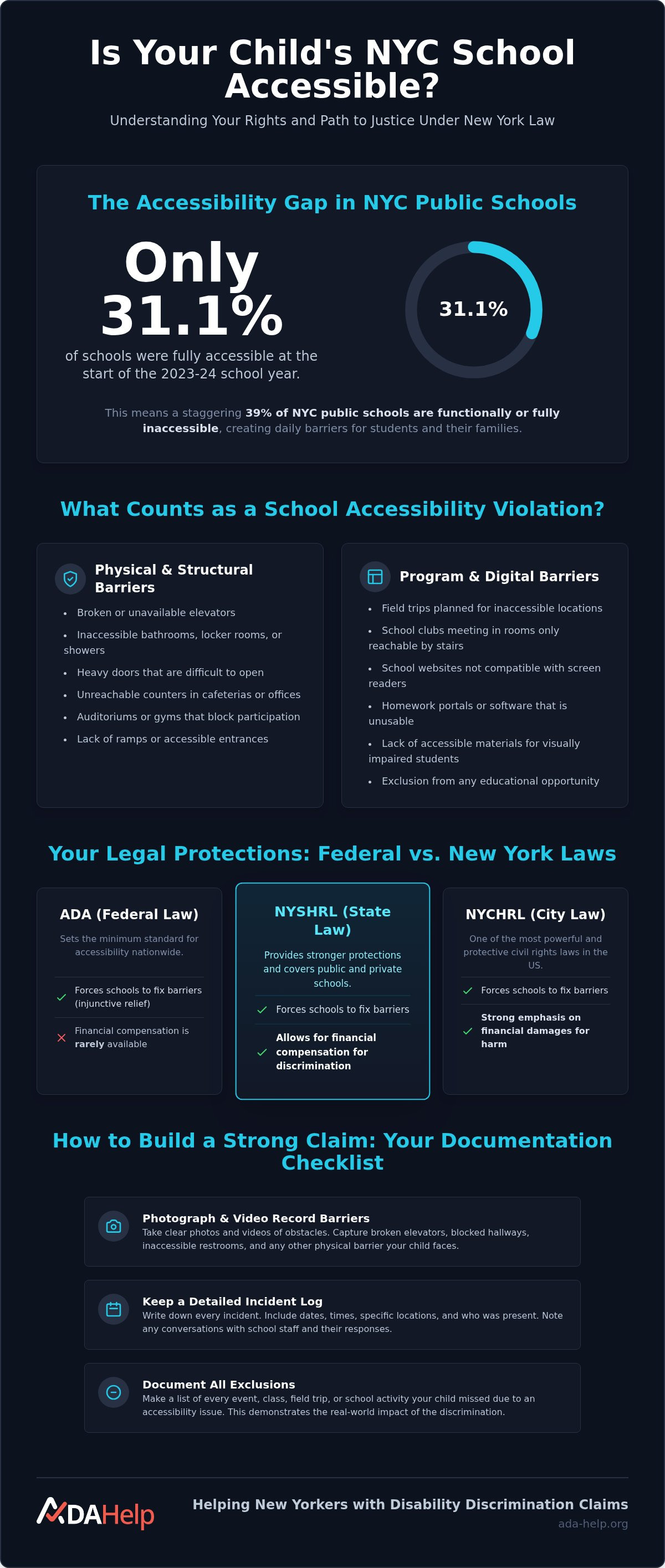
Did you know that only 31.1% of New York City public schools were fully accessible at the start of the 2023-2024 school year? It is a frustrating reality for many families across the five boroughs. If your child is facing blocked hallways, inaccessible bathrooms, or exclusion from school events, you may need to file a school accessibility complaint NY to protect their rights. You shouldn't have to fight the system alone while your child loses out on their education.
We understand how exhausting it feels to wait for administrators who never seem to call back. You want the school to fix the barriers now; you also deserve to know if your family is entitled to compensation for the discrimination you have faced. This guide explains how to identify violations under the Americans with Disabilities Act (ADA), the New York State Human Rights Law (NYSHRL), and the New York City Human Rights Law (NYCHRL). You will learn the exact steps to build a successful claim and how to seek a financial recovery without any out-of-pocket costs. We will show you how to turn your frustration into a clear, stress-free path toward justice.
Key Takeaways
- Identify physical barriers like broken elevators or inaccessible bathrooms that qualify as discrimination in New York schools.
- Learn how the New York State Human Rights Law (NYSHRL) and New York City Human Rights Law (NYCHRL) can lead to financial recovery.
- Follow a clear path to file a school accessibility complaint NY while documenting incidents of exclusion and physical obstacles.
- Discover why taking photos and keeping a detailed log of missed school events strengthens your potential claim.
- Find out how to get a free three-minute case check and connect with experts without paying any out-of-pocket fees.
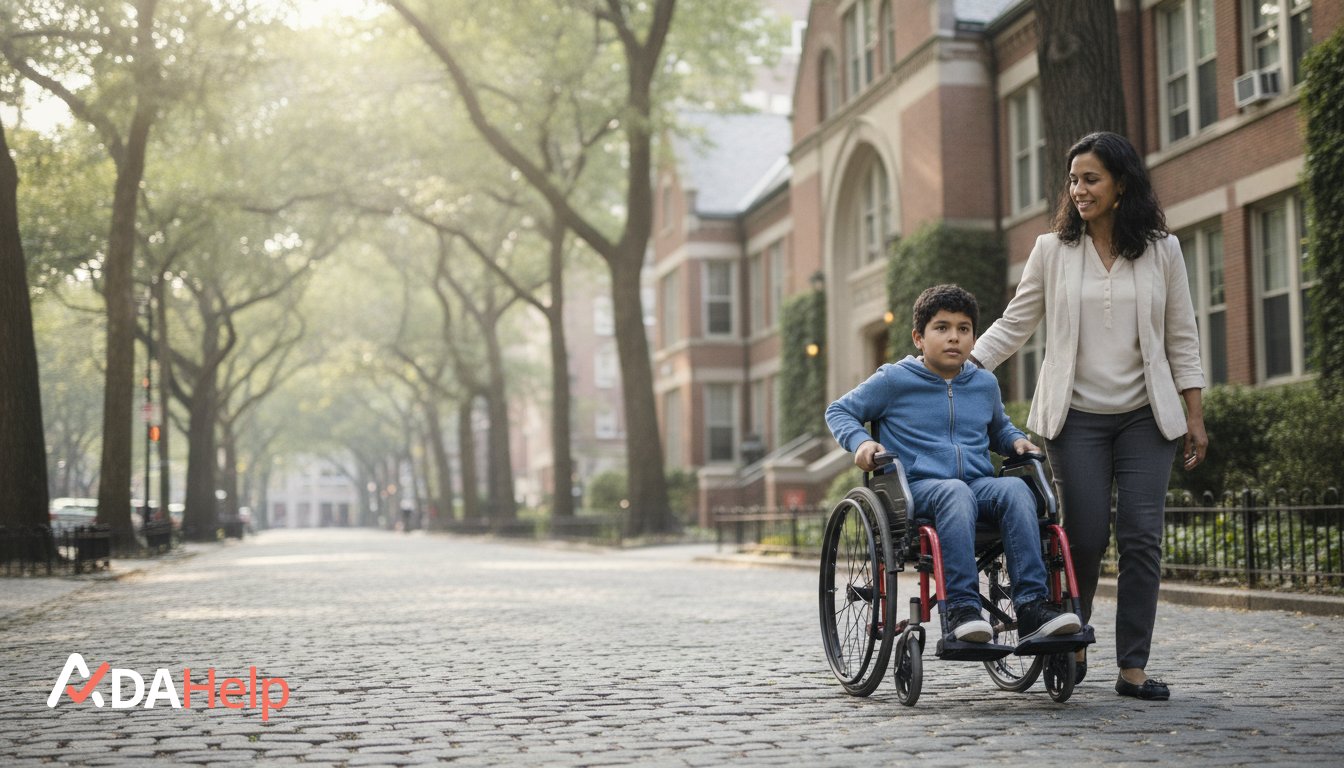
What counts as a school accessibility violation in New York?
Do you find yourself carrying your child up school stairs because the elevator is broken again? Is your child forced to use a different entrance or a separate bathroom far from their classroom? These aren't just inconveniences. They are potential violations of the Americans with Disabilities Act (ADA). This federal law sets the baseline for accessibility. In New York, you have even stronger protections under the New York State Human Rights Law (NYSHRL) and the New York City Human Rights Law (NYCHRL). If a school fails to provide equal access, filing a school accessibility complaint NY is often the only way to force a change.
To better understand the current state of school accessibility in New York, watch this helpful report:
Physical barriers in NYC school buildings
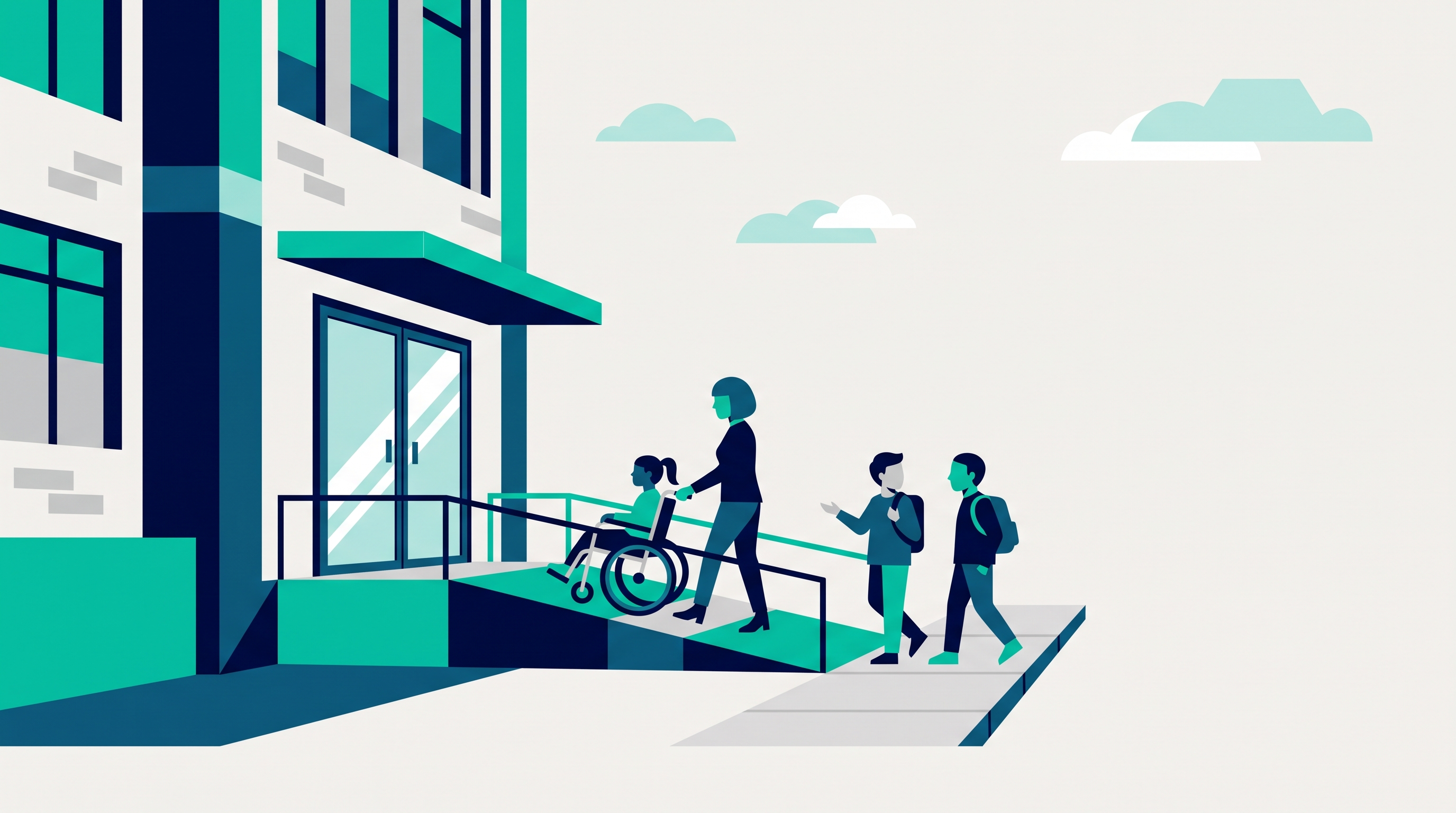
Many New York City schools are labeled as "partially accessible" on official websites. This label is often misleading. A school might have a ramp at the front door but no way for a student in a wheelchair to reach the science lab on the third floor. Statistics show that approximately 39% of NYC public schools are functionally or fully inaccessible. Common physical violations include:
- Heavy doors that are impossible to open without assistance.
- High service counters in the cafeteria or main office that block interaction.
- Inaccessible auditoriums or gyms that prevent families from attending graduations or games.
- Locker rooms that lack accessible stalls, benches, or showers.
If these barriers stop you or your child from using the building, the school is likely in violation of the NYCHRL. You have the right to a school environment where every room is reachable. The same pattern shows up in other public buildings, too, such as a library accessibility complaint in New York.
Programmatic and digital discrimination
Accessibility isn't only about ramps and elevators. It's about program access. This means every student has the right to participate in every educational opportunity. If a school plans a field trip to a location that isn't wheelchair friendly, that's discrimination. If a school club meets in a basement only reachable by stairs, that's a violation. Programmatic access ensures that no student is sidelined because of a disability.
Digital barriers are also a growing concern. School portals and learning software must be usable for students with visual impairments. If a screen reader cannot read the school's website or homework portal, the school is failing its legal duty. Under the NYSHRL, schools must ensure that digital tools don't leave students behind. Documenting these digital hurdles is a key part of your school accessibility complaint NY. Whether the barrier is a physical staircase or a digital login screen, the law requires the school to provide a solution. Younger children face similar hurdles before they even reach kindergarten, as seen in childcare center disability discrimination in New York cases.
Understanding ADA and New York accessibility laws
The Americans with Disabilities Act (ADA) is the federal law that sets the minimum standards for every school in the country. It ensures that students with disabilities have an equal opportunity to learn. However; if you are a New Yorker; you have access to much stronger protections. While the ADA often focuses on forcing a school to fix a broken elevator or install a ramp; New York laws go further. They recognize that discrimination causes real harm. If you are preparing a school accessibility complaint NY; you need to look beyond the federal baseline to see what you are actually owed.
The difference between federal and local rights
The ADA provides what is called injunctive relief. This means a court can order a school to stop its discriminatory practices or fix a physical barrier. It is a vital tool; and you can learn how to file an ADA complaint through the Department of Justice. But the ADA rarely provides money to the victim. It focuses on the building rather than the person.
In contrast; the New York State Human Rights Law (NYSHRL) covers a wider range of educational institutions. It applies to both public and private schools. As of February 15, 2024; you generally have three years from the date of the discrimination to file a claim. If you live in the five boroughs; the New York City Human Rights Law (NYCHRL) offers even more protection. It is widely considered one of the most powerful civil rights laws in the United States. These local laws don't just ask the school to fix the door. They hold the school accountable for the impact the barrier had on your life.
Why money damages matter for your claim
Many families don't realize they can seek financial compensation. Money damages are intended to compensate you for the emotional distress and the loss of educational opportunities caused by discrimination. Typical recovery amounts vary based on the specific details of your case. For example; the impact of a student being excluded from their own graduation ceremony is different from a single broken bathroom door. Potential recovery under New York laws may include:
- Compensatory damages: Money for the emotional pain and suffering you or your child experienced.
- Punitive damages: Under the NYCHRL; these are meant to punish the school for especially harmful behavior.
- Civil penalties: These are fines paid to the city or state to discourage future discrimination.
Because these cases are handled by independent contingency-fee attorneys; you don't have to worry about out-of-pocket legal bills. These professionals only get paid if you receive a recovery. This makes the process low-risk for families who have already dealt with enough stress. If you aren't sure which laws apply to your situation; you can start with a free three-minute case check to see if you have a claim.
How to start a school accessibility complaint in NY
Starting a school accessibility complaint NY requires a clear plan. You shouldn't just guess which form to fill out or wait for a principal to return your call. Taking the right steps early ensures your child's rights are protected. First; you must identify if the school is a public institution or a private one. This distinction changes your federal rights; but your New York rights remain strong in both settings. You can find official guidance on How to File an ADA Complaint through the Department of Justice. While federal forms are a start; they often lack the teeth of local New York laws.
Public vs. private school complaints
Public schools are covered under Title II of the Americans with Disabilities Act. Private schools; including religious or charter schools; are considered public accommodations under Title III. Public schools in New York City are managed by the Department of Education (DOE). However; the New York State Human Rights Law (NYSHRL) applies to both types of institutions regardless of their federal status. Whether your child is at a local SUNY campus or a private preschool; they deserve full access to their education. New York laws ensure that private schools cannot hide behind their private status to avoid providing necessary access.
Internal school complaints vs. legal claims
You have two main paths to resolution. An internal complaint with the school district or the NYC DOE might fix a specific physical barrier like a broken elevator. This is a bureaucratic fix. It is useful for immediate building repairs. However; a legal claim through the court system or the New York State Division of Human Rights seeks justice for the actual harm your child suffered. You can often pursue both paths at the same time. One path makes the building safe; the other path provides financial recovery for the discrimination faced. Legal claims focus on the emotional and educational impact of being excluded.
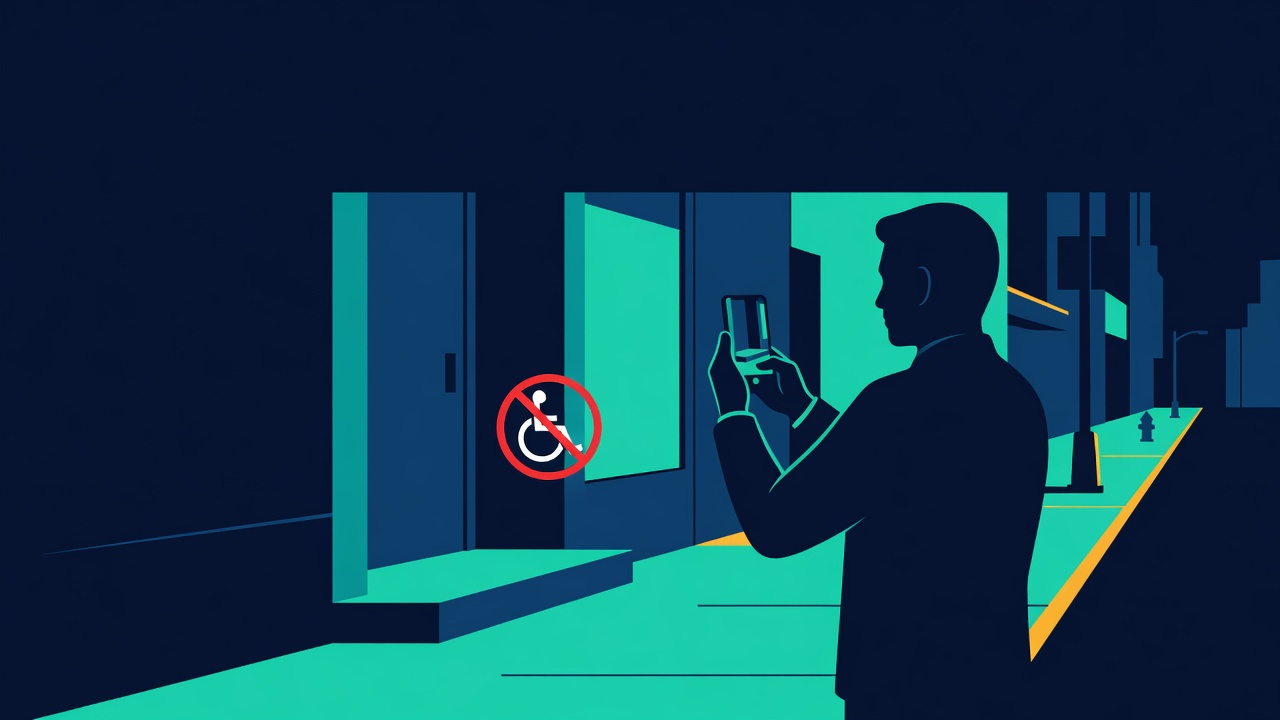
To build a strong case; you must document the specific barrier or incident of discrimination. Take clear photos of the stairs that lack a ramp or the bathroom door that won't open. Keep a log of every time your child was excluded from a school dance; a field trip; or a graduation ceremony. These details are the foundation of your claim. Once you have your evidence; determine if you want a simple fix or a full legal resolution that includes money damages.
Finally; perform a free case check to see if you have a claim for damages. You don't need to spend hours researching statutes or paying for a legal consultation. A quick three-minute check can tell you if your situation qualifies for a recovery. This is the fastest way to move from feeling stuck to taking real action toward justice. It helps you understand if you have a case without any upfront costs or financial risk.
Documenting your school accessibility case
You see the broken ramp every morning. You hear the same excuses from the front office about why the elevator hasn't been fixed. While these frustrations are real; your memory alone isn't enough to secure a recovery. To build a strong school accessibility complaint NY; you must act like a reporter. You need to gather hard evidence that proves the school failed to meet its legal obligations. Evidence is the foundation of your recovery.
- Take clear photos: Capture every physical barrier. This includes stairs without ramps; blocked hallways; and heavy doors without automatic openers.
- Keep an exclusion log: Write down every time your child missed a gym class; a field trip; or an assembly because of their disability.
- Save all communication: Keep every email; letter; and text message sent to administrators. If they ignore you; that silence is evidence too.
- Gather witness statements: Ask other parents or students who saw the barrier to write a brief account of what they witnessed.
What evidence do you need for a NY claim?
Visual proof is your strongest tool. Use your phone to take date-stamped photos and videos of the obstacles. If a door is too heavy to open; record yourself trying to pull it. Medical records are also essential. They prove that your child has a documented need for specific access. These records link the physical barrier to the actual harm caused to the student. Evidence is the foundation of your recovery.
For a full breakdown of what to collect and how to organize it, see our evidence checklist for disability discrimination cases in New York.
Common mistakes to avoid
Many parents make the mistake of relying on verbal promises. A principal might tell you a ramp is "coming next month;" but if it isn't in writing; it didn't happen. Another critical error is waiting too long to act. In New York; the statute of limitations for discrimination claims is generally three years. If you wait; you may lose your right to seek any compensation. Finally; never sign a waiver or a settlement agreement without a professional review. Schools often try to offer small fixes in exchange for you giving up your right to sue for damages. Don't let them trade your child's long-term rights for a quick; cheap repair.
Gathering this evidence can feel overwhelming when you are already managing your child's education. You don't have to organize it all by yourself. If you have photos or a log of incidents; you can start your free case check right now to see how your evidence builds a claim.
Where to File: Agencies & Deadlines
Knowing exactly where to send your complaint matters as much as the evidence you gather. Depending on whether the school is public or private and where it sits, you may have more than one agency option, and each comes with its own clock.
- U.S. Department of Justice (DOJ): Handles ADA Title II and Title III complaints nationwide, covering both public schools and private schools. File directly at ada.gov. There is no strict statute of limitations for a DOJ complaint, but filing sooner strengthens your case.
- New York State Division of Human Rights (NYSDHR): Covers public and private schools anywhere in New York State under the NYSHRL. You generally have three years from the discriminatory act to file. Learn more at dhr.ny.gov.
- NYC Commission on Human Rights (CCHR): Covers schools within the five boroughs under the NYCHRL. The filing window is typically one year from the incident. Details are available at nyc.gov/cchr.
- U.S. Equal Employment Opportunity Commission (EEOC): If you are a school employee rather than a parent or student, workplace disability discrimination claims go here, and you generally have 300 days to file.
Missing a deadline can permanently close the door on financial recovery, so confirm which agency applies to your situation as soon as possible.
How ADA Help - NY disability discrimination claims manages your school discrimination claim
You have identified the barriers and gathered your evidence. Now; you need a proactive partner to help you turn that information into a formal school accessibility complaint NY. ADA Help - NY disability discrimination claims provides specialized case management for New Yorkers facing discrimination in educational settings. We are not a law firm; and we do not provide legal advice. Instead; we act as your capable guide. We help you determine if you have a valid claim and then connect you with independent contingency-fee attorneys who can fight for your recovery. Our goal is to turn your frustration into a clear; stress-free path toward resolution.
Our team handles the heavy lifting of organizing your evidence and ensuring your case is filed with the proper authorities. We understand the specific local requirements for the New York State Division of Human Rights and the NYC Commission on Human Rights. By managing the logistics of your claim; we remove the stress of dealing with school bureaucracy alone. We work for you to make sure the school is held accountable for the harm caused to your child. We handle the process so you can stay focused on your family.
Our free three-minute case check
Do you have a case? Is it worth pursuing? You can find out right now without any risk or personal cost. We offer a confidential free three-minute case check. This quick check is designed to help you understand if your situation meets the legal standards for a discrimination claim in New York. The process is straightforward and carries no obligation to move forward. It is simply a tool to give you clarity on your rights and the potential for a financial recovery without the intimidation of a traditional legal consultation. You get the answers you need in minutes.
No out-of-pocket costs for your case
Many families hesitate to seek justice because they fear high hourly fees or legal bills. We have removed that financial risk entirely. Our service works on a contingency-fee model. This means you pay nothing out of pocket to start your claim. Fees are only taken if the independent attorneys we connect you with secure a financial recovery for you. This approach levels the playing field for New York families. It ensures that your access to justice is not limited by your bank account. You can learn more about how we protect your rights through ADA Title III case management New York. We focus on getting results and fixing access barriers while you focus on your child's well-being.
Take action for your child's rights
Your child deserves full access to every educational opportunity without being sidelined by physical or digital barriers. Filing a school accessibility complaint NY is about more than just reporting a problem; it is about securing the justice your family is owed under the law. While federal rules ensure building repairs, the New York State Human Rights Law and New York City Human Rights Law provide the path toward financial recovery for the discrimination faced. You have a limited time to act before the statute of limitations expires.
ADA Help - NY disability discrimination claims is here to guide you through the intake process. We handle the logistical burden of case management and connect you with independent attorneys who work on a contingency basis. This means you never have to worry about out-of-pocket costs. Our team knows the local New York legal system and is dedicated to making it work for you. We manage the details so you can focus on your family's well-being.
Don't let another school year pass with unresolved access issues. Start your free three-minute case check now to determine if you have a valid claim for damages. It is a confidential, zero-risk way to hold the school accountable and protect your child's future. You have the power to demand fairness today.
Frequently Asked Questions
Do I need a lawyer to file a school accessibility complaint in New York?
No; you can file a complaint with the New York State Division of Human Rights or the Department of Justice on your own. However; navigating the legal system is often complex and exhausting for families. Using a service like ADAhelp allows you to determine if you have a valid claim for a school accessibility complaint NY without upfront costs. We connect you with independent attorneys who handle the heavy lifting while you focus on your child.
Can I sue a New York school for money if it is not wheelchair accessible?
Yes; you can seek money damages under New York laws. While the federal Americans with Disabilities Act (ADA) usually only requires the school to fix the physical barrier; the New York State Human Rights Law (NYSHRL) and the New York City Human Rights Law (NYCHRL) allow for financial recovery. These damages compensate you for emotional distress and the loss of educational opportunities caused by the discrimination your child faced at their school.
What is the difference between an ADA claim and a Section 504 complaint?
An ADA claim focuses on equal access to public and private buildings and programs. Section 504 of the Rehabilitation Act is a federal law that applies to any program receiving federal financial assistance; including all public schools. While Section 504 often deals with educational accommodations; the ADA; New York State Human Rights Law (NYSHRL); and New York City Human Rights Law (NYCHRL) provide much broader protections for physical and digital access barriers that often lead to financial recovery.
How long does a school accessibility case typically take in NY?
The timeline for a school accessibility case in New York varies based on the complexity of the barriers and the school's response. Some cases resolve in a few months through settlement; while others involving the court system can take over a year. Starting with a free case check is the fastest way to understand your timeline. Our case management approach focuses on moving your claim forward efficiently to achieve a resolution as quickly as possible.
What if the school says the building is historic and cannot be changed?
Being a historic building does not exempt a school from providing access. Under the Americans with Disabilities Act (ADA) and New York laws; schools must remove barriers if it is readily achievable or provide program access in an alternative way. A school cannot simply block a student because a building is old. If a building cannot be physically altered; the school must move programs to an accessible location to ensure your child has the same opportunities.
Can my child be retaliated against for filing an ADA complaint?
No; retaliation is strictly illegal under federal and New York laws. You have a protected right to file a school accessibility complaint NY or report discrimination without fear of punishment. If a school administrator or teacher treats your child poorly; gives unfair grades; or excludes them from activities because you spoke up; that is a separate and serious legal violation. New York laws provide strong protections to ensure families can stand up for their rights safely.

Article by
ADA Help
Written by the ADAhelp editorial team and reviewed for accuracy before publishing. ADAhelp helps New Yorkers find out if they have a disability discrimination claim and manages the process end to end, working with independent attorneys who handle the legal work. We are not a law firm and do not provide legal advice.
Disclaimer
This article is general information about New York law, not legal advice, and reading it does not create an attorney-client relationship. ADAhelp is a case-management and intake service, not a law firm; legal representation is provided by independent attorneys. Recovery amounts and timelines vary by case, and past outcomes do not guarantee future results. For advice about your specific situation, speak with a qualified attorney or start the free case check.
Tags
Discriminated against in New York because of a disability?
A free three-minute check tells you if you can pursue a claim.
Check my case →New York onlyNo upfront costIndependent NY attorneysFree 3-minute check