ADA Website Complaint New York: Your 2026 Filing Guide
Reviewed for accuracy by the ADAhelp team before publishing. ADAhelp is not a law firm; legal work is handled by independent New York attorneys.
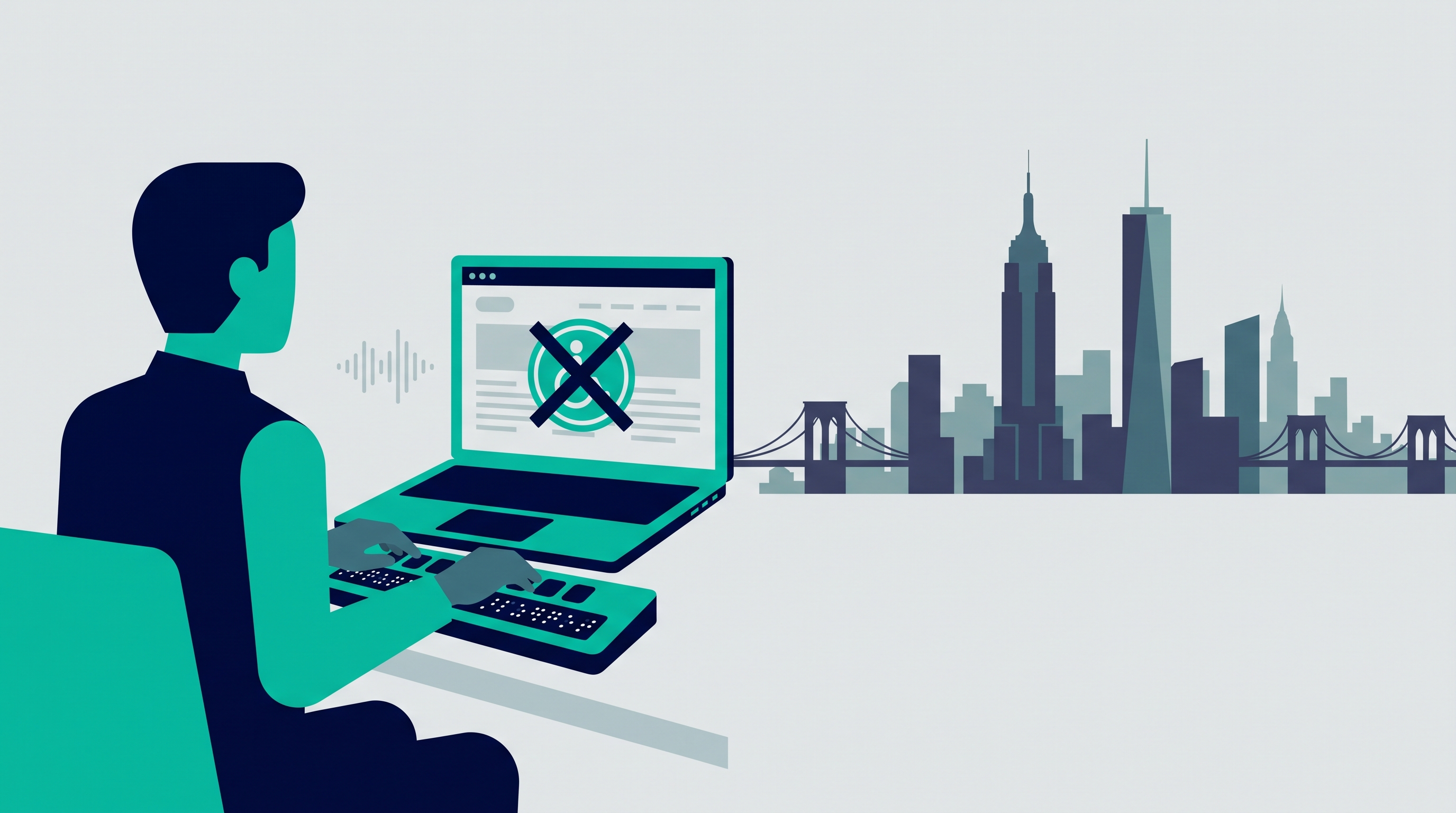
Blocked by an inaccessible site? See how to file an ADA website complaint in New York, which laws allow money damages, and where the deadlines fall.
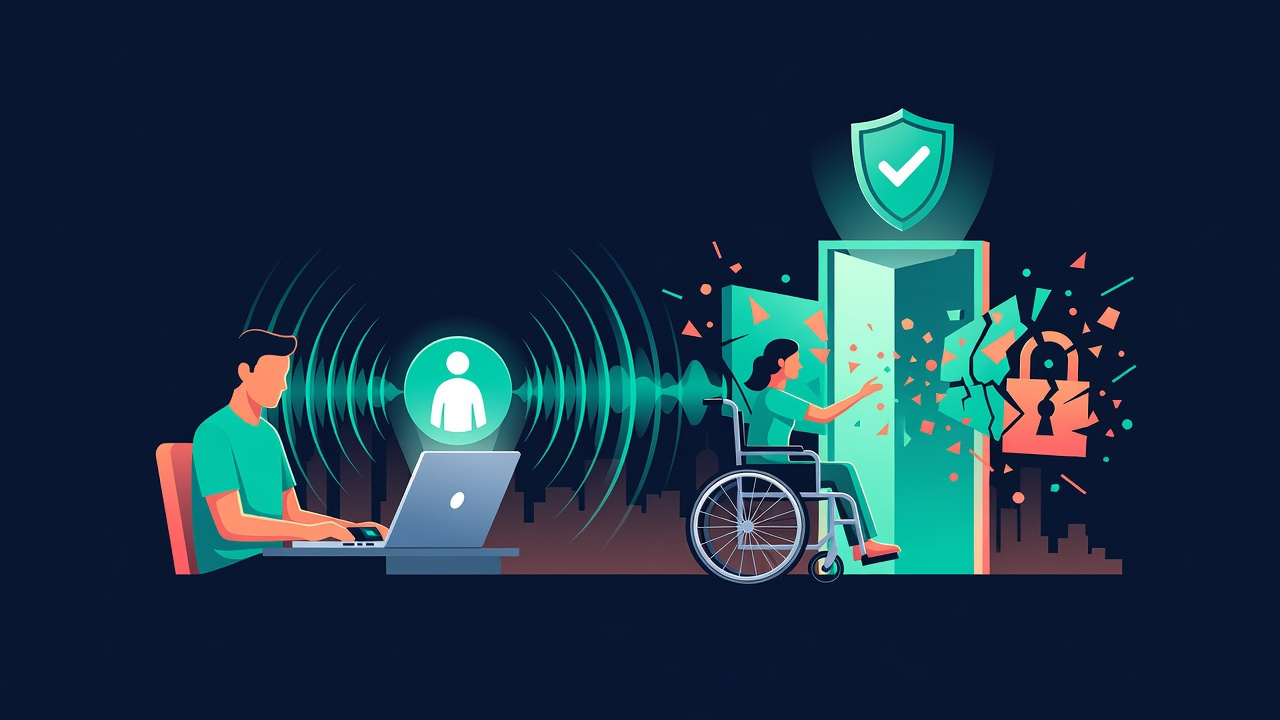
If a screen reader went silent at checkout, a menu was locked inside an unreadable PDF, or a form could not be completed with a keyboard, you ran into a digital barrier — not a personal failing. In New York, that barrier can be the basis of a discrimination claim.
This page is the starting point for every web accessibility question we handle. It explains how to file an ADA website complaint in New York, which of the three applicable laws actually opens the door to money damages, what evidence to save, and where each deadline falls. Wherever a situation needs more depth — an app, an ATM, a deaf or blind access barrier, a Title III public accommodation issue — you will find a link to the detailed guide for it.
ADAhelp is a case management and intake service, not a law firm. We review your situation, organize the record, and connect you with independent attorneys who work on contingency, so there is no out-of-pocket cost to you. ¿Prefiere leer en español? Consulte nuestra guía sobre cómo presentar una queja de sitio web ADA en Nueva York.
Key takeaways
- A business website that serves the public in New York is generally treated by courts here as an extension of a place of public accommodation.
- Federal ADA Title III can force a fix; the New York State and City Human Rights Laws are the statutes that allow individual money damages.
- Evidence wins these cases: URLs, screenshots, screen recordings, the assistive technology you used, and the date.
- Deadlines differ by forum — the NYC Commission on Human Rights generally requires filing within one year, the NYS Division of Human Rights within three years for acts on or after February 15, 2024.
- A free three-minute case check tells you whether your barrier is worth pursuing, with no upfront cost.
On this page
- What counts as an ADA website violation in New York?
- The three laws behind a New York web accessibility claim
- Find the guide that matches your barrier
- How to document a website accessibility barrier
- Where to file and the deadlines that matter
- Filing alone vs. professional case management
- Start your New York website complaint
- Frequently asked questions
What counts as an ADA website violation in New York?
A violation happens when a digital barrier keeps you from using goods, services, or information that other customers reach without difficulty. Title III of the Americans with Disabilities Act requires places of public accommodation to provide equal access, and New York courts have repeatedly applied that duty to the websites those businesses operate.
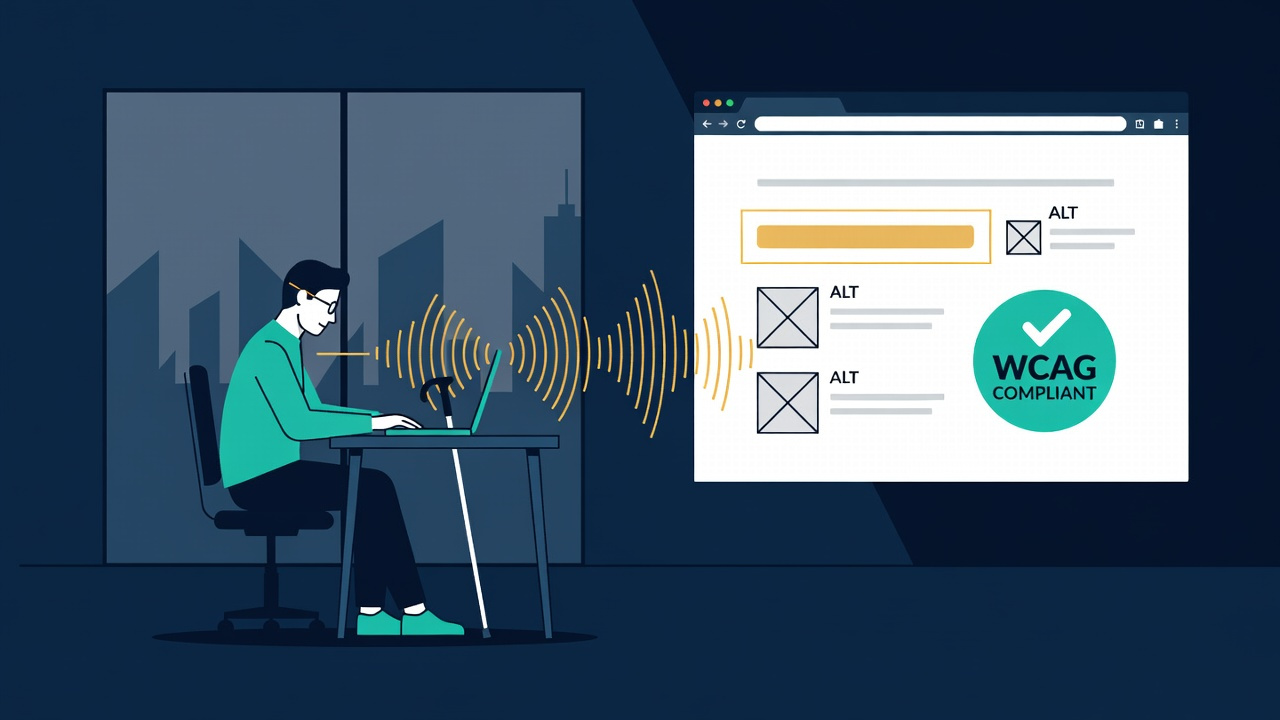
There is no single federal regulation setting technical standards for private business websites. In practice, courts, agencies, and settlement agreements point to the Web Content Accessibility Guidelines (WCAG), most often WCAG 2.1 Level AA. For state and local government entities, the U.S. Department of Justice issued a Title II rule in April 2024 that adopts WCAG 2.1 Level AA as the standard, with compliance dates phased in by entity size.
Common digital barriers for New Yorkers
- Images, buttons, and links with no alt text or accessible name, so a screen reader announces nothing usable.
- Menus, carousels, or checkout steps that cannot be reached or operated with a keyboard alone.
- Color contrast too low to read with limited vision, or text that breaks when enlarged.
- Videos without accurate captions, or audio-only content without a transcript.
- Forms that time out, or that flag an error without saying which field failed.
- Restaurant menus, leases, or notices posted as scanned image PDFs.
If this is happening repeatedly across the businesses you use, our overview of website accessibility violations in New York walks through how each barrier type is usually proven.
Why a business website is treated as a public accommodation
A Brooklyn bakery, a Manhattan retailer, a Queens medical office — if the doors are open to the public, the digital front door is expected to be open too. That reasoning is why website claims in New York are usually built on the same framework as physical access claims. Our guide to an ADA public accommodation violation in NYC explains the overlap, and ADA Title III case management in New York covers how a Title III matter is handled from intake to resolution.
The three laws behind a New York web accessibility claim
Three layers of law can apply to the same inaccessible website. Knowing which one you rely on determines what you can actually ask for.
Federal ADA Title III: a fix, not a check
Title III is the baseline. A private ADA Title III lawsuit generally provides injunctive relief — a court order requiring the business to remediate — plus attorney's fees and costs. It does not provide compensatory damages to the individual. You can also report the business to the U.S. Department of Justice, which may investigate but will not pay you.
NYSHRL and NYCHRL: where damages come from
The New York State Human Rights Law and the New York City Human Rights Law both prohibit disability discrimination in public accommodations, and both allow a complainant to seek compensatory damages, including damages for emotional harm. The NYCHRL is construed liberally and is generally the most protective of the three. The NYC Commission on Human Rights can also impose civil penalties of up to $250,000 for willful, wanton, or malicious conduct — those penalties are paid to the City, not to you, but they are part of why local filings get attention.
Recovery amounts vary widely with the facts, the evidence, and the business involved. Some New York disability matters resolve for up to $60,000; others resolve for far less or for remediation alone, and no result can be predicted in advance. For a realistic picture, read our breakdown of disability discrimination settlement amounts in New York.
Find the guide that matches your barrier
Web accessibility claims are not all the same. Use the guide closest to your situation, then come back here for the filing mechanics.
The website or app itself blocked you
- How to file a website accessibility complaint in New York — the step-by-step filing walkthrough.
- Website accessibility complaint New York: file and recover — what happens after the complaint goes in.
- Inaccessible website discrimination claim: New York filing guide — how the legal elements are assembled.
- Website accessibility violation New York: your rights — a plain-language rights summary.
- Website accessibility complaint New York: filing guide — a second walkthrough with agency detail.
- Digital accessibility claim management in NY — how an ongoing digital claim is managed end to end.
The barrier was about sight, hearing, or communication
- Blind discrimination case New York — screen reader and low-vision barriers, online and in person.
- How to file a deaf discrimination claim in New York — captioning, interpreters, and video content.
- Communication access discrimination in NY — the effective communication standard behind most caption and alt-text claims.
The technology was physical as well as digital
- ATM accessibility complaint NYC — touchscreens, kiosks, and audio output.
- How to report ADA non-compliance in NYC — when the same business has physical and digital barriers.
How to document a website accessibility barrier
Documentation is what separates a frustrating afternoon from a claim someone can act on. Before you close the tab:
- Copy the exact URL of the page where you got stuck, including the checkout or form step.
- Take screenshots, and where possible a short screen recording showing the failure in real time.
- Note the date, time, browser, device, and the assistive technology you used — JAWS, NVDA, VoiceOver, Dragon, keyboard-only, magnification.
- Write one or two sentences describing what you were trying to do and what stopped you.
- Save any error messages, abandoned cart confirmations, or receipts from a workaround you had to use.
- Keep every email or chat transcript if you asked the business for help, and note whether they replied.
Then record the impact. Did you miss a ticket sale, pay more elsewhere, need a sighted person to finish a private transaction, or give up on the service entirely? Under the NYSHRL and NYCHRL, that exclusion — and the distress it caused — is the part of the claim that supports damages. Silence from the business after you asked for help is also evidence.
Where to file and the deadlines that matter
You have more than one forum, and the choice has consequences.
- NYC Commission on Human Rights (CCHR) — for businesses operating in the five boroughs, under the NYCHRL. A complaint generally must be filed within one year of the discriminatory act.
- NYS Division of Human Rights (DHR) — statewide, under the NYSHRL. For discriminatory acts on or after February 15, 2024, the filing window is generally three years.
- Court — NYSHRL and NYCHRL claims can also be brought directly in court. Filing an administrative complaint with DHR or CCHR generally means you cannot later bring the same claim in court, an election-of-remedies rule worth understanding before you file anywhere.
- U.S. Department of Justice — accepts ADA Title III reports. Useful for pressure and enforcement; it does not produce individual compensation.
- EEOC — only for employment disability claims, not for customer-facing website barriers.
Deadlines are strict and a missed one can end the matter permanently. Confirm yours against our guide to the ADA claim statute of limitations in New York before you do anything else.
Filing alone vs. professional case management
You can submit an agency form yourself today. Some people do, and our guide to filing a discrimination claim without a lawyer in NY walks through every field. Be aware of three common problems: choosing a forum that cannot award damages, citing only federal law and losing the NYSHRL and NYCHRL remedies, and letting a one-year window lapse while waiting for a business to respond.
Case management removes that burden. We review your screenshots, URLs, and notes against the standards New York decision-makers actually use, identify which law and forum fit, and connect you with independent attorneys who handle these claims on a contingency basis. No recovery, no fee — and no out-of-pocket cost for the review. We handle intake and organization; the attorneys handle the legal work.
Start your New York website complaint
You do not need to be a developer or a lawyer to insist on a website you can actually use. Our free case check takes about three minutes and asks plain questions: what site, what barrier, what technology you were using, and what you were unable to do. You get a straight answer about whether your situation is worth pursuing and under which law.
Start your free three-minute case check — no upfront cost, no obligation, and no legal jargon.
Frequently asked questions
Is there a cost to file a website accessibility complaint in New York?
Filing with the NYS Division of Human Rights or the NYC Commission on Human Rights does not require a filing fee, and there is no out-of-pocket cost to use our case management service. We work with independent attorneys on a contingency basis: no recovery, no fee. The three-minute case check and the intake review are free.
How long does a website discrimination case take in New York?
It varies. Some matters resolve in a few months when the evidence is clean and the business wants to remediate quickly; agency investigations and contested cases can run considerably longer. Well-organized documentation at the start is the single biggest factor you control.
Can I get money for a website ADA violation in New York City?
Money damages come from the NYSHRL and NYCHRL, not from federal ADA Title III, which generally provides injunctive relief and attorney's fees. Under the city and state laws, a complainant may seek compensatory damages, including for emotional harm. Amounts vary by case; some New York disability matters have resolved for up to $60,000, and no outcome can be predicted in advance.
What if the business fixes the website after I complain?
A later fix does not erase the barrier you already encountered, which is why the date of your screenshots and recordings matters so much. Remediation may affect what injunctive relief is still available, but your documented experience remains the core of a city or state law claim.
Do I need a lawyer to file an ADA website complaint?
No — agency complaints can be filed without one. But if you are seeking financial recovery rather than just a fix, the choice of law, forum, and deadline becomes important. We are not a law firm; we organize your evidence and connect you with independent attorneys who take these cases on contingency.
Which websites have to be accessible in New York?
Websites of businesses serving the public — retailers, restaurants, banks, healthcare providers, entertainment venues — are generally treated by New York courts as extensions of places of public accommodation. Separately, the DOJ's 2024 Title II rule requires state and local government entities to meet WCAG 2.1 Level AA, with compliance dates phased in by entity size.
Where do I start if I am not sure which guide applies to me?
Start with the barrier. If a website or app blocked a transaction, use the step-by-step website complaint guide. If the issue was captions, interpreters, or alt text, start with communication access discrimination. If it involved a kiosk or ATM, start with the ATM accessibility guide. Or run the free case check and let us route it.
Disclaimer
This article is general information about New York law, not legal advice, and reading it does not create an attorney-client relationship. ADAhelp is a case-management and intake service, not a law firm; legal representation is provided by independent attorneys. Recovery amounts and timelines vary by case, and past outcomes do not guarantee future results. For advice about your specific situation, speak with a qualified attorney or start the free case check.
Tags
Discriminated against in New York because of a disability?
A free three-minute check tells you if you can pursue a claim.
Check my case →New York onlyNo upfront costIndependent NY attorneysFree 3-minute check